This book is about the mundane, local, every day practices that constitutes democracy. Focusing on France and Finland, the book defines politicization as the key process in understanding democracy in different cultural contexts and shows a nuanced picture of two opposite models of European politics.
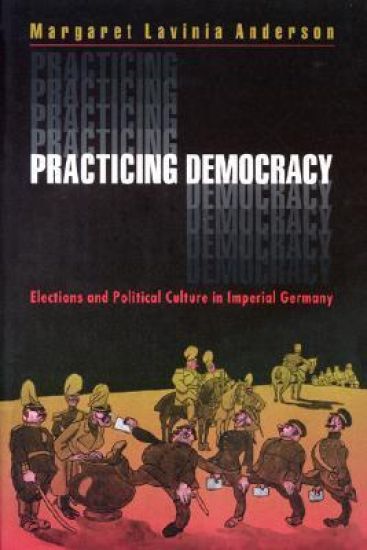
What happens when manhood suffrage, a radically egalitarian institution, gets introduced into a deeply hierarchical society? In her sweeping history of Imperial Germany's electoral culture, Anderson shows how the sudden opportunity to "practice" democracy in 1867 opened up a free space in the land of Kaisers, generals, and Junkers. Originally designed to make voters susceptible to manipulation by the authorities, the suffrage's unintended consequence was to enmesh its participants in ever more democratic procedures and practices. The result was the growth of an increasingly democratic culture in the decades before 1914. Explicit comparisons with Britain, France, and America give us a vivid picture of the coercive pressures--from employers, clergy, and communities--that German voters faced, but also of the legalistic culture that shielded them from the fraud, bribery, and violence so characteristic of other early "franchise regimes." We emerge with a new sense that Germans were in no way less modern in the practice of democratic politics. Anderson, in fact, argues convincingly against the widely accepted notion that it was pre-war Germany's lack of democratic values and experience that ultimately led to Weimar's failure and the Third Reich. Practicing Democracy is a surprising reinterpretation of nineteenth- and early twentieth-century Germany and will engage historians concerned with the question of Germany's "special path" to modernity; sociologists interested in obedience, popular mobilization, and civil society; political scientists debating the relative role of institutions versus culture in the transition to democracy. By showing how political activity shaped and was shaped by the experiences of ordinary men and women, it conveys the excitement of democratic politics.
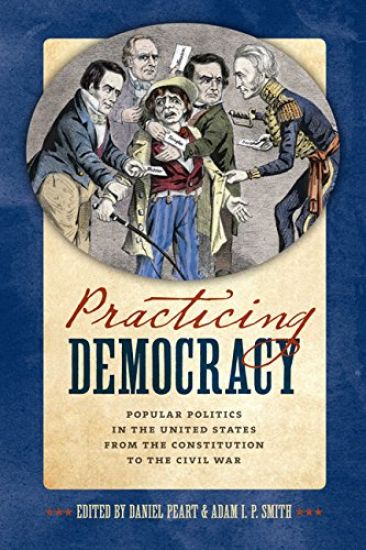
In Practicing Democracy, eleven historians challenge conventional narratives of democratization in the early United States, offering new perspectives on the period between the ratification of the Constitution and the outbreak of the Civil War. The essays in this collection address critical themes such as the origins, evolution, and disintegration of party competition, the relationship between political parties and popular participation, and the place that parties occupied within the wider world of United States politics. In recent years, historians of the early republic have demolished old assumptions about low rates of political participation and shallow popular partisanship in the age of Jefferson?raising the question of how, if at all, Jacksonian politics departed from earlier norms. This book reaffirms the significance of a transition in political practices during the 1820s and 1830s but casts the transformation in a new light. Whereas the traditional narrative is one of a party-driven democratic awakening, the contributors to this volume challenge the correlation of party with democracy. They both critique constricting definitions of legitimate democratic practices in the decades following the ratification of the Constitution and emphasize the proliferation of competing public voices in the buildup to the Civil War. Taken together, these essays offer a new way of thinking about American politics across the traditional dividing line of 1828 and suggest a novel approach to the long-standing question of what it meant to be part of ""We the People.
This book is about the mundane, local, every day practices that constitutes democracy. Focusing on France and Finland, the book defines politicization as the key process in understanding democracy in different cultural contexts and shows a nuanced picture of two opposite models of European politics.