Kirjojen hintavertailu. Mukana 11 417 157 kirjaa ja 12 kauppaa.

Kirjahaku

Etsi kirjoja tekijän nimen, kirjan nimen tai ISBN:n perusteella.

86 tulosta hakusanalla "Quentin Tarantino"

Quentin Tarantino

Quentin Tarantino

Aaron Barlow

Praeger Publishers Inc
2010
sidottu
This book places Quentin Tarantino at the heart of Hollywood, showing a director who speaks film through film, who examines the world beyond the movies in a way few have previously attempted, and at which fewer still have succeeded.Quentin Tarantino: Life at the Extremes explores the uses of violence in the films Tarantino has written, directed, and produced. Arguing that extreme violence is central to Tarantino’s art, the book helps readers understand its purpose in his films—as metaphor, as movement, and as motivation. For Tarantino, the book explains, violence serves the purposes of film. In each of his movies, he explores the boundaries of taste and audience reaction, using violence and shock to bring questions of responsibility and expectation to the forefront of discussions on cinema.After introductory chapters placing Tarantino and his films within the broader context of American cinema, author Aaron Barlow focuses on Tarantino's six major directorial efforts. Each film is discussed from its genre starting point and the differing directions the films take are explored, as are the structural elements. In the end, readers will see how Tarantino deliberately pushes film in new directions through old techniques, styles, and even actors, crafting original art from what others have discarded.A chronology dates events in the life of Quentin Tarantino, as well as significant developments in the world of the moviesIncludes a detailed listing of Tarantino's film career, noting his participation in projects as an actor, writer, producer, and director, with details on each film, including cast and other participants
Quentin Tarantino

Quentin Tarantino

Gallafent Edward

Longman
2006
nidottu
Quentin Tarantino is one of the best-known living American filmmakers in the world, and the story of his career has been the subject of a number of books and articles. But what do his films mean? In this new study, Edward Gallafent does not look at Tarantino’s story but at the films themselves. He asks to what extent Tarantino can be seen as a specifically American filmmaker, with the kinds of preoccupations and interests that have formed part of Hollywood’s traditions, and also how he explores the expressive possibilities of current cinema. The book concentrates on the main feature films of Tarantino’s career so far: Reservoir Dogs, Pulp Fiction, Jackie Brown, and the two volumes of Kill Bill. Apart from Kill Bill the films are not treated individually, but in terms of some of the subjects that connect them together, such as success and tradition, their notorious deployment of violence, and Tarantino’s approach to story-telling: his interest in presenting events out of chronological order. The book also covers adaptations of Tarantino’s work, looking at the screenplays of True Romance and Natural Born Killers as well as the films made from them, and compares Tarantino’s approach to adapting Elmore Leonard with that of another important American filmmaker, Paul Schrader. The aim of the book is to explore these topics and to take the reader back to what the American critic Robert Warshow called the ‘actual, immediate experience of seeing and responding to the movies’. It is designed to appeal both to those who were excited by the films on first seeing them in the cinema and to those taking the opportunity of reconsidering them on the screen or on DVD.
Quentin Tarantino

Quentin Tarantino

Edward Gallafent

Routledge
2016
sidottu
Quentin Tarantino is one of the best-known living American filmmakers in the world, and the story of his career has been the subject of a number of books and articles. But what do his films mean? In this new study, Edward Gallafent does not look at Tarantino’s story but at the films themselves. He asks to what extent Tarantino can be seen as a specifically American filmmaker, with the kinds of preoccupations and interests that have formed part of Hollywood’s traditions, and also how he explores the expressive possibilities of current cinema. The book concentrates on the main feature films of Tarantino’s career so far: Reservoir Dogs, Pulp Fiction, Jackie Brown, and the two volumes of Kill Bill. Apart from Kill Bill the films are not treated individually, but in terms of some of the subjects that connect them together, such as success and tradition, their notorious deployment of violence, and Tarantino’s approach to story-telling: his interest in presenting events out of chronological order. The book also covers adaptations of Tarantino’s work, looking at the screenplays of True Romance and Natural Born Killers as well as the films made from them, and compares Tarantino’s approach to adapting Elmore Leonard with that of another important American filmmaker, Paul Schrader. The aim of the book is to explore these topics and to take the reader back to what the American critic Robert Warshow called the ‘actual, immediate experience of seeing and responding to the movies’. It is designed to appeal both to those who were excited by the films on first seeing them in the cinema and to those taking the opportunity of reconsidering them on the screen or on DVD.
Quentin Tarantino

Quentin Tarantino

David Roche

University Press of Mississippi
2018
sidottu
Quentin Tarantino's films beg to be considered metafiction: metacommentaries that engage with the history of cultural representations and exalt the aesthetic, ethical, and political potential of creation as re-re-creation and resignification. Covering all eight of Quentin Tarantino's films according to certain themes, David Roche combines cultural studies and neoformalist approaches to highlight how closely the films' poetics and politics are intertwined. Each in-depth chapter focuses on a salient feature, some which have drawn much attention (history, race, gender, violence), others less so (narrative structure, style, music, theatricality).Roche sets Tarantino's films firmly in the legacy of Howard Hawks, Jean-Luc Godard, Sergio Leone, and the New Hollywood, revising the image of a cool pop-culture purveyor that the American director cultivated at the beginning of his career. Roche emphasizes the breadth and depth of his films' engagement with culture, highbrow and lowbrow, screen and print, American, East Asian, and European.
Quentin Tarantino

Quentin Tarantino

David Roche

University Press of Mississippi
2018
nidottu
Quentin Tarantino's films beg to be considered metafiction: metacommentaries that engage with the history of cultural representations and exalt the aesthetic, ethical, and political potential of creation as re-re-creation and resignification. Covering all eight of Quentin Tarantino's films according to certain themes, David Roche combines cultural studies and neoformalist approaches to highlight how closely the films' poetics and politics are intertwined. Each in-depth chapter focuses on a salient feature, some which have drawn much attention (history, race, gender, violence), others less so (narrative structure, style, music, theatricality).Roche sets Tarantino's films firmly in the legacy of Howard Hawks, Jean-Luc Godard, Sergio Leone, and the New Hollywood, revising the image of a cool pop-culture purveyor that the American director cultivated at the beginning of his career. Roche emphasizes the breadth and depth of his films' engagement with culture, highbrow and lowbrow, screen and print, American, East Asian, and European.
Quentin Tarantino

Quentin Tarantino

Dan Jolin

Quercus Publishing
2024
nidottu
Quentin Tarantino is one of the most iconic and best loved movie directors of the last two decades. Whether he's shooting up the Deep South, slicing through the Japanese underworld, blasting Nazi-occupied France or taking a flamethrower to '60s Los Angeles, Tarantino is a director who combines a radical vision with a sense of history: making movies precisely the way he wants, to celebrate the movies he loves. Featuring insights into his inspirations - from martial-arts epics to Spaghetti Westerns - and dishing up fascinating details from his productions, this is an indispensable guide to Tarantino's thrilling and sometimes controversial body of work.It takes in his searing debut Reservoir Dogs, the era-defining Pulp Fiction and the genre-subverting Django Unchained, among other modern classics, right up to his nostalgic masterpiece Once Upon A Time in Hollywood. Above all, this is a celebration of a filmmaker who has arguably made a bigger impact on modern pop culture than any other.
Quentin Tarantino

Quentin Tarantino

Quentin Tarantino; Gerald (EDT) Peary

Roundhouse Publishing Ltd
2004
pokkari
In many ways Quentin Tarantino is the paradi gmatic 1990s success story, from high school drop out, worki ng in a video store and taking acting lessons, to world accl aim with Pulp Fiction. This is a selection of interviews wit h the famous Tarantino. '
Quentin Tarantino

Quentin Tarantino

University Press of Mississippi
2013
sidottu
Here, in his own colorful, slangy words, is the true American Dream saga of a self-proclaimed ""film geek,"" with five intense years working in a video store, who became one of the most popular, recognizable, and imitated of all filmmakers. His dazzling, movie-informed work makes Quentin Tarantino's reputation, from his breakout film, Reservoir Dogs (1992), through Kill Bill: Vol. 1 (2003) and Kill Bill: Vol. 2 (2004), his enchanted homages to Asian action cinema, to his rousing tribute to guys-on-a-mission World War II movie, Inglourious Basterds (2009). For those who prefer a more mature, contemplative cinema, Tarantino provided the tender, very touching Jackie Brown (1997). A masterpiece--Pulp Fiction (1994). A delightful mash of unabashed exploitation and felt social consciousness--his latest opus, Django Unchained (2012).From the beginning, Tarantino (b. 1963)--affable, open, and enthusiastic about sharing his adoration of movies--has been a journalist's dream. Quentin Tarantino: Interviews, revised and updated with twelve new interviews, is a joy to read cover to cover because its subject has so much interesting and provocative to say about his own movies and about cinema in general, and also about his unusual life. He is frank and revealing about growing up in Los Angeles with a single, half-Cherokee mother, and dropping out of ninth grade to take acting classes. Lost and confused, he still managed a gutsy ambition: young Quentin decided he would be a filmmaker.Tarantino has conceded that Ordell (Samuel L. Jackson), the homicidal African American con man in Jackie Brown, is an autobiographical portrait. ""If I hadn't wanted to make movies, I would have ended up as Ordell,"" Tarantino has explained. ""I wouldn't have been a postman or worked at the phone company. . . . I would have gone to jail.""
Quentin Tarantino

Quentin Tarantino

University Press of Mississippi
2013
nidottu
Here, in his own colorful, slangy words, is the true American Dream saga of a self-proclaimed ""film geek,"" with five intense years working in a video store, who became one of the most popular, recognizable, and imitated of all filmmakers. His dazzling, movie-informed work makes Quentin Tarantino's reputation, from his breakout film, Reservoir Dogs (1992), through Kill Bill: Vol. 1 (2003) and Kill Bill: Vol. 2 (2004), his enchanted homages to Asian action cinema, to his rousing tribute to guys-on-a-mission World War II movie, Inglourious Basterds (2009). For those who prefer a more mature, contemplative cinema, Tarantino provided the tender, very touching Jackie Brown (1997). A masterpiece--Pulp Fiction (1994). A delightful mash of unabashed exploitation and felt social consciousness--his latest opus, Django Unchained (2012).From the beginning, Tarantino (b. 1963)--affable, open, and enthusiastic about sharing his adoration of movies--has been a journalist's dream. Quentin Tarantino: Interviews, revised and updated with twelve new interviews, is a joy to read cover to cover because its subject has so much interesting and provocative to say about his own movies and about cinema in general, and also about his unusual life. He is frank and revealing about growing up in Los Angeles with a single, half-Cherokee mother, and dropping out of ninth grade to take acting classes. Lost and confused, he still managed a gutsy ambition: young Quentin decided he would be a filmmaker.Tarantino has conceded that Ordell (Samuel L. Jackson), the homicidal African American con man in Jackie Brown, is an autobiographical portrait. ""If I hadn't wanted to make movies, I would have ended up as Ordell,"" Tarantino has explained. ""I wouldn't have been a postman or worked at the phone company. . . . I would have gone to jail.""
Quentin Tarantino

Quentin Tarantino

Ian Nathan

Aurum Press
2019
sidottu
Celebrate the work of iconic filmmaker Quentin Tarantino with this collector’s edition, covering all of the cult director’s hits. When Quentin Tarantino burst onto the big screen with Reservoir Dogs in 1992, he announced himself as the voice of his generation. Take an intimate look at his work, including stunning photos from the Kobal archives, and a foldout timeline with Tarantino’s entire filmography, as you explore his inspirations and unique directorial style, and gain insight into his many collaborations with favoured actors. Renowned film journalist Ian Nathan examines the whole of Tarantino’s work, including his early writing on screenplays such as True Romance and Natural Born Killers, the career-defining Pulp Fiction, as well as the iconic Kill Bill Volumes 1 and 2, Inglourious Basterds and later works Django Unchained, The Hateful Eight and the epic Once Upon a Time in Hollywood. Quentin Tarantino films don’t look or sound like anyone else’s. Travel through his incredible career, with in-depth explorations of his working methods and an appreciation for the breadth of his talent, and relish the visually arresting design, which mimics Tarantino’s approach to film-making. With chapters organised by film, and housed in a handsome slipcase, the pages are brimming with images taken on set and behind the scenes, creating the ultimate Quentin Tarantino book and celebration for any fan. Unauthorised and unofficial.
Quentin Tarantino

Quentin Tarantino

Christina Dumalasova; Katerina Horakova

Gemini Books Group Ltd
2025
sidottu
Exploring the creative genius of one of the most iconic and influential filmmakers of our time, Quentin Tarantino: The Graphic Novel is the story of the life and career of the visionary director, from his humble beginnings in Torrance, California to his rise to fame as one of Hollywood's true originals. Uncovering the inspirations behind each of his celebrated films, from his unmissable debut Reservoir Dogs to the Palme d'Or-winning Pulp Fiction and his most recent Academy Award-winner, Once Upon a Time in Hollywood, this unique book delves into the creative processes that have made Tarantino one of the most respected and lauded figures in film. With stunning illustrations and an in-depth look at the man behind the movies, Quentin Tarantino: The Graphic Novel is a must-read for fans of cinema and anyone interested in the art of storytelling.
Quentin Tarantino: A Graphic Biography

Quentin Tarantino: A Graphic Biography

Michele Botton

Quarto Publishing Plc
2024
sidottu
Unofficial and unauthorised.'When people ask me if I went to film school I tell them, "No, I went to films"'. From the set of 1993’s Pulp Fiction, to a bar room meeting with Robert Rodriguez and an inspirational lunch with Leonardo di Caprio, this unique graphic novel takes us across a series of Hollywood-inspired vignettes covering the movie-obsessed life and career of one of modern cinema’s greatest filmmakers – Quentin Tarantino. Join the conversation as Tarantino talks John Travolta into starring in Pulp Fiction, find out about the inspiration for his earliest screenplays and learn about Tarantino’s obsessive childhood growing up in California. For those who already know what they call a Quarter Pounder with Cheese in Paris – as well as those looking for an insight into Tarantino’s influences, inspirations and the development of his signature style – we present Quentin Tarantino: A Graphic Life.
Quentin Tarantino and Philosophy

Quentin Tarantino and Philosophy

Open Court Publishing Co ,U.S.
2008
pokkari
The films of Quentin Tarantino are ripe for philosophical speculation, raising compelling questions about justice and ethics, violence and aggression, the nature of causality, and the flow of time. In this witty collection of articles, no subject is too taboo for the writers to tackle. From an aesthetic meditation on the use of spraying blood in Kill Bill to the conundrum of translation and reference in Vincent and Jules' discussion about French Big Macs in Pulp Fiction, Tarantino and Philosophy shies away from nothing. Is The Bride a heroic figure, even though she's motivated solely by revenge? How is Tarantino able to create a coherent story when he jumps between past, future, and present? The philosophers in this book take on those questions and more in essays as provocative as the films themselves.
Quentin Tarantino's Inglourious Basterds

Quentin Tarantino's Inglourious Basterds

Continuum Publishing Corporation
2012
sidottu
This provocative and unique anthology analyzes Quentin Tarantino's controversial Inglourious Basterds in the contexts of cinema, cultural, gender, and historical studies. The film and its ideology is dissected by a range of scholars and writers who take on the director's manipulation of metacinema, Nazisploitation, ethnic stereotyping, gender roles, allohistoricism, geopolitics, philosophy, language, and memory. In this collection, the eroticism of the club-swinging and avenging "Bear Jew," the dashed heroism of the "role-playing" French and German females, the patriotic fools and pawns, the amoral yokel, Lieutenant Aldo Raine, and the cosmopolitan, but psychopathic Colonel Landa, are understood for their true functions in what has become an iconoclastic pop-culture phenomenon and one of the classics of early twenty-first century American cinema. Additionally, the book examines the use of "foreign" languages (subverting English and image), the allegory of Austria's identity in the war, and the particularly French and German cinematic influences, such as R. W. Fassbinder's realignment of the German woman's film and the iconic image of the German film star in Inglourious Basterds.
Quentin Tarantino's Inglourious Basterds

Quentin Tarantino's Inglourious Basterds

Continuum Publishing Corporation
2012
nidottu
This provocative and unique anthology analyzes Quentin Tarantino's controversial Inglourious Basterds in the contexts of cinema, cultural, gender, and historical studies. The film and its ideology is dissected by a range of scholars and writers who take on the director's manipulation of metacinema, Nazisploitation, ethnic stereotyping, gender roles, allohistoricism, geopolitics, philosophy, language, and memory. In this collection, the eroticism of the club-swinging and avenging "Bear Jew," the dashed heroism of the "role-playing" French and German females, the patriotic fools and pawns, the amoral yokel, Lieutenant Aldo Raine, and the cosmopolitan, but psychopathic Colonel Landa, are understood for their true functions in what has become an iconoclastic pop-culture phenomenon and one of the classics of early twenty-first century American cinema. Additionally, the book examines the use of "foreign" languages (subverting English and image), the allegory of Austria's identity in the war, and the particularly French and German cinematic influences, such as R. W. Fassbinder's realignment of the German woman's film and the iconic image of the German film star in Inglourious Basterds.
Quentin Tarantino FAQ

Quentin Tarantino FAQ

Dale Sherman

Applause Theatre Book Publishers
2015
pokkari
Quentin Tarantino is a man who came to Hollywood and didn't break the rules so much as make plain that he didn't even notice them. Making the films he wanted to see Tarantino broke through with ÊReservoir DogsÊ in 1992 and then cemented his reputation in 1994 with the release of ÊPulp FictionÊ. As his fame grew he spread his love for movies that are far from commonplace through his promotion of older films and theaters and by reviving the stalled careers of actors such as John Travolta Pam Grier and David Carradine.ÞÊQuentin Tarantino FAQÊ examines the movies directed by Tarantino the influences on his work and the inspiration he gave to others. There are also chapters on certain recurring elements in his films from fake product placement to the music actors and even cinematic moments used. The book also reviews his work in television the articles written about him or by him over the years his acting career his public battles and some of the projects he abandoned along the way. It all comes together to tell the story of a man who forged his own unique path and helped shape the way movies are made today.
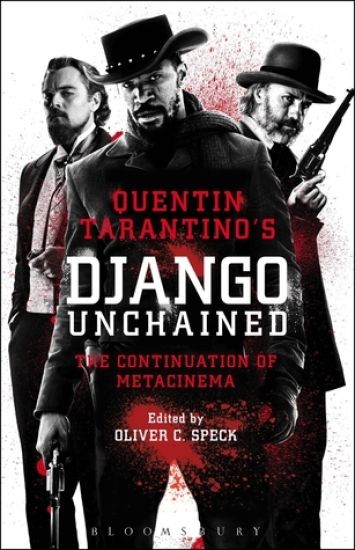
Quentin Tarantino's Django Unchained
Django Unchained is certainly Quentin Tarantino's most commercially-successful film and is arguably also his most controversial. Fellow director Spike Lee has denounced the representation of race and slavery in the film, while many African American writers have defended the white auteur. The use of extremely graphic violence in the film, even by Tarantino's standards, at a time when gun control is being hotly debated, has sparked further controversy and has led to angry outbursts by the director himself. Moreover, Django Unchained has become a popular culture phenomenon, with t-shirts, highly contentious action figures, posters, and strong DVD/BluRay sales. The topic (slavery and revenge), the setting (a few years before the Civil War), the intentionally provocative generic roots (Spaghetti Western and Blaxploitation) and the many intertexts and references (to German and French culture) demand a thorough examination. Befitting such a complex film, the essays collected here represent a diverse group of scholars who examine Django Unchained from many perspectives.