Kirjojen hintavertailu. Mukana 11 717 486 kirjaa ja 12 kauppaa.

Kirjahaku

Etsi kirjoja tekijän nimen, kirjan nimen tai ISBN:n perusteella.

69 tulosta hakusanalla "Raymond Williams"

Raymond Williams

Raymond Williams

John Higgins

Routledge
1999
sidottu
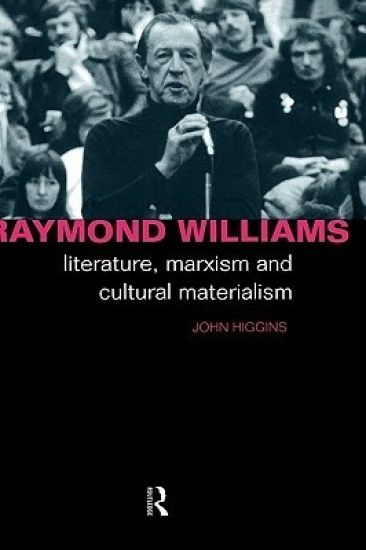
Raymond Williams' prolific output is increasingly recognised as the most influential body of work on literary and cultural studies in the past fifty years. This book provides the most comprehensive study to date of the theoretical and historical context of Williams' thinking on literature, politics and culture. John Higgins traces: * Williams' intellectual development * the related growth of a New Left cultural politics * the origins of the theory and practice of cultural materialism.Raymond Williams is an astonishing achievement and will challenge many received ideas about Williams' work.
Raymond Williams

Raymond Williams

John Higgins

Routledge
1999
nidottu
Raymond Williams' prolific output is increasingly recognised as the most influential body of work on literary and cultural studies in the past fifty years. This book provides the most comprehensive study to date of the theoretical and historical context of Williams' thinking on literature, politics and culture. John Higgins traces: * Williams' intellectual development * the related growth of a New Left cultural politics * the origins of the theory and practice of cultural materialism.Raymond Williams is an astonishing achievement and will challenge many received ideas about Williams' work.
Raymond Williams

Raymond Williams

Elizabeth Eldridge; John Eldridge

Routledge
1994
nidottu
This book provides a critical introduction to the full range of Williams' work - fiction and non-fiction. It assesses the significance of his contribution in understanding culture, politics and society. Fair-minded, accurate and sensitive, the book makes crucial connections between the different aspects of Williams' work and the underlying concern for a democratic polity which informed it.
Raymond Williams

Raymond Williams

Fred Inglis

Routledge
1995
sidottu
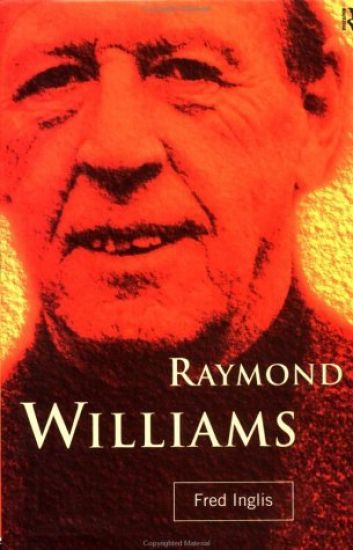
In his life, Raymond Williams played many parts: child of the Black Mountains, inspirational adult lecturer, Cambridge professor, folk hero and guru of the left. After his death, he has remained a symbolic figure and his classic works, Culture and Society, The Long Revolution, The Country and the City continue to inspire new generations all over the world. In this first major biography, Fred Inglis has spoken to those who knew this complex and charismatic man at every stage of his life, from his boyhood in the Welsh border country to his brief years of retirement. Through their voices and his own passionate stories and at times combative engagement with his subject, he tells of a story of a life not just for its time but for our own. After Thatcher and Reagan and the Cold War, Williams still has much to teach us about the nature of a good and just society and about the constant struggle to attain it.
Raymond Williams

Raymond Williams

Fred Inglis

Routledge
1998
nidottu
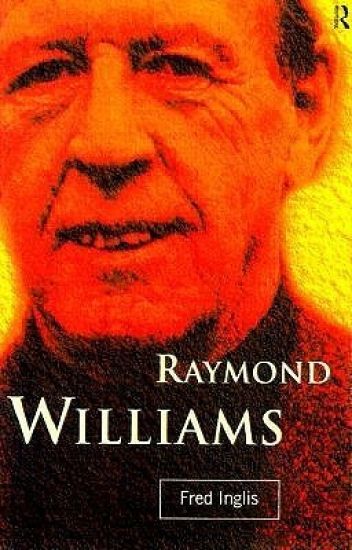
In his life, Raymond Williams played many parts: child of the Black Mountains, inspirational adult lecturer, Cambridge professor, folk hero and guru of the left. After his death, he has remained a symbolic figure and his classic works, Culture and Society, The Long Revolution, The Country and the City continue to inspire new generations all over the world. In this first major biography, Fred Inglis has spoken to those who knew this complex and charismatic man at every stage of his life, from his boyhood in the Welsh border country to his brief years of retirement. Through their voices and his own passionate stories and at times combative engagement with his subject, he tells of a story of a life not just for its time but for our own. After Thatcher and Reagan and the Cold War, Williams still has much to teach us about the nature of a good and just society and about the constant struggle to attain it.
Raymond Williams on Television (Routledge Revivals)
First Published in 1989, this work is based around a monthly TV column which Raymond Williams wrote for The Listener between 1968 and 1972. Those were the years of the Prague Spring, of anti-Vietnam war demonstrations, of fighting in Cambodia and Northern Ireland, of hope for McGovern in the United States and attacks on the Wilson Labour Government in Britain. In The Listener articles Williams comments on all of these events, providing a rare glimpse not only into the events of his daily life but also into the continuing development of a personal sociology of culture. The articles also discuss such television forms as detective series, science programmes and sports, travelogue, education, gardening, and children’s programming. The book also includes Williams’ key lecture "Drama in a Dramatised Society", which sets a framework for his analysis; a London Review of Books piece on the Falklands/Malvinas adventure as a "tele-war"; and an interview with Williams on television and teaching. Cited by The Guardian as "The foremost political thinker of his generation", Williams’ writing amounts to a primer on ways of watching television and of critiquing its profound social and political impact.
Raymond Williams on Television (Routledge Revivals)
First Published in 1989, this work is based around a monthly TV column which Raymond Williams wrote for The Listener between 1968 and 1972. Those were the years of the Prague Spring, of anti-Vietnam war demonstrations, of fighting in Cambodia and Northern Ireland, of hope for McGovern in the United States and attacks on the Wilson Labour Government in Britain. In The Listener articles Williams comments on all of these events, providing a rare glimpse not only into the events of his daily life but also into the continuing development of a personal sociology of culture. The articles also discuss such television forms as detective series, science programmes and sports, travelogue, education, gardening, and children’s programming. The book also includes Williams’ key lecture "Drama in a Dramatised Society", which sets a framework for his analysis; a London Review of Books piece on the Falklands/Malvinas adventure as a "tele-war"; and an interview with Williams on television and teaching. Cited by The Guardian as "The foremost political thinker of his generation", Williams’ writing amounts to a primer on ways of watching television and of critiquing its profound social and political impact.
Raymond Williams

Raymond Williams

Alan O'Connor

Rowman Littlefield Publishers
2005
sidottu
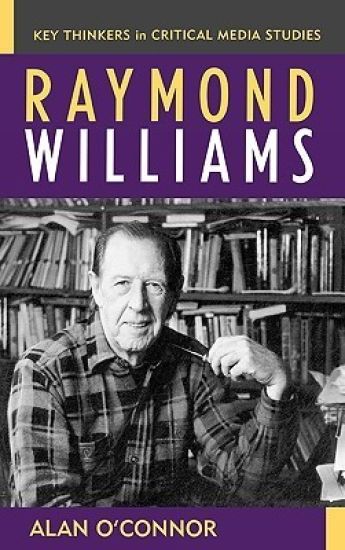
Raymond Williams_a Welsh media critic and one of the founding thinkers behind the popular field of cultural studies_believed that the traditional focus of biographies on individuals isolated these people from their communities. For this reason, Alan O'Connor looks at Williams and his time period, one of social change and crisis in Wales and England. Williams, the son of a railway worker, would have pursued university studies, an atypical act for a working-class boy, had the Second World War not disrupted his plans. So the unorthodox intellectual executed his work outside the university until 1960, decades after he originally intended to begin his studies. O'Connor then turns to Williams's studies of media, revealing his subject's life-long emphasis on the interchange between culture and democracy. He shows the ways in which these ideas were revolutionary, upsetting conservative thinkers of the time, and concludes with the same message of hope that Williams carried with him daily: In a period dominated by conservative forces, Raymond Williams still thought it worthwhile to struggle for small changes.
Raymond Williams

Raymond Williams

Alan O'Connor

Rowman Littlefield Publishers
2005
nidottu
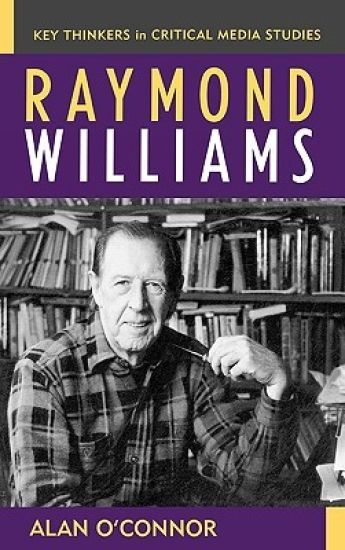
Raymond Williams—a Welsh media critic and one of the founding thinkers behind the popular field of cultural studies—believed that the traditional focus of biographies on individuals isolated these people from their communities. For this reason, Alan O'Connor looks at Williams and his time period, one of social change and crisis in Wales and England. Williams, the son of a railway worker, would have pursued university studies, an atypical act for a working-class boy, had the Second World War not disrupted his plans. So the unorthodox intellectual executed his work outside the university until 1960, decades after he originally intended to begin his studies. O'Connor then turns to Williams's studies of media, revealing his subject's life-long emphasis on the interchange between culture and democracy. He shows the ways in which these ideas were revolutionary, upsetting conservative thinkers of the time, and concludes with the same message of hope that Williams carried with him daily: In a period dominated by conservative forces, Raymond Williams still thought it worthwhile to struggle for small changes.
Raymond Williams

Raymond Williams

Polity Press
1989
nidottu
Raymond Williams is widely acknowledged to be one of the most original and influential thinkers of the post-war era. He wrote extensively across a wide range of subjects: from drama and the novel to politics, popular culture and mass communications. He was also a major novelist, well-known for books such as Border Country and Second Generation. This volume of new and original essays, edited and introduced by Terry Eagleton, provides a critical appreciation of Raymond Williams' writings by those best acquainted with his work. Among the contributions are essays on Williams's work as a literary critic, as a student of popular culture, as a novelist and as an analyst of contemporary politics and society.
The Centenary Edition Raymond Williams

The Centenary Edition Raymond Williams

Raymond Williams

University of Wales Press
2021
nidottu
In the words of Cornel West, Raymond Williams was 'the last of the great European male revolutionary socialist intellectuals'. A figure of international importance in the fields of cultural criticism and social theory, Williams was also preoccupied throughout his life with the meaning and significance of his Welsh identity. Who Speaks for Wales? was the first collection of Raymond Williams's writings on Welsh culture, literature, history and politics. Published in 2003, it appeared in the early years of Welsh political devolution and offered a historical and theoretical basis for thinking across the divisions of nationalism and socialism in Welsh thought. This edition, appearing in the centenary of Williams's birth, appears at a very different moment in which - after the Brexit referendum of 2016 - Raymond Williams's 'Welsh-European' vision seems to have been soundly rejected and is now a reminder of what might have been. This new edition includes material that was not included in the first edition, with a new afterword in which the editor argues that Williams continues to speak to our moment. Daniel G. Williams's new edition further underlines the ways in which Raymond Williams's engagement with Welsh issues makes a significant contribution to contemporary international debates on nationalism, class and ethnicity. Who Speaks for Wales? remains essential reading for everyone interested in questions of nationhood and identity in Britain and beyond.
Raymond Williams

Raymond Williams

Jim McGuigan

Intellect Books
2019
nidottu
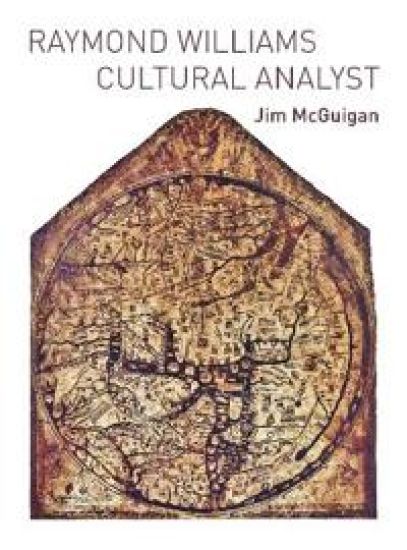
Raymond Williams was a complex figure with various different facets to his activity. Raymond Williams: Cultural Analyst concentrates on the formation and application of his cultural-materialist methodology and its relation to his politics. Surveying Williams’s extensive writings across the fields of cultural studies, sociology and Marxist theory, the overall objective is to rescue Williams from his routine treatment as a literary scholar, and restore him to his rightful place as a leading scholar of the social sciences, not least for his theoretically sophisticated contribution to the field in the form of cultural materialism. Ultimately, this book argues that Williams should be regarded as a cultural analyst in the sociological rather than narrowly literary sense. The book is replete with examples of Williams’s ideas and concepts that are of direct and illuminating relevance to twenty-first century problems. Throughout, Jim McGuigan displays a remarkable capacity to explain Williams’s sometimes complex ideas in an inviting and intuitively appealing way, making interesting connections across key concepts. For those familiar with Williams’s work, this new book will come as a breath of fresh air, and for readers coming across Williams for the first time, this offers an inspiring and vivid introduction to his work.
Raymond Williams

Raymond Williams

Tony Pinkney

Seren
1995
nidottu
Raymond Williams (1921-1988) was one of the most original and influential thinkers of the post-war period. Many know him for his work on mass culture and his left-wing literary criticism, yet he is also the author of six novels, set in his native Welsh border country. This area was central to all of Williams' work and it seems likely that his novels meant more to him than his other writing. This is the first critical study of the novels: Border Country, Second Generation, The Fight for Manod, The Volunteers, Loyalties and People of the Black Mountains. In it Tony Pinkney sees the novels as the battleground of political and cultural forces, particularly modernism, realism and postmodernism. In these books, he contends, Williams found a way to dramatise the pressures which society bears upon us, and the ways in which we might alter that society. His close reading of the novels is an invaluable guide to them, and to their author.Tony Pinkney is the editor of The Politics of Modernism, a collection of Raymond Williams' unfinished work. A lecturer in English at Lancaster University, Pinkney is the author of books on Eliot and Lawrence, and editor of the radical magazine, News from Nowhere.
Raymond Williams’s Sociology of Culture
This detailed study of Williams unlocks his late sociology of culture. It covers previously overlooked aspects, such as his critique of Birmingham cultural studies, his use of an Adorno-like approach to 'cultural production', his 'social formalist' alternative to structuralism and post-structuralism and his approach to 'the media'.
Raymond Williams Now

Raymond Williams Now

Palgrave Macmillan
1997
sidottu
The work of Raymond Williams continues to exercise a powerful hold over the minds of contemporary cultural analysts and social commentators. This collection responds to the challenge of Williams's thinking in discussions of topics of current interest and concern. The essays embrace a widely-divergent field of enquiry, from the study of language, dramaturgical theory, the theory of human needs and approaches to sociology, cultural studies and television, to issues of history, temporality and the future in relation to modernity and the postmodern.
Raymond Williams’s Sociology of Culture
This detailed study of Williams unlocks his late sociology of culture. It covers previously overlooked aspects, such as his critique of Birmingham cultural studies, his use of an Adorno-like approach to 'cultural production', his 'social formalist' alternative to structuralism and post-structuralism and his approach to 'the media'.
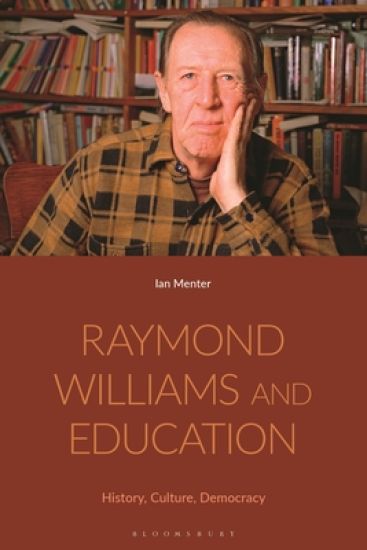
Raymond Williams and Education

Raymond Williams and Education

Ian Menter

Bloomsbury Academic
2022
sidottu
Raymond Williams' major contributions to intellectual progress are usually categorised within cultural theory, media studies or neo-Marxist studies. Serious analysis of his contributions to education as a field of practice as well as a field of study have been relatively neglected. This is the first book to redress that omission, focusing on how his writing and thought have helped us to understand education in Britain and also provide analytical tools that have helped to shape educational studies in the USA and internationally. Ian Menter draws on Williams' several novels, including Border Country, as well as on his seminal contributions to cultural theory, including Culture and Society, The Long Revolution, Keywords and Marxism and Literature. Menter also examines how Williams' life shaped his understanding of education including his early involvement in adult education and his deeply ambivalent relationship with the academy. Public education is positioned as a key arena of social struggle where decisions shaping the nature of our futures and crucial to creating a democratic and just society. The book includes a foreword by Michael Apple who is John Boscom Professor Emeritus of Curriculum and Instruction at the University of Wisconsin–Madison, USA, which makes reference to the importance of Williams' work in relation to education in the USA.