Kirjojen hintavertailu. Mukana 11 342 296 kirjaa ja 12 kauppaa.

Kirjahaku

Etsi kirjoja tekijän nimen, kirjan nimen tai ISBN:n perusteella.

90 tulosta hakusanalla "Remote Sensing and GIS"

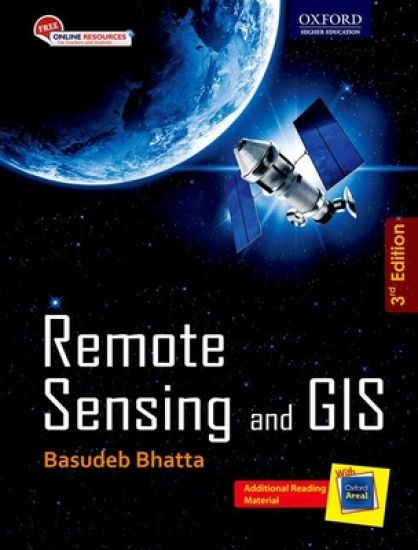
Remote Sensing and GIS

Remote Sensing and GIS

Basudeb Bhatta

OUP India
2021
nidottu
Beginning with the history and basic concepts of remote sensing and GIS, the book gives an exhaustive coverage of optical, thermal, and microwave remote sensing, global navigation satellite systems (such as GPS and IRNSS), digital photogrammetry, visual image analysis, digital image processing, spatial and attribute data model, geospatial analysis, and planning, implementation, and management of GIS. It also presents the modern trends of remote sensing and GIS with an illustrated discussion on its numerous applications.
Remote Sensing and GIS Integration: Theories, Methods, and Applications
Publisher's Note: Products purchased from Third Party sellers are not guaranteed by the publisher for quality, authenticity, or access to any online entitlements included with the product.Maximize a geographical information tool by incorporating it with up-to-date remotely sensed dataGIS is predominantly a data-handling technology, while remote sensing is a data retrieval and analysis technology. This book addresses the need to combine remotely sensed data with cartographic, socioeconomic, and environmental data and GIS functionalities. Remote Sensing and GIS Integration begins with theoretical discussions, followed by a series of application areas in urban and environmental studies that employ the integration of remote sensing and GIS. Each application area is examined through analysis of state-of-the-art methods and detailed presentations of one or more case studies.
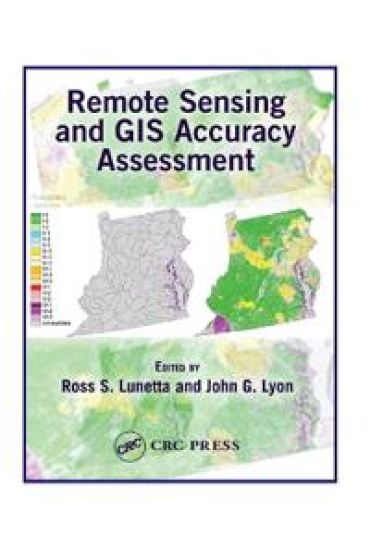
Remote Sensing and GIS Accuracy Assessment
The development of robust accuracy assessment methods for the validation of spatial data represents a difficult challenge for the geospatial science community. Obstacles to robust assessments include continuous data characteristics and positional errors, demanding ongoing development by GIS and remote sensing experts. Based upon a special symposium sponsored by the U.S. Environmental Protection Agency (EPA), Remote Sensing and GIS Accuracy Assessment evaluates the important scientific elements related to the performance of accuracy assessments for remotely sensed data, GIS data analysis, and integration products. Scientists from federal, state, and local governments, academia, and nongovernmental organizations present twenty technical chapters that examine sampling issues, reference data collection, edge and boundary effects, error matrix and fuzzy assessments, error budget analysis, and change detection accuracy assessment. The book includes the keynote presentation by Russell G. Congalton that provides a historical accuracy assessment overview, articulatescurrent technical shortcomings, and identified numerous issues that were debated throughout the symposium. All chapters underwent a peer review and were determined to be valuable to the remote sensing and GIS community. The editors arranged the chapters as a series of complementary scientific topics to provide you with a detailed treatise on spatial data accuracy assessment issues.
Remote Sensing and GIS in Peri-Urban Research

Remote Sensing and GIS in Peri-Urban Research

Elsevier - Health Sciences Division
2024
nidottu
Remote Sensing and GIS in Peri-Urban Research: Perspectives on Global Change, Sustainability and Resilience, Eleventh Edition provides the most recent methods and techniques, incorporating geoinformatics-based practices to map, evaluate, and model urban landscape attributes and changes. The book provides theory, methodology, and future perspectives of remote sensing and GIS techniques applied to peri-urban modelling, analysis and sustainability through the use of spatio-temporal geospatial datasets. It also includes case studies of real-world data sets, with applicable algorithms, techniques and methods for study. This will be a useful reference for researchers and academics in remote sensing, GIS, and spatial analysis, and environmental or urban scientists wanting to implement remote sensing technologies in their research.
Remote Sensing and GIS Accuracy Assessment
The development of robust accuracy assessment methods for the validation of spatial data represents a difficult challenge for the geospatial science community. Obstacles to robust assessments include continuous data characteristics and positional errors, demanding ongoing development by GIS and remote sensing experts. Based upon a special symposium sponsored by the U.S. Environmental Protection Agency (EPA), Remote Sensing and GIS Accuracy Assessment evaluates the important scientific elements related to the performance of accuracy assessments for remotely sensed data, GIS data analysis, and integration products. Scientists from federal, state, and local governments, academia, and nongovernmental organizations present twenty technical chapters that examine sampling issues, reference data collection, edge and boundary effects, error matrix and fuzzy assessments, error budget analysis, and change detection accuracy assessment. The book includes the keynote presentation by Russell G. Congalton that provides a historical accuracy assessment overview, articulatescurrent technical shortcomings, and identified numerous issues that were debated throughout the symposium. All chapters underwent a peer review and were determined to be valuable to the remote sensing and GIS community. The editors arranged the chapters as a series of complementary scientific topics to provide you with a detailed treatise on spatial data accuracy assessment issues.
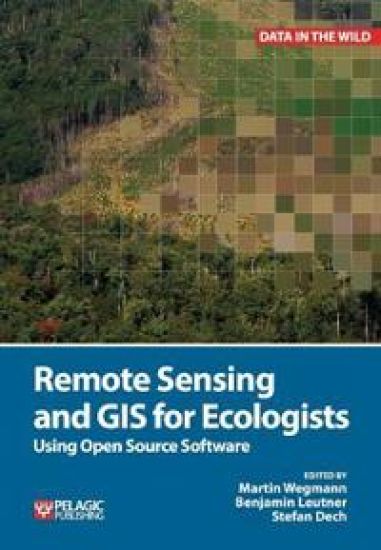
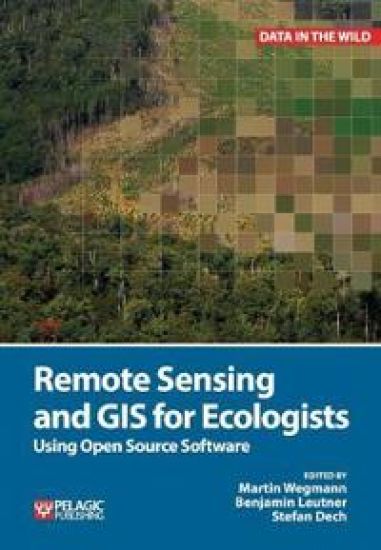
Remote Sensing and GIS for Ecologists
This is a book about how ecologists can integrate remote sensing and GIS in their daily work. It will allow ecologists to get started with the application of remote sensing and to understand its potential and limitations. Using practical examples, the book covers all necessary steps from planning field campaigns to deriving ecologically relevant information through remote sensing and modelling of species distributions. All practical examples in this book rely on OpenSource software and freely available data sets. Quantum GIS (QGIS) is introduced for basic GIS data handling, and in-depth spatial analytics and statistics are conducted with the software packages R and GRASS. Readers will learn how to apply remote sensing within ecological research projects, how to approach spatial data sampling and how to interpret remote sensing derived products. The authors discuss a wide range of statistical analyses with regard to satellite data as well as specialised topics such as time-series analysis. Extended scripts on how to create professional looking maps and graphics are also provided. This book is a valuable resource for students and scientists in the fields of conservation and ecology interested in learning how to get started in applying remote sensing in ecological research and conservation planning.
Remote Sensing and GIS for Ecologists
This is a book about how ecologists can integrate remote sensing and GIS in their daily work. It will allow ecologists to get started with the application of remote sensing and to understand its potential and limitations. Using practical examples, the book covers all necessary steps from planning field campaigns to deriving ecologically relevant information through remote sensing and modelling of species distributions. All practical examples in this book rely on OpenSource software and freely available data sets. Quantum GIS (QGIS) is introduced for basic GIS data handling, and in-depth spatial analytics and statistics are conducted with the software packages R and GRASS. Readers will learn how to apply remote sensing within ecological research projects, how to approach spatial data sampling and how to interpret remote sensing derived products. The authors discuss a wide range of statistical analyses with regard to satellite data as well as specialised topics such as time-series analysis. Extended scripts on how to create professional looking maps and graphics are also provided. This book is a valuable resource for students and scientists in the fields of conservation and ecology interested in learning how to get started in applying remote sensing in ecological research and conservation planning.
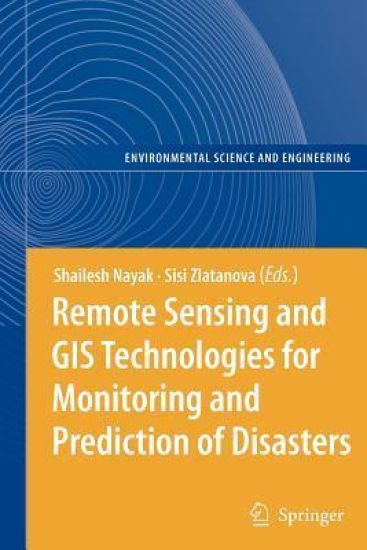
Remote Sensing and GIS Technologies for Monitoring and Prediction of Disasters
Lessons learned in the last several years have given clear indications that the prediction and efficient monitoring of disasters is one of the critical factors in decision-making process. In this respect space-based technologies have the great potential of supplying information in near real time. Earth observation satellites have already demonstrated their flexibility in providing data to a wide range of applications: weather forecasting, person and vehicle tracking, alerting to disaster, forest fire and flood monitoring, oil spills, spread of desertification, monitoring of crop and forestry damages. This book focuses on a wider utilisation of remote sensing in disaster management. The discussed aspects comprise data access/delivery to the users, information extraction and analysis, management of data and its integration with other data sources (airborne and terrestrial imagery, GIS data, etc.), data standardization, organisational and legal aspects of sharing remote sensing information.
Remote Sensing and GIS Technologies for Monitoring and Prediction of Disasters
Lessons learned in the last several years have given clear indications that the prediction and efficient monitoring of disasters is one of the critical factors in decision-making process. In this respect space-based technologies have the great potential of supplying information in near real time. Earth observation satellites have already demonstrated their flexibility in providing data to a wide range of applications: weather forecasting, person and vehicle tracking, alerting to disaster, forest fire and flood monitoring, oil spills, spread of desertification, monitoring of crop and forestry damages. This book focuses on a wider utilisation of remote sensing in disaster management. The discussed aspects comprise data access/delivery to the users, information extraction and analysis, management of data and its integration with other data sources (airborne and terrestrial imagery, GIS data, etc.), data standardization, organisational and legal aspects of sharing remote sensing information.