Kirjojen hintavertailu. Mukana 11 699 587 kirjaa ja 12 kauppaa.

Kirjahaku

Etsi kirjoja tekijän nimen, kirjan nimen tai ISBN:n perusteella.

31 tulosta hakusanalla "Robert Fludd"

Robert Fludd

Robert Fludd

PHANES PRESS,U.S.
2004
nidottu
Robert Fludd was one of the last of the true Renaissance men who tool all learning as their preserve and tried to encompass the whole of human knowledge. Born in Elizabethan England, he became a convinced occultist while traveling on the Continent. His voluminous writings were devoted to defending the philosophy of the alchemists and Rosicrucians and applying their doctrines to a vast description of man and the universe. All of Fludd's important plates are collected here for the first time, annotated and explained together with an introduction to his life and thought.
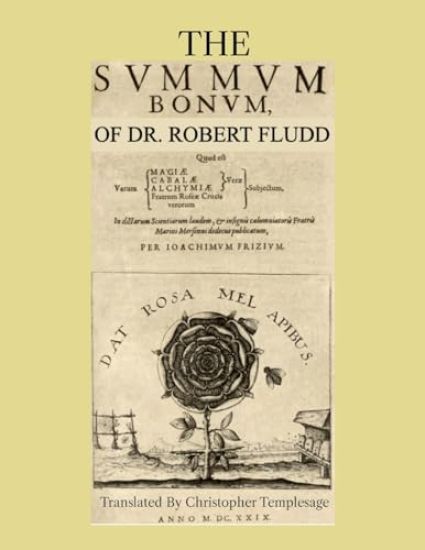
The Summum Bonum Of Dr. Robert Fludd
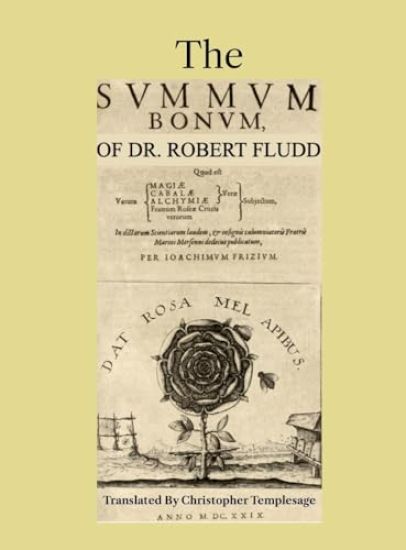
Uncover the secrets of Dr. Robert Fludd's "The Summum Bonum," expertly translated by Christopher Templesage. This timeless tome, originally penned in 1629, opens the door to the mystical world of iatro-chemistry and alchemy. Templesage's meticulous translation preserves Fludd's exact words, offering readers an authentic glimpse into the mind of this revered figure. From the hallowed halls of Alexandria to the alchemical laboratories of medieval Europe, Fludd's teachings resonate through the ages, guiding seekers on a journey of spiritual enlightenment. With references to biblical verses and the chemistry of doctors, "The Summum Bonum" is a treasure trove of esoteric knowledge, destined to enrich the libraries of alchemists and scholars alike. Embark on a voyage of discovery and unlock the secrets of the universe with this illuminating work.
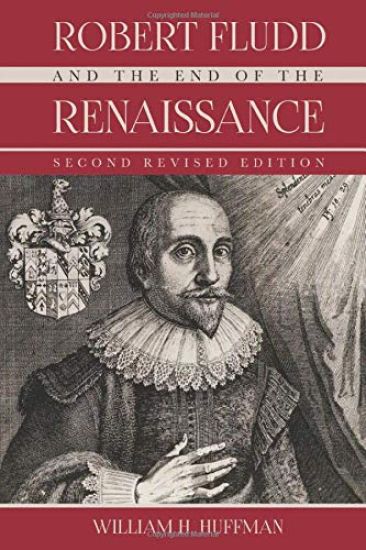
Robert Fludd and the End of the Renaissance: Second Revised Edition

Robert Fludd and the End of the Renaissance: Second Revised Edition

William H. Huffman Ph. D.

Independently Published
2019
nidottu
Robert Fludd was a "Renaissance Man" in the true meaning of the name. During his lifetime, he was well known to his medical colleagues, high gentry and clergy. in England and the Continent, and Kings James I and Charles I. His lasting legacy, of which he was most proud (beyond his family heritage), is his remarkable voluminous publications. In hundreds of folio pages, with striking copperplate illustrations of his own design, he incorporated the entirety of creation, from the heavenly to the earthly, into a comprehensive schematic system which was organized according to exacting harmonic scales from the highest to the lowest realms. He graphically shows man's arts, science and medicine, where we become the "Ape of Nature," and shows how we contract disease and how to treat such maladies. His grand summation of this tradition came at the end of the classic Renaissance during the seventeenth century,
'The Temple of Music' by Robert Fludd

'The Temple of Music' by Robert Fludd

Peter Hauge

Ashgate Publishing Limited
2010
sidottu
Robert Fludd (1574-1637) is well known among historians of science and philosophy for his intriguing work, The Metaphysical, Physical and Technical History of both Major and Minor Worlds, in which music plays an important role in his system of neoplatonic correspondences: the harmony of the universe (macrocosm) as well as the harmony of man (microcosm). 'The Temple of Music' (1617-18) is one section of this work, and deals with music theory, practice and organology. Many musicologists today have dismissed his musical ideas as conservative and outmoded or mainly based on fantasy; only the chapters on instruments have received some attention. However, reading Fludd's work on music theory and practice in the context of his own time and comparing it with other contemporary treatises, it is apparent that much of it contains highly original ideas and cannot be considered old fashioned or conservative. It is evident that Fludd's music philosophy influenced and provoked contemporary natural philosophers such as Marin Mersenne and Johannes Kepler. Less well known is the fact that Fludd's music theory reveals aspects of the development of new concepts that appear to reflect contemporary writers on music such as John Coprario and Thomas Campion. Before now, 'The Temple of Music' has not been easily accessible or available, and the fact that Fludd wrote in Latin has also been prohibitive. This critical edition provides the original Latin, an English translation and essential illustrations. The book will therefore be a useful tool for understanding the position of English music theory around 1600.
'The Temple of Music' by Robert Fludd

'The Temple of Music' by Robert Fludd

Peter Hauge

TAYLOR FRANCIS LTD
2024
nidottu
Robert Fludd (1574-1637) is well known among historians of science and philosophy for his intriguing work, The Metaphysical, Physical and Technical History of both Major and Minor Worlds, in which music plays an important role in his system of neoplatonic correspondences: the harmony of the universe (macrocosm) as well as the harmony of man (microcosm). 'The Temple of Music' (1617-18) is one section of this work, and deals with music theory, practice and organology. Many musicologists today have dismissed his musical ideas as conservative and outmoded or mainly based on fantasy; only the chapters on instruments have received some attention. However, reading Fludd's work on music theory and practice in the context of his own time and comparing it with other contemporary treatises, it is apparent that much of it contains highly original ideas and cannot be considered old fashioned or conservative. It is evident that Fludd's music philosophy influenced and provoked contemporary natural philosophers such as Marin Mersenne and Johannes Kepler. Less well known is the fact that Fludd's music theory reveals aspects of the development of new concepts that appear to reflect contemporary writers on music such as John Coprario and Thomas Campion. Before now, 'The Temple of Music' has not been easily accessible or available, and the fact that Fludd wrote in Latin has also been prohibitive. This critical edition provides the original Latin, an English translation and essential illustrations. The book will therefore be a useful tool for understanding the position of English music theory around 1600.
The Greater and Lesser Worlds of Robert Fludd

The Greater and Lesser Worlds of Robert Fludd

Joscelyn Godwin

Inner Traditions Bear and Company
2020
sidottu
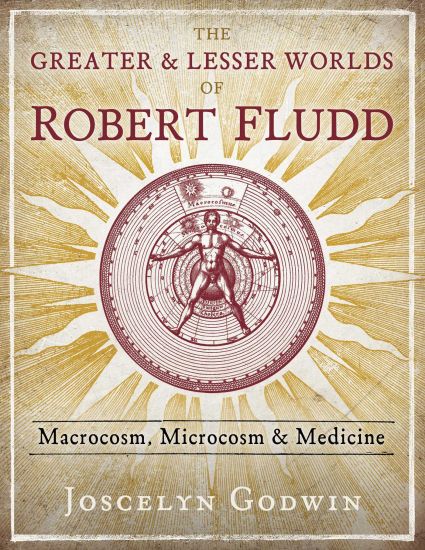
An illustrated reference book on a seminal figure of occult philosophy and Renaissance thought • Explains Fludd’s thoughts on cosmic harmonies, divination, the kabbalah, astrology, geomancy, alchemy, the Rosicrucians, and multiple levels of existence • Includes more than 200 of Fludd’s illustrations, representing the whole corpus of Fludd’s iconography, each one accompanied by Godwin’s expert commentary • Explores Fludd’s medical work as an esoteric Paracelsian physician and his theories on the macrocosm of elements, planets, stars, and subtle and divine beings and the microcosm of the human being and its creative activities, including material never before translated One of the last Renaissance men, Robert Fludd (1574-1637) was one of the great minds of the early modern period. A physician by profession, he was also a Christian Hermetist, a Rosicrucian, an alchemist, astrologer, musician, and inventor. His drive to encompass the whole of human knowledge--from music to alchemy, from palmistry to fortification--resulted in a series of books remarkable for their hundreds of engravings, a body of work recognized as the first example of a fully-illustrated encyclopedia. In this in-depth, highly illustrated reference, scholar and linguist Joscelyn Godwin explains Fludd’s theories on the correspondence between the macrocosm of elements, planets, stars, and subtle and divine beings and the microcosm of the human being and its creative activities. He shows how Fludd’s two worlds--the macrocosm and the microcosm--along with Paracelsus’s medical principles and the works of Hermes Trismegistus provided the foundation for his search for the cause and cure of all diseases. The more than 200 illustrations in the book represent the whole corpus of Fludd’s iconography, each one accompanied by Godwin’s expert commentary and explanation. Sharing many passages translated for the first time from Fludd’s Latin, allowing him to speak for himself, Godwin explores Fludd’s thoughts on cosmic harmonies, divination, the kabbalah, astrology, geomancy, and the rapport between the multiple levels of existence. He also analyzes Fludd’s writings in defense of alchemy and the Rosicrucians. An essential reference for scholars of Renaissance thinkers, traditional cosmology, metaphysics, and the Western esoteric tradition, this book offers intimate access to Fludd’s worlds and gives one a feel for an epoch in which magic, science, philosophy, spirituality, and imagination could still cohabit and harmonize within a single mind.
The Mosaical Philosophy of Dr. Robert Fludd

The Mosaical Philosophy of Dr. Robert Fludd

Christopher Templesage; Robert Fludd

Lulu.com
2025
sidottu
Christopher Templesage's exploration of Dr. Robert Fludd's Mosaical Philosophy is a meticulously illustrated and elucidated journey through the complex blend of esoteric wisdom and classical philosophy that characterizes Fludd's work. Templesage does an admirable job of making Fludd's often dense and cryptic alchemical texts accessible to both the judicious and discreet reader. The book delves deep into the synthesis of physical and theophilosophical tenets that underpin Fludd's theories, offering a thoughtful examination of his interpretations of the biblical scriptures and their allegorical application to natural philosophy and the human condition. By guiding the reader through the intricate relationships between man, cosmos, and creator as envisioned by Fludd, Templesage provides a clear path to understanding the foundational principles of what he terms as "Mosaical Philosophy"-a term that encapsulates the blend of divine wisdom and earthly science. Dr. Robert Fludd (1574-1637) was an English physician, astrologer, and mystic, celebrated for his contributions to alchemical and esoteric philosophy. Born in Bearsted, Kent, Fludd studied at St John's College, Oxford, before traveling across Europe to further his medical and metaphysical knowledge. His extensive travels enabled him to study various schools of thought, including the Paracelsian philosophy of medicine which greatly influenced his work. Fludd is best known for his elaborate writings on alchemy, cosmology, and Rosicrucianism, often illustrating his texts with complex engravings that depicted the interconnectivity of the physical, spiritual, and divine worlds. His major work, "Utriusque Cosmi Historia," is a two-volume treatise that explores the macrocosm of the universe and the microcosm of human nature, reflecting his belief in the deep symbiosis between all elements of existence.
The Summum Bonum Of Dr. Robert Fludd
Uncover the secrets of Dr. Robert Fludd's "The Summum Bonum," expertly translated by Christopher Templesage. This timeless tome, originally penned in 1629, opens the door to the mystical world of iatro-chemistry and alchemy. Templesage's meticulous translation preserves Fludd's exact words, offering readers an authentic glimpse into the mind of this revered figure. From the hallowed halls of Alexandria to the alchemical laboratories of medieval Europe, Fludd's teachings resonate through the ages, guiding seekers on a journey of spiritual enlightenment. With references to biblical verses and the chemistry of doctors, "The Summum Bonum" is a treasure trove of esoteric knowledge, destined to enrich the libraries of alchemists and scholars alike. Embark on a voyage of discovery and unlock the secrets of the universe with this illuminating work.