Gerhard was one of the most visionary composers of the twentieth century drawing together ideas from science, philosophy, and the arts into an oeuvre that encompasses the folk song of his native Catalonia, to serialism and electronic music. The composer lived through some of the most tumultuous times in recent memory including the Spanish Civil War and the Second World War as an exile in England. This edited volume uniquely brings together specialists in Spanish cultural studies, exile, musicology, and analysis to explore how these events and the post-war cultural and political climate shaped Gerhard's life and work.
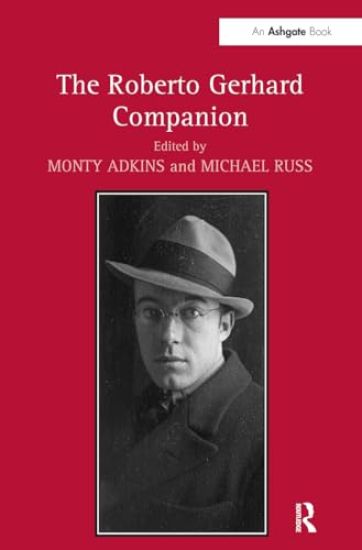
More than forty years after the composer's death, the music of Roberto Gerhard (1896-1970) continues to be recorded and performed and to attract international scholarly interest. The Roberto Gerhard Companion is the first full length scholarly work on this composer noted for his sharp intellect and original, exploring mind. This book builds on the outcomes of two recent international conferences and includes contributions by scholars from Spain, the USA and UK. The essays collected here explore themes and trends within Gerhard’s work, using individual or groups of works as case studies. Among the themes presented are the way Gerhard’s work was shaped by his Catalan heritage, his education under Pedrell and Schoenberg, and his very individual reaction to the latter’s teaching and methods, notably Gerhard’s very distinctive approach to serialism. The influence of these and other cultural and literary figures is an important underlying theme that ties essays together. Exiled from Catalonia from 1939, Gerhard spent the remainder of his life in Cambridge, England, composing a string of often ground-breaking compositions, notably the symphonies and concertos composed in the 1950s and 1960s. A particular focus in this book is Gerhard's electronic music. He was a pioneer in this genre and the book will contain the first rigorous studies of this music as well as the first accurate catalogue of this electronic output. His ground-breaking output of incidental music for radio and the stage is also given detailed consideration.
More than forty years after the composer's death, the music of Roberto Gerhard (1896-1970) continues to be recorded and performed and to attract international scholarly interest. The Roberto Gerhard Companion is the first full length scholarly work on this composer noted for his sharp intellect and original, exploring mind. This book builds on the outcomes of two recent international conferences and includes contributions by scholars from Spain, the USA and UK. The essays collected here explore themes and trends within Gerhard’s work, using individual or groups of works as case studies. Among the themes presented are the way Gerhard’s work was shaped by his Catalan heritage, his education under Pedrell and Schoenberg, and his very individual reaction to the latter’s teaching and methods, notably Gerhard’s very distinctive approach to serialism. The influence of these and other cultural and literary figures is an important underlying theme that ties essays together. Exiled from Catalonia from 1939, Gerhard spent the remainder of his life in Cambridge, England, composing a string of often ground-breaking compositions, notably the symphonies and concertos composed in the 1950s and 1960s. A particular focus in this book is Gerhard's electronic music. He was a pioneer in this genre and the book will contain the first rigorous studies of this music as well as the first accurate catalogue of this electronic output. His ground-breaking output of incidental music for radio and the stage is also given detailed consideration.
Arnold Schoenberg und Roberto Gerhard begannen 1923 eine Meister-Schuler-Beziehung, die sich im Laufe der Zeit in eine enge Freundschaft verwandelte. Trotz der geographischen Distanz, die beide Komponisten trennte -Schoenberg floh 1933 in die USA und Gerhard ging 1939 ins Exil-, unterhielten sie bis zu ihrem Tode eine intensive Korrespondenz, die dank der Freundschaft ihrer Wiener Ehefrauen gefestigt wurde.Der vorliegende Band enthalt den bisher noch nicht veroeffentlichten, aus 82 Einzel dokumenten bestehenden vollstandigen Briefwechsel zwischen Arnold Schoenberg und seinem spanischen Schuler Roberto Gerhard, der nach einer langwierigen Suche und minuzioeser Arbeit in verschiedenen internationalen Archiven von Prof. Dr. Ortiz-de-Urbina zusammengetragen werden konnte.Eine erste Analyse der Briefe zwischen Arnold Schoenberg und seinem Schuler Roberto Gerhard liefert interessante Ergebnisse bezuglich des Lebens, des Werkes und der Persoenlich keit beider Komponisten und beleuchtet relevante biografische Aspekte, wie das enge familiare Verhaltnis zwischen beiden dank der aktiven Vermittlerrolle beider Ehefrauen, die Relevanz des Aufenthalts der Schoenbergs in Barcelona von Oktober 1931 bis Juni 1932 oder den verzweifelten Versuch Gerhards, mit Hilfe Pau Casals und anderer spanischer Musiker fur Schoenberg verbindliche Vertrage in Spanien zu schliessen, damit der Wiener Meister, bedrangt vom zunehmenden Antisemitismus in Deutschland ab 1932, definitiv nach Barcelona mit Frau und Kind ubersiedeln koennte. Die gesammelten Dokumente beleuchten auch den Prozess der Gestaltung mancher Werke beider Komponisten.Wenn auch Leben und Werk Arnold Schoenbergs umfassend erforscht und dokumentiert wurden und immer noch Schwerpunkt der internationalen musikwissenschaftlichen Forschung sind, bleibt Roberto Gerhard trotz seiner Relevanz als Komponist und Denker innerhalb der europaischen posttonalen Musik des 20. Jahrhunderts ein unzureichend erforschter Komponist. Als Republikaner fand er wahrend der Franco-Diktatur offiziell keine Beachtung und erst nach seinem Tode 1970, zwei Jahre nach Erhalt der Ehrendoktorwurde der Cambridge University, wurden sowohl sein Leben und Werk als auch seine Rezeption Thema der musikwissenschaftlichen Forschungsgemeinschaft. Aus diesem Grunde soll das vorliegende Buch nicht nur als Dokumentensammlung der Schoenberg- und Gerhardforschung dienen, sondern auch als Beitrag zu einer Gerhard-Renaissance verstanden werden.
This title was first published in 2000: Catalan-born composer Roberto Gerhard (1896-1970) left significant legacies - both musical and documentary. Exiled in Cambridge with the onset of the Spanish Civil War, he gradually achieved wide recognition by performers and conductors, in both Britain and America, as a composer whose music was essential to the modern repertoire. In this work, Meirion Bowen collects many of the composer's articles, reviews, lectures and broadcasts to demonstrate the full extent and continuity of Gerhard's artistic and creative thinking. The writings have been arranged thematically to emphasize the evolution of Gerhard's musical interests. His attachment to Spanish and Catalonian traditions broadened into a fascination with folk music of all kinds. His studies with Schoenberg in the mid 1920s gave him the key to his own creative individuality; thereafter, his imaginative vitality led him eventually to experiment with electronic and concrete music and he continued breaking new ground, even in his final years.
This title was first published in 2000: Catalan-born composer Roberto Gerhard (1896-1970) left significant legacies - both musical and documentary. Exiled in Cambridge with the onset of the Spanish Civil War, he gradually achieved wide recognition by performers and conductors, in both Britain and America, as a composer whose music was essential to the modern repertoire. In this work, the author collects many of the composer's articles, reviews, lectures and broadcasts to demonstrate the full extent and continuity of Gerhard's artistic and creative thinking. The writings have been arranged thematically to emphasize the evolution of Gerhard's musical interests. His attachment to Spanish and Catalonian traditions broadened into a fascination with folk music of all kinds. His studies with Schoenberg in the mid 1920s gave him the key to his own creative individuality; thereafter, his imaginative vitality led him eventually to experiment with electronic and concrete music and he continued breaking new ground, even in his final years.