Kirjojen hintavertailu. Mukana 11 244 527 kirjaa ja 12 kauppaa.

Kirjahaku

Etsi kirjoja tekijän nimen, kirjan nimen tai ISBN:n perusteella.

36 tulosta hakusanalla "Rudolf Bultmann"

Rudolf Bultmann

Rudolf Bultmann

Augsburg Fortress
1991
nidottu
Bultmann's pioneering study of the New Testament initiated a new era in biblical studies in the Twentieth Century. Together with Karl Barth, Bultmann broke with liberal theology, but his often misunderstood program of demythologization took him in a radically different direction from Barth. In many respects Bultmann set the agenda for biblical theology in the decades following World War II. This volume concentrates on the key texts and ideas in Bultmann's thought. It presents the essential Bultmann for students and the general reader. Roger Johnson's introductory essay and notes on the selected texts set Bultmann in his historical context, chart the development of his thought, and indicate the significance of his theology in the development of Christian theology as a whole. Substantial selections from Bultmann's work illustrate key themes: God as "Wholly Other" Jesus and the Eschatological Kingdom Existentialist interpretation Kerygma Faith and Modernity in conflict Demythologizing: controversial slogan and theological focus
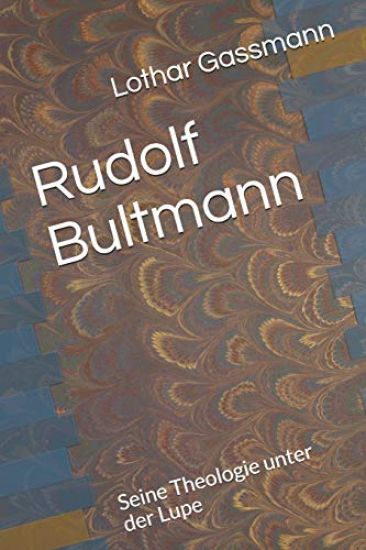
Rudolf Bultmann: Seine Theologie unter der Lupe

Rudolf Bultmann: Seine Theologie unter der Lupe

Lothar Gassmann

Independently Published
1998
nidottu
Rudolf Bultmann (1884-1976), evangelischer Theologe, Neutestamentler, sah sich zeitweilig der Dialektischen Theologie zugeh rig, gilt aber eher als Hauptvertreter der Liberalen Theologie im 20. Jahrhundert. Sein Name steht f r das Programm der Entmythologisierung und Existentialen Interpretation der Bibel, das vielf ltigen Widerstand hervorgerufen hat, etwa in Gestalt der Gr ndung der Bekenntnisbewegung "Kein anderes Evangelium" im Jahre 1966.Bultmanns Theologie (besser gesagt: Anthropologie) ist nach wie vor u erst einflussreich. Dr. Lothar Gassmann unternimmt in diesem Buch eine kritische Analyse aus evangelikal-bibeltreuer Sicht.
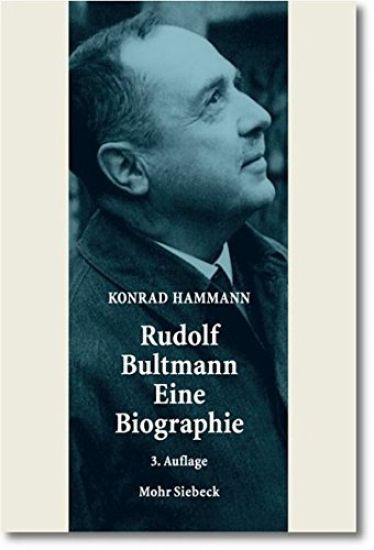
Rudolf Bultmann - Eine Biographie

Rudolf Bultmann - Eine Biographie

Konrad Hammann

Mohr Siebeck
2012
nidottu
Rezensionen der 2. Auflage: "So ist diese Bultmann-Biographie nicht nur als einfühlsam verfasste Lebensbeschreibung empfehlenswert, sondern auch jedem an der Ideen- und Geistesgeschichte des 20. Jahrhunderts und an der Geschichte der Bibelwissenschaft Interessierten als lehrreiche Lektüre ans Herz zu legen."Michael Zugmann in Theologisch-praktische Quartalsschrift 159 (2011), S. 414-415"Dieses eindrucksvolle Lebensbild schließt mit einer detaillierten und weiterführenden Bibliograhie und Personenregister, welche noch einmal die erstaunliche Weise und Tiefe von Bultmanns Forscherleben wie die breite Resonanz und Wirkungsgeschichte in der theologischen Literatur (511-82) vor Augen führen."R. Oberforcher in Zeitschrift für Katholische Theologie 132 (2010), S. 222-223"Ein Abschnitt über das Öffentliche Gedenken beschliesst diesen höchst bemerkenswert geschriebenen Lebens- und Denkweg dieses höchst bemerkenswerten Theologen des zwanzigsten Jahrhunderts."Hans Weder in Göttingische Gelehrte Anzeigen 262 (2010), S. 189-213"[...] danke ich für viele neue Informationen und empfehle das Buch dringend sowohl denen, die Bultmann auch weiterhin im theologischen Diskurs mitsprechen lassen wollen, als auch jenen, die ihn nur noch als Negativ-Folie zu nennen gewohnt sind."Matthias Dreher in Evangelische Theologie 70 (2010), S. 234-239
Rudolf Bultmann und seine Zeit

Rudolf Bultmann und seine Zeit

Konrad Hammann

Mohr Siebeck
2016
sidottu
Die befreiende Wahrheit des christlichen Glaubens sachgemäß und gegenwartsbezogen zugleich auszusagen, war ein zentrales Motiv der theologischen Arbeit Rudolf Bultmanns. Dies prägte auch seinen Dialog mit anderen Gelehrten. Erörterte er mit Hermann Gunkel Fragen der Formgeschichte, so setzte er sich mit dem Glaubensbegriff Wilhelm Herrmanns und mit Karl Barth über die Bestimmung des Verhältnisses zwischen Christologie und Soteriologie kritisch auseinander. In seiner Begegnung mit dem Judentum und im Austausch mit seinem philosophischen Meisterschüler Hans Jonas verband Bultmann theologische Einsichten mit der Empathie der Humanität. Während sich die Anfänge seiner Arbeitsgemeinschaft mit Martin Heidegger in seinem Jesus-Buch widerspiegeln, hat seine Beziehung zu Max Kommerell vor allem in Briefen ihren Niederschlag gefunden. Konrad Hammann vergegenwärtigt biographische und theologische Konstellationen, die das kommunikative Denken Bultmanns eindrücklich zu erkennen geben.
Rudolf Bultmann und die neutestamentliche Wissenschaft der Gegenwart
Die Mehrzahl der Beiträge des vorliegenden Bandes geht auf Vorträge und Diskussionen des General Meeting der Studiorum Novi Testamenti Societas/Society for New Testament Studies 2019 in Marburg zurück, die für die Publikation weiter ausgearbeitet wurden. Sie wurden durch Beiträge namhafter internationaler Neutestamentlerinnen und Neutestamentler ergänzt. Im ersten Teil werden die Geschichte und die gegenwärtige Bedeutung der Entmythologisierung und der existentialen Interpretation neu beleuchtet. Im zweiten Teil werden die exegetischen Beiträge Bultmanns zu den synoptischen Evangelien, Paulus und Johannes rekonstruiert und auf ihre gegenwärtige Bedeutung befragt. Im Ergebnis wird deutlich, dass der Ausgangspunkt und das Ziel der theologischen Exegese Bultmanns bis heute eine Herausforderung und wesentliche Anregung für die Exegese der Gegenwart darstellen.
Existence and Faith; Shorter Writings of Rudolf Bultmann

Existence and Faith; Shorter Writings of Rudolf Bultmann

Rudolf Karl 1884-1976 Bultmann

Hassell Street Press
2021
sidottu
This work has been selected by scholars as being culturally important and is part of the knowledge base of civilization as we know it.This work is in the public domain in the United States of America, and possibly other nations. Within the United States, you may freely copy and distribute this work, as no entity (individual or corporate) has a copyright on the body of the work.Scholars believe, and we concur, that this work is important enough to be preserved, reproduced, and made generally available to the public. To ensure a quality reading experience, this work has been proofread and republished using a format that seamlessly blends the original graphical elements with text in an easy-to-read typeface.We appreciate your support of the preservation process, and thank you for being an important part of keeping this knowledge alive and relevant.
Existence and Faith; Shorter Writings of Rudolf Bultmann

Existence and Faith; Shorter Writings of Rudolf Bultmann

Rudolf Karl 1884-1976 Bultmann

Hassell Street Press
2021
nidottu
This work has been selected by scholars as being culturally important and is part of the knowledge base of civilization as we know it.This work is in the public domain in the United States of America, and possibly other nations. Within the United States, you may freely copy and distribute this work, as no entity (individual or corporate) has a copyright on the body of the work.Scholars believe, and we concur, that this work is important enough to be preserved, reproduced, and made generally available to the public. To ensure a quality reading experience, this work has been proofread and republished using a format that seamlessly blends the original graphical elements with text in an easy-to-read typeface.We appreciate your support of the preservation process, and thank you for being an important part of keeping this knowledge alive and relevant.
An Introduction to the Theology of Rudolf Bultmann
Although the name of Rudolf Bultmann is so well-known, and a considerable number of his writings, and specialist discussions of them, are available in English, there has so far been no thorough basic introduction setting out Bultmann's theology in a comprehensive way. This gap has now been admirably filled by the present book, which derives from a series of lectures given by one of Bultmann's pupils at Marburg in celebration of Bultmann's eightieth birthday. Addressed to an audience of widely differing backgrounds, it presupposes no specialist knowledge, and expounds Bultmann's thought with particular vividness, making full use of quotations from his works.
Dietrich Bonhoeffer, Karl Barth, Rudolf Bultmann, Paul Tillich
Dietrich Bonhoeffer, Karl Barth, Rudolf Bultmann und Paul Tillich sind die vier einflussreichsten evangelischen Theologen des 20 Jahrhunderts. Jeder von ihnen besitzt bis heute zahlreiche Sch ler, die ihr Denken ins 21. Jahrhundert hinein weitertragen. Ihr Einfluss reicht dabei weit ber die evangelische Theologie hinaus.Lothar Gassmann, selbst evangelischer Theologe, hat sich in einer Vorlesung ber die "Theologie des 20. Jahrhunderts" intensiv mit diesen vier pr genden M nnern und ihren Lehrsystemen befasst. Aus dieser Vorlesung ist das hier vorliegende Buch entstanden. Es m chte Hilfen an die Hand geben, um das Denken Bonhoeffers, Barths, Bultmanns und Tillichs zu verstehen. Zugleich werden kritische Anfragen an alle vier Systeme gestellt, die als Befruchtung f r ein eigenst ndiges theologisches Weiterdenken und Leben als Christ dienen k nnen.
Jesus Christ and Mythology

Jesus Christ and Mythology

Rudolf Bultmann

SCM Press
2012
nidottu
Rudolf Bultmann's courageous thought has been right at the centre of living Christian theology ever since the 1940s. There is no doubt that his challenge will be equally crucial for the 1960s. What we have so far lacked is an account of `Bultmannism' clearly stating its message for preachers and lay people. Now Dr Bultmann has himself supplied this lack, and has taken the opportunity of making his position sharply clear in response to criticism that he is abandoning the essence of Christianity. For all who ask how Christianity can be restated without the 'myths' of the first century, the appearance of this short book is a help and an encouragement.
What Is Theology?

What Is Theology?

Rudolf Bultmann

Augsburg Fortress
1997
pokkari
From 1926 to 1936 Rudolf Bultmann offered an introductory course in theology, which he continually revised and refined. Finally published posthumously, and now available in English for the first time, WHAT IS THEOLOGY? presents a clear compendium of the theology of a member of one of this century's rare number of giant scholars.
History and Eschatology

History and Eschatology

Rudolf Bultmann

Baylor University Press
2019
nidottu
Rudolf Bultmann remains the most influential New Testament scholar of the twentieth century. He weds rigorous source and form criticism to an unrelenting historicism while still articulating a robust, challenging, and relevant theology. Bultmann's grand achievement is not that he convinced everyone. Rather, it is that his work still remains the measuring stick for the study of the New Testament and early Christianity. Bultmann was no mere historian, technical critic, or New Testament theologian. Bultmann's geniusâand some think his Achilles heelâresides in his strategic use of existential philosophy as a means of interpreting the significance of Christianity. In History and Eschatology , first presented as the 1955 Gifford Lectures, Bultmann steps back to address larger philosophical questions about the relationship between history and the Christian future and then expands to consider how meaning exists within history. Bultmann begins with a discussion of ancient cyclical understandings of history before exploring the fundamental eschatological shift in historical understanding. Bultmann credits the Judeo-Christian tradition with reconceptualizing history as linear with a clear end, culminating in the second coming of Christ. But, as Bultmann argues, this new understanding of history was not without its own problems. The early church's profound disappointment in Christ's failure to return forced a Christian reinterpretation of historyâa teleological oneâthat flourished in the Renaissance and eventuated, surprisingly, in Marxism. According to Bultmann, this teleology neglects the individual's participation in the Christ event. In the end, Bultmann draws on Paul and John to challenge this purely teleological approach and ground a Christian understanding of history and eschatology in the historical event of Christ that is both timeless and immediately present. Only through this Christ event, both in the past and future, does life find eternal meaning.