Kirjojen hintavertailu. Mukana 11 244 527 kirjaa ja 12 kauppaa.

Kirjahaku

Etsi kirjoja tekijän nimen, kirjan nimen tai ISBN:n perusteella.

654 tulosta hakusanalla "Sade"

Sade

Sade

Laurence L. Bongie

University of Chicago Press
1998
sidottu
The writings of the Marquis de Sade have attained in recent years a widely acclaimed position in the canon of world literature. Sade himself, at one time discussed mainly in horrified whispers, is now often celebrated as a heroic apostle of individual rights, a giant of philosophical thought, and a martyr to freedom of conscience. This text puts these claims to a severe test and finds them clearly unfounded and undeserved. Laurence Bongie lays bare both the man and the writer, using newly discovered material in police archives to examine and reconstruct the complex relationship between the Marquis and his parents, particularly his mother. The documentation establishes the professional and sexual misconduct of Sade's diplomat father, leading to the anger and disappointment of Sade's mother, and to a troubled family dynamic that became a significant source of Sade's transgressive ideology, in both act and text. Bongie's research uncovers information on Sade's obscure preadolescent years and explores how it relates to Sade the author. He reminds the reader that it was not for his ideas but for his repeated involvement in criminal sexual assaults on women that Sade - the haughtiest of latter-day aristocrats, later a bogus revolutionary - ended up in the Bastille.
Sade

Sade

Laurence L. Bongie

University of Chicago Press
2000
nidottu
The writings of the Marquis de Sade have recently attained notoriety in the canon of world literature. Now Sade himself is often celebrated as a heroic apostle of individual rights and a giant of philosophical thought. In this detailed investigative work, Laurence Bongie tests these claims and finds them unfounded and undeserved."A valuable correction to the perception of Sade as a profound thinker, a great writer, and a martyr to liberty. Drawing on original archival work, Bongie tries to illuminate Sade's childhood and his relationship with his parents. . . . Fluent and well-informed."—Library Journal"Mr. Bongie . . . has written an investigation focusing on one aspect of Sade's character and development, his heretofore neglected relationship with his aristocratic mother. . . . A profitable selection."—Richard Bernstein, New York Times"A welcome corrective. Bongie's book . . . aims to deflate the exalted claims made about the marquis by demonstrating that he was a monstrous character."—Scott Stossel, Boston Phoenix Literary Supplement
Sade

Sade

Marcel Henaff

University of Minnesota Press
1999
nidottu
In this long-awaited translation of a book regarded by many as the best on the subject, Henaff says that Sade should be discussed less for the sensual heat of his writing and more for the larger poetic and economic model his work represents'
Sade

Sade

Annie Le Brun

CITY LIGHTS BOOKS
2001
pokkari
The literary adventure of D.A.F. (1740-1814) is unique and paradoxical. He was widely read in the nineteenth century, but his books disappeared almost completely from circulation in the century. Meanwhile the exegesis of Sade poured from the presses of the Western world in a flood of words in which the writer, the novelist, and the exceptional pet disappeared. In France today, J. J. Pauvert, who considers Sade "the greatest French writer," is publishing a new edition of the complete works with a new introduction by Annie Le Brun. Sade: A Sudden Abyss is the translation of this introduction, which shows Sade as the inventor of an entirely new language through which he fathoms human nature, desire, and relationships of power. In this fresh and authoritative survey of Sade's work as a whole, Le Brun frees it from such critics as Bataille, Blanchot, Klossowski, and Barthes (who see Sade's language as a metaphor for history, society, or writing itself). She asks, Where is Sade himself in these texts? What exactly does Sade tell us? What is obscured when Sade's writing is placed in a "universe of discourse" rather than understood as a manifestation of a life spent in eleven prisons over twenty-seven years? Like a powerful laser beam, her reflections cut through two centuries of intellectual hide-and-seek and let Sade for the first time be seen and read in his own light. Annie Le Brun is a French poet and literary theorist. Her books include Lachez tout, a critique of the French neofeminist movement; A distance; and Les chateaux de la subversion, a study of the Gothic tradition.
Sade

Sade

Nade Arslan

Imaginary Edge
2024
pokkari
Vous tenez entre vos mains la gen se de notre histoire. Vous qui avez oubli , voici comment tout a d but . Comment nous, fr res Joyce, avons construit notre l gende. Et comment vous vous appr tez tre destitu s. Nous nous sommes cr s seuls, affam s de chairs, de sang et de d sirs... (Re)d couvrez comment, moi, Sade Joyce, j'ai d but ma vie et celle des miens autour d'un unique dessein. Car au fond, vous n' tes pas sans savoir que je suis n pour tuer, Choisi pour d fier, Attendu pour vaincre.
Sade and the Narrative of Transgression
This major collection of essays on the Marquis de Sade, first published in 1995, encompasses a wide range of critical approaches to his oeuvre, including some of the most celebrated texts in Sade scholarship. It focuses on several distinctly contemporary areas of interest: the explicitly libidinal components of Sade's work and the effects they engender, the textual and narrative apparatus which supports these operations, the ethical and political concerns which arise from them, and the problematic issues surrounding the conceptual closure of representation. Sade is placed at the centre of current debates in literary and philosophical criticism, feminist and gender theory, aesthetics, rhetoric and eighteenth-century French cultural history, and this volume will be of interest to a wide range of readers across these disciplines.
Sade and the Narrative of Transgression
This major collection of essays on the Marquis de Sade, first published in 1995, encompasses a wide range of critical approaches to his oeuvre, including some of the most celebrated texts in Sade scholarship. It focuses on several distinctly contemporary areas of interest: the explicitly libidinal components of Sade's work and the effects they engender, the textual and narrative apparatus which supports these operations, the ethical and political concerns which arise from them, and the problematic issues surrounding the conceptual closure of representation. Sade is placed at the centre of current debates in literary and philosophical criticism, feminist and gender theory, aesthetics, rhetoric and eighteenth-century French cultural history, and this volume will be of interest to a wide range of readers across these disciplines.
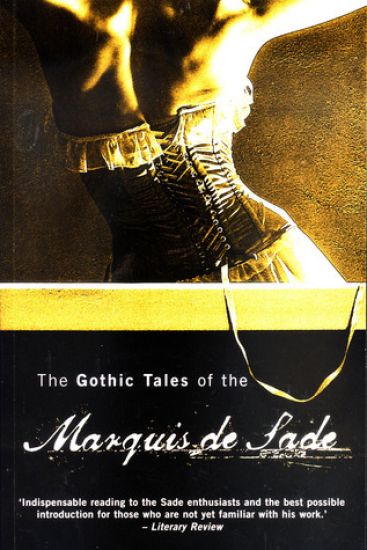
Gothic Tales of the Marquis de Sade

Gothic Tales of the Marquis de Sade

Sade de Marquis

Peter Owen Publishers
2011
nidottu
The notorious author of pornographic novels, a sexual pervert who spent much of his life in prison and whose name was unmentionable in civilized circles. Only in recent times has the Marquis come to be seen as misunderstood; essentially a moralist, his exploration of the so-called dark side of the human psyche remains as relevant to our society as it was to his own. Gothic Tales will provide an excellent introduction to Sade's fiction; these accessible stories range from the dramatic novella Eugenie de Franval, in which a father's criminal passion for his daughter leads to intrigue, abduction and murder, to comic tales such as The Husband Who Plays Priest, concerning a lecherous monk who finds an ingenious way to combine clerical duties with secular pleasures. Sade's gift as a humorist are much in evidence, as is his particular delight in unusual marital situations - which invariably lead to the most diverting conclusions...
Sade's Theatre: Pleasure, Vision, Masochism

Sade's Theatre: Pleasure, Vision, Masochism

Thomas Wynn

Voltaire Foundation
2007
nidottu
Sade’s rehabilitation as a major Enlightenment writer has hitherto not extended to a re-evaluation of his dramatic works. With a theoretical framework inspired by psychoanalysis and dramatic theory, and attentive to eighteenth-century theoretical debates, Thomas Wynn demonstrates the value of these neglected works. This is the first study to consider the nature and implications of Sade’s dramatic aesthetic, and to define the erotic quality of spectatorship in his experimental plays.Challenging the assumption that the gaze is sadistic, the author uses insights from film theory to argue that Sade adapts contemporary theatrical texts and practice to create an aesthetic distinct from that of his novels. Rather than replicate the style of such works as Les Cent vingt journées de Sodome, Sade’s drama anticipates a masochistic model, as theorised by Theodor Reik and Gilles Deleuze. This analysis of Sadean spectatorship takes a thematic rather than chronological or text-by-text approach. The author argues that Sade, as an atheist materialist, focuses on the structural elements of theatre to produce visual pleasure rather than moral improvement, and that he elaborates an insistently visual dramatic aesthetic, a mode analogous to the linguistic saturation of the novels’ tout dire.With reference to eighteenth-century obscene drama, theatre architecture and the history of visuality, the author explores the paradox that Sade’s theatre is meant not for the stage, but for the private imagination. His visionary theatre is an example of the late eighteenth-century sublime, an aesthetic of the ineffable and the unrepresentable which, in its emphasis on the survival of the demeaned individual, structurally resembles masochism.Without deforming his technique or strategy, the author shows that Sade’s voluptuous theatre – like his fiction – addresses an individual whose sovereignty in a godless world is intimately linked to the independent imagination. This book will be of interest to all those working in eighteenth-century drama and theory of spectatorship.
Sade: Queer Theorist

Sade: Queer Theorist

William F. Edmiston

Voltaire Foundation
2013
nidottu
In an era when both Church and State assigned gender roles and defined sexual practices in terms of male/female, lawful/illicit, Sade’s extensive accounts of sexual activity were categorized as deviant, prurient or provocative. William F. Edmiston explores how Sade’s unique challenge to sexual, moral and social taboos anticipates the discourses of queer theory.Following an overview of queer theory, Edmiston examines the categories of sex, gender and sexuality as treated in some of Sade’s best- and lesser-known works. He demonstrates the extent to which Sade erodes the boundaries of sexual opposition through discourses justifying rather than illegitimizing ‘unlawful’ sex. The author reveals the coexistence of two competing discourses on sexuality: a proclivity that cannot be eradicated, and a habit that one can choose to adopt. This pioneering re-reading culminates with an examination of how recent biographies attempt to force Sade into a normal/abnormal dichotomy, manipulating police reports, personal correspondence or narratorial interventions to establish (or not) the author’s homosexuality.Through revealing Sade’s attempts to undermine prevailing gender roles and sexual identities, Edmiston uncovers a ‘queer’ discourse that challenges the still common assumption that heterosexuality is exclusively natural and normative, and that nature has always prompted humans to reproduce, rather than to seek pleasure.
Sade in His Own Name

Sade in His Own Name

Philippe Seminet

Peter Lang Publishing Inc
2003
sidottu
This book aims to situate the much-ignored public Marquis de Sade, author of eleven stories collected into four volumes under the title "Les Crimes de l'amour (1800), vis-a-vis the better-known Marquis de Sade, author of various anonymous works privileged by contemporary critics. Who is this author who--after the success of all his clandestine works--cast aside the cloak of anonymity to offer the public a collection of short fiction? This book explores how "Les Crimes de l'amour provides a key to better understanding Sade's prose in both its public and its clandestine guise. More than just a critical appraisal of each of the stories, this book sheds light on Sade in his role as a man of letters publishing in his own name. By considering the ramifications of Sade's goals as a writer, stated explicitly in the "Idee sur les romans," the prefatory essay to "Les Crimes, and how these goals compare to those of his contemporaries, as well as how they play out in "Les Crimes, Sade in His Own Name opens up new, historically situated readings of the better-known anonymous works.
Sade's Publisher: A Memoir

Sade's Publisher: A Memoir

Jean-Jacques Pauvert

Paris Writers Press
2016
nidottu
In this prize-winning memoir, Jean-Jacques Pauvert recounts in vivid detail his meteoric rise to the top of the French book world. By the tender age of twenty, Pauvert successfully published the complete works of the Marquis de Sade, which led to a protracted legal struggle with the French authorities. A similar firestorm erupted three years later in 1954, after he published Histoire d'O, a daring work by a then anonymous author that again drew the ire of censorship advocates. He begins his career in 1942, working in the mailroom of the venerable publishing house run by Gaston Gallimard, rubbing elbows with the likes of Albert Camus and Raymond Queneau. The sixteen- year-old Pauvert soon broke into the rare books business as World War II and the Occupation rendered literature as an increasingly precious commodity. After being arrested and jailed for three months in Tours by the Nazis for his role as a courier in the Resistance, he returned to Paris and printed his first book, a slim essay by Sartre on Camus. a work by Gide soon followed. SADE'S PUBLISHER: A Memoir was first published as La Travers e du Livre by Viviane-Hamy in 2005. It was translated from the French by Lynn Jeffress.
Sade on the Wall

Sade on the Wall

Elizabeth Barone

Maietta Ink
2018
pokkari
Save her friendship, or save her best friend's life?Sade and Jackie have been best friends from the moment Jackie moved onto Campbell Street, but a dangerous secret is driving a rift between them that will cost more than their friendship.Naive and sheltered Sade has always played by the rules, but she soon finds herself breaking all of them to cover for Jackie's addiction. She's never lied to either of her moms before, yet the lies come more and more easily, burying her own truth. Outside of Jackie's keeper, who is she?Caught between Jackie's web of self-destruction and the best friends' code of secrecy, Sade must choose between saving her friendship, or saving her best friend's life.Sade on the Wall is a raw coming of age story filled with suspense, heartache, and prevailing hope.