Kirjojen hintavertailu. Mukana 11 342 296 kirjaa ja 12 kauppaa.

Kirjahaku

Etsi kirjoja tekijän nimen, kirjan nimen tai ISBN:n perusteella.

433 tulosta hakusanalla "Samuel Beckett"
Samuel Beckett
Samuel Beckett
Rosemarie Bodenheimer

Oxford University Press
2022
sidottu
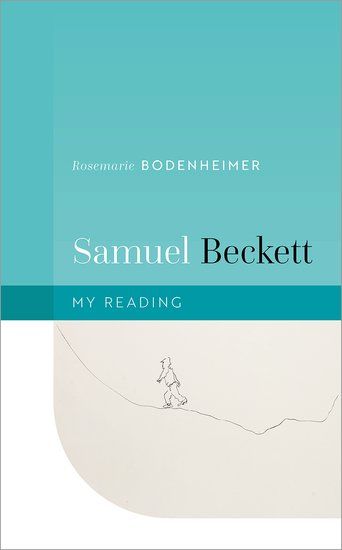
A book on the experience of reading the works of Samuel Beckett. After a life of writing about Victorian novelists, Rosemarie Bodenheimer found herself entranced by the work of Samuel Beckett. In this book she shares her journey of discovery with readers who may or may not be familiar with Beckett's novels and stories. She follows his trajectory from the first unpublished novel, Dream of Fair to Middling Women, through the great post-war trilogy of Molloy, Malone Dies, and The Unnamable, and on to the ever more experimental inventions in the shorter, later fictions, and monologues. Through readings of his work alongside extracts from his published correspondence, Beckett emerges as a sympathetic human figure, a poet of productive doubt, and a brilliant stylist of mood changes and second thoughts. Bodenheimer considers Beckett's treatments of memory, nostalgia, and grief, and the forms he finds to convey those essential human experiences while avoiding melodrama or sentimentality. His dramatized relationship with his own writing is a crucial part of that emotional landscape. His playful jousts with the conventions of novel-writing show how, from the start, Beckett challenged the notion of character and other inherited novel conventions. The book also emphasizes his dismantling of the autobiographical "I" his moving narratives of attachment and loss, and the inimitable mixture of comedy and pathos he creates by inventing outlandish situations to which his characters respond in very recognizable human ways.
Samuel Beckett

Samuel Beckett

Palgrave Macmillan
2010
sidottu
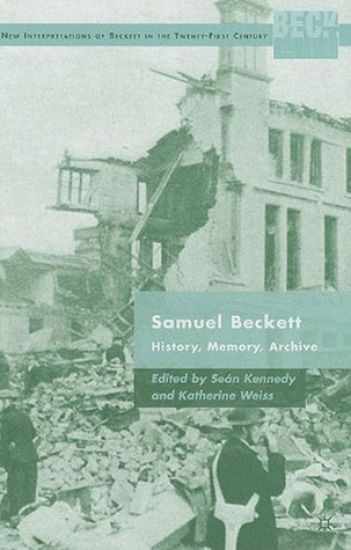
This volume comprises ten essays challenging the dominant account of Samuel Beckett as a figure that cannot be read historically by drawing on new archival materials and situating his finished works in their historical context.
Samuel Beckett

Samuel Beckett

Eugene Webb

University of Washington Press
1970
sidottu
Collectively the works of Samuel Beckett, winner of the 1969 Nobel Prize for Literature, reveal a remarkable continuity of theme. Together his writings present a particular view of life and each novel constitutes part of a larger whole.
Samuel Beckett

Samuel Beckett

Eugene Webb

University of Washington Press
2014
pokkari
Collectively the works of Samuel Beckett, winner of the 1969 Nobel Prize for Literature, reveal a remarkable continuity of theme. Together his writings present a particular view of life and each novel constitutes part of a larger whole.
Samuel Beckett

Samuel Beckett

Isaac Cronin

Da Capo Press Inc
1999
pokkari
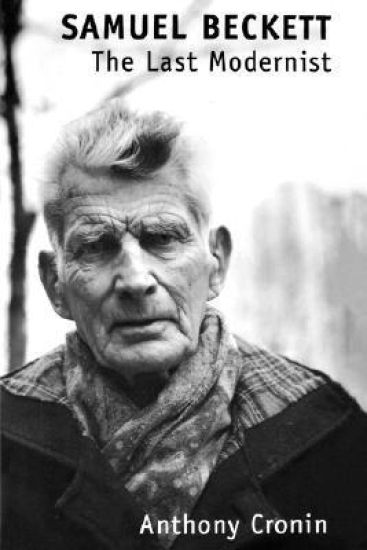
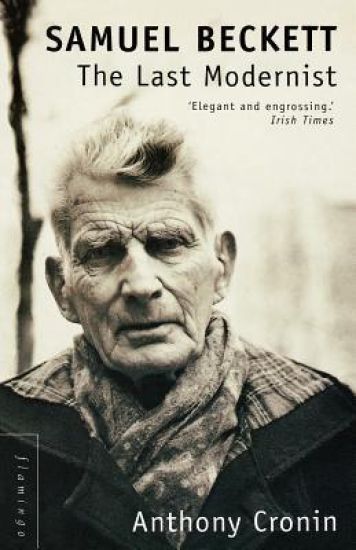
Intensely private, possibly saintly, but perhaps misanthropic, Samuel Beckett was the most legendary and enigmatic of writers. Anthony Cronin's biography is a revelation of this mythical figure as fully human and fallible, while confirming his enormous stature both as a man and a writer. Cronin explores how the sporty schoolboy of solid Protestant bourgeois stock became a prizewinning student at Trinity, flirted with scholarship, and, in Paris, found himself at the centre of its literary avant-garde as an intimate friend of James Joyce. But he was a young man who struggled with complexities in his own nature as well as with problems of literary expression. In the small provincial city of Kassel, Germany, the cosmopolitan Beckett experienced a faltering entanglement with his cousin,one of the first in a series of problematic encounters with women. The war years, which he spent as a member of the Resistance and a refugee in the South of France, brought Beckett the self-probings and discoveries that led to the great works. Then, with his sudden and astonishing fame, the balloons of myth began to inflate and a stereotype was born,frozen in exile and enigma, solemnity and sanctity. Anthony Cronin bursts these balloons to see more clearly what lies behind. Without moralizing or psychologizing, without pretensions or piety, he uncovers the real Beckett, the way the life was lived, the way the art was made.
Samuel Beckett
This set comprises 40 volumes covering 19th and 20th century European and American authors. These volumes will be available as a complete set, mini boxed sets (by theme) or as individual volumes. This second set compliments the first 68 volume set of Critical Heritage published by Routledge in October 1995.
Samuel Beckett

Samuel Beckett

David Pattie

Routledge
2000
sidottu
Samuel Beckett's work forever changed the concepts of literature and theatre. His work remains a core part of introductory courses on literary history, drama, theatre or performance and also features in more specialist modules such as Modernism or The Absurd. Samuel Beckett is a comprehensive introduction to his life and work as well as an outline of the critical issues surrounding his work. This guidebook leaves judgements up to the student by explaining the full range of often very different critical views and interpretations and offers guides to further reading in each area discussed.
Samuel Beckett

Samuel Beckett

David Pattie

Routledge
2000
nidottu
Samuel Beckett's work forever changed the concepts of literature and theatre. His work remains a core part of introductory courses on literary history, drama, theatre or performance and also features in more specialist modules such as Modernism or The Absurd. Samuel Beckett is a comprehensive introduction to his life and work as well as an outline of the critical issues surrounding his work. This guidebook leaves judgements up to the student by explaining the full range of often very different critical views and interpretations and offers guides to further reading in each area discussed.
Samuel Beckett
This set comprises 40 volumes covering 19th and 20th century European and American authors. These volumes will be available as a complete set, mini boxed sets (by theme) or as individual volumes. This second set compliments the first 68 volume set of Critical Heritage published by Routledge in October 1995.
Samuel Beckett

Samuel Beckett

Andrew Karpati Kennedy

Cambridge University Press
1989
pokkari
While providing a critical introduction for the student of Samuel Beckett’s work and for other readers and theatre-goers who have been influenced by it, this study also presents an original perspective on one of the twentieth century’s greatest writers of prose fiction and drama. Andrew Kennedy links Beckett’s vision of a diminished humanity with his art of formally and verbally diminished resources, and traces the fundamental simplicity and coherence of Beckett’s work beneath its complex textures. In the section on the plays, Dr Kennedy stresses the humour and tragicomic humanism alongside the theatrical effectiveness; and in a discussion of the fiction (the celebrated trilogy of novels) he relates the relentless diminution of ‘story’ to the diminishing selfhood of the narrator. An introduction outlines the personal, cultural and specifically literary contexts of Beckett’s writing, while a concluding chapter offers up-to-date reflections on his œuvre, from the point-of-view of the themes highlighted throughout the book. This study, complete with a chronological table and a guide to further reading, will prove stimulating for both new and advanced students of Beckett.
The Letters of Samuel Beckett: Volume 1, 1929–1940

The Letters of Samuel Beckett: Volume 1, 1929–1940

Samuel Beckett

Cambridge University Press
2009
sidottu
The letters written by Samuel Beckett between 1929 and 1940 provide a vivid and personal view of Western Europe in the 1930s, and mark the gradual emergence of Beckett's unique voice and sensibility. The Cambridge University Press edition of The Letters of Samuel Beckett offers for the first time a comprehensive range of letters of one of the greatest literary figures of the twentieth century. Selected for their bearing on his work from over 15,000 extant letters, the letters published in this four-volume edition encompass sixty years of Beckett's writing life (1929–1989), and include letters to friends, painters and musicians, as well as to students, publishers, translators, and colleagues in the world of literature and theatre. For anyone interested in twentieth-century literature and theatre this edition is essential reading, offering not only a record of Beckett's achievements but a powerful literary experience in itself.
The Letters of Samuel Beckett: Volume 2, 1941–1956

The Letters of Samuel Beckett: Volume 2, 1941–1956

Samuel Beckett

Cambridge University Press
2011
sidottu
This second volume of The Letters of Samuel Beckett opens with the war years, when it was often impossible or too dangerous to correspond. The surge of letters beginning in 1945, and their variety, are matched by the outpouring and the range of Beckett's published work. Primarily written in French and later translated by the author, the work includes stories, a series of novels (Molloy, Malone meurt and L'Innommable), essays and plays – most notably En attendant Godot. The letters chronicle a passionately committed but little known writer evolving into a figure of international reputation, and his response to such fame. The volume provides detailed introductions which discuss Beckett's situation during the war and his crucial move into the French language, as well as translations of the letters, explanatory notes, year-by-year chronologies, profiles of correspondents and other contextual information.
The Letters of Samuel Beckett: Volume 3, 1957–1965

The Letters of Samuel Beckett: Volume 3, 1957–1965

Samuel Beckett

Cambridge University Press
2014
sidottu
This third volume of The Letters of Samuel Beckett focuses on the years when Beckett is striving to find a balance between the demands put upon him by his growing international fame, and his need for the peace and silence from which new writing might emerge. This is the period in which Beckett launches into work for radio, film and, later, into television. It also marks his return to writing fiction, with his first major piece for a decade, Comment c'est (How It Is). Where hitherto he has been reticent about the writing process, now he devotes letter after letter to describing and explaining his work in progress. For the first time Beckett has a woman as his major correspondent: a relationship shown in his intense and abundant letters to Barbara Bray. The volume also provides critical introductions, chronologies, explanatory notes and profiles of Beckett's main correspondents.
The Letters of Samuel Beckett: Volume 4, 1966–1989

The Letters of Samuel Beckett: Volume 4, 1966–1989

Samuel Beckett

Cambridge University Press
2016
sidottu
This fourth and final volume, which completes the Cambridge edition of The Letters of Samuel Beckett, covers the final twenty-four years of what was, as Beckett saw it, a surprisingly long life. During these years he produced many of his finest and most concentrated works for theatre, plays that included Not I, Ohio Impromptu, and Catastrophe; for television he wrote Eh Joe and Ghost Trio; while in prose, he produced the late 'trilogy' that comprises Company, Ill Seen Ill Said, and Worstward Ho. In 1969, Beckett was awarded the Nobel Prize in Literature, and the letters from this period show him struggling to cope with the pressures created by his ever-growing international fame. The letters reveal how, later, he turned his mind to his legacy, as seen through his interactions with biographers and archivists. This volume also provides chronologies, explanatory notes, translations, and profiles of Beckett's chief correspondents.
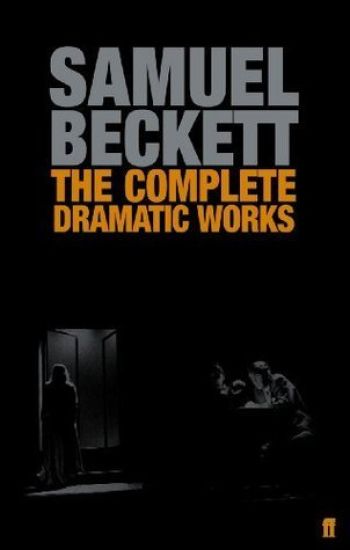
The Complete Dramatic Works of Samuel Beckett
The present volume gathers all of Beckett's texts for theatre, from 1955 to 1984. It includes both the major dramatic works and the short and more compressed texts for the stage and for radio.'He believes in the cadence, the comma, the bite of word on reality, whatever else he believes; and his devotion to them, he makes clear, is a sufficient focus for the reader's attention. In the modern history of literature he is a unique moral figure, not a dreamer of rose-gardens but a cultivator of what will grow in the waste land, who can make us see the exhilarating design that thorns and yucca share with whatever will grow anywhere.' - Hugh KennerContents: Waiting for Godot, Endgame, Happy Days, All That Fall, Acts Without Words, Krapp's Last Tape, Roughs for the Theatre, Embers, Roughs for the Radio, Words and Music, Cascando, Play, Film, The Old Tune, Come and Go, Eh Joe, Breath, Not I, That Time, Footfalls, Ghost Trio,...but the clouds..., A Piece of Monologue, Rockaby, Ohio Impromptu, Quad, Catastrophe, Nacht und Traume, What Where.
Collected Poems of Samuel Beckett

Collected Poems of Samuel Beckett

Samuel Beckett

Faber Faber
2013
pokkari
It was as a poet that Samuel Beckett launched himself in the little reviews of 1930s Paris, and as a poet that he ended his career.The Collected Poems is the most complete edition of Beckett's poetry and verse translations ever to be published, as well as the first critical edition. It establishes a significant new canon, and the commentary draws on a wide range of published sources, manuscripts and Beckett's extensive correspondence. The notes place each poem in context, detailing the history and circumstances of its composition; they indicate significant variants and help explain obscure turns of phrase and allusions (frequently sourced to Beckett's notebooks); they also identify resonances between poems and across Beckett's work as a whole. The commentary is written in a lively and engaging style and is intended equally for the general reader, the student of modernism and the Beckett specialist.
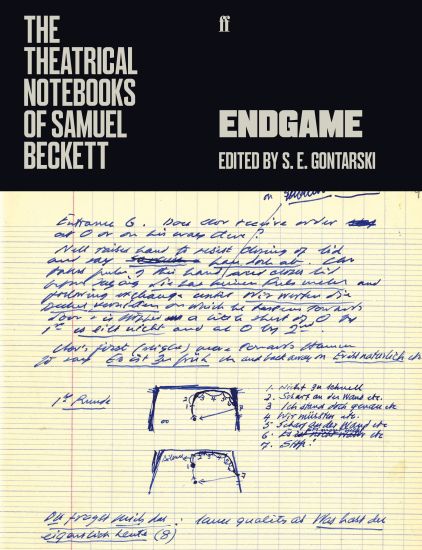
The Theatrical Notebooks of Samuel Beckett
'Pattern is as crucial to Beckett's eye as to his ear', writes Gontarski, 'and that patterning dominates his theatrical notes: motion is repeated to echo other motion, posture to echo other posture, gestures to echo other gestures, sounds to echo other sounds. The principle of analogy is fundamental.'Samuel Beckett directed two separate productions of Endgame, once with the Schiller Theater Company in Berlin in 1967, and again with the San Quentin Drama Workshop in 1980. For both productions he prepared detailed notes that are reproduced here in facsimile for the first time.Beckett's revisions for both his productions maintain a consistency - with minor variations to allow for strengths or weaknesses of particular actors - that make a 'corrected' (Beckett's word) text not only possible but desirable, a reflection of the substantial amount of thinking and theatrical testing the work has undergone since its publication. No previous edition - English, French or German - includes the complete production-generated changes. This text was approved by Samuel Beckett.
The Theatrical Notebooks of Samuel Beckett
Samuel Beckett directed Krapp's Last Tape on four separate occasions: this volume offers a facsimile of his 1969 Schiller-Theater notebook.Professor Knowlson writes that in these notes 'we see Beckett simplifying, shaping and refining, as he works towards a realization of the play that will function well dramatically. The material reveals a flexibility and openness of approach often considered alien to Beckett's ways of working in the theatre.' The Schiller notebook also contains some of the most explicit analysis by Beckett of his own work ever revealed.The revised text incorporates many of the changes Beckett made in the 1969 Schiller production, as well as subsequent changes in later productions. Professor Knowlson worked closely with Beckett over these revisions - and deviations from the original are noted and explained in detail.
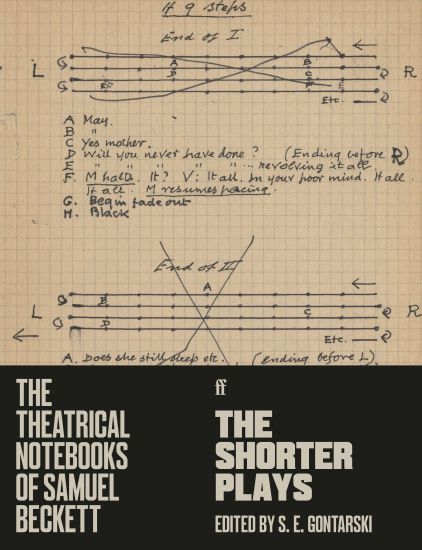
The Theatrical Notebooks of Samuel Beckett
This volume completes the publication of this series of notebooks, the plays in question being Play, Come and Go, Eh Joe, Footfalls, That Time and What Where. Professor Gontarski brings his own experience as a director to editing this book, which provides a continuing revelation of the playwright's approach to the staging of his work. To these 'shorter plays' Samuel Beckett devoted the same care and attention to the details of textual revision and stagecraft as he did to the full-length works, and this book contains revised texts prepared on the same editorial basis as before.