Kirjojen hintavertailu. Mukana 11 717 486 kirjaa ja 12 kauppaa.

Kirjahaku

Etsi kirjoja tekijän nimen, kirjan nimen tai ISBN:n perusteella.

475 tulosta hakusanalla "Samuel Richardson"

Samuel Richardson

Samuel Richardson

Cambridge University Press
2011
pokkari
This 1989 volume was created to mark the three-hundredth anniversary of Samuel Richardson's birth, with fifteen essays, some illustrated, by contributors who investigate various aspects of the novelist's work. The essays offer fresh readings of individual novels and of Richardson's whole oeuvre. Subjects range from an examination of reactions to Pamela to observations on patterns of male friendship in the novels. Richardson's personal epistolary production is studied by several of the contributors, one of whom makes a strong appeal for the publication of Richardson's complete correspondence. A strikingly original essay explores the novelist's temporal and geographical world, in relation to the real London of the time. This important collection, festive in spirit but sharp, scholarly and brilliantly multi-faceted, is a landmark in Richardson studies.
Samuel Richardson

Samuel Richardson

Harris Jocelyn

Cambridge University Press
1987
sidottu
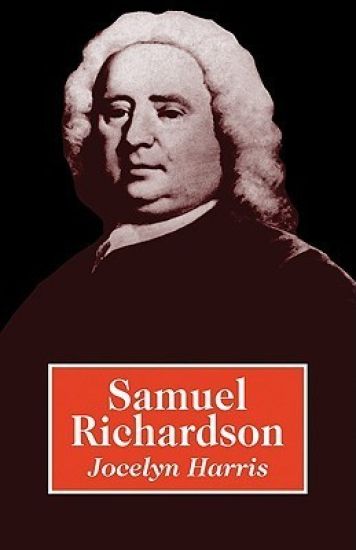
This book provides a concise introduction to Richardson, by combining a close reading of Pamela, Clarissa and Sir Charles Gerandison with a discussion of their central themes. An outsider by birth, education and profession, Richardson found common cause with women in a world that needed change. Employing forms familiar to them, letters and tales of courtship and marriage, he urged his mainly female readers to train their powers of reason and morality by debating the issues of his novels. Dr Harris explores Richardson's vision that the relationship between men and women is as politically charged as that between monarch and subject. In Clarissa this relationship is imaginatively represented by means of the characters' archetypes - Evne, Lucretia and queen Elizabeth on the one hand, Sarah, don Juan, Fault and King on the other. In Grandison, Richardson shows men what they must be if they wish to marry women like Clarissa, and argues that marriage, then the necessary female destiny, can only thus be made to work to women's advantage.
Samuel Richardson

Samuel Richardson

Jocelyn Harris

Cambridge University Press
1987
pokkari
This book provides a concise introduction to Richardson, by combining a close reading of Pamela, Clarissa and Sir Charles Gerandison with a discussion of their central themes. An outsider by birth, education and profession, Richardson found common cause with women in a world that needed change. Employing forms familiar to them, letters and tales of courtship and marriage, he urged his mainly female readers to train their powers of reason and morality by debating the issues of his novels. Dr Harris explores Richardson's vision that the relationship between men and women is as politically charged as that between monarch and subject. In Clarissa this relationship is imaginatively represented by means of the characters' archetypes - Evne, Lucretia and queen Elizabeth on the one hand, Sarah, don Juan, Fault and King on the other. In Grandison, Richardson shows men what they must be if they wish to marry women like Clarissa, and argues that marriage, then the necessary female destiny, can only thus be made to work to women's advantage.
Samuel Richardson

Samuel Richardson

Cambridge University Press
1989
sidottu
This 1989 volume was created to mark the three-hundredth anniversary of Samuel Richardson's birth, with fifteen essays, some illustrated, by contributors who investigate various aspects of the novelist's work. The essays offer fresh readings of individual novels and of Richardson's whole oeuvre. Subjects range from an examination of reactions to Pamela to observations on patterns of male friendship in the novels. Richardson's personal epistolary production is studied by several of the contributors, one of whom makes a strong appeal for the publication of Richardson's complete correspondence. A strikingly original essay explores the novelist's temporal and geographical world, in relation to the real London of the time. This important collection, festive in spirit but sharp, scholarly and brilliantly multi-faceted, is a landmark in Richardson studies.
Samuel Richardson

Samuel Richardson

Carol Houlihan Flynn

Princeton University Press
2014
pokkari
Adding a lively voice to Richardsonian studies, Carol Houlihan Flynn traces the complex workings of a major literary imagination. Originally published in 1982. The Princeton Legacy Library uses the latest print-on-demand technology to again make available previously out-of-print books from the distinguished backlist of Princeton University Press. These editions preserve the original texts of these important books while presenting them in durable paperback and hardcover editions. The goal of the Princeton Legacy Library is to vastly increase access to the rich scholarly heritage found in the thousands of books published by Princeton University Press since its founding in 1905.
Samuel Richardson

Samuel Richardson

Carol Houlihan Flynn

PRINCETON UNIVERSITY PRESS
2016
sidottu
Adding a lively voice to Richardsonian studies, Carol Houlihan Flynn traces the complex workings of a major literary imagination. Originally published in 1982. The Princeton Legacy Library uses the latest print-on-demand technology to again make available previously out-of-print books from the distinguished backlist of Princeton University Press. These editions preserve the original texts of these important books while presenting them in durable paperback and hardcover editions. The goal of the Princeton Legacy Library is to vastly increase access to the rich scholarly heritage found in the thousands of books published by Princeton University Press since its founding in 1905.
The Correspondence of Samuel Richardson

The Correspondence of Samuel Richardson

Samuel Richardson

Cambridge University Press
2011
pokkari
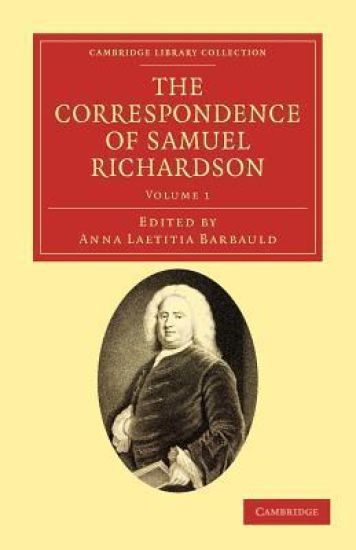
Samuel Richardson (1689–1761), the English writer and printer best known for his epistolary novels, including Pamela (1740) and Clarissa (1748), had preserved copies of his extensive correspondence with a view to its eventual publication, and these volumes, edited by Anna Laetitia Barbauld and first published in 1804, contain her selection from his papers. Richardson became a printer's apprentice in 1706 and for the rest of his life managed a successful printing business in addition to writing his highly popular and influential novels. After the success of Pamela, Richardson regularly corresponded with leading contemporary literary figures including Henry Fielding and Samuel Johnson. The letters provide fascinating insights into Richardson's life and literary and social activities, as well as discussions of current affairs. Volume 1 contains a biography of Richardson by Mrs Barbauld; this is followed by his correspondence with friends such as Aaron Hill and the Scots printer William Strahan.
The Correspondence of Samuel Richardson

The Correspondence of Samuel Richardson

Samuel Richardson

Cambridge University Press
2011
pokkari
Samuel Richardson (1689–1761), the English writer and printer best known for his epistolary novels, including Pamela (1740) and Clarissa (1748), had preserved copies of his extensive correspondence with a view to its eventual publication, and these volumes, edited by Anna Laetitia Barbauld and first published in 1804, contain her selection from his papers. Richardson became a printer's apprentice in 1706 and for the rest of his life managed a successful printing business in addition to writing his highly popular and influential novels. After the success of Pamela, Richardson regularly corresponded with leading contemporary literary figures including Henry Fielding and Samuel Johnson. The letters provide fascinating insights into Richardson's life and literary and social activities, as well as discussions of current affairs. Volume 2 contains correspondence with (among others) Margaret Collier, Sarah Fielding, Colly Cibber and Hester Mulso (Mrs Chapone).
The Correspondence of Samuel Richardson

The Correspondence of Samuel Richardson

Samuel Richardson

Cambridge University Press
2011
pokkari
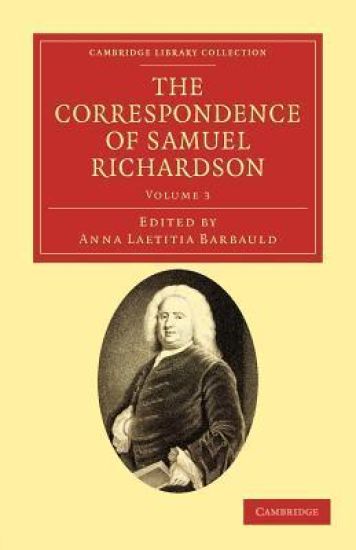
Samuel Richardson (1689–1761), the English writer and printer best known for his epistolary novels, including Pamela (1740) and Clarissa (1748), had preserved copies of his extensive correspondence with a view to its eventual publication, and these volumes, edited by Anna Laetitia Barbauld and first published in 1804, contain her selection from his papers. Richardson became a printer's apprentice in 1706 and for the rest of his life managed a successful printing business in addition to writing his highly popular and influential novels. After the success of Pamela, Richardson regularly corresponded with leading contemporary literary figures including Henry Fielding and Samuel Johnson. The letters provide fascinating insights into Richardson's life and literary and social activities, as well as discussions of current affairs. Volume 3 contains correspondence with (among others) Thomas Edwards, the poet and literary editor, and Hester Mulso (Mrs Chapone).
The Correspondence of Samuel Richardson

The Correspondence of Samuel Richardson

Samuel Richardson

Cambridge University Press
2011
pokkari
Samuel Richardson (1689–1761), the English writer and printer best known for his epistolary novels, including Pamela (1740) and Clarissa (1748), had preserved copies of his extensive correspondence with a view to its eventual publication, and these volumes, edited by Anna Laetitia Barbauld and first published in 1804, contain her selection from his papers. Richardson became a printer's apprentice in 1706 and for the rest of his life managed a successful printing business in addition to writing his highly popular and influential novels. After the success of Pamela, Richardson regularly corresponded with leading contemporary literary figures including Henry Fielding and Samuel Johnson. The letters provide fascinating insights into Richardson's life and literary and social activities, as well as discussions of current affairs. Volume 4 contains correspondence with (among others) Dr and Mrs Delany and Thomas and Frances Sheridan, the parents of the playwright Richard Brinsley Sheridan.
The Correspondence of Samuel Richardson

The Correspondence of Samuel Richardson

Samuel Richardson

Cambridge University Press
2011
pokkari
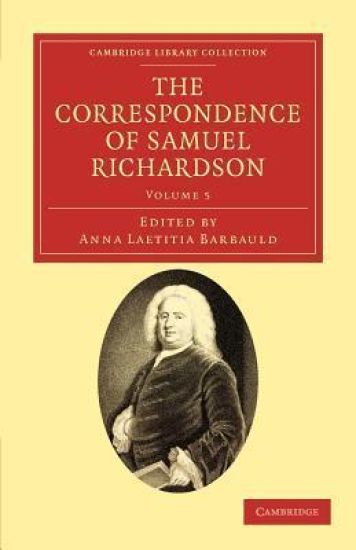
Samuel Richardson (1689–1761), the English writer and printer best known for his epistolary novels, including Pamela (1740) and Clarissa (1748), had preserved copies of his extensive correspondence with a view to its eventual publication, and these volumes, edited by Anna Laetitia Barbauld and first published in 1804, contain her selection from his papers. Richardson became a printer's apprentice in 1706 and for the rest of his life managed a successful printing business in addition to writing his highly popular and influential novels. After the success of Pamela, Richardson regularly corresponded with leading contemporary literary figures including Henry Fielding and Samuel Johnson. The letters provide fascinating insights into Richardson's life and literary and social activities, as well as discussions of current affairs. Volume 5 contains his correspondence with (among many others) Samuel Johnson.
The Correspondence of Samuel Richardson

The Correspondence of Samuel Richardson

Samuel Richardson

Cambridge University Press
2011
pokkari
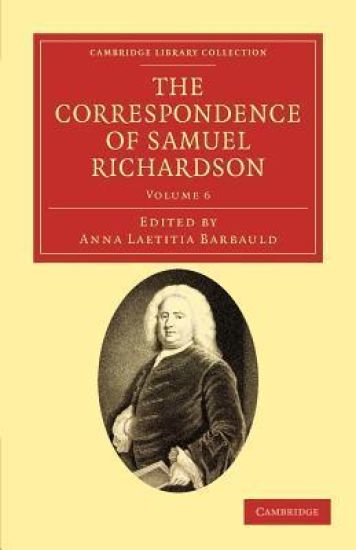
Samuel Richardson (1689–1761), the English writer and printer best known for his epistolary novels, including Pamela (1740) and Clarissa (1748), had preserved copies of his extensive correspondence with a view to its eventual publication, and these volumes, edited by Anna Laetitia Barbauld and first published in 1804, contain her selection from his papers. Richardson became a printer's apprentice in 1706 and for the rest of his life managed a successful printing business in addition to writing his highly popular and influential novels. After the success of Pamela, Richardson regularly corresponded with leading contemporary literary figures including Henry Fielding and Samuel Johnson. The letters provide fascinating insights into Richardson's life and literary and social activities. Volume 6 is devoted entirely to his lively correspondence with Lady Bradshaigh, discussing literature but also the writers' respective domestic affairs, and contemporary social concerns including the education of women and the behaviour of men.