Kirjojen hintavertailu. Mukana 11 213 693 kirjaa ja 12 kauppaa.

Kirjahaku

Etsi kirjoja tekijän nimen, kirjan nimen tai ISBN:n perusteella.

500 tulosta hakusanalla "Schelling"

Schelling

Schelling

Karl Jaspers

Schwabe Verlag
2024
nidottu
Jaspers' Monographie Schelling. Grosse und Verhangnis wurde in der Fachwelt uberwiegend mit Unmut aufgenommen. Erhofft hatte man sich eine Schelling-Renaissance - vor diesem Hintergrund wurde das Werk als ein ungerechtfertigter Angriff auf den Idealisten verstanden. Aus dem Blick geriet dabei, dass Schelling zu diesem Zeitpunkt bereits seit Jahrzehnten ein unverzichtbarer, auch positiver Bezugspunkt von Jaspers' Metaphysik und Existenzphilosophie war. Der vorliegende Band enthalt neben der Schelling-Monographie zwei kurzere Aufsatze von Jaspers zum selben Thema. Die Neuausgabe im Rahmen der Karl Jaspers Gesamtausgabe enthalt einen mit Jaspers' ursprunglichem Typoskript abgeglichenen und um zahlreiche Druck- und Abschreibfehler bereinigten Text. Dieser wird durch eine wissenschaftliche Einleitung und einen ausfuhrlichen Stellenkommentar erschlossen.
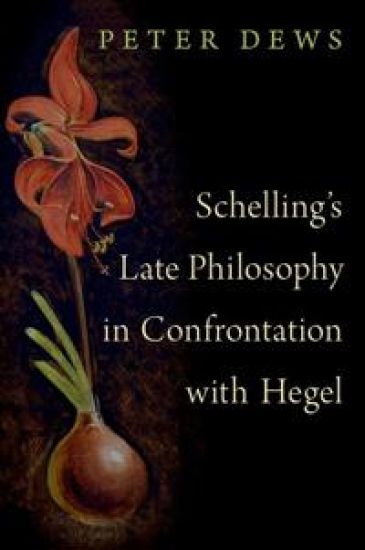
Schelling's Late Philosophy in Confrontation with Hegel

Schelling's Late Philosophy in Confrontation with Hegel

Peter Dews

OXFORD UNIVERSITY PRESS INC
2023
sidottu
Recent decades have seen a remarkable upsurge of interest in German Idealism in the English-speaking world. However, out of the three leading thinkers of the period directly after Kant--Fichte, Schelling, and Hegel--Schelling has received relatively little attention. In particular, the distinctive philosophical project of Schelling's late period, beginning in the 1820s, has been almost completely ignored. This omission has impaired the overall understanding of German Idealism. For it is during the late phase of his work that Schelling develops his influential critique of Hegel and his definitive response to the central problems post-Kantian thought as a whole. This book is the first in English to survey the whole of Schelling's late system, and to explore in detail the rationale for its division into a “negative philosophy” and a “positive philosophy.” It begins by tracing Schelling's intellectual development from his early work of the 1790s up to the threshold of his final phase. It then examines Schelling's mature conception of the scope of pure thinking, the basis of negative philosophy, and the nature of the transition to positive philosophy. In this second, historically oriented enterprise Schelling explores the deep structure of mythological worldviews and seeks to explain the epochal shift to the modern universe of “revelation.” Simultaneously, the book offers a sustained comparison of Hegel's and Schelling's treatment of a range of central topics in post-Kantian thought: the relation between a priori thinking and being; the role of religion in human existence; the inner dynamics of history; and the paradoxical structure of freedom.
Schelling's Mystical Platonism

Schelling's Mystical Platonism

Naomi Fisher

OXFORD UNIVERSITY PRESS INC
2024
sidottu
Schelling came of age during the pivotal and exciting years at the end of the eighteenth century, as Kant's philosophy was being incorporated into the German academic world. At this time, in addition to delving into the new Kantian philosophy, Schelling engaged in an intense study of Plato's dialogues and was immersed in a Neoplatonic intellectual culture. Attention to these aspects of Schelling's early philosophical development illuminates his fundamental commitments. Throughout the first decade of his adult life, from 1792-1802, Schelling was a mystical Platonist. Naomi Fisher argues that Schelling is committed to two overarching theses, which together comprise his mystical Platonism. First, Schelling considers the absolute to be ineffable: It cannot be described in conceptual terms. For this reason, it remains inferentially external to any given philosophical system and is only intimated to us in certain analogical formulations, in works of art, or in nature as a whole. Second, Schelling is committed to a kind of priority monism: All things are grounded in the absolute, but finite things possess an integral unity all their own, and so have a distinct and relatively independent existence. Highlighting these commitments resolves an interpretive dispute, according to which Schelling is a Fichtean idealist or a Spinozist, or he vacillates between these positions. Interpreting Schelling as advancing a mystical Platonism provides an alternative way of interpreting these early texts, such that they are by and large consistent. Fisher presents Schelling's early philosophy as a unique and compelling fusion of the old and new: Schelling fulfills the characteristic aims of post-Kantian philosophy in a way distinctive among his contemporaries, by drawing on and appropriating various strands of Platonism.
Schelling's Philosophy

Schelling's Philosophy

Oxford University Press
2020
sidottu
The current wave of critical and historical engagement with idealist texts affords an unprecedented opportunity to discover the richness and value of the thought of F. W. J. Schelling. In this volume leading scholars offer compelling reasons to regard Schelling as one of Kant's most incisive interpreters, a pioneering philosopher of nature, a resolute philosopher of human finitude and freedom, a nuanced thinker of the bounds of logic and self-consciousness, and perhaps Hegel's most effective critic. The volume provides a wide-ranging presentation of Schelling's original contribution to, and internal critique of, the basic insights of German idealism, his role in shaping the course of post-Kantian thought, and his sensitivity and innovative responses to questions of lasting metaphysical, epistemological, ethical, aesthetic, and theological importance.
Schelling's Theory of Symbolic Language

Schelling's Theory of Symbolic Language

Daniel Whistler

Oxford University Press
2013
sidottu
This study reconstructs F.W.J. Schelling's philosophy of language based on a detailed reading of §73 of Schelling's lectures on the Philosophy of Art. Daniel Whistler argues that the concept of the symbol present in this lecture course, and elsewhere in Schelling's writings of the period, provides the key for a non-referential conception of language, where what matters is the intensity at which identity is produced. Such a reconstruction leads Whistler to a detailed analysis of Schelling's system of identity, his grand project of the years 1801 to 1805, which has been continually neglected by contemporary scholarship. In particular, Whistler recovers the concepts of quantitative differentiation and construction as central to Schelling's project of the period. This reconstruction also leads to an original reading of the origins of the concept of the symbol in German thought: there is not one 'romantic symbol', but a whole plethora of experiments in theorising symbolism taking place at the turn of the nineteenth century. At stake, then, is Schelling as a philosopher of language, Schelling as a systematiser of identity, and Schelling as a theorist of the symbol.
Schelling's Game Theory

Schelling's Game Theory

Robert V. Dodge

Oxford University Press Inc
2012
sidottu
Thomas Schelling won the Nobel Prize in economics "for having enhanced our understanding of conflict and cooperation through game-theory analysis." This came after he had taught a course in game theory and rational choice to advanced students and government officials for 45 years. In this book, Robert Dodge provides in language for a broad audience, the concepts that Schelling taught. Armed with Schelling's understanding of game theory methods and his approaches to problems, the general reader can improve daily decision making. Mathematics often make game theory challenging but was not a major part of Schelling's course and is even less of a factor in this book. Along with a summary of the material Schelling presented, included are problems from the course and similar less challenging questions. While considerable analysis is done with the basic game theory tool -- the two-by-two matrix -- much of the book is descriptive and rational decision-making is explained with stories. Chapter supplements are added to illuminate points presented by Schelling, including writings by Paul Krugman, Thomas Friedman, Steven Levitt, and others.
Schelling Now

Schelling Now

Indiana University Press
2004
pokkari
Although previously considered a way-station on the road to Hegel, F. W. J. von Schelling is today enjoying a renaissance among Continental philosophers and others. The 14 essays in this engaging volume bring Schelling in tune with such luminaries as Heidegger, Derrida, Bataille, Foucault, Deleuze, Levinas, and Irigaray and situate him squarely in the center of current themes and discussions in such topics as ethical alterity (the other), deep ecology and the question of nature, the relation of aesthetics to nature, the crisis of truth, the possibility of non-dialectical philosophy, and the possibility of a philosophical religion. Established scholars and newer voices cast light on Schelling and German Idealism. Contributors are Patrick Burke, Theodore D. George, Eiko Hanaoka, David Farrell Krell, Joseph P. Lawrence, Benjamin S. Pryor, Stephen David Ross, Marcia Sá Cavalcante Schuback, F. Scott Scribner, Fiona Steinkamp, Martin Wallen, Peter Warnek, Jason M. Wirth, and Slavoj Zizek.
Schelling, Hegel, and the Philosophy of Nature

Schelling, Hegel, and the Philosophy of Nature

Benjamin Berger

TAYLOR FRANCIS LTD
2023
sidottu
This book develops an original interpretation of the relationship between F.W.J. Schelling and G.W.F. Hegel. It argues that the difference between these philosophers should be understood in light of their shared commitment to the philosophy of nature and the idea that spirit, or humanity, emerges from the natural world.The author makes a case for the contemporary relevance of German idealist philosophy of nature by walking the reader through its major themes, motivations, and arguments. Along the way, Schelling and Hegel are shown to develop key insights about the structure of reality and the dependence of living things and human beings upon inorganic natural processes. In elucidating the details of Schelling’s and Hegel’s respective philosophies of nature, the book challenges some of our most basic assumptions about the scope of philosophical inquiry and the relationship between matter, life, and human existence.Schelling, Hegel, and the Philosophy of Nature will appeal to scholars and advanced students working on German idealism, as well as those interested in contemporary philosophies of nature and the topic of emergence.
Schelling and Modern European Philosophy
Andrew Bowie's book is the first introduction in English to present F. W. J. Schelling as a major European philosopher in his own right. Schelling and Modern European Philosophy, surveys the whole of Schelling's philosophical career, lucidly reconstructing his key arguments, particularly those against Hegel, and relating them to contemporary philosophical discussion. For anyone interested in German romanticism and the development of Continental philosophy, this is an invaluable source book. The cogent and subtle argument of this book fills a major gap in our understanding of modern philosophy, in which Schelling emerges as a key transitional figure.
Schelling and Modern European Philosophy:
Andrew Bowie's book is the first introduction in English to present F W J Schelling as a major European philospher in his own right. Schelling and Modern European Philosophy, surveys the whole of Schelling's philosophical career, lucidly reconstructing his key arguments, particularly those against Hegel, and relating them to contemporary philosophical discussion. Dr Bowie traces how central ideas and conceptual strategies in the work of philosophers as diverse as Nietzsche, Heidegger, Derrida and Davidson relate closely to Schelling's often misunderstood philosophy and focuses on Schelling's work as an alternative to, and critique of aspects of Hegel's thinking.
Schelling and Modern European Philosophy
Andrew Bowie's book is the first introduction in English to present F. W. J. Schelling as a major European philosopher in his own right. Schelling and Modern European Philosophy, surveys the whole of Schelling's philosophical career, lucidly reconstructing his key arguments, particularly those against Hegel, and relating them to contemporary philosophical discussion. For anyone interested in German romanticism and the development of Continental philosophy, this is an invaluable source book. The cogent and subtle argument of this book fills a major gap in our understanding of modern philosophy, in which Schelling emerges as a key transitional figure.
Schelling and the End of Idealism

Schelling and the End of Idealism

Dale E. Snow

State University of New York Press
1996
pokkari
This comprehensive, general introduction to Schelling's philosophy shows that it was Schelling who set the agenda for German idealism and defined the term of its characteristic problems.Schelling is finally beginning to emerge from the long shadow cast by the eminence and influence of Hegel. This book demonstrates that, far from merely forming a step on the royal road to Hegel, it was Schelling who set the agenda for German Idealism and defined the terms of its characteristic problems. Ultimately, it was also Schelling who explored the possibility of idealistic system-building from within and thus brought an end to idealism
Schelling, Freud, and the Philosophical Foundations of Psychoanalysis
Schelling, Freud, and the Philosophical Foundations of Psychoanalysis provides a long-overdue dialogue between two seminal thinkers, Schelling and Freud. Through a sustained reading of the sublime, mythology, the uncanny, and freedom, this book provokes the reader to retrieve and revive the shared roots of philosophy and psychoanalysis. Teresa Fenichel examines the philosophical basis for the concepts of the unconscious and for the nature of human freedom on which psychoanalysis rests. Drawing on the work of German philosopher F. W. J. Schelling, the author explores how his philosophical understanding of human actions, based as it was on the ideas of drives, informed and helped shape Freud’s work. Fenichel also stresses the philosophical weight of Freudian psychoanalysis, specifically in regards to the problem of freedom and argues that psychoanalysis complicates and reinforces Schelling’s basic idea: to know reality we must engage with the world empathetically and intimately. This book also serves as an introduction to Schelling’s thought, arguing that his metaphysics—particularly concerning the primacy of the unconscious and of fantasy—can be read as a therapeutic endeavor. Finally, the book offers a deep rethinking of the action and nature of sublimation through both Freud’s and Schelling’s texts. Fenichel suggests psychoanalytic therapy is self-interpretation—a recognition of our narratives as narratives, without for that reason taking them any less seriously. Schelling, Freud, and the Philosophical Foundations of Psychoanalysis will be of great interest to psychoanalysts and psychoanalytic psychotherapists as well as scholars of philosophy.
Schelling, Freud, and the Philosophical Foundations of Psychoanalysis
Schelling, Freud, and the Philosophical Foundations of Psychoanalysis provides a long-overdue dialogue between two seminal thinkers, Schelling and Freud. Through a sustained reading of the sublime, mythology, the uncanny, and freedom, this book provokes the reader to retrieve and revive the shared roots of philosophy and psychoanalysis. Teresa Fenichel examines the philosophical basis for the concepts of the unconscious and for the nature of human freedom on which psychoanalysis rests. Drawing on the work of German philosopher F. W. J. Schelling, the author explores how his philosophical understanding of human actions, based as it was on the ideas of drives, informed and helped shape Freud’s work. Fenichel also stresses the philosophical weight of Freudian psychoanalysis, specifically in regards to the problem of freedom and argues that psychoanalysis complicates and reinforces Schelling’s basic idea: to know reality we must engage with the world empathetically and intimately. This book also serves as an introduction to Schelling’s thought, arguing that his metaphysics—particularly concerning the primacy of the unconscious and of fantasy—can be read as a therapeutic endeavor. Finally, the book offers a deep rethinking of the action and nature of sublimation through both Freud’s and Schelling’s texts. Fenichel suggests psychoanalytic therapy is self-interpretation—a recognition of our narratives as narratives, without for that reason taking them any less seriously. Schelling, Freud, and the Philosophical Foundations of Psychoanalysis will be of great interest to psychoanalysts and psychoanalytic psychotherapists as well as scholars of philosophy.
Schelling's Treatise on the Essence of Human Freedom

Schelling's Treatise on the Essence of Human Freedom

Martin Heidegger

Ohio University Press
1985
pokkari
Heidegger's lectures delivered at the University of Freiburg in 1936 on Schelling's Treatise On Human Freedom came at a crucial turning point in Heidegger's development. He had just begun his study to work out the term "Ereignis." Heidegger's interpretation of Schelling's work reveals a dimension of his thinking which has never been previously published in English. While Schelling's philosophy is less known than that of the other major German Idealists, Fichte and Hegel, he is one of the thinker with whom Heidegger has the most affinity, making this study fruitful for an understanding of both philosophers. Heidegger's interpretation of On Human Freedom is the most straightforward of the studies to have appeared in English on the Treatise, and is the only work that is devoted to Schelling in Heidegger's corpus. The basic problems at stake in Schelling's Treatise lie at the very heart of the idealist tradition: the question of the compatibility of the system and individual freedom, the questions of pantheism and the justification of evil. Schelling was the first thinker in the rationalist-idealist tradition to grapple seriously with the problem of evil. These are the great questions of the philosophical tradition. They lead Schelling and, with him, Heidegger, to possibilities that come very close to the boundaries of the idealist tradition. For example, Schelling's concept of the "groundless"—what reason can no longer ground and explain—points back to Jacob Boehme and indirectly forward to the direction of Heidegger's own inquiry into "Being." Heidegger's reading of Schelling, especially of the topics of evil and freedom, clearly shows Schelling's influence on Heidegger's views.