Kirjojen hintavertailu. Mukana 11 244 527 kirjaa ja 12 kauppaa.

Kirjahaku

Etsi kirjoja tekijän nimen, kirjan nimen tai ISBN:n perusteella.

205 tulosta hakusanalla "Simone Weil"

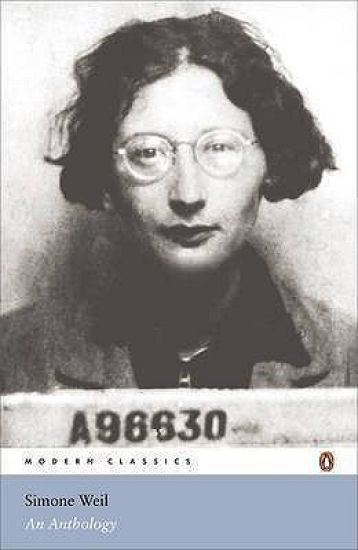
Simone Weil: An Anthology

Simone Weil: An Anthology

Simone Weil

Penguin Classics
2005
pokkari
Simone Weil was one of the foremost thinkers of the twentieth century: a philosopher, theologian, critic, sociologist and political activist. This anthology spans the wide range of her thought, and includes an extract from her best-known work 'The Need for Roots', exploring the ways in which modern society fails the human soul; her thoughts on the misuse of language by those in power; and the essay 'Human Personality', a late, beautiful reflection on the rights and responsibilities of every individual. All are marked by the unique combination of literary eloquence and moral perspicacity that characterised Weil's ideas and inspired a generation of thinkers and writers both in and outside her native France.
Simone Weil

Simone Weil

A. Rebecca Rozelle-Stone

Oxford University Press
2024
nidottu
This Very Short Introduction provides an overview of the intriguing and provocative life and ideas of twentieth century French philosopher, mystic, and social activist Simone Weil. Weil was not a typical, systematic philosopher. Despite her short life, Weil's philosophy has much to offer us in our times of personal, communal, political, and environmental crises, both in the breath and poignancy of her philosophy, and the topics it covers. In keeping with Weil's spirit to consider and address laypeople, Rozelle-Stone takes readers, including those who have had little or no previous exposure to Weil or philosophy, on an accessible journey of Weil's major philosophical impacts. This exploration consists of seven chapters highlighting: her life and manner of death, both characterized by attention; the influence of ancient Greek ideas on her philosophy; her thoughts on labour and politics; her unique and ecumenical religious inspirations, stemming from Christianity, Hinduism, Buddhism, and Taoism; her ethical philosophy centred on a specific notion of attentiveness; her understanding of beauty as connected to fragility but also eternity; and finally, her legacy and influence on contemporary writers and issues, particularly as she may help us navigate and critically assess the growing convergence between religious fervour, late capitalist and corporate values, and authoritarian politics. ABOUT THE SERIES: The Very Short Introductions series from Oxford University Press contains hundreds of titles in almost every subject area. These pocket-sized books are the perfect way to get ahead in a new subject quickly. Our expert authors combine facts, analysis, perspective, new ideas, and enthusiasm to make interesting and challenging topics highly readable.
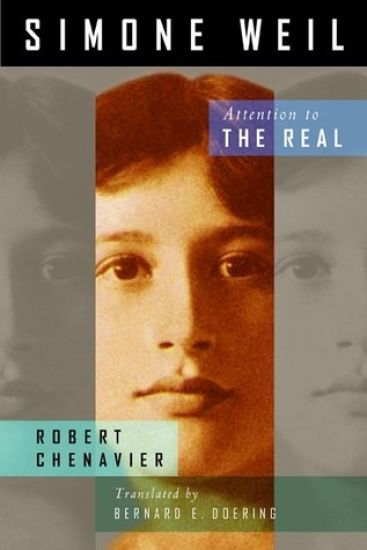
Simone Weil

Simone Weil

Robert Chenavier

University of Notre Dame Press
2012
nidottu
How can we articulate the intimate demand of the spiritual life and the struggle for solidarity? These two issues have often been treated separately; in Simone Weil: Attention to the Real, however, Robert Chenavier explores the work of Simone Weil (1909–1943) and demonstrates how she brought them together in a single movement of thought. "Our time has a unique mission, calling for the creation of a civilization based on the spirituality of work," she wrote near the end of her short life. Her experience as a militant and the call of the divine nurtured in her writing an intense and unwavering defense of this new civilization, backed by her personal sense of intellectual, moral, and political responsibility. Originally published in French in 2009, Simone Weil: Attention to the Real leads the reader through her earliest writing as a perceptive social critic to her work on spirituality and materialism, and finally to her extraordinary concept of decreation, produced before her death at the age of thirty-four. "To an exceptional degree," Chenavier says, "the life of Simone Weil, her personality, her commitment, and her reflection form one single whole." Chenavier argues that Weil's vocation took on a very original form in the history of philosophical thought. He is especially concerned with Weil's philosophical writings on the concept of work, which remain relevant today, and which provide an important key to her thinking throughout her life. Bernard Doering's superb translation brings to English readers Chenavier's succinct account of Simone Weil's life and an illuminating introduction to her philosophical thought.
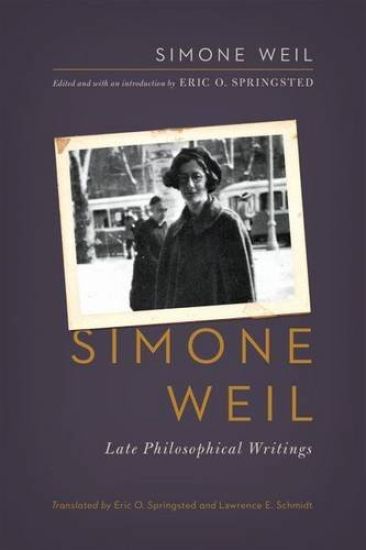
Simone Weil

Simone Weil

Simone Weil

University of Notre Dame Press
2015
nidottu
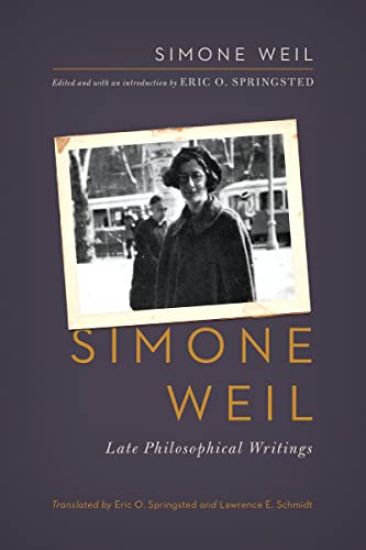
Although trained as a philosopher, Simone Weil (1909–43) contributed to a wide range of subjects, resulting in a rich field of interdisciplinary Weil studies. Yet those coming to her work from such disciplines as sociology, history, political science, religious studies, French studies, and women's studies are often ignorant of or baffled by her philosophical investigations. In Simone Weil: Late Philosophical Writings, Eric O. Springsted presents a unique collection of Weil's writings, one concentrating on her explicitly philosophical thinking. The essays are drawn chiefly from the time Weil spent in Marseille in 1940-42, as well as one written from London; most have been out of print for some time; three appear for the first time; all are newly translated. Beyond making important texts available, this selection provides the context for understanding Weil's thought as a whole. This volume is important not only for those with a general interest in Weil; it also specifically presents Weil as a philosopher, chiefly one interested in questions of the nature of value, moral thought, and the relation of faith and reason. What also appears through this judicious selection is an important confirmation that on many issues respecting the nature of philosophy, Weil, Wittgenstein, and Kierkegaard shared a great deal.
Simone Weil

Simone Weil

Simone Weil

UNIVERSITY OF NOTRE DAME PRESS
2024
sidottu
Although trained as a philosopher, Simone Weil (1909–43) contributed to a wide range of subjects, resulting in a rich field of interdisciplinary Weil studies. Yet those coming to her work from such disciplines as sociology, history, political science, religious studies, French studies, and women's studies are often ignorant of or baffled by her philosophical investigations. In Simone Weil: Late Philosophical Writings, Eric O. Springsted presents a unique collection of Weil's writings, one concentrating on her explicitly philosophical thinking. The essays are drawn chiefly from the time Weil spent in Marseille in 1940-42, as well as one written from London; most have been out of print for some time; three appear for the first time; all are newly translated. Beyond making important texts available, this selection provides the context for understanding Weil's thought as a whole. This volume is important not only for those with a general interest in Weil; it also specifically presents Weil as a philosopher, chiefly one interested in questions of the nature of value, moral thought, and the relation of faith and reason. What also appears through this judicious selection is an important confirmation that on many issues respecting the nature of philosophy, Weil, Wittgenstein, and Kierkegaard shared a great deal.
The Notebooks of Simone Weil

The Notebooks of Simone Weil

Simone Weil

Routledge
2003
sidottu
Simone Weil (1909-1943) was a defining figure of the twentieth century; a philosopher, Christian, resistance fighter, anarchist, feminist, Labour activist and teacher. She was described by T. S. Eliot as 'a woman of genius, of a kind of genius akin to that of the saints', and by Albert Camus as 'the only great spirit of our time'. Originally published posthumously in two volumes, these newly reissued notebooks, are among the very few unedited personal writings of Weil's that still survive today. Containing her thoughts on art, love, science, God and the meaning of life, they give context and meaning to Weil's famous works, revealing an unique philosophy in development and offering a rare private glimpse of her singular personality.
Simone Weil on Colonialism

Simone Weil on Colonialism

Simone Weil

Rowman Littlefield Publishers
2003
nidottu
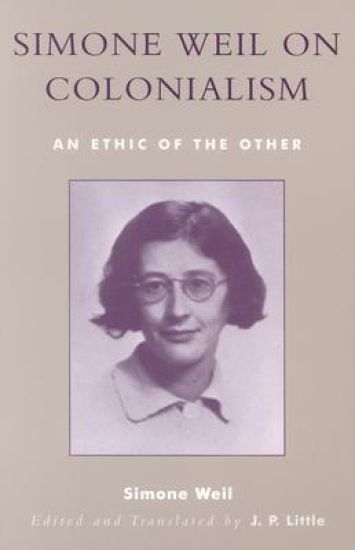
In 1931, Simone Weil read an article by Louis Roubaud in the Petit Parisien that exposed the Yen Bay massacre in Indochina. That article opened Weil's eyes, and from then until her death in exile in 1943, she cared most deeply about the French colonial situation. Weil refused to accept the contradiction between the image of France as champion of the rights of man and the reality of France's exploitation and oppression of the peoples in its territories. Weil wrote thirteen articles or letters about the situation, writings originally published in French journals or in French collections of her work. J. P. Little's fluid and clear translations finally introduce to English-speaking scholars and students this important element of Weil's political consciousness.
Simone Weil

Simone Weil

Joan Dargan

State University of New York Press
1999
pokkari
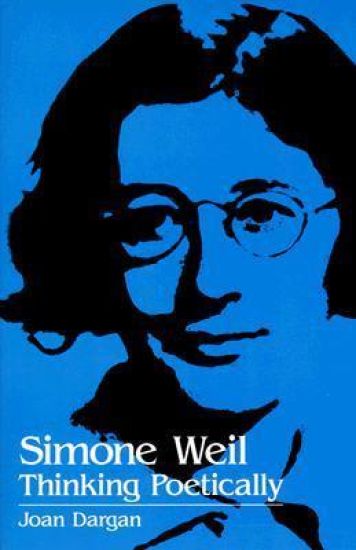
Situates Weil's writing within the French literary tradition, and recognizes her as a master stylist.Simone Weil created a memorable œuvre remarkable for its lucid, striking, and seemingly transparent prose. Aphoristic and impersonal in tone, it is the instrument of a master stylist. The first to recognize Weil's achievement as a writer, this book situates her work within the French literary tradition, showing its affinities with Pascal and Baudelaire, and acknowledges its kinship to the works of poets and writers of her generation, notably the poets René Char and Marina Tsvetaeva. The parallel between Weil's concept of decreation and the impersonality of the speaker in her prose is shown ultimately to be related to her will to surpass the boundaries of the written page in her drive to self-immolation. Close reading of passages from her notebooks, several short texts, and a proposal for front-line nurses addressed to the Free French illustrates the forces and influences at work in her writing.
Simone Weil

Simone Weil

Grove Press / Atlantic Monthly Press
2000
nidottu
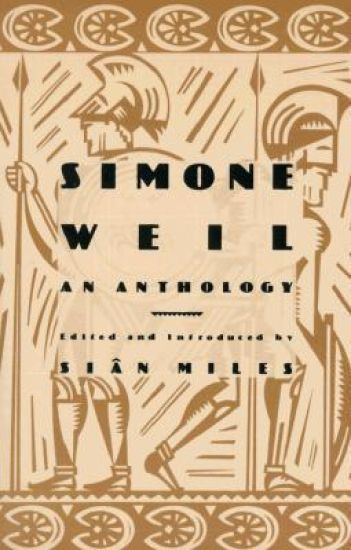
Philosopher, theologian, critic, sociologist, political activist -- Simone Weil was among the foremost thinkers of our time. Best known in this country for her theological writing, Weil wrote on a great variety of subjects ranging from classical philosophy and poetry, to modern labor, to the language of political discourse. The present anthology offers a generous collection of her work, including essays never before translated into English and many that have long been out of print. It amply confirms Elizabeth Hardwick's words that Simone Weil was "one of the most brilliant and original minds of twentieth-century France" and "a woman of transcendent intellectual gifts and the widest learning." A longtime Weil scholar, Sian Miles has selected essays representative of the wide sweep of Weil's work and provides a superb introduction that places Weil's work in context of her life and times.
Simone Weil

Simone Weil

Christopher Frost; Rebecca Bell-Metereau

SAGE Publications Ltd
1998
nidottu
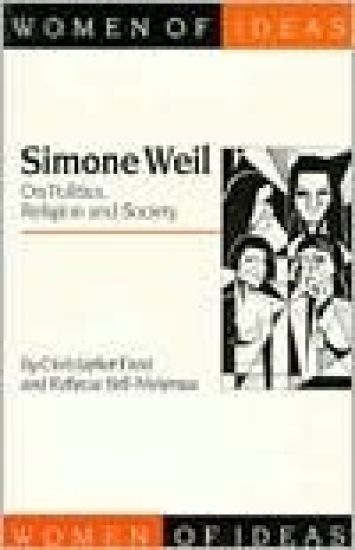
Long before postmodern or deconstructionist ideas became current, Simone Weil was concerned with recognizing the absence of consistency and the continual presence of reversals and contradictions in life. She was someone for whom the task of clarifying her perceptions of reality and meaning was an ongoing one. She challenged contemporary views on such complex issues as human nature, good and evil, divinity and truth. Weil's work offers a voice for those segments of society that are generally under-represented, misrepresented or totally silent in conventional historical and philosophical writings. In this introduction to Simone Weil's ideas, and the political and intellectual circumstances of her work, the authors make Weil's complex and at times elusive ideas accessible to readers. They delineate how her ideas evolved, and provide compelling excerpts from her writings to let her speak for herself. In addition, the authors provide their own interpretation of Weil's work.
Simone Weil

Simone Weil

Nevin Thomas R.

The University of North Carolina Press
2012
nidottu
Over fifty years after her death, Simone Weil (1909-1943) remains one of the most searching religious inquirers and political thinkers of the twentieth century. Albert Camus said she had a ""madness for truth."" She rejected her Jewishness and developed a strong interest in Catholicism, although she never joined the Catholic church. Both an activist and a scholar, she constantly spoke out against injustice and aligned herself with workers, with the colonial poor in France, and with the opressed everywhere. She came to believe that suffering itself could be a way to unity with God, and her death at thirty-four has been recorded as suicide by starvation.This extraordinary study is primarily a topography of Weil's mind, but Thomas Nevin is persuaded that her thought is inextricably bound to her life and dramatic times. Thus, he not only addresses her thoughts and her prejudices but examines her reasons for entertaining them and gives them a historical focus. He claims that to Weil's generation the Spanish War, the Popular Front, the ascendance of Hitlerism, and the Vichy years were not mere backdrops but definitive events.Nevin explores in detail not only matters of continuing interest, such as Weil's leftist politics and her attempt to embrace Christianity, but also hitherto unexamined aspects of her life and work which permit a deeper understanding of her: her writings on science, her work as a poet and dramatist, and her selective friendships. The thread uniting these topics is her struggle to maintain her independence as a free thinker while resisting community such as Judaism could have offered her. Her intellectual struggles eloquently reveal the desperate isolation of Jews torn between the lure of assimilation and the tormented dignity of their communal history.Nevin's massive research draws on the full range of essays, notebooks, and fragments from the Simone Weil archives in Paris, many of which have never been translated or published.Originally published in 1991. A UNC Press Enduring Edition -- UNC Press Enduring Editions use the latest in digital technology to make available again books from our distinguished backlist that were previously out of print. These editions are published unaltered from the original, and are presented in affordable paperback formats, bringing readers both historical and cultural value.
Simone Weil

Simone Weil

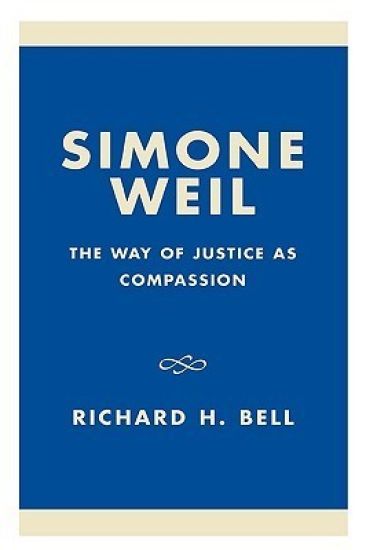
Richard H. Bell

Rowman Littlefield
1998
sidottu
Richard H. Bell analyzes the social and political thought of Simone Weil, paying particular attention to Weil's concept of justice as compassion. Bell describes the ways in which Weil's concept of justice stands in contrast with liberal 'rights-based' views of justice, and focuses upon central aspects of Weil's thought, including 'attention,' human suffering and 'affliction,' and the importance of 'a spiritual way of life' in reshaping the individual's role in civic life. Simone Weil: The Way of Justice as Compassion is a valuable addition to the scholarship on this important thinker and a necessary book for students and scholars of political theory and philosophical moral thought.
Simone Weil

Simone Weil

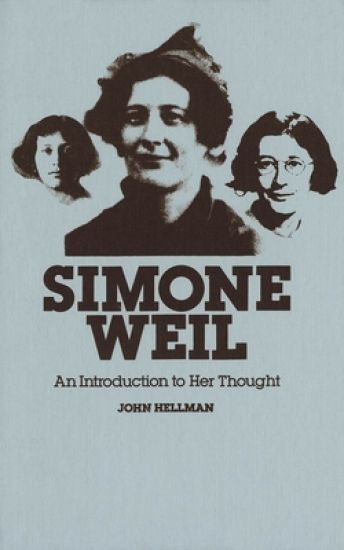
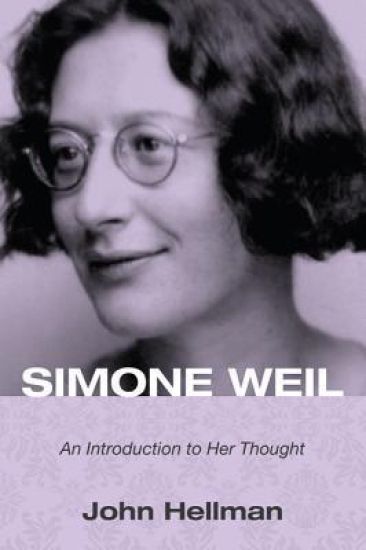
Hellman John

WILFRID LAURIER UNIVERSITY PRESS
1983
sidottu
"The generation of 1930 in French intellectual life was unique in the gravity of the challenges they faced." Simone Weil--the brilliant social and political theorist, activist, and spiritual writer--was one of an eminent company in the France of the 1930s who responded to these challenges. In her brief, remarkable life she wrote a host of essays and letters and filled several notebooks with reflections. Hellman's volume sets out the single world view--with its paradoxes and its logic--which appears behind her disparate writings but which she never lived to set out formally herself. Hellman extracts the key themes in Weil's writings on Marxism, Hitlerism, factory work, history, and religion, in an effort to examine the seeming contradictions and inconsistencies in her fusion of deep spirituality and commitment to the poor and oppressed and her love-hate relationship with Roman Catholicism and Israel. The result is a synthesis of her thought as a whole, drawn principally from her varied, fragmentary writings, and seen in relation to her life and personality.
Simone Weil: Basic Writings

Simone Weil: Basic Writings

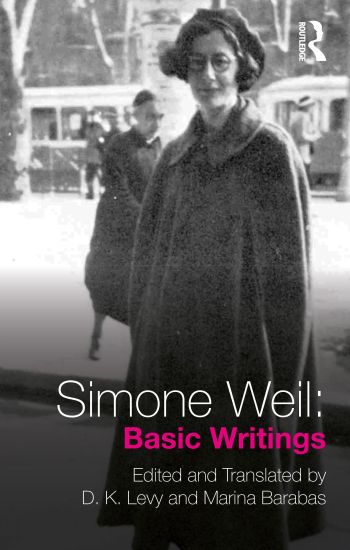
Simone Weil

TAYLOR FRANCIS LTD
2023
nidottu
Simone Weil is one of the most profound and thought-provoking thinkers of the 20th century. A teacher, factory and farm labourer, a political activist at home and abroad, a loving friend, daughter and sister—all these manifest a life devoted to the good in its many forms. Her writings explore the good open to us and the various routes to it, spanning philosophy, politics, science and spirituality. While she saw her vocation primarily as a philosopher—examining questions concerning human faculties, action and thought, the limits of language and our need of mediation, suffering and beauty for contact with reality—her startlingly original thought is often obscured by her having been too readily categorized as a Christian mystic.Simone Weil: Basic Writings is an expertly edited anthology of Weil’s most important writings, presenting her philosophy as it relates to the architecture of human nature, politics, work, necessity, beauty, goodness and God. Working from the definitive French edition of Weil’s complete writings, D. K. Levy and Marina Barabas have translated the essays anew or for the first time, adding important notes and references absent from existing English language editions of Weil’s work.Following an extensive introduction that gives an overview of Weil's life and thought, each part opens with a short preface situating the selected essays within Weil’s oeuvre.Simone Weil: Basic Writings provides an excellent entry point to Weil’s philosophy, as well as a reference for students and scholars of Weil's thought in philosophy and related disciplines.
Simone Weil: Basic Writings

Simone Weil: Basic Writings

Simone Weil

TAYLOR FRANCIS LTD
2023
sidottu
Simone Weil is one of the most profound and thought-provoking thinkers of the 20th century. A teacher, factory and farm labourer, a political activist at home and abroad, a loving friend, daughter and sister—all these manifest a life devoted to the good in its many forms. Her writings explore the good open to us and the various routes to it, spanning philosophy, politics, science and spirituality. While she saw her vocation primarily as a philosopher—examining questions concerning human faculties, action and thought, the limits of language and our need of mediation, suffering and beauty for contact with reality—her startlingly original thought is often obscured by her having been too readily categorized as a Christian mystic.Simone Weil: Basic Writings is an expertly edited anthology of Weil’s most important writings, presenting her philosophy as it relates to the architecture of human nature, politics, work, necessity, beauty, goodness and God. Working from the definitive French edition of Weil’s complete writings, D. K. Levy and Marina Barabas have translated the essays anew or for the first time, adding important notes and references absent from existing English language editions of Weil’s work.Following an extensive introduction that gives an overview of Weil's life and thought, each part opens with a short preface situating the selected essays within Weil’s oeuvre.Simone Weil: Basic Writings provides an excellent entry point to Weil’s philosophy, as well as a reference for students and scholars of Weil's thought in philosophy and related disciplines.