Kirjojen hintavertailu. Mukana 11 342 296 kirjaa ja 12 kauppaa.

Kirjahaku

Etsi kirjoja tekijän nimen, kirjan nimen tai ISBN:n perusteella.

172 tulosta hakusanalla "Suetonius"

Suetonius

Suetonius

D. Wardle

Oxford University Press
2014
sidottu
Suetonius' Life of Augustus is the most commonly read ancient account of the life of Rome's first emperor, presenting a mass of historical and biographical detail about both his public and personal lives. This volume provides the first large-scale commentary on Suetonius' work in English, drawing out what is unique about Suetonius' information, discussing how it relates to other ancient accounts, and assessing its historical reliability. The commentary is the first to be accessible to readers without any knowledge of Latin or Greek due to its use of English lemmata, while the new translation remains faithful to the original Latin. Accompanied by an introduction which investigates the career of Suetonius, the date of the Lives of the Caesars, the structure of the Life of Augustus, the various sources utilized by Suetonius, and the way in which the reader should approach this complex text, the commentary also looks to examine Suetonius' work not just as a repository of facts, but as a literary artefact carefully constructed by its author.
Suetonius

Suetonius

D. Wardle

Oxford University Press
2014
nidottu
Suetonius' Life of Augustus is the most commonly read ancient account of the life of Rome's first emperor, presenting a mass of historical and biographical detail about both his public and personal lives. This volume provides the first large-scale commentary on Suetonius' work in English, drawing out what is unique about Suetonius' information, discussing how it relates to other ancient accounts, and assessing its historical reliability. The commentary is the first to be accessible to readers without any knowledge of Latin or Greek due to its use of English lemmata, while the new translation remains faithful to the original Latin. Accompanied by an introduction which investigates the career of Suetonius, the date of the Lives of the Caesars, the structure of the Life of Augustus, the various sources utilized by Suetonius, and the way in which the reader should approach this complex text, the commentary also looks to examine Suetonius' work not just as a repository of facts, but as a literary artefact carefully constructed by its author.
Suetonius: Diuus Claudius

Suetonius: Diuus Claudius

Suetonius

Cambridge University Press
2001
pokkari
The first-century emperor Claudius did not leave the fledgling Roman Empire as he had found it: his contribution was to turn its developing institutions into an imperial tradition. But the ancient sources represent him as an odd personality - active but manipulated by his inferiors, at once distracted and awkward and cruel. Suetonius’ biography is a rich offering of both solid fact and the prejudicial anecdotes that his contemporaries and the generation that followed thought worth repeating, raw material for exploring the man and his reign. This commentary provides context for the text’s abundant information, but form is not neglected, and attention is given to Suetonius’ intelligent and conscious marshalling of his material, and guidance offered to students reading the biographer’s often densely compressed style. This is the first English commentary on the Claudius Life to deal with both historical and stylistic issues.
The Lives of the XII. Cæsars, or the First Twelve Roman Emperors, Written in Latin by C. Suetonius Tranquillus. Translated Into English, With Explanatory Notes. Adorn'd With Cuts. In two Volumes. of 2; Volume 1
The 18th century was a wealth of knowledge, exploration and rapidly growing technology and expanding record-keeping made possible by advances in the printing press. In its determination to preserve the century of revolution, Gale initiated a revolution of its own: digitization of epic proportions to preserve these invaluable works in the largest archive of its kind. Now for the first time these high-quality digital copies of original 18th century manuscripts are available in print, making them highly accessible to libraries, undergraduate students, and independent scholars.Rich in titles on English life and social history, this collection spans the world as it was known to eighteenth-century historians and explorers. Titles include a wealth of travel accounts and diaries, histories of nations from throughout the world, and maps and charts of a world that was still being discovered. Students of the War of American Independence will find fascinating accounts from the British side of conflict. ++++The below data was compiled from various identification fields in the bibliographic record of this title. This data is provided as an additional tool in helping to insure edition identification: ++++British LibraryT145613With separate volume titlepages; register and pagination are continuous. The translation is by Jabez Hughes.London: printed for J. Nicholson, 1717. 2v.( 34],502, 18]p., plates); 12
The Lives of the XII. Cæsars, or the First Twelve Roman Emperors, Written in Latin by C. Suetonius Tranquillus. Translated Into English, With Explanatory Notes. Adorn'd With Cuts. In two Volumes. of 2; Volume 2
The 18th century was a wealth of knowledge, exploration and rapidly growing technology and expanding record-keeping made possible by advances in the printing press. In its determination to preserve the century of revolution, Gale initiated a revolution of its own: digitization of epic proportions to preserve these invaluable works in the largest archive of its kind. Now for the first time these high-quality digital copies of original 18th century manuscripts are available in print, making them highly accessible to libraries, undergraduate students, and independent scholars.Rich in titles on English life and social history, this collection spans the world as it was known to eighteenth-century historians and explorers. Titles include a wealth of travel accounts and diaries, histories of nations from throughout the world, and maps and charts of a world that was still being discovered. Students of the War of American Independence will find fascinating accounts from the British side of conflict. ++++The below data was compiled from various identification fields in the bibliographic record of this title. This data is provided as an additional tool in helping to insure edition identification: ++++British LibraryT145613With separate volume titlepages; register and pagination are continuous. The translation is by Jabez Hughes.London: printed for J. Nicholson, 1717. 2v.( 34],502, 18]p., plates); 12
The Lives of the Twelve Cæsars, Written in Latin by C. Suetonius Tranquillus. Translated Into English, With Explanatory Notes, by Mr. Hughes. Adorn'd With Cuts. In two Volumes. The Second Edition. of 2; Volume 1
The 18th century was a wealth of knowledge, exploration and rapidly growing technology and expanding record-keeping made possible by advances in the printing press. In its determination to preserve the century of revolution, Gale initiated a revolution of its own: digitization of epic proportions to preserve these invaluable works in the largest archive of its kind. Now for the first time these high-quality digital copies of original 18th century manuscripts are available in print, making them highly accessible to libraries, undergraduate students, and independent scholars.Rich in titles on English life and social history, this collection spans the world as it was known to eighteenth-century historians and explorers. Titles include a wealth of travel accounts and diaries, histories of nations from throughout the world, and maps and charts of a world that was still being discovered. Students of the War of American Independence will find fascinating accounts from the British side of conflict. ++++The below data was compiled from various identification fields in the bibliographic record of this title. This data is provided as an additional tool in helping to insure edition identification: ++++Bodleian Library (Oxford)N011156Pagination is continuous.London: printed for Theodore Sanders, 1726. 2v., plates; 12
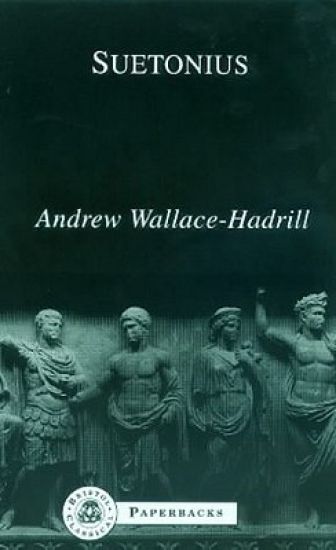
Suetonius

Suetonius

Andrew Wallace-Hadrill

Bristol Classical Press
1998
nidottu
Seutonius, a Roman historian, was the author of "The Lives of the Caesars". This biography sets the historian's career and his method of dealing with his subject matter in the context of Roman society in the early Empire, and draws a picture of the coherence of Suetonius's life, appointments, scholarship and literary activities. Seutonius is presented as a man of learning, rather than as a failed narrative historian. This portrait takes account of recent evidence concerning his life and seeks to clarify the character of "The Lives of the Caesars" as a description of emperors and Roman imperial society by a scholarly biographer who himself was in the service of a scholarly Caesar - the Emperor Hadrian.
Suetonius Vespasian

Suetonius Vespasian

Suetonius

Bristol Classical Press
2000
pokkari
The emperor Vespasian (AD69-79) is universally regarded as one of the better Roman emperors. Coming to the throne after the demise of Nero and the bitterness of a year-long civil war, he restored the empire's finances and inaugurated a period of peace and prosperity. Tacitus, Pliny and Josephus had a high regard for Vespasian, portraying him as an astute commander and an excellent emperor. In comparison with the comments of these contemporary or near-contemporary writers, Suetonius' biography, produced some fifty years after the emperor's death, is quite detailed. He too admired Vespasian. For him, Vespasian was a very shrewd administrator, who liked to be seen as having the common touch and as an ex-soldier with a ribald sense of humour. These and other aspects of his character are revealed in a series of anecdotes, always amusing and always opposite. This edition (the first since 1930) offers a newly revised text with a general introduction and detailed commentary. Comparison is continually drawn between Vespasian and other accounts of the reign, especially that of Dio Cassius, the only other substantial account but written a century after that of Suetonius.
Suetonius' Life of Augustus

Suetonius' Life of Augustus

OXFORD UNIVERSITY PRESS INC
2023
sidottu
The lifetime of Augustus (63 BCE -14 CE) was a key moment of transition for the Roman world. Following decades of civil war, the traditional government of the Roman Republic evolved to include a leading role for Augustus. Peace at home was balanced with wars of expansion and consolidation on the frontiers. Literature and the arts flourished. A building boom transformed the city of Rome. Augustus was at the center of it all, and thus the lifetime of Augustus and the life of Augustus himself have attracted keen interest from antiquity up to the present day. In his biography of Augustus, the early second century CE author C. Suetonius Tranquillus offers not only a survey of the major political, military and civic accomplishments of his subject, but also includes such diverse topics as Augustus's family lineage, spouses, personal appearance, leisure activities, intellectual pursuits and style of living. We find in the Life of Augustus a detailed biography of a leading figure at a pivotal historical moment, as well as the material for political, social, and cultural history that offers a wide range of approaches to the Augustan age. This volume provides a comprehensive edition of Suetonius's Life of Augustus for readers of Latin at the intermediate and advanced levels. The complete Latin text is presented, accompanied on the same page by a running vocabulary, grammatical support, and historical notes to aid comprehension, making this volume ideally suited for use on its own. An introduction to Suetonius and his style of biographical writing provides context for interpreting the text.
Suetonius: Lives of the Caesars & On Teachers of Grammar and Rhetoric (C. Suetoni Tranquilli De uita Caesarum libri VIII et De grammaticis et rhetoribus liber)
Oxford Classical Texts, also known as Scriptorum Classicorum Bibliotheca Oxoniensis, provide authoritative, clear, and reliable editions of ancient texts. Suetonius' Lives of the Caesars-the collected biographies of the Roman Empire's first leaders-is an indispensable source for our understanding of the first century of the Roman Empire and is, at the same time, one of the main sources (with Plutarch) of the tradition of biographical writing in the West. This volume provides the first new critical edition of the Latin text to appear in over a century, and has been rigorously edited to the highest standards of scholarship. The Latin text is accompanied by a critical apparatus at the foot of the page which provides concise information on manuscript and textual variants. It is also the first edition ever to base itself on a comprehensive and accurate analysis of the medieval manuscript tradition (ninth to thirteenth centuries) on which the text is based. An extensive English preface-featuring illustrative stemmata-is included, as well as a detailed apparatus testium. It also features an updated version of the editor's original 1995 Oxford University Press edition of De grammaticis et rhetoribus, a collection of brief biographies of ancient Roman teachers of grammar and rhetoric (first century BCE-first century CE) that is a crucial source for the history of ancient education. This Oxford Classical Text is accompanied by a companion volume, Studies on the Text of Suetonius' De uita Caesarum, which provides a detailed insight into the research and textual analysis underlying this critical edition.
Suetonius the Biographer

Suetonius the Biographer

Oxford University Press
2018
nidottu
The biographer Suetonius is one of the most fascinating writers of ancient Rome, but he is rarely afforded serious critical attention. This volume of new essays focuses on the various aspects of Suetonius' work, from his lost writing on Roman courtesans to his imperial portraits of the Caesars. Beginning with an introduction that assesses the originality of Suetonius as a writer and situates the essays within the context of debates and controversies over his biographical form, the collection addresses the issues surrounding his style, themes, and early influence on literature in three parts. The first part discusses formal features of Suetonian biography, such as his literary techniques, manners of citation and quotation, and devices of allusion and closure. The middle section is devoted to readings of the individual Lives, treating several topics - from Suetonius' decision to begin his collection with Julius Caesar, to fictional elements in his death scene of the emperor Caligula, to the theme of solitude in his Life of Domitian. The last part examines the ways in which Suetonius transgresses the boundaries of ancient biography by looking at his influence on epistolographers, antiquarians, commentators, and later biographers. This volume is essential reading for anyone who wants to know why Suetonius' Lives are such a unique and powerful medium for the stories of ancient Rome, and how they became the primary model for later biography.
Suetonius: Life of Julius Caesar

Suetonius: Life of Julius Caesar

D. Wardle

Oxford University Press
2025
sidottu
Suetonius' Life of Julius Caesar (Vita Divi Iuli in the original Latin) deals with one of the best known of all Romans. His highly colourful account of Caesar's life begins a series of twelve Lives of Rome's first emperors (Caesars) and describes how Caesar was the gods' means of ending the Roman Republic and of introducing a new form of government. Suetonius presents a picture of a man who was driven in pursuit of power and honour, even initiating a bloody civil war to protect his own interests. Although Caesar was famously assassinated on the Ides of March 44 BC, his ultimate status was that of a god, Divus Iulius, as which he is celebrated by Suetonius. Wardle's volume provides a new translation of the Life with a full introduction and commentary on the events it describes. The volume discusses both the historical and the historiographical aspects of the Life, what we believe happened and what Suetonius says happened; it relates Suetonius' distinctive approach to life-writing to other examples from Greek and Roman authors and shows how the Life is a carefully constructed literary artefact rather than the styleless conglomeration of facts it has often been considered to be. Suetonius' account makes use of material written by Caesar's contemporaries as he rose to pre-eminence and reflects how subsequent generations, living and writing under the system that Suetonius for one believed he initiated, themselves imagined Caesar.
Suetonius' Life of Augustus

Suetonius' Life of Augustus

OXFORD UNIVERSITY PRESS INC
2023
nidottu
The lifetime of Augustus (63 BCE -14 CE) was a key moment of transition for the Roman world. Following decades of civil war, the traditional government of the Roman Republic evolved to include a leading role for Augustus. Peace at home was balanced with wars of expansion and consolidation on the frontiers. Literature and the arts flourished. A building boom transformed the city of Rome. Augustus was at the center of it all, and thus the lifetime of Augustus and the life of Augustus himself have attracted keen interest from antiquity up to the present day. In his biography of Augustus, the early second century CE author C. Suetonius Tranquillus offers not only a survey of the major political, military and civic accomplishments of his subject, but also includes such diverse topics as Augustus's family lineage, spouses, personal appearance, leisure activities, intellectual pursuits and style of living. We find in the Life of Augustus a detailed biography of a leading figure at a pivotal historical moment, as well as the material for political, social, and cultural history that offers a wide range of approaches to the Augustan age. This volume provides a comprehensive edition of Suetonius's Life of Augustus for readers of Latin at the intermediate and advanced levels. The complete Latin text is presented, accompanied on the same page by a running vocabulary, grammatical support, and historical notes to aid comprehension, making this volume ideally suited for use on its own. An introduction to Suetonius and his style of biographical writing provides context for interpreting the text.
Suetonius the Biographer

Suetonius the Biographer

Oxford University Press
2014
sidottu
The biographer Suetonius is one of the most fascinating writers of ancient Rome, but he is rarely afforded serious critical attention. This volume of new essays focuses on the various aspects of Suetonius' work, from his lost biographical writing on Roman courtesans to his imperial portraits of the Caesars. Beginning with an introduction that assesses the originality of Suetonius as a writer and situates the essays within the context of debates and controversies over his biographical form, the collection addresses the issues surrounding his style, themes, and early influence on literature in three parts. The first part discusses formal features of Suetonian biography, such as his literary techniques, manners of citation and quotation, and devices of allusion and closure. The middle section is devoted to readings of the individual Lives, treating several topics - from Suetonius' decision to begin his collection with Julius Caesar, to fictional elements in his death scene of the emperor Caligula, and to the theme of solitude in his Life of Domitian. The last part examines the ways in which Suetonius transgresses the boundaries of ancient biography by looking at his influence on epistolographers, antiquarians, commentators, and later biographers. This volume is essential reading for anyone who wants to know why Suetonius' Lives are such a unique and powerful medium for the stories of ancient Rome, and how they became the primary model for later biography.
Suetonius: Lives of Galba, Otho and Vitellius

Suetonius: Lives of Galba, Otho and Vitellius

David C. A. Shotter

Aris Phillips Ltd
1994
nidottu
Suetonius has often been used as if he were an historian, and at the same time criticised for not being one. This is a new translation of and commentary on Suetonius' biographies of three emperors, Galba, Otho, and Vitellius, who held power for short periods in the tumultuous and confused events that encompassed and followed the end of the Julio-Claudian period in AD 69. The introductory essays discuss Suetonius' purposes and qualities as a writer, and seek to elucidate the personalities and careers of the three emperors as well as the events of which they were a part. The importance of this study lies in the fact that it applies fresh understanding of these events to Suetonius' accounts, comparing them to the chief 'alternative' to be found in the works of Tacitus, Plutarch and Dio Cassius. The careers and reigns of the three emperors are discussed in the introduction, whilst the 'minor characters' involved in the events are treated, as relevant, in the commentary; this is constructed with the non-Latinist in mind, and the notes are appended to the translation rather than to the Latin text. Latin text with facing-page translation.