Kirjojen hintavertailu. Mukana 11 627 220 kirjaa ja 12 kauppaa.

Kirjahaku

Etsi kirjoja tekijän nimen, kirjan nimen tai ISBN:n perusteella.

18 tulosta hakusanalla "Susan Stebbing"

Susan Stebbing

Susan Stebbing

OXFORD UNIVERSITY PRESS INC
2025
sidottu
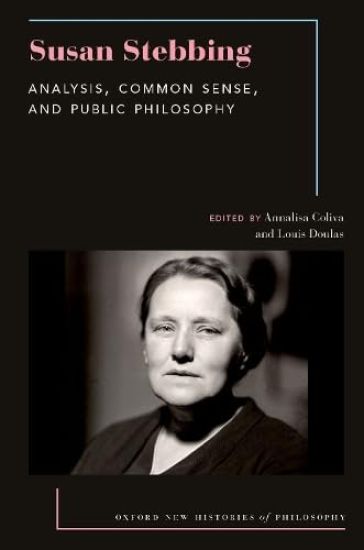
Susan Stebbing: Analysis, Common Sense, and Public Philosophy is the first edited volume to be dedicated exclusively to the philosophy of Susan Stebbing (1885-1943)-a pivotal female figure in the male-dominated tradition of early analytic philosophy, and Britain's first female professor of philosophy who has, until recently, been unjustly neglected. This volume collects eleven new essays that explore various elements of Stebbing's prolific output: the significance of her work on metaphysical analysis, her contributions to public philosophy, including her work in the philosophy of physics, critical thinking, ethics, and counterpropaganda efforts, as well as her work in philosophical logic and the philosophy of language. The volume and its contributors aim to reinstate Stebbing's place in the analytic tradition by examining her ideas - many of which are still relevant to present day philosophy - in context and elucidating their significance.
Susan Stebbing

Susan Stebbing

OXFORD UNIVERSITY PRESS INC
2025
nidottu
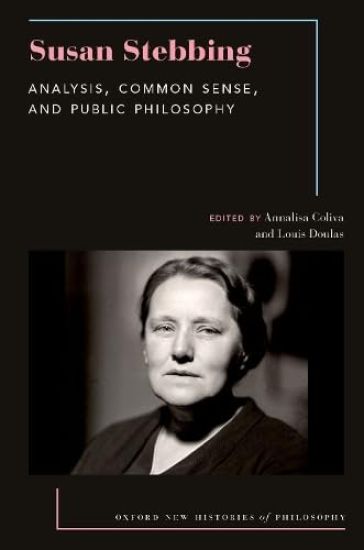
Susan Stebbing: Analysis, Common Sense, and Public Philosophy is the first edited volume to be dedicated exclusively to the philosophy of Susan Stebbing (1885-1943)-a pivotal female figure in the male-dominated tradition of early analytic philosophy, and Britain's first female professor of philosophy who has, until recently, been unjustly neglected. This volume collects eleven new essays that explore various elements of Stebbing's prolific output: the significance of her work on metaphysical analysis, her contributions to public philosophy, including her work in the philosophy of physics, critical thinking, ethics, and counterpropaganda efforts, as well as her work in philosophical logic and the philosophy of language. The volume and its contributors aim to reinstate Stebbing's place in the analytic tradition by examining her ideas - many of which are still relevant to present day philosophy - in context and elucidating their significance.
Susan Stebbing

Susan Stebbing

Frederique Janssen-Lauret

Cambridge University Press
2022
pokkari
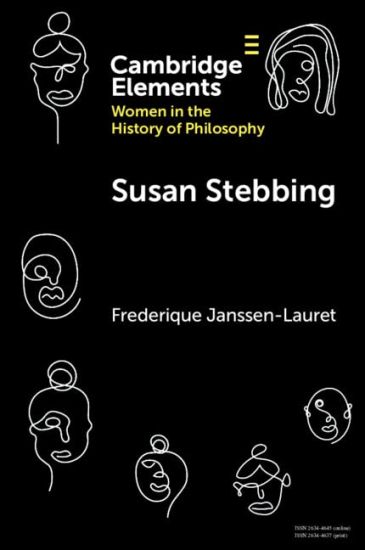
Susan Stebbing (1885–1943), the UK's first female professor of philosophy, was a key figure in the development of analytic philosophy. Stebbing wrote the world's first accessible book on the new polyadic logic and its philosophy. She made major contributions to the philosophy of science, metaphysics, philosophical logic, critical thinking and applied philosophy. Nonetheless she has remained largely neglected by historians of analytic philosophy. This Element provides a thorough yet accessible overview of Stebbing's positive, original contributions, including her solution to the paradox of analysis, her account of the relation of sense data to physical objects, and her anti- idealist interpretation of the new Einsteinian physics. Stebbing's innovative work in these and other areas helped move analytic philosophy from its early phase to its middle period.
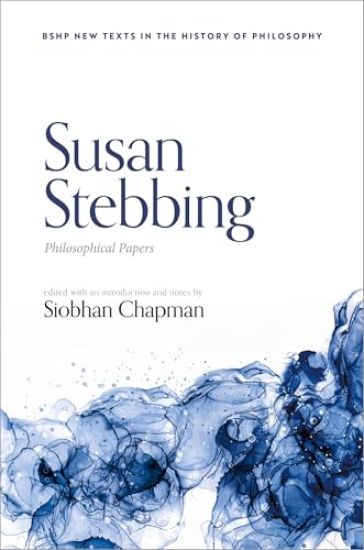
Susan Stebbing: Philosophical Papers
Susan Stebbing (1885-1943) was an important figure in the development of analytic philosophy. She was author of the ground-breaking work A Modern Introduction to Logic (1930), critic of what she saw as the inaccuracies in terminology and method of many of her most celebrated contemporaries, and originator of the concept of 'directional analysis', which was foundational to the 'Cambridge' school during the 1930s. She was also a leading proponent of public philosophy, and in books such as Philosophy and the Physicists (1937) and Thinking to Some Purpose (1939) she wrote for a general readership, exposing the dangers of misleading phrasing and implicit ideologies in the language used by authority figures such as scientists, politicians, and religious leaders. This volume is the first published selection of Stebbing's writings, bringing together sixteen papers from across the span of her thinking. The papers are grouped thematically into four parts, on 'Logic', 'Science', 'Analysis' and 'Ideology'. In the Introduction, Siobhan Chapman presents an overview of Stebbing's work and an account of the significance of each of the selected papers, and extensive notes offer the reader the opportunity to engage with the published works referred to in the papers. The volume includes a bibliography of Stebbing's numerous publications.
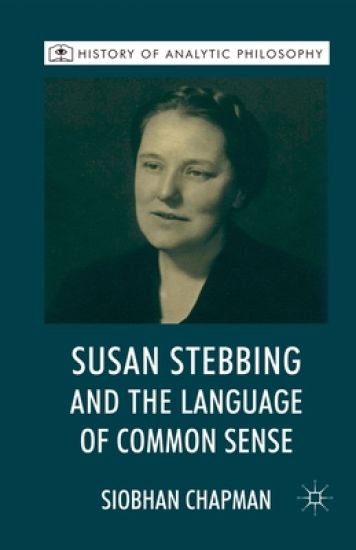
Susan Stebbing and the Language of Common Sense
This first book-length study of the work and life of L. Susan Stebbing relates the development of her thought to the philosophical, social and political background of her life. It also assesses Stebbing's contribution in the light of developments both in analytic philosophy and in linguistics in the decade since her death.
Susan Stebbing and the Language of Common Sense
This first book-length study of the work and life of L. Susan Stebbing relates the development of her thought to the philosophical, social and political background of her life. It also assesses Stebbing's contribution in the light of developments both in analytic philosophy and in linguistics in the decade since her death.
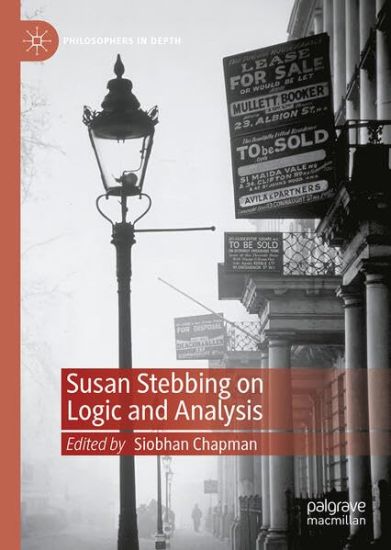
Susan Stebbing on Logic and Analysis

Susan Stebbing on Logic and Analysis

Springer Nature Switzerland AG
2026
sidottu
This volume presents a collection of newly commissioned essays on the work of L. Susan Stebbing (1885-1943). Stebbing was an important figure in the development of analytic philosophy in the first half of the twentieth century, and a pioneer of the social utility of philosophy and of the application of logical analysis to critical inquiry into language use. The separate studies of Stebbing's work included in this volume offer fresh perspectives across three broad topics: Logic and Cambridge Analysis; Idealism, Realism and the Philosophy of Science; and Public Philosophy and Social Engagement. The volume brings together seven chapters by leading international scholars in the field, along with a contextualising introduction, in order to advance understanding of the importance, originality and continuing significance of Stebbing's remarkable oeuvre.
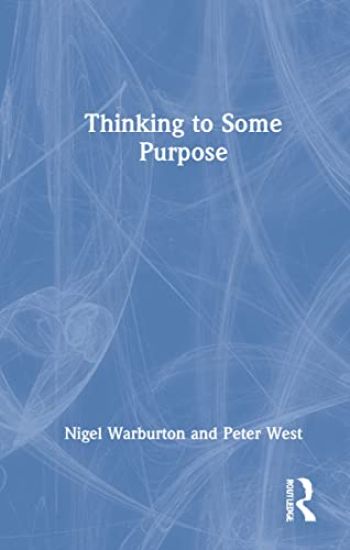
Thinking to Some Purpose

Thinking to Some Purpose

Susan Stebbing

TAYLOR FRANCIS LTD
2022
nidottu
"I am convinced of the urgent need for a democratic people to think clearly without the distortions due to unconscious bias and unrecognized ignorance. Our failures in thinking are in part due to faults which we could to some extent overcome were we to see clearly how these faults arise. It is the aim of this book to make a small effort in this direction." - Susan Stebbing, from the Preface Despite huge advances in education, knowledge and communication, it can often seem we are neither well-trained nor well practised in the art of clear thinking. Our powers of reasoning and argument are less confident that they should be, we frequently ignore evidence and we are all too often swayed by rhetoric rather than reason. But what can you do to think and argue better?First published in 1939 but unavailable for many years, Susan Stebbing's Thinking to Some Purpose is a classic first-aid manual of how to think clearly, and remains astonishingly fresh and insightful. Written against a background of the rise of dictatorships and the collapse of democracy in Europe, it is packed with useful tips and insights. Stebbing offers shrewd advice on how to think critically and clearly, how to spot illogical statements and slipshod thinking, and how to rely on reason rather than emotion. At a time when we are again faced with serious threats to democracy and freedom of thought, Stebbing’s advice remains as urgent and important as ever.This Routledge edition of Thinking to Some Purpose includes a new Foreword by Nigel Warburton and a helpful Introduction by Peter West, who places Susan Stebbing’s classic book in historical and philosophical context.
Thinking to Some Purpose

Thinking to Some Purpose

Susan Stebbing

TAYLOR FRANCIS LTD
2022
sidottu
"I am convinced of the urgent need for a democratic people to think clearly without the distortions due to unconscious bias and unrecognized ignorance. Our failures in thinking are in part due to faults which we could to some extent overcome were we to see clearly how these faults arise. It is the aim of this book to make a small effort in this direction." - Susan Stebbing, from the Preface Despite huge advances in education, knowledge and communication, it can often seem we are neither well-trained nor well practised in the art of clear thinking. Our powers of reasoning and argument are less confident that they should be, we frequently ignore evidence and we are all too often swayed by rhetoric rather than reason. But what can you do to think and argue better?First published in 1939 but unavailable for many years, Susan Stebbing's Thinking to Some Purpose is a classic first-aid manual of how to think clearly, and remains astonishingly fresh and insightful. Written against a background of the rise of dictatorships and the collapse of democracy in Europe, it is packed with useful tips and insights. Stebbing offers shrewd advice on how to think critically and clearly, how to spot illogical statements and slipshod thinking, and how to rely on reason rather than emotion. At a time when we are again faced with serious threats to democracy and freedom of thought, Stebbing’s advice remains as urgent and important as ever.This Routledge edition of Thinking to Some Purpose includes a new Foreword by Nigel Warburton and a helpful Introduction by Peter West, who places Susan Stebbing’s classic book in historical and philosophical context.
Revival: Philosophy and the Physicists (1937)

Revival: Philosophy and the Physicists (1937)

Lizzie Susan Stebbing

Routledge
2018
sidottu
This book is written by a philosopher for other philosophers and for that section of the reading public who buy in large quantities and, no doubt, devour with great earnestness the popular books written by scientists for their enlightenment. We common readers, to adapt a phrase from Samuel Johnson, are fitted neither to criticize physical theories not to decide what precisely are their implications. We are dependent upon the scientists for an exposition of those developments which – so we find them proclaiming – have important and far-reaching consequences for philosophy. Unfortunately, however, our popular expositors do not always serve us very well. The two who are most widely read in this country are Sir Arthur Eddington and Sir James Jeans. They are not always reliable guides. Their influence has been considerable upon the reading public, upon theologians, and upon preachers; they have even misled philosopher who should have known better. Accordingly, it has seemed to me to be worth while to examine in some detail the philosophical views that they have put forth and to criticize the grounds upon which these views are based.
Revival: A Modern Introduction to Logic (1950)

Revival: A Modern Introduction to Logic (1950)

Lizzie Susan Stebbing

Routledge
2018
sidottu
As the author of this volume states, "the science of logic does not stand still." This book was intended to cover the advances made in the study of logic in the first half of the nineteenth century, during which time the author felt there to have been greater advances made than in the whole of the preceding period from the time of Aristotle. Advances which, in her eyes, were not present in contemporary text books. As such, this book offers a valuable insight into the progress of the subject, tracing this frenetic period in its development with a first-hand awareness of its documentary value.
Revival: A Modern Introduction to Logic (1950)

Revival: A Modern Introduction to Logic (1950)

Lizzie Susan Stebbing

Routledge
2019
nidottu
As the author of this volume states, "the science of logic does not stand still." This book was intended to cover the advances made in the study of logic in the first half of the nineteenth century, during which time the author felt there to have been greater advances made than in the whole of the preceding period from the time of Aristotle. Advances which, in her eyes, were not present in contemporary text books. As such, this book offers a valuable insight into the progress of the subject, tracing this frenetic period in its development with a first-hand awareness of its documentary value.
Revival: Philosophy and the Physicists (1937)

Revival: Philosophy and the Physicists (1937)

Lizzie Susan Stebbing

Routledge
2019
nidottu
This book is written by a philosopher for other philosophers and for that section of the reading public who buy in large quantities and, no doubt, devour with great earnestness the popular books written by scientists for their enlightenment. We common readers, to adapt a phrase from Samuel Johnson, are fitted neither to criticize physical theories not to decide what precisely are their implications. We are dependent upon the scientists for an exposition of those developments which – so we find them proclaiming – have important and far-reaching consequences for philosophy. Unfortunately, however, our popular expositors do not always serve us very well. The two who are most widely read in this country are Sir Arthur Eddington and Sir James Jeans. They are not always reliable guides. Their influence has been considerable upon the reading public, upon theologians, and upon preachers; they have even misled philosopher who should have known better. Accordingly, it has seemed to me to be worth while to examine in some detail the philosophical views that they have put forth and to criticize the grounds upon which these views are based.
Logic in Practice

Logic in Practice

L. Susan Stebbing

Routledge
2019
sidottu
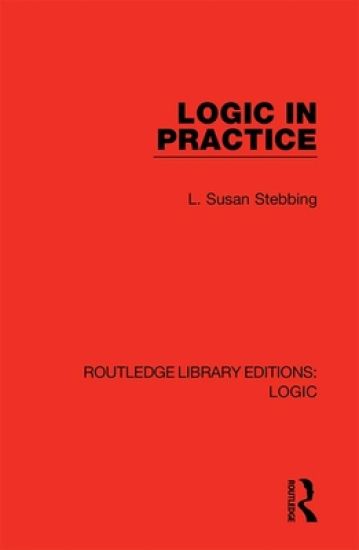
Originally published in 1934. This fourth edition originally published 1954., revised by C. W. K. Mundle."It must be the desire of every reasonable person to know how to justify a contention which is of sufficient importance to be seriously questioned. The explicit formulation of the principles of sound reasoning is the concern of Logic".This book discusses the habit of sound reasoning which is acquired by consciously attending to the logical principles of sound reasoning, in order to apply them to test the soundness of arguments. It isn’t an introduction to logic but it encourages the practice of logic, of deciding whether reasons in argument are sound or unsound. Stress is laid upon the importance of considering language, which is a key instrument of our thinking and is imperfect.
Logic in Practice

Logic in Practice

L. Susan Stebbing

Routledge
2021
nidottu
Originally published in 1934. This fourth edition originally published 1954., revised by C. W. K. Mundle."It must be the desire of every reasonable person to know how to justify a contention which is of sufficient importance to be seriously questioned. The explicit formulation of the principles of sound reasoning is the concern of Logic".This book discusses the habit of sound reasoning which is acquired by consciously attending to the logical principles of sound reasoning, in order to apply them to test the soundness of arguments. It isn’t an introduction to logic but it encourages the practice of logic, of deciding whether reasons in argument are sound or unsound. Stress is laid upon the importance of considering language, which is a key instrument of our thinking and is imperfect.
Pragmatism and French Voluntarism

Pragmatism and French Voluntarism

L. Susan Stebbing

Cambridge University Press
2013
pokkari
Originally published in 1914, this book examines the French Voluntarist school of philosophy and the key ways in which it differs from the Pragmatists. Stebbing argues that Voluntarism and Pragmatism both prove inadequate in their definition of truth, and suggests that an acknowledgment of the 'non-existential character of truth' is needed. This book will be of value to anyone with an interest in philosophy.
Routledge Revivals: A Modern Elementary Logic (1952)
First published in 1943, and revised for this 1952 edition, this book was intended for use by students of philosophy and as such traditional and modern developments in logic have been combined in a unified treatment. The author envisaged this volume as filling a gap for a simple, introductory text on formal logic, written from a modern point of view, unencumbered by traditional doctrine. This title provides a thorough introduction and grounding in the philosophy of logic, and was later revised after the author’s death to correct a number of logical errors — making this edition the most complete version of the work.
Routledge Revivals: A Modern Elementary Logic (1952)
First published in 1943, and revised for this 1952 edition, this book was intended for use by students of philosophy and as such traditional and modern developments in logic have been combined in a unified treatment. The author envisaged this volume as filling a gap for a simple, introductory text on formal logic, written from a modern point of view, unencumbered by traditional doctrine. This title provides a thorough introduction and grounding in the philosophy of logic, and was later revised after the author’s death to correct a number of logical errors — making this edition the most complete version of the work.