Kirjojen hintavertailu. Mukana 11 244 527 kirjaa ja 12 kauppaa.

Kirjahaku

Etsi kirjoja tekijän nimen, kirjan nimen tai ISBN:n perusteella.

8 tulosta hakusanalla "T Lymphocytes"

T Lymphocytes

T Lymphocytes

Kluwer Academic / Plenum Publishers
1992
sidottu
Elucidates the structure and function of T lymphocytes, the commanding elements of the immune system, providing a balance between the basic principles and latest experimental findings of cellular immunology; and the hypotheses, speculations, and new projections that will inform the field during the
T Lymphocytes

T Lymphocytes

Springer-Verlag New York Inc.
2012
nidottu
This volume contains the proceedings of the NATO Advanced Study Institute held in Porto Conte (Alghero), Sardinia, September 15-27, 1991. The A. S. 1. was attended by 86 graduate and postgraduate students from 18 different countries, and was hosted by the newly founded International Laboratory of Molecular Genetics of Porto Conte, directed by Prof. Marcello Siniscalco. The A. S. I. was funded by NATO Scientific Affairs Division, the International Union of Immunological Societies, the European Community (Directorate General for Science, Research and Development), the Italian Research Council, and the San Raffaele Institute of Milano. In addition, a number of students who reside in the U. S. received travel funds from the U. S. National Science Foundation, and the Turkish National Fund provided financial assistance to several students from Turkey. When we decided to organize a course on T lymphocytes, our concern was to reach a balance between the teaching of both the hard core principles and the latest experimental findings of cellular immunology, and the recently expanded interfaces with the not-yet­ known: hypotheses, speCUlations, new projections to be born from the discussions.
T Lymphocytes Subpopulations in Immunotoxicology
T Lymphocyte Subpopulations in Immunotoxicology Edited by Ian Kimber ZENECA Pharmaceuticals, Central Toxicology Laboratory, Macclesfield, Cheshire, UK and Mary Jane K. Selgrade US Environmental Protection Agency, National Health and Environmental Effects Research Laboratory, NC, USA Immunotoxicology is a diverse discipline that embraces the investigation of the adverse health effects that may result from the interaction of xenobiotics with the immune system. T lymphocytes orchestrate adaptive immune responses and are of central importance in the consideration of immunotoxicity. These cells and/or the tissue responsible for their functional maturation (the thymus) have been implicated as the primary or secondary targets for chemical insult. Moreover, T lymphocytes play pivotal roles in the induction and elicitation of chemical and protein allergy and in the pathogenesis of autoimmune disease. Classically, T lymphocytes have been divided into two main populations: CD4 helper T cells and CD8 suppressor/cytotoxic T cells. It is now apparent that there exists within both populations considerable functional heterogeneity, characterized usually by variable cytokine secretion patterns. Two major subpopulations of T helper (Th) cells have been identified and designated Th1 and Th2, with similar, but less well characterized, sub-types of cytotoxic (Tc) cells having been described also. The discovery of functional subpopulations of Th (and Tc) cells has profoundly influenced our view of the immune response and, in particular, our appreciation of the way in which the immune system can tailor responses to meet challenges of different types. This has also translated into a much more detailed understanding of certain immunopathologic processes and the role of T lymphocytes in the development of allergic, autoimmune and inflammatory diseases. This book explores the role of T lymphocyte subpopulations in the development and expression of immunotoxic effects. Constituent chapters reveal that a consideration of the impact of chemicals on these diverse T cell populations and the polarization of T cell responses has already contributed greatly to our understanding of the mechanisms underlying immunotoxicity, including immune suppression and allergic and autoimmune responses.
T Lymphocytes as Tools in Diagnostics and Immunotoxicology
This book summarizes the state-of-the art in the development of T cell-based in vitro assays, which offer useful tools for hazard identification, risk assessment and improvement of diagnostics. It will be of interest to scientists, the chemical and pharmaceutical industry, and regulators involved in the replacement of animal testing methods.The identification of hazardous chemicals and drugs is essential to ensuring human health. The ban on animal testing for the cosmetics industry since 2009 and international efforts to reduce and replace animal testing in research and immunotoxicology call for alternative in vitro methods. The most specific immune response to chemicals and drugs that cause allergic contact dermatitis, respiratory disease and adverse drug reactions is the highly antigen-specific T lymphocyte response. Therefore the use of T cells as tools for identifying contact allergens and drugs that may cause health problems is of great interest.
Cytotoxic T-Lymphocytes in Human Viral and Malaria Infections

Cytotoxic T-Lymphocytes in Human Viral and Malaria Infections

Springer-Verlag Berlin and Heidelberg GmbH Co. K
2011
nidottu
Cytotoxic T lymphocytes (CTL) control several viral infections in animals based on deletion and reconstitution experiments with CTL clones and use of CD8 genetically deficient (knock-out) mice. In this volume, data for the role that CTL play in human infectious diseases is presented. As such, this represents the first volume in which such information from several different viral and protozoan infections is brought together.
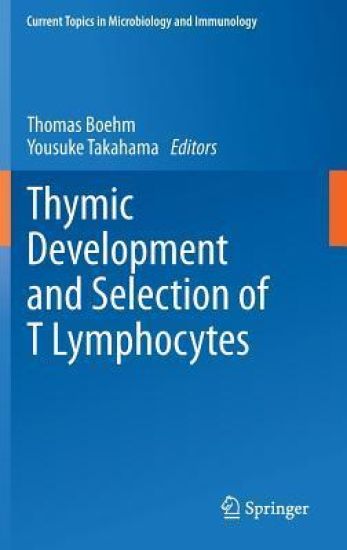
Thymic Development and Selection of T Lymphocytes

Thymic Development and Selection of T Lymphocytes

Springer-Verlag Berlin and Heidelberg GmbH Co. K
2013
sidottu
The thymus is an evolutionarily ancient primary lymphoid organ common to all vertebrates in which T cell development takes place. Failing thymus function is associated with immunodeficiency and/or autoimmunity. In this volume, leading experts provide a comprehensive overview of recent advances in thymopoiesis research. The chapters cover the development of the thymic epithelial microenvironment, address the formation of a diverse and self-tolerant repertoire of T cell receptors as the basis for cellular immunity, discuss the mechanisms by which progenitor cells colonize the thymus and detail the molecular basis for T lineage decisions. The reviews illustrate the important role of the multifaceted process of thymopoiesis for adaptive immunity.
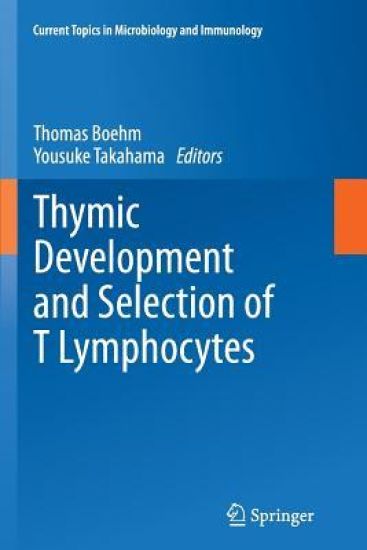
Thymic Development and Selection of T Lymphocytes

Thymic Development and Selection of T Lymphocytes

Springer-Verlag Berlin and Heidelberg GmbH Co. K
2016
nidottu
The thymus is an evolutionarily ancient primary lymphoid organ common to all vertebrates in which T cell development takes place. Failing thymus function is associated with immunodeficiency and/or autoimmunity. In this volume, leading experts provide a comprehensive overview of recent advances in thymopoiesis research. The chapters cover the development of the thymic epithelial microenvironment, address the formation of a diverse and self-tolerant repertoire of T cell receptors as the basis for cellular immunity, discuss the mechanisms by which progenitor cells colonize the thymus and detail the molecular basis for T lineage decisions. The reviews illustrate the important role of the multifaceted process of thymopoiesis for adaptive immunity.