Kirjojen hintavertailu. Mukana 12 390 323 kirjaa ja 12 kauppaa.

Kirjahaku

Etsi kirjoja tekijän nimen, kirjan nimen tai ISBN:n perusteella.

127 tulosta hakusanalla "The Islamic World"

The Islamic World

The Islamic World

University of Chicago Press
1984
nidottu
The Islamic World is a collection of important and representative documents from all periods of Islamic history. From the formative years in Arabia to the confrontations with and responses to modernity, these translations indicate the continuity and development of the youngest of the world's greatest civilizations. Included are historical, theological, philosophical, and political writings, as well as poetry and narratives, from Muslim writers in the Arab lands, Turkey, Persia, and other parts of the Islamic world. The editors have provided informative introductions to each historical period and to the individual texts, making this an enlightening and intriguing first look at Islamic civilization and tradition.
The Islamic World
The Islamic World is an outstanding guide to Islamic faith and culture in all its geographical and historical diversity. Written by a distinguished international team of scholars, it elucidates the history, philosophy and practice of one of the world's great religious traditions. Its grounding in contemporary scholarship makes it an ideal reference source for students and scholars alike.Edited by Andrew Rippin, a leading scholar of Islam, the volume covers the political, geographical, religious, intellectual, cultural and social worlds of Islam, and offers insight into all aspects of Muslim life including the Qur’an and law, philosophy, science and technology, art, literature, and film and much else. It explores the concept of an ‘Islamic’ world: what makes it distinctive and how uniform is that distinctiveness across Muslim geographical regions and through history?
The Islamic World
The Islamic World is an outstanding guide to Islamic faith and culture in all its geographical and historical diversity. Written by a distinguished international team of scholars, it elucidates the history, philosophy and practice of one of the world's great religious traditions. Its grounding in contemporary scholarship makes it an ideal reference source for students and scholars alike.Edited by Andrew Rippin, a leading scholar of Islam, the volume covers the political, geographical, religious, intellectual, cultural and social worlds of Islam, and offers insight into all aspects of Muslim life including the Qur’an and law, philosophy, science and technology, art, literature, and film and much else. It explores the concept of an ‘Islamic’ world: what makes it distinctive and how uniform is that distinctiveness across Muslim geographical regions and through history?
The Islamic World

The Islamic World

Ladan Akbarnia; Venetia Porter; Fahmida Suleman; William Greenwood; Zeina Klink-Hoppe; Amandine Mérat

Thames Hudson Ltd
2018
sidottu
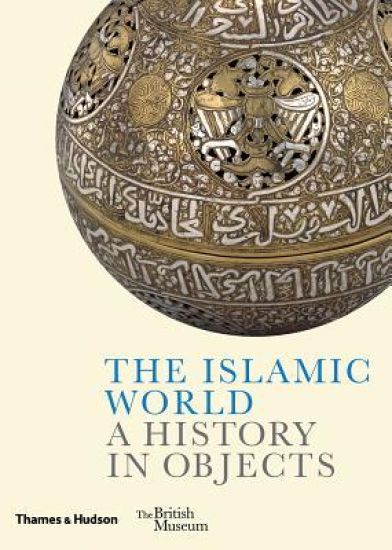
This illustrated introduction offers a fresh approach to the history of the Islamic world from its origins to the present day. Told in six chapters, arranged both chronologically and thematically, and richly enhanced with outstanding images, it provides an illuminating insight into the material culture produced from West Africa to Southeast Asia through art and artefacts, people and places. From pre-Islamic works that provided a foundation for the arts of Islam to masterpieces produced under the great empires and objects that continue to be made today, this expansive survey traces the development of civilizations at the forefront of philosophical and scientific ideas, artistic and literary developments, and technological innovations, exploring a wealth of cultural treasures along the way. Texts are accompanied by a wide variety of objects, including architectural decoration, ceramics, jewellery, metalwork, calligraphy, textiles, musical instruments, coins, illustrated manuscripts, and modern and contemporary art, all of which shed new light on the Islamic world both past and present. This book will inspire and inform anyone interested in one of the most influential and diverse cultures of the world.
The Islamic World in Decline

The Islamic World in Decline

Martin Sicker

Praeger Publishers Inc
2000
sidottu
The long era of Muslim political ascendancy that began in a small region of western Arabia reached its pinnacle some nine hundred years later with the siege of Vienna by Suleiman the Magnificent in 1529. Suleiman then concluded that, given the increasingly volatile geopolitical environment, Muslim expansionism in Eurasia had run its course. The subsequent decline of Ottoman power also meant, in effect, the decline of political Islam, which had been intimately bound to it for centuries.As Sicker shows, the problems faced by the Ottoman Empire were also faced by the Persian Empire and both underwent an extended period of political decline and territorial retrenchment in the face of imperialist pressures from Europe and Asia. The greatest challenge to the world of political Islam came from Western Europe, especially France and Great Britain. The Ottoman and Persian empires assumed a global importance in the 19th century, not because of anything in them of intrinsic economic value, but because of their geopolitical and geostrategic significance. They became, in effect, a buffer zone separating Europe from the wealth of the East, at a time when European imperialism was on the march in Asia. It thus came about that the rivalries of the Great Powers, most especially those of Great Britain, France, and Russia, were played out in the Middle East. This book will serve as a vital resource for students, scholars, and other researchers involved with Middle East History, Political Islam, and Modern European History.
The Islamic World in Ascendancy

The Islamic World in Ascendancy

Martin Sicker

Praeger Publishers Inc
2000
sidottu
In the view of Dr. Martin Sicker, it was with the emergence of Islam that the combination of geopolitics and religion reached its most volatile form and provided the ideological context for war and peace in the Middle East for more than a millennium. The conflation of geopolitics and religion in Islam is predicated on the concept of jihad (struggle), which may be understood as a crescentade, in the same sense as the later Christian crusade, which seeks to achieve a religious goal, the conversion of the world to Islam, by militant means. This equates to a concept of perpetual war with the non-Muslim world, a concept that underlays Muslim geopolitical thinking throughout the thousand-year period covered in this book. However, as Sicker amply demonstrates, the concept often bore little relation to the political realities of the region that as often as not saw Muslims and non-Muslims aligned against and at war with other Muslims.The story of the emergence and phenomenal ascendancy of the Islamic world from a relatively small tribe in sparsely populated Arabia is one that taxes the imagination, but it becomes more comprehensible when viewed through a geopolitical prism. Religion was repeatedly and often shamelessly harnessed to geopolitical purpose by both Muslims and Christians, albeit with arguably greater Muslim success. Islamic ascendancy began as an Arab project, initially focused on the Arabian peninsula, but was soon transformed into an imperialist movement with expansive ambitions. As it grew, it quickly registered highly impressive gains, but soon lost much of its Arab content. It ended a millennium later as a Turkish—more specifically, an Ottoman—project with many intermediate transformations. The reverberations of the thousand-year history of that ascendancy are still felt today in many parts of the greater Middle East. A comprehensive geopolitical survey for scholars, students, researchers, and all others interested in the history of the Middle East and Islam.
The Islamic World-System

The Islamic World-System

Masudul Alam Choudhury

Routledge
2003
sidottu
This highly original book presents an alternative vision of globalization and explores the epistemology, derived from the Qur'an and the Prophetic guidance Sunnah, that underpins the systemic unity at the heart of the Islamic concept of world-system. Choudhury's investigation reveals the ethical foundations that influence the development of law, markets and social contract in Islamic societies. He then applies his methodology to issues and problems such as property rights, money, political economy, technology diffusion, microenterprise development and asset evaluation.
The Islamic World-System

The Islamic World-System

Masudul Alam Choudhury

Routledge
2010
nidottu
This highly original book presents an alternative vision of globalization and explores the epistemology, derived from the Qur'an and the Prophetic guidance Sunnah, that underpins the systemic unity at the heart of the Islamic concept of world-system. Choudhury's investigation reveals the ethical foundations that influence the development of law, markets and social contract in Islamic societies. He then applies his methodology to issues and problems such as property rights, money, political economy, technology diffusion, microenterprise development and asset evaluation.
The Islamic World, Russia and the Vikings, 750–900
Professor Noonan here sets out to examine what Islamic silver coins (dirhams) reveal about the great trade between the Islamic world, European Russia, and the Baltic during the early Viking Age. Particular attention is devoted to the origins of this international commerce and the role of such peoples as the Vikings and Khazars. As he shows, the study of these coins also throws new light on mint output in the ’Abbasid caliphate, the historical significance of specific dirham hoards, and how the patterns of trade evolved during the course of the ninth century.
The Islamic World and the Mediterranean
This collection investigates the conflictual relationship between the Islamic world and Western civilization, looking at its history as key to understanding its present. The historical narrative starts from the controversial encounter that took place at the close of the 18th century, the effort being to improve our understanding of that engagement and its current implications, focusing in particular on how it has affected law, philosophy, and religion. The subsequent age of 19th-century colonialism is analysed with a view to understanding the currents of mutual influence that throughout that era ran between Islam and the Western world, looking at the law and the institutions, as well as at different strains in the culture. This discussion provides the backdrop against which the book turns a critical eye on current Euro-Mediterranean relations, highlighting the need to move beyond the conditionality principle that has traditionally been a cornerstone of European policy toward Arab Muslim peoples and to set this relationship on a new foundation, one that recognizes the interdependency between these two areas, making it possible to open up a Mediterranean space of mutual recognition among all its peoples. The book will be of interest to researchers and academics working in the areas of Legal and Political History, Comparative Law, Legal Philosophy, Law and Religion, and Islamic Studies.
The Islamic World in the New Century

The Islamic World in the New Century

Ekmeleddin Ihsanoglu

C Hurst Co Publishers Ltd
2010
sidottu
The Organisation of the Islamic Conference (OIC) is the Muslim world's only intergovernmental body-the largest such system operating outside of the United Nations. Based in Jeddah, Saudi Arabia, the OIC was founded forty years ago to respond to the Palestinian crisis and counts fifty-seven Muslim countries among its members. It has since branched out into the areas of economic development, education, culture, science, technology, conflict resolution, and tackling Islamophobia. Sharing the history of the OIC with Western readers for the first time, this book details the achievements, successes, and failures of this singular political body and demonstrates why modernization is so central to the continued development of Islamic society. In 2005, the OIC elected Ekmeleddin Ihsanoglu of Turkey to transform the organisation's platform and intentions. Ihsanoglu has since tackled the difficult problems of illiteracy and poverty, economic underdevelopment, and ethnic and sectarian conflict. In this history he devotes an important chapter to Islamophobia and its impact on relations between Islam and the West. The OIC treats Islamophobia as a form of racism and xenophobia, and Ihsanoglu explains why it is essential for international institutions to work together to combat violent extremism. He also argues that representative government, free speech, and equal rights for all citizens are critical for Muslim societies, and he envisions the need to reform the OIC as a necessary step toward renewing the Muslim world. One of the most important studies of the Muslim world to emerge directly from its participants, The Islamic World in the New Century ushers in a new era of change.
The Islamic World in International Relations
The aim of the book is to present the issues of central importance to the Islamic World. This diverse area faces a lot of difficulties and challenges regarding ethnic and religious conflicts as well as political and economic instability. The authors of the book address the topic from the perspectives of international security, foreign policy, economy, energy policy and regional studies and aim to depict the most suitable examples of crucial dilemmas of the Islamic World in the 21st century. The authors represent the variety of academic institutions and scientific disciplines including political science, international relations, economics and sociology. They apply a wide-selection of qualitative and quantitative methods to perform their research. As a result of this work, this book contributes to the research on the Middle East, South Asia and North Africa.
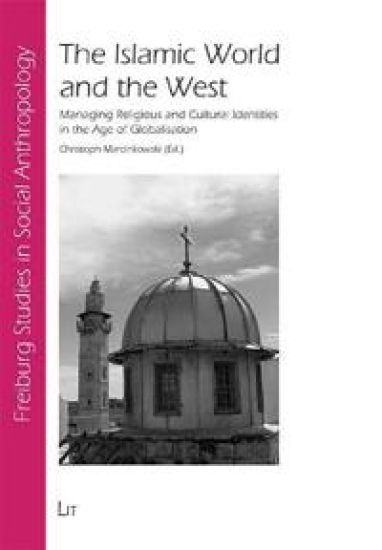
The Islamic World and the West
This timely volume brings together contributions by 14 established Muslim and Western scholars. It intends to present a somewhat more positive outlook in the currently rather strained relations between the Islamic world and Europe by drawing on shared values and possibilities of cooperation in various fields, such as those reflected in worldview, education, economics, multiculturalism, religious dialogue, politics, as well as security issues. It also contains a historical revaluation of some of those contacts.
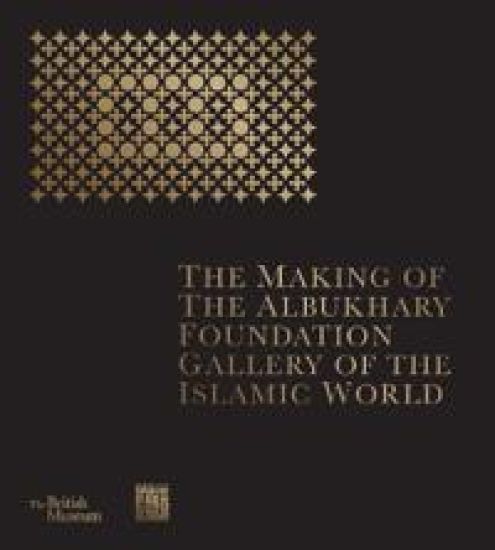
The Making of The Albukhary Foundation Gallery of the Islamic World
This highly illustrated publication details the concepts, construction and design of the new Albukhary Foundation Gallery of the Islamic World at the British Museum. The book outlines not only the history of the extremely rich and varied collection of Islamic material culture at the British Museum, but also the challenges of building and designing a new gallery for the 21st century within a historic building. The building of a new gallery requires collaboration from a number of different individuals. Therefore, this book highlights not only the work done by British Museum staff, but also details the partnerships with the architects Stanton Williams, the Prince’s School of Traditional Arts and the Islamic Arts Museum Malaysia. The result is a fascinating and beautifully illustrated insight into a remarkable new gallery and the British Museum’s unparalleled collection of Islamic material culture.
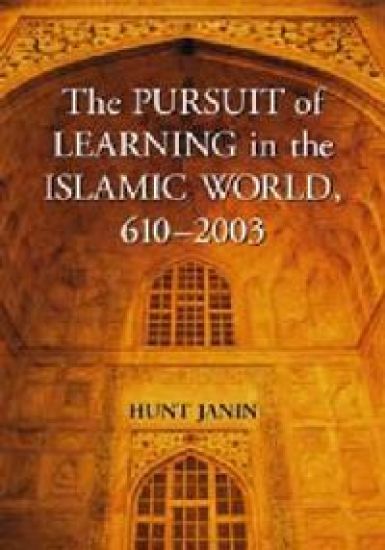
The Pursuit of Learning in the Islamic World, 610-2003
Islam scares the West. Militant conservatism and the horrific acts of violent fundamentalists evoke outrage, but the reprehensible few reinforce a longstanding Western stereotype of all Muslims as "incorrigibly fanatical, violent and morally and culturally different." Overlooked is the long history of Muslim intellectual and cultural achievement, and its potential to flower once again. With about 1.5 billion adherents, Islam is the world's fastest growing religion. An understanding of its past glories, present state and future potential has never been more critical. This survey of Muslim intellectual and cultural achievements spans 1,400 years. Chapters fall into three sections: fundamentals of Islamic learning; its growth until the present; and its future direction in the face of anti-intellectual fundamentalism. Arranged chronologically within the sections, chapters begin with an historical overview of the time period they encompass, providing context for the subsequent discussion of key intellectual and cultural achievements within that period. Appendices describe decorative and other arts, the requirements for expertise in Islamic thought, Islamic ethical traditions, and list noteworthy personalities and achievements chronologically. Maps and photographs illustrate the text, which also includes a glossary, notes, a bibliography and an index.
The Book in the Islamic World

The Book in the Islamic World

State University of New York Press
1995
pokkari
Explores Muslims' conception of themselves as "the people of the book" and explains the multifaceted meanings of this concept. Published jointly with the Library of Congress, it is an illustrated history of the book and the written word in the Islamic world. The Book in the Islamic World brings together serious studies on the book as an intellectual entity and as a vehicle of cultural development. Written by a group of distinguished scholars, it examines and reflects upon this unique tool of communication not as a physical artifact but as a manifestation of the aspirations, values, and wisdom of Arabs and Muslims in general. The Islamic system of book production differed from that of the West. This volume shows the peculiarities of book making and the intellectual principles that governed a book's inner structure, mysteries, and impact on culture. Investigated and explained are the issues involved in printing; the compilation of the Koran, the most important book in Islam; attitudes toward books; the oral versus the written tradition; metaphors of the book in literature; biographical dictionaries, an important genre of Islamic books; the grammatical tradition; women's contribution to calligraphy; scientific manuscripts; the transition from scribal to print culture; publishing in the modern Arab World; and the new electronic media, a non-book vehicle of communication, and its impact on education.
The American Military Advisor: Dealing with Senior Foreign Officials in the Islamic World
Although the role of the military advisor to senior foreign officials is honored in political history, it became almost a forgotten art when it was needed in Afghanistan and Iraq. American military services are now fully engaged in nation-building in the Iraqi and Afghan conflict zones, and the advisory responsibility seems certain to be needed elsewhere. Advisors have become an invaluable part of the nation-building process, and whether they are assigned to counsel and work with governors, generals, or Cabinet Ministers, their role has an impact on America's overall political and military strategy. This guidebook draws on the experiences of diplomats and military officers who have served in such roles, and whose work with senior foreign officials was carried out in conflict zones at critical times. Although examples are drawn from life in the Islamic world, the precepts have widespread application, and the examples will be an important part of any future advisor's preparation.
The New Cambridge History of Islam: Volume 1, The Formation of the Islamic World, Sixth to Eleventh Centuries
Volume One of The New Cambridge History of Islam, which surveys the political and cultural history of Islam from its Late Antique origins until the eleventh century, brings together contributions from leading scholars in the field. The book is divided into four parts. The first provides an overview of the physical and political geography of the Late Antique Middle East. The second charts the rise of Islam and the emergence of the Islamic political order under the Umayyad and the Abbasid caliphs of the seventh, eighth and ninth centuries, followed by the dissolution of the empire in the tenth and eleventh. 'Regionalism', the overlapping histories of the empire's provinces, is the focus of Part Three, while Part Four provides a cutting-edge discussion of the sources and controversies of early Islamic history, including a survey of numismatics, archaeology and material culture.