
Kirjahaku
Etsi kirjoja tekijän nimen, kirjan nimen tai ISBN:n perusteella.
146 tulosta hakusanalla "This Place"
This Place
Kateri Akiwenzie-Damm; Sonny Assu; Brandon Mitchell; Rachel Qitsualik-Tinsley; Sean Qitsualik-Tinsley; David A. Robertson; Niigaanwewidam James Sinclair; Jen Storm; Richard Van Camp; Katherena Vermette; Chelsea Vowel; Alicia Elliott
Portage Main Press
2019
nidottu
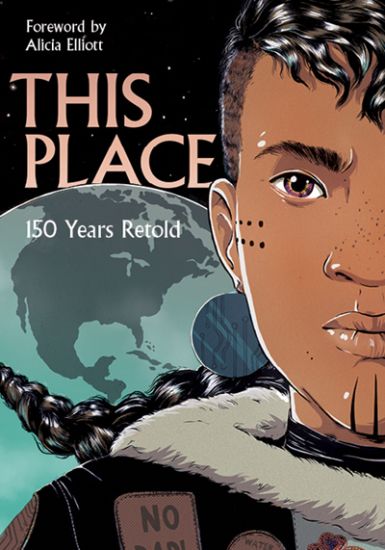
Explore the past 150 years through the eyes of Indigenous creators in this groundbreaking graphic novel anthology. Beautifully illustrated, these stories are an emotional and enlightening journey through Indigenous wonderworks, psychic battles, and time travel. See how Indigenous peoples have survived a post-apocalyptic world since Contact. Each story includes a timeline of related historical events and a personal note from the author. Find cited sources and a select bibliography for further reading in the back of the book. The accompanying teacher guide includes curriculum charts and 12 lesson plans to help educators use the book with their students. This is one of the 200 exceptional projects funded through the Canada Council for the Arts’ New Chapter initiative. With this $35M initiative, the Council supports the creation and sharing of the arts in communities across Canada.
Miriam could use a Christmas miracle.But she doesn't feel she deserves it.Not after giving up her baby for adoption to her brother while in prison.But now her baby's parents are dead. And she and her child's uncle, Duncan, are forced to work together to help their orphaned niece get through Christmas.Neither feels capable but both have hearts full of love for her.Miriam has never completely gotten over Duncan. They met at their respective siblings' wedding. They both thought something magical was growing between them.They parted ways, promising, needing to keep in touch.Then Miriam's life imploded and shame kept her away.Now, as joint guardians of their niece, the only thing they can agree on is trying to find out what is best for Celia. Neither feels capable but as they work together the old attraction ignites.Can their changing relationship survive Christmas and the dark secret Miriam harbors? A secret that could drive Miriam away from Duncan, Celia, and This Place.If you like Christmas reunions, romantic sleigh rides, and stories about second chances, you'll love Carolyne Aarsen's story of loss and redemption and Christmas wonder.
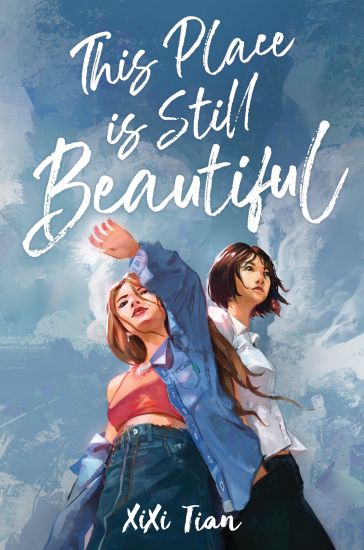
With five starred reviews, this is an acclaimed novel about sisterhood, family, and the pernicious legacy of racism. Perfect for fans of Tahereh Mafi, Jandy Nelson, and Emily X.R. Pan, with crossover appeal for readers of Brit Bennett's The Vanishing Half.The Flanagan sisters are as different as they come. Seventeen-year-old Annalie is bubbly, sweet, and self-conscious, whereas nineteen-year-old Margaret is sharp and assertive. Margaret looks just like their mother, while Annalie passes for white and looks like the father who abandoned them years ago, leaving their Chinese immigrant mama to raise the girls alone in their small, predominantly white Midwestern town.When their house is vandalized with a shocking racial slur, Margaret rushes home from her summer internship in New York City. She expects outrage. Instead, her sister and mother would rather move on. Especially once Margaret's own investigation begins to make members of their community uncomfortable.For Annalie, this was meant to be a summer of new possibilities, and she resents her sister's sudden presence and insistence on drawing negative attention to their family. Meanwhile Margaret is infuriated with Annalie's passive acceptance of what happened. For Margaret, the summer couldn't possibly get worse, until she crosses paths with someone she swore she'd never see again: her first love, Rajiv Agarwal.As the sisters navigate this unexpected summer, an explosive secret threatens to break apart their relationship, once and for all.This Place Is Still Beautiful is a luminous, captivating story about identity, sisterhood, and how our hometowns are inextricably a part of who we are, even when we outgrow them.
With five starred reviews, this is an acclaimed novel about sisterhood, family, and the pernicious legacy of racism. Perfect for fans of Tahereh Mafi, Jandy Nelson, and Emily X.R. Pan, with crossover appeal for readers of Brit Bennett's The Vanishing Half.The Flanagan sisters are as different as they come. Seventeen-year-old Annalie is bubbly, sweet, and self-conscious, whereas nineteen-year-old Margaret is sharp and assertive. Margaret looks just like their mother, while Annalie passes for white and looks like the father who abandoned them years ago, leaving their Chinese immigrant mama to raise the girls alone in their small, predominantly white Midwestern town.When their house is vandalized with a shocking racial slur, Margaret rushes home from her summer internship in New York City. She expects outrage. Instead, her sister and mother would rather move on. Especially once Margaret's own investigation begins to make members of their community uncomfortable.For Annalie, this was meant to be a summer of new possibilities, and she resents her sister's sudden presence and insistence on drawing negative attention to their family. Meanwhile Margaret is infuriated with Annalie's passive acceptance of what happened. For Margaret, the summer couldn't possibly get worse, until she crosses paths with someone she swore she'd never see again: her first love, Rajiv Agarwal.As the sisters navigate this unexpected summer, an explosive secret threatens to break apart their relationship, once and for all.This Place Is Still Beautiful is a luminous, captivating story about identity, sisterhood, and how our hometowns are inextricably a part of who we are, even when we outgrow them.
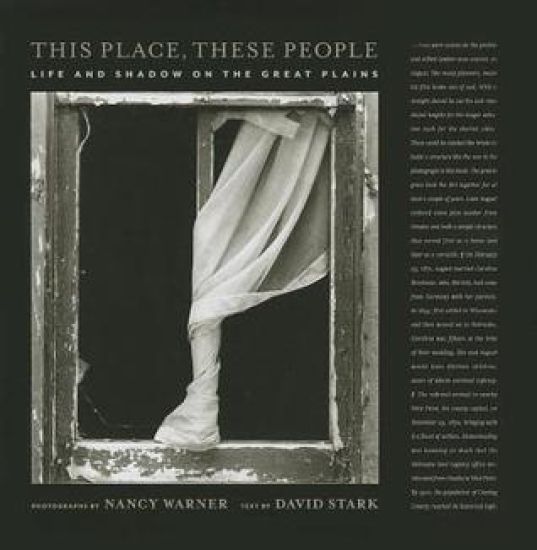
The numbers of farms and farmers on the Great Plains are dwindling. Disappearing even faster are the farm places-the houses, barns, and outbuildings that made the rural landscape a place of habitation. Nancy Warner's photographs tell the stories of buildings that were once loved yet have now been abandoned. Her evocative images are juxtaposed with the voices of Nebraska farm people, lovingly recorded by sociologist David Stark. These plainspoken recollections tell of a way of life that continues to evolve in the face of wrenching change. Warner's spare, formal photographs invite readers to listen to the cadences and tough-minded humor of everyday speech in the Great Plains. Stark's afterword grounds the project in the historical relationship between people and their land. In the tradition of Wright Morris, this combination of words and images is both art and document, evoking memories, emotions, and questions for anyone with rural American roots.
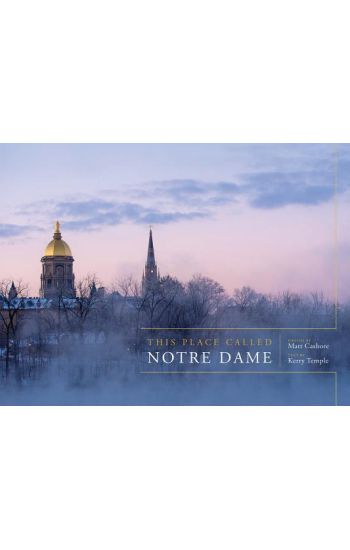
This Place Called Notre Dame
University of Notre Dame Press
2018
sidottu
Matt Cashore, a 1994 graduate of Notre Dame, has been photographing the university for over twenty years, and was named the 2016 University Photographer of the Year by the University Photographers Association of America. Kerry Temple is a 1974 Notre Dame graduate who has been writing about the university for forty years and serves as the editor of Notre Dame Magazine. Cashore and Temple have combined their talents in a magnificent new coffee-table book, This Place Called Notre Dame. Cashore's photographs beautifully document campus life, capturing the quads, the architecture, the academics, football festivities, the faith life, and student fun of contemporary Notre Dame. Now these images have been collected into one volume conveying the beauty, character, and spirit of the university. Accompanying Cashore's photographs is text by Kerry Temple, an astute university observer and writer whose articles and essays have chronicled the nature, traditions, and growth of Notre Dame over the past four decades. The result of this collaboration is a volume that speaks of Notre Dame with insight, artistry, and affection that will be treasured and enjoyed by students, alumni, faculty, staff, and all who have experienced and love the university.
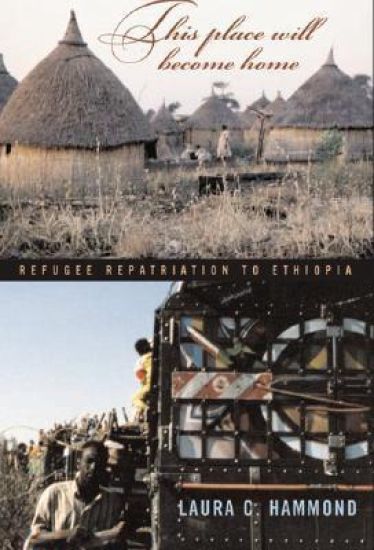
How do communities grapple with the challenges of reconstruction after conflicts? In one of the first in-depth ethnographic accounts of refugee repatriation anywhere in the world, Laura C. Hammond follows the story of Ada Bai, a returnee settlement with a population of some 7,500 people. In the days when refugees first arrived, Ada Bai was an empty field along Ethiopia's northwest border, but it is now a viable—arguably thriving—community. For the former refugees who fled from northern Ethiopia to eastern Sudan to escape war and famine in 1984 and returned to their country of birth in 1993, "coming home" really meant creating a new home out of an empty space. Settling in a new area, establishing social and kin ties, and inventing social practices, returnees gradually invested their environment with meaning and began to consider their settlement home. Hammond outlines the roles that gender and generational differences played in this process and how the residents came to define the symbolic and geographical boundaries of Ada Bai.Drawing on her fieldwork from 1993 to 1995 and regular shorter periods since, Hammond describes the process by which a place is made meaningful through everyday practice and social interaction. This Place Will Become Home provides insight into how people cope with extreme economic hardship, food insecurity, and limited access to international humanitarian or development assistance in their struggle to attain economic self-sufficiency.
How do communities grapple with the challenges of reconstruction after conflicts? In one of the first in-depth ethnographic accounts of refugee repatriation anywhere in the world, Laura C. Hammond follows the story of Ada Bai, a returnee settlement with a population of some 7,500 people. In the days when refugees first arrived, Ada Bai was an empty field along Ethiopia's northwest border, but it is now a viable—arguably thriving—community. For the former refugees who fled from northern Ethiopia to eastern Sudan to escape war and famine in 1984 and returned to their country of birth in 1993, "coming home" really meant creating a new home out of an empty space. Settling in a new area, establishing social and kin ties, and inventing social practices, returnees gradually invested their environment with meaning and began to consider their settlement home. Hammond outlines the roles that gender and generational differences played in this process and how the residents came to define the symbolic and geographical boundaries of Ada Bai. Drawing on her fieldwork from 1993 to 1995 and regular shorter periods since, Hammond describes the process by which a place is made meaningful through everyday practice and social interaction. This Place Will Become Home provides insight into how people cope with extreme economic hardship, food insecurity, and limited access to international humanitarian or development assistance in their struggle to attain economic self-sufficiency.
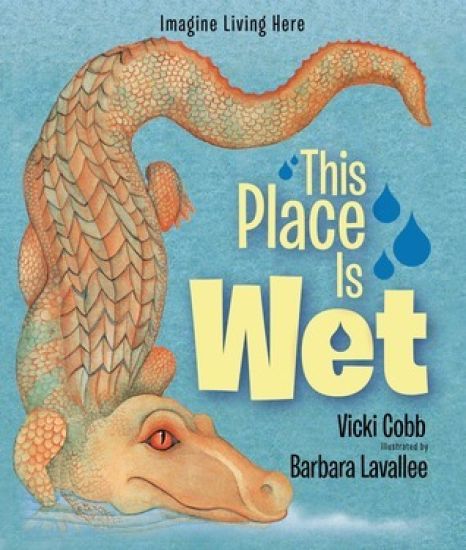
Can you imaging living in a place where there is so much water some houses need to be built on stilts to protect them when the river rises? Or where it is so wet that some plants can grow on the sides of trees with their roots gathering water from the air? In This Place is Wet you'll find out all sorts of things about what it's like to live in the rain forest of Brazil. Try to imagine living there!
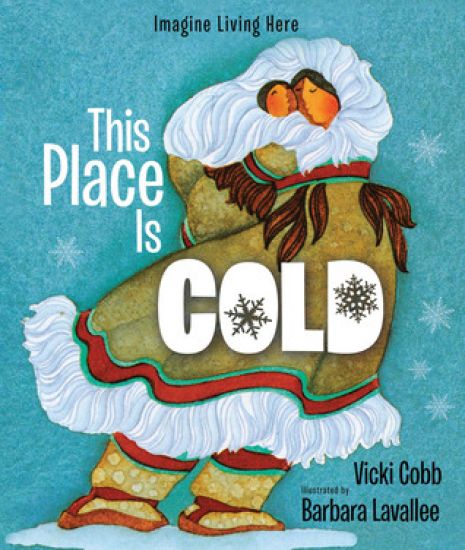
Can you imaging living in a place where it's so cold your breath turns instantly into tiny ice crystals that glitter in the sun? Where temperatures can drop fifty degrees below zero and even lower and the sun only comes out for a few hours per day? In This Place Is Cold readers will learn how people and animals survive in Alaska's ferocious cold, and how because of global warming this region is now in trouble. Vicki Cobb and Barbara Lavallee travelled the world together to research this groundbreaking geography series, that is now updated and redesigned to appeal to today's readers.
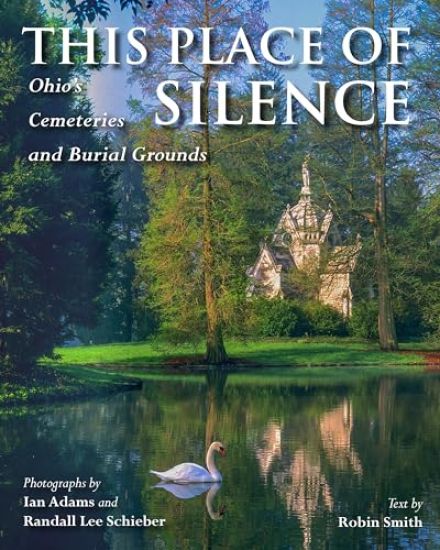
This Place of Silence
Ian Adams; Randall Lee Schieber; Robin L. Smith
OHIO UNIVERSITY PRESS
2024
pokkari
This Place of Silence is a photographic portrait of Ohio’s cemeteries and burial grounds by Ohio photographers Ian Adams and Randall Lee Schieber. The text and photo captions by Robin L. Smith provide an overview of the history of burial grounds, from prehistoric mounds through modern “green” cemeteries-and many fascinating details about gravestones, mausoleums, statuary, and cemetery landscapes. The introduction provides an overview of the historical place of burial grounds in our society and of their value today not only as rich sources of history but also as repositories of art, architecture, and nature. Cemeteries record the history of their communities in their names and dates, but they also tell us how a community wanted its history recorded: How did this community see itself? What was important to that community? Who were the prominent people, and what did they accomplish? Graveyards, especially older ones, are also full of quirky names and mysteries. Who would name a child Nimrod, and where did that name come from? Why would two families build identical side-by-side mausoleums? Who would want a grave marker that looks like a pile of stones? Chapters cover prehistoric mounds and early European American burial grounds; the evolution from rural cemeteries in the nineteenth century to modern green burials; art, architecture, and symbolism in cemeteries; cemeteries and nature; military and institutional burial grounds; and distinctive ethnic cemeteries. The authors highlight and showcase these often beautiful but sometimes neglected pieces of history. Cemeteries are not dark, morbid places to be avoided, but historic landscapes that are full of beauty, hope, and honor for those Ohioans who came before us.

Conceived of as a way to commemorate Missouri’s bicentennial of statehood, this unique work presents the perspective of Gary Kremer, one of the Show-Me State’s foremost historians, on how history has played out in the two centuries since Missouri’s admittance to the Union. In the writing of what is much more than a survey history, Kremer, himself a fifth-generation Missourian, infuses the narrative with his vast knowledge and personal experiences as he thoughtfully considers what being a Missourian has meant—across the many years and to this day—to all of the state’s people, and how the forces of history—time, place, race, gender, religion, and class—shaped people and determined their opportunities and choices, in turn creating communities of collective experience that draw upon the past in order to try to make sense of the present and plan for the future.

Conceived of as a way to commemorate Missouri’s bicentennial of statehood, this unique work presents the perspective of Gary Kremer, one of the Show-Me State’s foremost historians, as he ponders why history played out as it did over the course of the two centuries since Missouri’s admittance to the Union. In the writing of what is much more than a survey history, Kremer, himself a fifth-generation Missourian, infuses the narrative with his vast knowledge and personal experiences, even as he considers what being a Missourian has meant—across the many years and to this day—to all of the state’s people, and how the forces of history—time, place, race, gender, religion, and class—shaped people and determined their opportunities and choices, in turn creating collective experiences that draw upon the past in an attempt to make sense of the present and plan for the future. Key elements of the book include the centrality of race to the Missouri experience—from the time Missourians began to seek statehood in 1817 all the way up to the Black Lives Matter movement of the 21st century—as well as ongoing tensions created by the urban-rural divide and struggle to define the proper role of government in society.
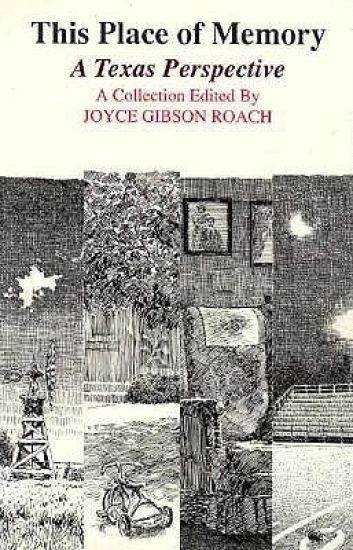
"These personal essays, poems, fiction . . . are best savored . . . amid the quiet comforts of your own special place of memories. It can bring forth tears, as well as smiles, of remembrance and recognition. It can leave you yearning to go home again--to people and places that now live only in your heart."--Dallas Morning News"The perfect bedside companion . . . like fine candy--so good you may not be able to confine yourself to one or two pieces before bedtime. "--Fort Worth Star-Telegram"Offers some thought-provoking images and ideas about the notion of place, that home is where the heart is, whether that place is Dallas or Dimebox or somewhere that only exists in the back of the mind."--Texas Observer"Even if you aren't a dyed-in-the wool Texan, this book will help you to understand Texans' remembrance and longing for a people, a way of life that seemed to belong just to Texas."--Denton Record-Chronicle