Kirjojen hintavertailu. Mukana 11 244 527 kirjaa ja 12 kauppaa.

Kirjahaku

Etsi kirjoja tekijän nimen, kirjan nimen tai ISBN:n perusteella.

35 tulosta hakusanalla "Vehicular ad hoc Networks"

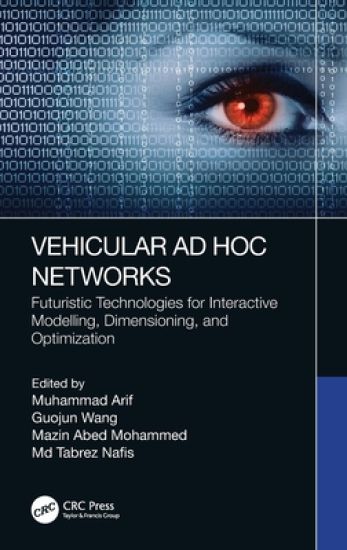
Vehicular Ad Hoc Networks

Vehicular Ad Hoc Networks

TAYLOR FRANCIS LTD
2022
sidottu
With the evolution of technology and sudden growth in the number of smart vehicles, traditional Vehicular Ad hoc NETworks (VANETs) face several technical challenges in deployment and management due to less flexibility, scalability, poor connectivity, and inadequate intelligence. VANETs have raised increasing attention from both academic research and industrial aspects resulting from their important role in driving assistant system.Vehicular Ad Hoc Networks focuses on recent advanced technologies and applications that address network protocol design, low latency networking, context-aware interaction, energy efficiency, resource management, security, human-robot interaction, assistive technology and robots, application development, and integration of multiple systems that support Vehicular Networks and smart interactions.Simulation is a key tool for the design and evaluation of Intelligent Transport Systems (ITS) that take advantage of communication-capable vehicles in order to provide valuable safety, traffic management, and infotainment services. It is widely recognized that simulation results are only significant when realistic models are considered within the simulation tool chain. However, quite often research works on the subject are based on simplistic models unable to capture the unique characteristics of vehicular communication networks. The support that different simulation tools offer for such models is discussed, as well as the steps that must be undertaken to fine-tune the model parameters in order to gather realistic results. Moreover, the book provides handy hints and references to help determine the most appropriate tools and models. This book will promote best simulation practices in order to obtain accurate results.
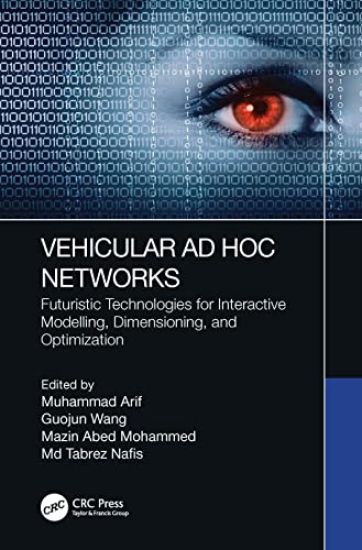
Vehicular Ad Hoc Networks

Vehicular Ad Hoc Networks

TAYLOR FRANCIS LTD
2024
nidottu
With the evolution of technology and sudden growth in the number of smart vehicles, traditional Vehicular Ad hoc NETworks (VANETs) face several technical challenges in deployment and management due to less flexibility, scalability, poor connectivity, and inadequate intelligence. VANETs have raised increasing attention from both academic research and industrial aspects resulting from their important role in driving assistant system.Vehicular Ad Hoc Networks focuses on recent advanced technologies and applications that address network protocol design, low latency networking, context-aware interaction, energy efficiency, resource management, security, human-robot interaction, assistive technology and robots, application development, and integration of multiple systems that support Vehicular Networks and smart interactions.Simulation is a key tool for the design and evaluation of Intelligent Transport Systems (ITS) that take advantage of communication-capable vehicles in order to provide valuable safety, traffic management, and infotainment services. It is widely recognized that simulation results are only significant when realistic models are considered within the simulation tool chain. However, quite often research works on the subject are based on simplistic models unable to capture the unique characteristics of vehicular communication networks. The support that different simulation tools offer for such models is discussed, as well as the steps that must be undertaken to fine-tune the model parameters in order to gather realistic results. Moreover, the book provides handy hints and references to help determine the most appropriate tools and models. This book will promote best simulation practices in order to obtain accurate results.
Vehicular Ad Hoc Networks

Vehicular Ad Hoc Networks

Sherali Zeadally; Neeraj Kumar; Thinus Booysen

ISTE Ltd and John Wiley Sons Inc
2014
sidottu
The last decade has witnessed an unprecedented development and growth in global wireless communications systems, technologies and network "traffic" generated over network infrastructures. This book presents state-of-the-art energy-efficient techniques, designs and implementations that pertain to wireless communication networks such as cellular networks, wireless local area networks (WLANs) and wireless ad hoc networks (WAHNs) including mobile ad hoc networks (MANETs), and wireless sensor networks (WSNs) as they are deployed across the world to facilitate "always on" reliable high-speed wireless access from anywhere, at anytime to accommodate the new paradigm of the "Internet of Things" (IoT). The pervasive and exponential growth of Wi-Fi and the impact of bandwidth-intensive applications on the energy consumption of Wi-Fi-enabled devices are discussed along with energy harvesting as an advantageous option to power WAHNs. The book aims to serve as a useful reference for researchers, students, regulatory authorities, and educators.
Vehicular ad hoc Networks

Vehicular ad hoc Networks

Springer International Publishing AG
2015
sidottu
This book presents vehicular ad-hoc networks (VANETs) from the their onset, gradually going into technical details, providing a clear understanding of both theoretical foundations and more practical investigation. The editors gathered top-ranking authors to provide comprehensiveness and timely content; the invited authors were carefully selected from a list of who’s who in the respective field of interest: there are as many from Academia as from Standardization and Industry sectors from around the world. The covered topics are organized around five Parts starting from an historical overview of vehicular communications and standardization/harmonization activities (Part I), then progressing to the theoretical foundations of VANETs and a description of the day-one standard-compliant solutions (Part II), hence going into details of vehicular networking and security (Part III) and to the tools to study VANETs, from mobility and channel models, to network simulators and field trial methodologies (Part IV), and finally looking into the future of VANETs by investigating alternative, complementary communication technologies, innovative networking paradigms and visionary applications (Part V). The way the content is organized, with a differentiated level of technical details, makes the book a valuable reference for a large pool of target readers ranging from undergraduate, graduate and PhD students, to wireless scientists and engineers, to service providers and stakeholders in the automotive, ITS, ICT sectors.
Vehicular ad hoc Networks

Vehicular ad hoc Networks

Springer International Publishing AG
2016
nidottu
This book presents vehicular ad-hoc networks (VANETs) from the their onset, gradually going into technical details, providing a clear understanding of both theoretical foundations and more practical investigation. The editors gathered top-ranking authors to provide comprehensiveness and timely content; the invited authors were carefully selected from a list of who’s who in the respective field of interest: there are as many from Academia as from Standardization and Industry sectors from around the world. The covered topics are organized around five Parts starting from an historical overview of vehicular communications and standardization/harmonization activities (Part I), then progressing to the theoretical foundations of VANETs and a description of the day-one standard-compliant solutions (Part II), hence going into details of vehicular networking and security (Part III) and to the tools to study VANETs, from mobility and channel models, to network simulators and field trial methodologies (Part IV), and finally looking into the future of VANETs by investigating alternative, complementary communication technologies, innovative networking paradigms and visionary applications (Part V). The way the content is organized, with a differentiated level of technical details, makes the book a valuable reference for a large pool of target readers ranging from undergraduate, graduate and PhD students, to wireless scientists and engineers, to service providers and stakeholders in the automotive, ITS, ICT sectors.
Vehicular Ad hoc Networks

Vehicular Ad hoc Networks

Surjeet Balhara; Venuprea Gupta; Vansh Kaushal

LAP Lambert Academic Publishing
2018
pokkari
Disseminating warning information by Vehicular Ad hoc Networks (VANETs) is of great significance to alleviate traffic problems in future Intelligent Transportation Systems (ITS). In the urban express environment, it is very challenging to design efficient dissemination mechanisms with strict Quality of Service (QoS) requirements due to complex road structures, severe channel contention, message redundancy etc. The focus of the book throughout has been on the study of VANETs and development of QoS constrained broadcasting to ensure minimum delay in emergency message dissemination for time critical applications.
Vehicular Ad Hoc Networks and Emerging Technologies for Road Vehicle Automation

Vehicular Ad Hoc Networks and Emerging Technologies for Road Vehicle Automation

Amit Kumar Tyagi; Shaveta Malik

INSTITUTION OF ENGINEERING AND TECHNOLOGY
2023
sidottu
The automation of road vehicles is still developing, moving towards improved technology, safety, energy and fuel efficiency, comfort, economic growth, and real-world applications. Vehicle connectivity and information exchange over the road is an essential requirement for the future of automated driving. This book is intended to help bridge the gap between theory and applications of autonomous vehicles. Vehicular Ad Hoc Networks and Emerging Technologies for Road Vehicle Automation covers autonomous road vehicles and systems, with a particular focus on vehicular ad-hoc networks (VANETs). VANETs are a key part of the intelligent transport systems framework. They are created by applying the principles of mobile ad-hoc networks to vehicles; that is, the spontaneous creation of a wireless network of mobile devices based on inter-vehicle communication. Coverage also includes further aspects of autonomous road vehicles, including hybrid vehicles, autonomous intelligent vehicles, and autonomous decentralized systems (ADS). The book is essential reading for researchers and advanced students from academia, industry and government working on the automation of road vehicles. Additionally, it is a helpful resource for students, researchers and newcomers to the field; providing an in-depth understanding of autonomous road vehicles, their internal structure, types, and fundamental principles, helping to inform and direct their research, and identify challenging areas and problems where further investigations are needed.
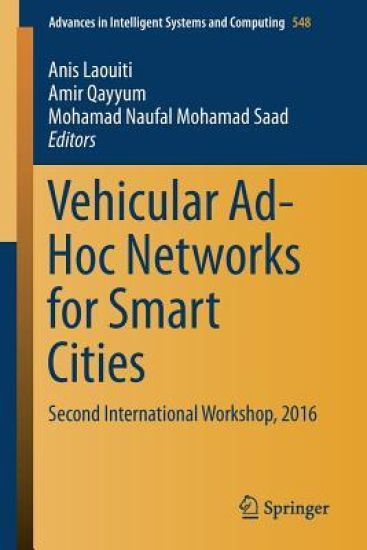
Vehicular Ad-hoc Networks for Smart Cities
Vehicular communication is a key technology in intelligent transportation systems. For many years now, the academic and industrial research communities have been investigating these communications in order to improve efficiency and safety of future transportation. Vehicular networking offers a wide variety of applications, including safety applications as well as infotainment applications. This book highlights the recent developments in vehicular networking technologies and their interaction with future smart cities in order to promote further research activities and challenges.SAADI BOUDJIT, University of Paris 13, France HAKIMA CHAOUCHI, Telecom SudParis, France YACINE GHAMRI, University La Rochelle, FranceHALABI HASBULLAH, Universiti Teknologi Petronas, MalaysiaANIS LAOUITI, Telecom SudParis, France SAOUCENE MAHFOUDH, Jeddah, Saudi Arabia PAUL MUHLETHALER, INRIA, FranceAMIR QAYYUM, Mohamad Ali Jinnah University, PakistanNAUFAL SAAD, Universiti Teknologi Petronas, MalaysiaAHMED SOUA, NIST, USAHAJIME TAZAKI, University of Tokyo, JapanAPINUN TUNPAN, Aintec, ThailandWEI WEI, Xi'an University, ChinaRACHID ZAGROUBA, ENSI, Tunisia.
Vehicular Ad-Hoc Networks for Smart Cities
This book presents selected articles from the Second International Workshop on Vehicular Adhoc Networks for Smart Cities, 2016 (IWVSC’2016). In order to promote further research activities and challenges, it highlights recent developments in vehicular networking technologies and their role in future smart cities.
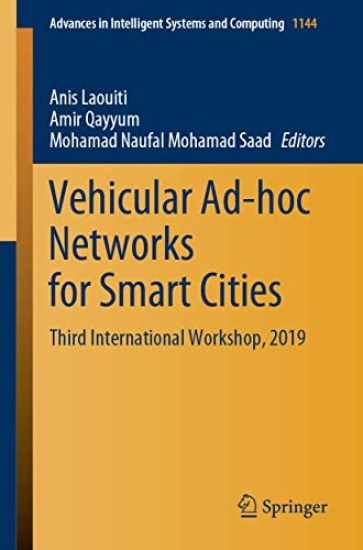
Vehicular Ad-hoc Networks for Smart Cities
This book presents selected papers from the Third International Workshop on Vehicular Ad-hoc Networks for Smart Cities, Paris, 2019. Future smart cities are well placed to profit from extraordinary mobile infrastructures. IWVSC'2019 brings together experts from both academia and industry to discuss recent developments in vehicular networking technologies and their interaction with future smart cities in order to promote further research activities and challenges.
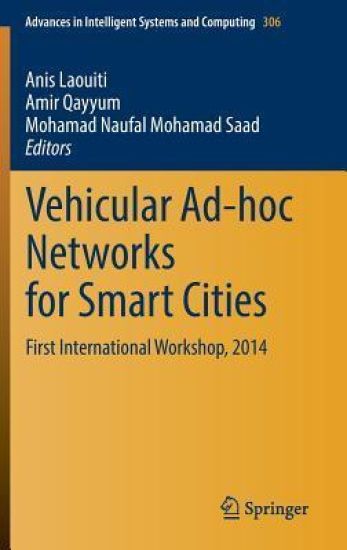
Vehicular Ad-hoc Networks for Smart Cities
Vehicular communication is a key technology in intelligent transportation systems. For many years now, the academic and industrial research communities have been investigating these communications in order to improve efficiency and safety of future transportation. Vehicular networking offers a wide variety of applications, including safety applications as well as infotainment applications. This book highlights the recent developments in vehicular networking technologies and their interaction with future smart cities in order to promote further research activities and challenges.SAADI BOUDJIT, University of Paris 13, France HAKIMA CHAOUCHI, Telecom SudParis, France YACINE GHAMRI, University La Rochelle, FranceHALABI HASBULLAH, Universiti Teknologi Petronas, MalaysiaANIS LAOUITI, Telecom SudParis, France SAOUCENE MAHFOUDH, Jeddah, Saudi Arabia PAUL MUHLETHALER, INRIA, FranceAMIR QAYYUM, Mohamad Ali Jinnah University, PakistanNAUFAL SAAD, Universiti Teknologi Petronas, MalaysiaAHMED SOUA, NIST, USAHAJIME TAZAKI, University of Tokyo, JapanAPINUN TUNPAN, Aintec, ThailandWEI WEI, Xi'an University, ChinaRACHID ZAGROUBA, ENSI, Tunisia.
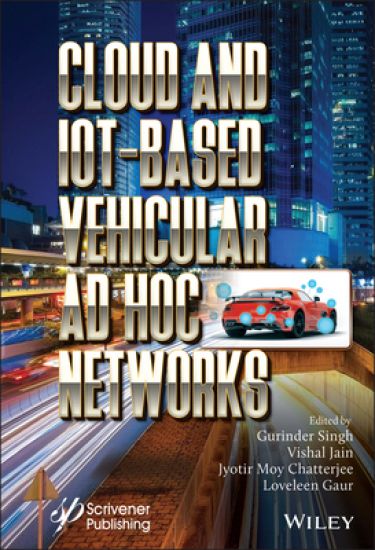
Cloud and IoT-Based Vehicular Ad Hoc Networks
CLOUD AND IOT-BASED VEHICULAR AD HOC NETWORKS This book details the architecture behind smart cars being fitted and connected with vehicular cloud computing, IoT and VANET as part of the intelligent transport system (ITS). As technology continues to weave itself more tightly into everyday life, socioeconomic development has become intricately tied to ever-evolving innovations. An example of this is the technology being developed to address the massive increase in the number of vehicles on the road, which has resulted in more traffic congestion and road accidents. This challenge is being addressed by developing new technologies to optimize traffic management operations.This book describes the state-of-the-art of the recent developments of Internet of Things (IoT) and cloud computing-based concepts that have been introduced to improve Vehicular Ad-Hoc Networks (VANET) with advanced cellular networks such as 5G networks and vehicular cloud concepts. 5G cellular networks provide consistent, faster and more reliable connections within the vehicular mobile nodes. By 2030, 5G networks will deliver the virtual reality content in VANET which will support vehicle navigation with real time communications capabilities, improving road safety and enhanced passenger comfort.In particular, the reader will learn:A range of new concepts in VANETs, integration with cloud computing and IoT, emerging wireless networking and computing models New VANET architecture, technology gap, business opportunities, future applications, worldwide applicability, challenges and drawbacks Details of the significance of 5G Networks in VANET, vehicular cloud computing, edge (fog) computing based on VANET.AudienceThe book will be widely used by researchers, automotive industry engineers, technology developers, system architects, IT specialists, policymakers and students.
Studies on Urban Vehicular Ad-hoc Networks

Studies on Urban Vehicular Ad-hoc Networks

Hongzi Zhu; Minglu Li

Springer-Verlag New York Inc.
2013
nidottu
With the advancement of wireless technology, vehicular ad hoc networks (VANETs) are emerging as a promising approach to realizing "smart cities" and addressing many important transportation problems such as road safety, efficiency, and convenience. This brief provides an introduction to the large trace data set collected from thousands of taxis and buses in Shanghai, the largest metropolis in China. It also presents the challenges, design issues, performance modeling and evaluation of a wide spectrum of VANET research topics, ranging from realistic vehicular mobility models and opportunistic routing, to real-time vehicle tracking and urban sensing applications. In addition to the latest research and techniques, the reader will also learn the trace-driven methodologies and tools of performance modeling and analysis, network protocol design and optimization, and network simulation, thus keeping pace with the fast moving VANET research and development.
Wireless Technologies in Vehicular Ad Hoc Networks
Wireless Technologies in Vehicular Ad Hoc Networks: Present and Future Challenges explores different models for inter-vehicular communication, in which vehicles are equipped with on-board computers that function as nodes in a wireless network. The book covers current theories and applications in physical, medium access, and network layers of IVC systems, exploring inter-vehicle ad-hoc routing protocols and the challenges of predicting vehicular movements, particularly inter-vehicular distance and relative velocity in highly dynamic and varied real-world scenarios.
Enabling Content Distribution in Vehicular Ad Hoc Networks

Enabling Content Distribution in Vehicular Ad Hoc Networks

Tom H. Luan; Xuemin (Sherman) Shen; Fan Bai

Springer-Verlag New York Inc.
2014
nidottu
This SpringerBrief presents key enabling technologies and state-of-the-art research on delivering efficient content distribution services to fast moving vehicles. It describes recent research developments and proposals towards the efficient, resilient and scalable content distribution to vehicles through both infrastructure-based and infrastructure-less vehicular networks. The authors focus on the rich multimedia services provided by vehicular environment content distribution including vehicular communications and media playback, giving passengers many infotainment applications. Common problems of vehicular network research are addressed, including network design and optimization, standardization, and the adaptive playout from a user’s perspective.
Advances in Vehicular AD-Hoc Networks

Advances in Vehicular AD-Hoc Networks

Information Science Reference
2010
sidottu
Advances in Vehicular Ad-Hoc Networks: Developments and Challenges tackles the prevalent research challenges that hinder a fully deployable vehicular network. This unique reference presents a unified treatment of the various aspects of VANETs and is essential for not only university professors, but also for researchers working in the automobile industry.