Kirjojen hintavertailu. Mukana 12 390 323 kirjaa ja 12 kauppaa.

Kirjahaku

Etsi kirjoja tekijän nimen, kirjan nimen tai ISBN:n perusteella.

322 tulosta hakusanalla "William Faulkner"

The William Faulkner Audio Collection
William Faulkner never stood taller than five feet, six inches, but in the realm of American literature, he is a giant. More than simply a renowned Mississippi writer, the Nobel-Prize winning novelist and short story writer is acclaimed throughout the world as one of the twentieth century's greatest writers, one who transformed his "postage stamp" of native soil into an apocryphal setting in which he explored, articulated, and challenged the "old verities and truths of the heart."In this collection, we are proud to present a historic recording of Mr. Faulkner reading his 1949 Nobel acceptance speech and excerpts from As I Lay Dying and The Old Man.
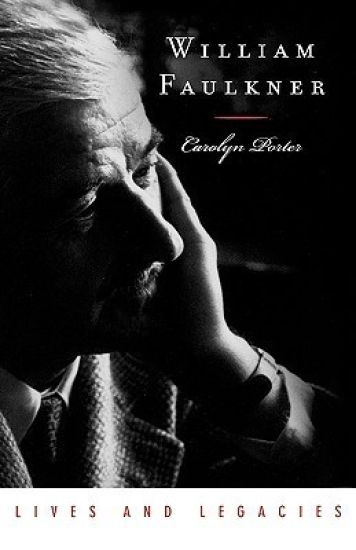
William Faulkner

William Faulkner

Carolyn Porter

Oxford University Press Inc
2008
sidottu
In this newest volume in Oxford's Lives and Legacies series, Carolyn Porter, a leading authority on William Faulkner, offers an insightful account of Faulkner's life and work, with special focus on the breathtaking twelve-year period when he wrote some of the finest novels in American literature. Porter ranges from Faulkner's childhood in Mississippi to his abortive career as a poet, his sojourn in New Orleans (where he met a sympathetic Sherwood Anderson and wrote his first novel Soldier's Pay), his short but strategically important stay in Paris, his "rescue" by Malcolm Crowley in the late 1940s, and his winning of the Nobel Prize. But the heart of the book illuminates the formal leap in Faulkner's creative vision beginning with The Sound and the Fury in 1929, which sold poorly but signaled the arrival of a major new literary talent. Indeed, from 1929 through 1942, he would produce, against formidable odds--physical, spiritual, and financial--some of the greatest fictional works of the twentieth century, including As I Lay Dying, Sanctuary, Light in August, Absalom, Absalom! and Go Down, Moses. Porter shows how, during this remarkably sustained burst of creativity, Faulkner pursued an often feverish process of increasingly ambitious narrative experimentation, coupled with an equally ambitious thematic expansion, as he moved from a close-up study of the white nuclear family, both lower and upper class, to an epic vision of southern, American, and ultimately Western culture. Porter illuminates the importance of Faulkner's legacy not only for American literature, but also for world literature, and reveals how Faulkner lives on so powerfully, both in the works of his literary heirs and in the lives of readers today.
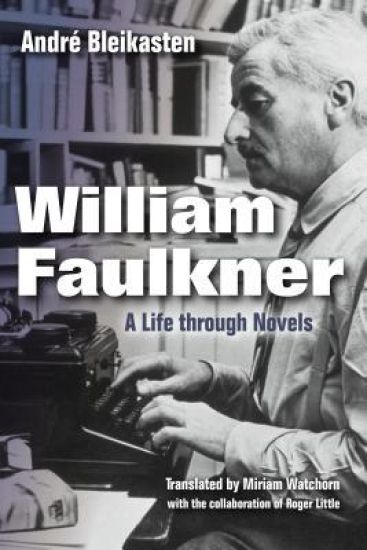
William Faulkner

William Faulkner

André Bleikasten; Philip Weinstein

Indiana University Press
2017
sidottu
Writing to American poet Malcolm Cowley in 1949, William Faulkner expressed his wish to be known only through his books. He would go on to win the Nobel Prize for literature several months later, and when he died famous in 1962, his biographers immediately began to unveil and dissect the unhappy life of "the little man from Mississippi." Despite the many works published about Faulkner, his life and career, it still remains a mystery how a poet of minor symbolist poems rooted in the history of the Deep South became one of the greatest novelists of the twentieth century. Here, renowned critic André Bleikasten revisits Faulkner's biography through the author's literary imagination. Weaving together correspondence and archival research with the graceful literary analysis for which he is known, Bleikasten presents a multi-strand account of Faulkner's life in writing. By carefully keeping both the biographical and imaginative lives in hand, Bleikasten teases out threads that carry the reader through the major events in Faulkner's life, emphasizing those circumstances that mattered most to his writing: the weight of his multi-generational family history in the South; the formation of his oppositional temperament provoked by a resistance to Southern bourgeois propriety; his creative and sexual restlessness and uncertainty; his lifelong struggle with finances and alcohol; his paradoxical escape to the bondages of Hollywood; and his final bent toward self-destruction. This is the story of the man who wrote timeless works and lived in and through his novels.
William Faulkner

William Faulkner

James G. Watson

University of Texas Press
2002
pokkari
In his life and writings, William Faulkner continually created and "performed" selves. Even in letters, he often played a part-gentleman dandy, soldier, farmer-while in his fictions these and other personae are counterpoised against one another to create a world of controlled chaos, made in Faulkner's own protean image and reflective of his own multiple sense of self. In this groundbreaking book, James Watson draws on the entire Faulkner canon, including letters and photographs, to decipher the complicated ways in which Faulkner put himself forth as the artist he felt himself to be through written performances and displays based on the life he actually lived and the ones he imagined living. The topics Watson treats include the overtly performative aspects of The Sound and the Fury, self-presentation and performance in private records of Faulkner's life, the ways in which his complicated marriage and his relationships to male mentors underlie his fictions' recurring motifs of marriages and fatherhood, Faulkner's readings of Melville, Hawthorne, and Thoreau and the problematics of authorial sovereignty, his artist-as-God creation of a fictional cosmos, and the epistolary relationships with women that lie in the correspondence behind Requiem for a Nun.
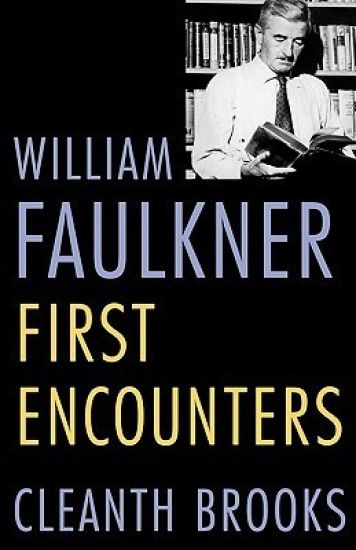
William Faulkner

William Faulkner

Cleanth Brooks

Yale University Press
1985
pokkari
In this clear-sighted and enjoyable book, Cleanth Brooks, acknowledged to be "the best critic of our best novelist," introduces the general reader to Faulkner's most important novels and stories: The Sound and the Fury; As I lay Dying; The Hamlet; Go Down, Moses; Light in August; and Absalom, Absalom! Brooks focuses on theme, character, and plot as well as on Faulkner's world—the fictional Yoknapatawpha County that provides a unique setting for Faulkner's tragicomic vision.
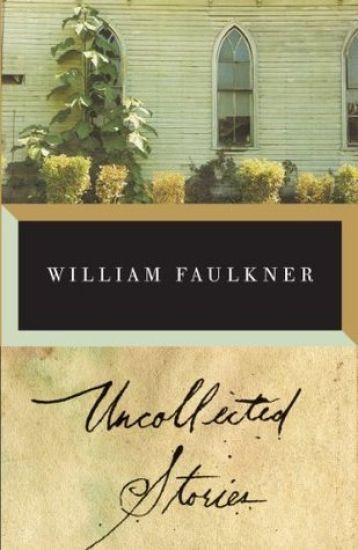
The Uncollected Stories of William Faulkner

The Uncollected Stories of William Faulkner

William Faulkner

Vintage Books
1997
pokkari
This invaluable volume contains some of the greatest short fiction by a writer who defined the course of American literature. Its forty-five stories fall into three categories: those not included in Faulkner s earlier collections; previously unpublished short fiction; and stories that were later expanded into such novels as The Unvanquished, The Hamlet, and Go Down, Moses. The Uncollected Stories of William Faulkner is an essential addition to its author s canon as well as a book of some of the most haunting, harrowing, and atmospheric short fiction written in the twentieth century."
William Faulkner
This set comprises of 40 volumes covering nineteenth and twentieth century European and American authors. These volumes will be available as a complete set, mini boxed sets (by theme) or as individual volumes. This second set compliments the first 68 volume set of Critical Heritage published by Routledge in October 1995.
William Faulkner
This set comprises of 40 volumes covering nineteenth and twentieth century European and American authors. These volumes will be available as a complete set, mini boxed sets (by theme) or as individual volumes. This second set compliments the first 68 volume set of Critical Heritage published by Routledge in October 1995.
William Faulkner

William Faulkner

John T. Matthews

John Wiley Sons Inc
2011
nidottu
Considered by many to be the most influential US novelist the world has known, William Faulkner's roots and his writing are planted in a single obscure county in the Deep South. A foremost international modernist, Faulkner's subjects and characters, ironically, are more readily associated with the history and sociology of the most backward state in the Union. He experimented endlessly with narrative structure, developing an unorthodox writing style. Yet his main goal was to reveal the truth of "the human heart in conflict with itself," ultimately defining human nature through the lens of his own Southern experience. This comprehensive account of Faulkner's literary career features an exploration of his novels and key short stories, including The Sound and the Fury, As I Lay Dying, Absalom, Absalom!, and many more. Drawing on psychoanalytic, post-structuralist, feminist, and post-colonial theory, it offers an imaginative topography of Faulkner's efforts to reckon with his Southern past, to acknowledge its modernization, and to develop his own modernist method.
William Faulkner

William Faulkner

Cambridge University Press
2008
pokkari
A comprehensive collection of contemporary published reactions to the writing of William Faulkner from 1926 to 1962, these articles document the response of reviewers to specific works, and chronicle the development of Faulkner's reputation among the nation's book reviewers. It has often been assumed that a poor reception in the popular review publications contributed to Faulkner's lack of commercial success. The material presented here tends to refute that assumption, clarifying the development of Faulkner's literary career and providing a fuller understanding of the part played by book reviewing in the sales, promotion and success of American literature.
William Faulkner

William Faulkner

Lothar Honnighausen

Cambridge University Press
2009
pokkari
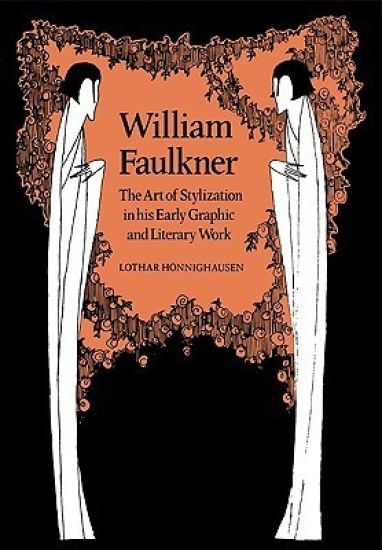
With a writer of Faulkner's scope and subtlety even the study of his beginnings is a challenging task. How did the young man who imitated Swinburne's verse and Beardsley's drawings develop into the author of The Sound and the Fury and Absalom, Absalom!? This book attempts one solution of the problem by focusing on the aspect of 'stylization' in Faulkner's earliest work and in his mature novels. The first comprehensive study of Faulkner's early graphic work, it sets his art nouveau illustrations and his affinities with the Arts and Crafts movement in their precise historical background, and goes on to offer new readings of his early poetry and his poetic play The Marionettes. By examining these ephemeral and apprentice works in detail, Professor Hönnighausen is able to show how the painstaking efforts of the young poet, calligrapher and illustrator foreshadow the verbal art of his great poetic novels.
William Faulkner

William Faulkner

Honnighausen Lothar

Cambridge University Press
1987
sidottu
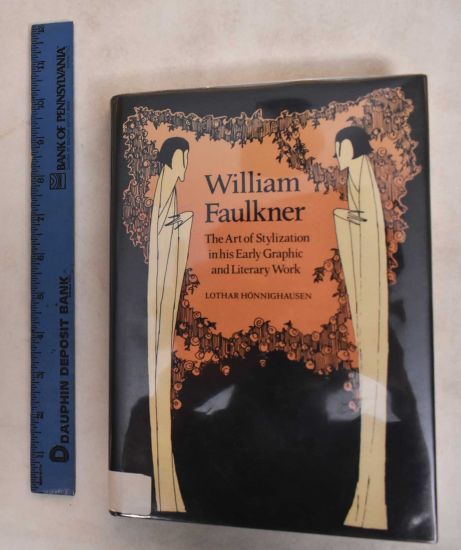
With a writer of Faulkner's scope and subtlety even the study of his beginnings is a challenging task. How did the young man who imitated Swinburne's verse and Beardsley's drawings develop into the author of The Sound and the Fury and Absalom, Absalom!? This book attempts one solution of the problem by focusing on the aspect of 'stylization' in Faulkner's earliest work and in his mature novels. The first comprehensive study of Faulkner's early graphic work, it sets his art nouveau illustrations and his affinities with the Arts and Crafts movement in their precise historical background, and goes on to offer new readings of his early poetry and his poetic play The Marionettes. By examining these ephemeral and apprentice works in detail, Professor Hönnighausen is able to show how the painstaking efforts of the young poet, calligrapher and illustrator foreshadow the verbal art of his great poetic novels.
William Faulkner

William Faulkner

Cambridge University Press
1995
sidottu
A comprehensive collection of contemporary published reactions to the writing of William Faulkner from 1926 to 1962, these articles document the response of reviewers to specific works, and chronicle the development of Faulkner's reputation among the nation's book reviewers. It has often been assumed that a poor reception in the popular review publications contributed to Faulkner's lack of commercial success. The material presented here tends to refute that assumption, clarifying the development of Faulkner's literary career and providing a fuller understanding of the part played by book reviewing in the sales, promotion and success of American literature.
Collected Stories of William Faulkner
"I'm a failed poet. Maybe every novelist wants to write poetry first, finds he can't and then tries the short story which is the most demanding form after poetry. And failing that, only then does he take up novel writing." --William Faulkner Winner of the National Book Award Forty-two stories make up this magisterial collection by the writer who stands at the pinnacle of modern American fiction. Compressing an epic expanse of vision into hard and wounding narratives, Faulkner's stories evoke the intimate textures of place, the deep strata of history and legend, and all the fear, brutality, and tenderness of the human condition. These tales are set not only in Yoknapatawpha County, but in Beverly Hills and in France during World War I. They are populated by such characters as the Faulknerian archetypes Flem Snopes and Quentin Compson, as well as by ordinary men and women who emerge so sharply and indelibly in these pages that they dwarf the protagonists of most novels.
William Faulkner

William Faulkner

Richard Godden

Princeton University Press
2007
sidottu
In William Faulkner, Richard Godden traces how the novelist's late fiction echoes the economic and racial traumas of the South's delayed modernization in the mid-twentieth century. As the New Deal rapidly accelerated the long-term shift from tenant farming to modern agriculture, many African Americans were driven from the land and forced to migrate north. At the same time, white landowners exchanged dependency on black labor for dependency on northern capital. Combining powerful close readings of The Hamlet, Go Down, Moses, and A Fable with an examination of southern economic history from the 1930s to the 1950s, Godden shows how the novels' literary complexities--from their narrative structures down to their smallest verbal emphases--reflect and refract the period's economic complexities. By demonstrating the interrelation of literary forms and economic systems, the book describes, in effect, the poetics of an economy. Original in the way it brings together close reading and historical context, William Faulkner offers innovative interpretations of late Faulkner and makes a unique contribution to the understanding of the relation between literature and history.
William Faulkner

William Faulkner

David Minter

Johns Hopkins University Press
1997
pokkari
In this highly acclaimed biography, David Minter draws upon a wealth of material, including the novelist's essays, interviews, published and unpublished letters, as well as his poems, stories, and novels, to illuminate the close relationship between the flawed life and the artistic achievement of one of twentieth-century America's most complex literary figures. In the process, he reveals a Faulkner who is powerful, vulnerable, real-every bit as fascinating as the characters he created. Anyone who has ever tarried in Yoknapatawpha County will find this a sensitive and readable account of the novelist's struggles in art and life. In his new preface, Minter locates his biography in relation to the changes in the literary critical landscape during the 1980s and discusses its departures from New Critical tenets about the relationship between authors' lives and their works.
William Faulkner

William Faulkner

Cleanth Brooks

Louisiana State University Press
1989
nidottu
An examination of the Yoknapatawpha novels, in themselves and in their relationship with Faulkner's central accomplishment, sheds light on Faulkner's development, technique, themes, and concerns
William Faulkner

William Faulkner

Cleanth Brooks

Louisiana State University Press
1989
nidottu
In this companion volume to William Faulkner: The Yoknapatawpha Country, Cleanth Brooks takes an in-depth look at Faulkner's early poetry and prose as well as his five non-Yoknapatawpha novels - Soldiers Pay, Mosquitoes, Pylon, The Wild Palms, and A Fable. Brooks also offers relevant clarification of some of his earlier interpretations of Faulkner that have been challenged - most notably in the case of Faulkner that have been challenged - most notable in the case of Absalom, Absalom!, which he considers Faulkner's greatest novel. recognising that the creative and imaginative center of Faulkner's art is Yoknapatawpha County, Brooks examines the merits of each of the works set beyond these boundaries and explores how these writings complement Faulkner as an artist. He sheds light on the literary sources that influenced Faulkner's early work and the technical innovations and general themes Faulkner was to develop in his later writing. The notes and appendixes with which Brooks concludes Toward Yoknapatawpha and Beyond serve only to amplify this comprehensive study.
William Faulkner

William Faulkner

Panthea Reid Broughton

Louisiana State University Press
1999
nidottu
William Faulkner was one of the few major writers of the period following World War I to retain a sense of the place of abstractions in life and in art. Faulkner saw life as a process of flux and change and abstractions as a means of either denying actuality or of coping with change and providing a solid touchstone in the flux.William Faulkner: The Abstract and the Actual is the first critical study of Faulkner to examine in depth the theme of evasion and distortion of existence through abstractions- a theme that can be found to a greater or lesser degree in every Faulkner novel. The book covers the entire seventeen-novel canon and includes discussions of a significant number of short stories. Its thematic organization points out the unity and continuity of Faulkner's work.Examining the interrelationships between Faulkner's fiction and modern thinking, Panthea Broughton shows the insight Faulkner had into the philosophical problem of the abstract versus the actual. She concludes that the central dilemma in Faulkner's fiction- resistance to flux or change- is also one of the salient problems of the modern world.
William Faulkner

William Faulkner

The University of North Carolina Press
1999
nidottu
This intellectual biography of William Faulkner traces the author's attempts to liberate himself from the repressive Victorian culture in which he was raised by embracing the Modernist culture of the artistic avant-garde. Daniel Singal argues that, to accommodate the conflicting demands of these two cultures, Faulkner created a complex and fluid structure of selfhood based on a set of dual roles - one, a Modernist author writing on the most daring and subversive issues of his day, and the other, a southern country gentleman loyal to the conservative mores of his community. Indeed, Singal says, it is in the clash between these two selves that one finds the key to making sense of Faulkner and his work.