Kirjojen hintavertailu. Mukana 11 699 587 kirjaa ja 12 kauppaa.

Kirjahaku

Etsi kirjoja tekijän nimen, kirjan nimen tai ISBN:n perusteella.

1000 tulosta hakusanalla Élisabeth Roudinesco

Why Psychoanalysis?

Why Psychoanalysis?

Elisabeth Roudinesco

Columbia University Press
2001
sidottu
Why do some people still choose psychoanalysis-Freud's so-called talking cure-when numerous medications are available that treat the symptoms of psychic distress so much faster? Elisabeth Roudinesco tackles this difficult question, exploring what she sees as a "depressive society": an epidemic of distress addressed only by an increasing reliance on prescription drugs. Far from contesting the efficacy of new medications like Prozac, Zoloft, and Viagra in alleviating the symptoms of any number of mental or nervous conditions, Roudinesco argues that the use of such drugs fails to solve patients' real problems. In the man who takes Viagra without ever wondering why he is suffering from impotence and the woman who is given antidepressants to deal with the loss of a loved one, Roudinesco sees a society obsessed with efficiency and desperate for the quick fix. She argues that "the talking cure" and pharmacology represent not just different approaches to psychiatry, but different worldviews. The rush to treat symptoms is itself symptomatic of an antiseptic and depressive culture in which thought is reduced to the firing of neurons and desire is just a chemical secretion. In contrast, psychoanalysis testifies to human freedom and the power of language.

Why Psychoanalysis?

Why Psychoanalysis?

Elisabeth Roudinesco

Columbia University Press
2004
pokkari
Why do some people still choose psychoanalysis-Freud's so-called talking cure-when numerous medications are available that treat the symptoms of psychic distress so much faster? Elisabeth Roudinesco tackles this difficult question, exploring what she sees as a "depressive society": an epidemic of distress addressed only by an increasing reliance on prescription drugs. Far from contesting the efficacy of new medications like Prozac, Zoloft, and Viagra in alleviating the symptoms of any number of mental or nervous conditions, Roudinesco argues that the use of such drugs fails to solve patients' real problems. In the man who takes Viagra without ever wondering why he is suffering from impotence and the woman who is given antidepressants to deal with the loss of a loved one, Roudinesco sees a society obsessed with efficiency and desperate for the quick fix. She argues that "the talking cure" and pharmacology represent not just different approaches to psychiatry, but different worldviews. The rush to treat symptoms is itself symptomatic of an antiseptic and depressive culture in which thought is reduced to the firing of neurons and desire is just a chemical secretion. In contrast, psychoanalysis testifies to human freedom and the power of language.
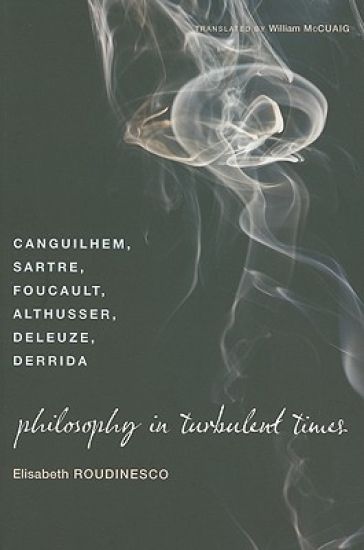
Philosophy in Turbulent Times

Philosophy in Turbulent Times

Elisabeth Roudinesco

Columbia University Press
2008
sidottu
For Elisabeth Roudinesco, a historian of psychoanalysis and one of France's leading intellectuals, Canguilhem, Sartre, Foucault, Althusser, Deleuze, and Derrida represent a "great generation" of French philosophers who accomplished remarkable work and lived incredible lives. These troubled and innovative thinkers endured World War II and the cultural and political revolution of the 1960s, and their cultural horizon was dominated by Marxism and psychoanalysis, though they were by no means strict adherents to the doctrines of Marx and Freud. Roudinesco knew many of these intellectuals personally, and she weaves an account of their thought through lived experience and reminiscences. Canguilhem, for example, was a distinguished philosopher of science who had a great influence on Foucault's exploration of sanity and madness-themes Althusser lived in a notorious personal drama. And in dramatizing the life of Freud for the screen, Sartre fundamentally altered his own philosophical approach to psychoanalysis. Roudinesco launches a passionate defense of Canguilhem, Sartre, Foucault, Althusser, Deleuze, and Derrida against the "new philosophers" of the late 1970s and 1980s, who denounced the work-and sometimes the private lives-of this great generation. Roudinesco refutes attempts to tar them, as well as the Marxist and left-wing tradition in general, with the brush of Soviet-style communism. In Freudian theory and the philosophy of radical commitment, she sees a bulwark against the kind of manipulative, pill-prescribing, and normalizing psychology that aims to turn individuals into mindless consumers. Intense, clever, and persuasive, Philosophy in Turbulent Times captivates with the dynamism of French thought in the twentieth century.
Philosophy in Turbulent Times

Philosophy in Turbulent Times

Elisabeth Roudinesco

Columbia University Press
2010
pokkari
For Elisabeth Roudinesco, a historian of psychoanalysis and one of France's leading intellectuals, Canguilhem, Sartre, Foucault, Althusser, Deleuze, and Derrida represent a "great generation" of French philosophers who accomplished remarkable work and lived incredible lives. These troubled and innovative thinkers endured World War II and the cultural and political revolution of the 1960s, and their cultural horizon was dominated by Marxism and psychoanalysis, though they were by no means strict adherents to the doctrines of Marx and Freud. Roudinesco knew many of these intellectuals personally, and she weaves an account of their thought through lived experience and reminiscences. Canguilhem, for example, was a distinguished philosopher of science who had a great influence on Foucault's exploration of sanity and madness-themes Althusser lived in a notorious personal drama. And in dramatizing the life of Freud for the screen, Sartre fundamentally altered his own philosophical approach to psychoanalysis. Roudinesco launches a passionate defense of Canguilhem, Sartre, Foucault, Althusser, Deleuze, and Derrida against the "new philosophers" of the late 1970s and 1980s, who denounced the work-and sometimes the private lives-of this great generation. Roudinesco refutes attempts to tar them, as well as the Marxist and left-wing tradition in general, with the brush of Soviet-style communism. In Freudian theory and the philosophy of radical commitment, she sees a bulwark against the kind of manipulative, pill-prescribing, and normalizing psychology that aims to turn individuals into mindless consumers. Intense, clever, and persuasive, Philosophy in Turbulent Times captivates with the dynamism of French thought in the twentieth century.
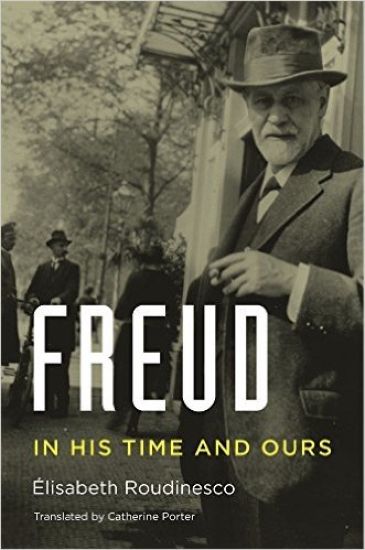
Freud

Freud

Élisabeth Roudinesco

Harvard University Press
2016
sidottu
Élisabeth Roudinesco offers a bold and modern reinterpretation of the iconic founder of psychoanalysis. Based on new archival sources, this is Freud’s biography for the twenty-first century—a critical appraisal, at once sympathetic and impartial, of a genius greatly admired and yet greatly misunderstood in his own time and in ours.Roudinesco traces Freud’s life from his upbringing as the eldest of eight siblings in a prosperous Jewish-Austrian household to his final days in London, a refugee of the Nazis’ annexation of his homeland. She recreates the milieu of fin de siècle Vienna in the waning days of the Habsburg Empire—an era of extraordinary artistic innovation, given luster by such luminaries as Gustav Klimt, Stefan Zweig, and Gustav Mahler. In the midst of it all, at the modest residence of Berggasse 19, Freud pursued his clinical investigation of nervous disorders, blazing a path into the unplumbed recesses of human consciousness and desire.Yet this revolutionary who was overthrowing cherished notions of human rationality and sexuality was, in his politics and personal habits, in many ways conservative, Roudinesco shows. In his chauvinistic attitudes toward women, and in his stubborn refusal to acknowledge the growing threat of Hitler until it was nearly too late, even the analytically-minded Freud had his blind spots. Alert to his intellectual complexity—the numerous tensions in his character and thought that remained unresolved—Roudinesco ultimately views Freud less as a scientific thinker than as the master interpreter of civilization and culture.
Jacques Lacan

Jacques Lacan

Elisabeth Roudinesco

Polity Press
1997
sidottu
Roudinesco follows the development of Lacan's career from his early clinical practice and conflicts with the establishment, as he constantly pushed the boundaries of psychoanalysis from its roots in biology and neurology to a powerful critical tool that resonated in fields ranging from literary theory to feminist politics.
Jacques Lacan

Jacques Lacan

Elisabeth Roudinesco

Polity Press
1999
nidottu
The author offers the story of a young man from the provinces determined to leave his family fortune and its old-fashioned values behind; the young doctor in Paris who set out to reinvent clinical psychotherapy and ended up transforming the fundamental notions that shape it all.
Our Dark Side

Our Dark Side

Elisabeth Roudinesco

Polity Press
2009
sidottu
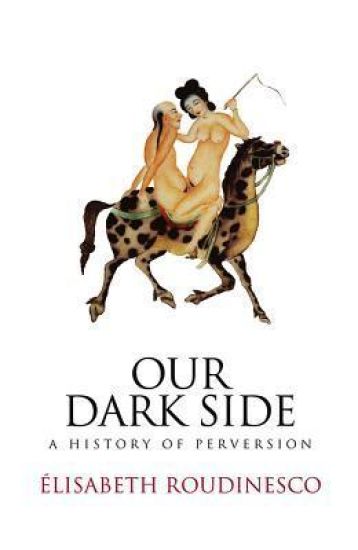
Where does perversion begin? Who is perverse? Ever since the word first appeared in the Middle Ages, anyone who delights in evil and in the destruction of the self or others has been described as 'perverse'. But while the experience of perversion is universal, every era has seen it and dealt with it in its own way. The history of perversion in the West is told here through a study of great emblematic figures of the perverse - Gilles de Rais, the mystical saints and the flagellants in the middle ages, the Marquis de Sade in the eighteenth century, the masturbating child, the male homosexual and the hysterical woman nineteenth century, Nazism in the twentieth century, and the complementary figures of the paedophile and the terrorist in the twenty-first. The perverse are rarely talked about and when they are it is usually only to be condemned. They are commonly viewed as monstrous and cruel, as something alien to the very nature of being human. And yet, perversion can also attest to creativity and self-transcendence, to the refusal of individuals to submit to the rules and prohibitions that govern human life. Perversion fascinates us precisely because it can be both abject and sublime. Whether they are sublime because they turn to art or mysticism, or abject because they surrender to their murderous impulses, the perverse are part of us because they exhibit something that we always conceal: our own negativity and our dark side.
Our Dark Side

Our Dark Side

Elisabeth Roudinesco

Polity Press
2009
nidottu
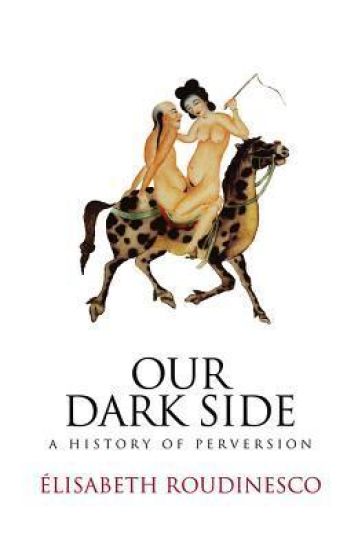
Where does perversion begin? Who is perverse? Ever since the word first appeared in the Middle Ages, anyone who delights in evil and in the destruction of the self or others has been described as 'perverse'. But while the experience of perversion is universal, every era has seen it and dealt with it in its own way. The history of perversion in the West is told here through a study of great emblematic figures of the perverse - Gilles de Rais, the mystical saints and the flagellants in the middle ages, the Marquis de Sade in the eighteenth century, the masturbating child, the male homosexual and the hysterical woman nineteenth century, Nazism in the twentieth century, and the complementary figures of the paedophile and the terrorist in the twenty-first. The perverse are rarely talked about and when they are it is usually only to be condemned. They are commonly viewed as monstrous and cruel, as something alien to the very nature of being human. And yet, perversion can also attest to creativity and self-transcendence, to the refusal of individuals to submit to the rules and prohibitions that govern human life. Perversion fascinates us precisely because it can be both abject and sublime. Whether they are sublime because they turn to art or mysticism, or abject because they surrender to their murderous impulses, the perverse are part of us because they exhibit something that we always conceal: our own negativity and our dark side.
Revisiting the Jewish Question

Revisiting the Jewish Question

Elisabeth Roudinesco

Polity Press
2013
sidottu
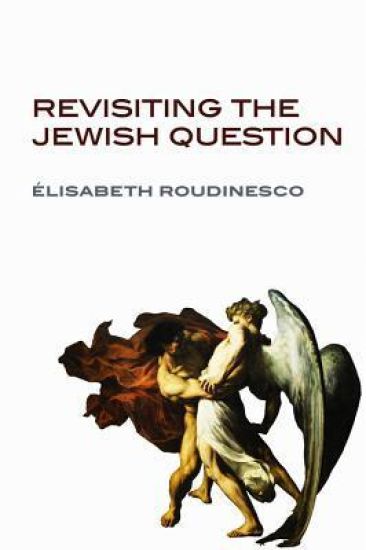
What does it mean to be Jewish? What is an anti-Semite? Why does the enigmatic identity of the men who founded the first monotheistic religion arouse such passions? We need to return to the Jewish question. We need, first, to distinguish between the anti-Judaism of medieval times, which persecuted the Jews, and the anti-Judaism of the Enlightenment, which emancipated them while being critical of their religion. It is a mistake to confuse the two and see everyone from Voltaire to Hitler as anti-Semitic in the same way. Then we need to focus on the development of anti-Semitism in Europe, especially Vienna and Paris, where the Zionist idea was born. Finally, we need to investigate the reception of Zionism both in the Arab countries and within the Diaspora. Re-examining the Jewish question in the light of these distinctions and investigations, Roudinesco shows that there is a permanent tension between the figures of the ‘universal Jew’ and the ‘territorial Jew’. Freud and Jung split partly over this issue, which gained added intensity after the creation of the State of Israel in 1948 and the Eichmann trial in 1961. Finally, Roudinesco turns to the Holocaust deniers, who started to suggest that the Jews had invented the genocide that befell their people, and to the increasing number of intellectual and literary figures who have been accused of anti-Semitism. This thorough re-examination of the Jewish question will be of interest to students and scholars of modern history and contemporary thought and to a wide readership interested in anti-Semitism and the history of the Jews.
Revisiting the Jewish Question

Revisiting the Jewish Question

Elisabeth Roudinesco

Polity Press
2013
nidottu
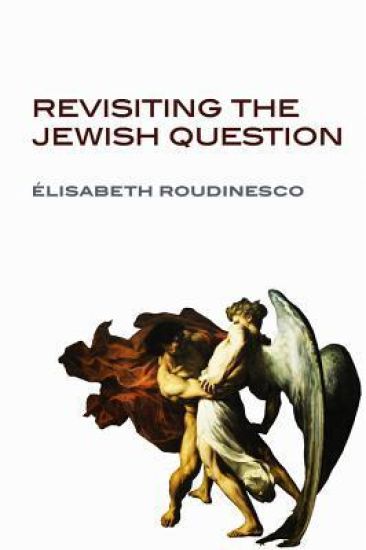
What does it mean to be Jewish? What is an anti-Semite? Why does the enigmatic identity of the men who founded the first monotheistic religion arouse such passions? We need to return to the Jewish question. We need, first, to distinguish between the anti-Judaism of medieval times, which persecuted the Jews, and the anti-Judaism of the Enlightenment, which emancipated them while being critical of their religion. It is a mistake to confuse the two and see everyone from Voltaire to Hitler as anti-Semitic in the same way. Then we need to focus on the development of anti-Semitism in Europe, especially Vienna and Paris, where the Zionist idea was born. Finally, we need to investigate the reception of Zionism both in the Arab countries and within the Diaspora. Re-examining the Jewish question in the light of these distinctions and investigations, Roudinesco shows that there is a permanent tension between the figures of the ‘universal Jew’ and the ‘territorial Jew’. Freud and Jung split partly over this issue, which gained added intensity after the creation of the State of Israel in 1948 and the Eichmann trial in 1961. Finally, Roudinesco turns to the Holocaust deniers, who started to suggest that the Jews had invented the genocide that befell their people, and to the increasing number of intellectual and literary figures who have been accused of anti-Semitism. This thorough re-examination of the Jewish question will be of interest to students and scholars of modern history and contemporary thought and to a wide readership interested in anti-Semitism and the history of the Jews.
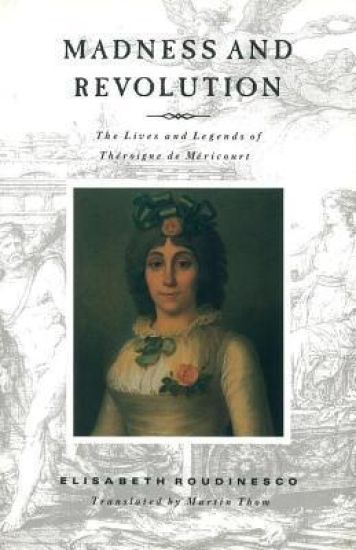
Madness and Revolution

Madness and Revolution

Élisabeth Roudinesco

Verso Books
1992
nidottu
'An impure Joan of Arc' or 'a radiant Penthesilea'-Theroigne de Mericourt remains one of the most misrepresented figures of the French revolution. Theroigne loved the Revolution; she refused the roles prescribed by her sex; and, at the age of thirty-one, she lost her reason. From these three facts, historians have woven tenacious myths about women, madness and revolution which reveal more about their own phantasms and allegiances than about Theroigne herself.Élisabeth Roudinesco's exploration of Theroigne's life and afterlife restores a much-wronged woman to her rightful place in history. After vividly tracing Theroigne's life, Roudinesco applies psychoanalysis to history, and history to psychiatry. She analyses the founding fathers of the asylum and the historians of the French Revolution, using their own assessments of Theroigne as revealing evidence. Her book adds a new dimension to our understanding of the French Revolution, early feminism and the birth of the modern asylum.
The Sovereign Self

The Sovereign Self

Elisabeth Roudinesco

JOHN WILEY AND SONS LTD
2022
sidottu
The toppling of statues in the name of anti-racism is disconcerting, as is the violence sometimes displayed towards others in the name of gender equality. The emancipation movements of the past seem to have undergone a subtle transformation: the struggle now is not so much to bring about progress but rather to denounce offenses, express indignation, and assert identities, sometimes in order to demand recognition. The individual’s commitment to self-definition and self-appreciation, understood as the exercise of a sovereign right, has become a distinctive sign of our time. Elisabeth Roudinesco takes us into the darker corners of identity thinking, where conspiracy theories, rejection of the other, and incitement to violence are often part of the mix. But she also points to several paths that could lead us away from despair and toward a possible world in which everyone can adhere to the principle according to which “I am myself, that’s all there is to it” without denying the diversity of human communities or essentializing either universality or difference. This bold and courageous interrogation of identity politics will be of great interest to anyone concerned with the state of our world today.
The Sovereign Self

The Sovereign Self

Elisabeth Roudinesco

JOHN WILEY AND SONS LTD
2022
nidottu
The toppling of statues in the name of anti-racism is disconcerting, as is the violence sometimes displayed towards others in the name of gender equality. The emancipation movements of the past seem to have undergone a subtle transformation: the struggle now is not so much to bring about progress but rather to denounce offenses, express indignation, and assert identities, sometimes in order to demand recognition. The individual’s commitment to self-definition and self-appreciation, understood as the exercise of a sovereign right, has become a distinctive sign of our time. Elisabeth Roudinesco takes us into the darker corners of identity thinking, where conspiracy theories, rejection of the other, and incitement to violence are often part of the mix. But she also points to several paths that could lead us away from despair and toward a possible world in which everyone can adhere to the principle according to which “I am myself, that’s all there is to it” without denying the diversity of human communities or essentializing either universality or difference. This bold and courageous interrogation of identity politics will be of great interest to anyone concerned with the state of our world today.
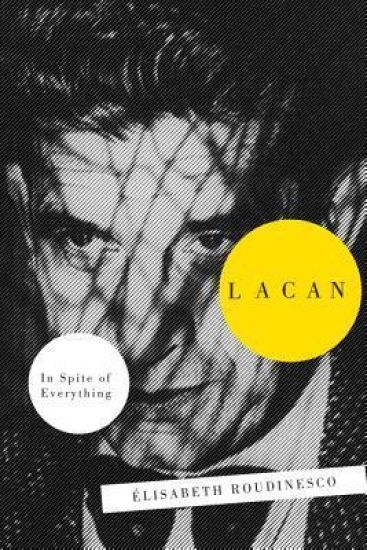
Lacan

Lacan

Élisabeth Roudinesco

Verso Books
2014
nidottu
Jacques Lacan continues to be subject to the most extravagant interpretations. Angelic to some, he is demonic to others. To recall Lacan's career, now that the heroic age of psychoanalysis is over, is to remember an intellectual and literary adventure that occupies a founding place in our modernity. Lacan went against the current of many of the hopes aroused by 1968, but embraced their paradoxes, and his language games and wordplay resonate today as so many injunctions to replace rampant individualism with a heightened social consciousness. Widely recognized as the leading authority on Lacan, Élisabeth Roudinesco revisits his life and work: what it was-and what it remains.
Wörterbuch der Psychoanalyse

Wörterbuch der Psychoanalyse

Elisabeth Roudinesco; Michel Plon

SPRINGER VERLAG GMBH
2012
nidottu
Das Wörterbuch der Psychoanalyse informiert über die wichtigsten Elemente des psychoanalytischen Denkens: die wesentlichen Begriffe, die wichtigsten Länder, in denen die Psychoanalyse Fuß fassen konnte, die Biographien ihrer Autoren, psychopathologische Theorien und andere Wissensbereiche oder intellektuelle, politische und religiöse Bewegungen, die von der Psychoanalyse beeinflusst wurden, die wichtigen ersten Fallbeschreibungen, die Behandlungstechniken sowie die Ansichten der Psychoanalyse zu Geburt, Familie, Geschlecht und Wahn. Es behandelt auch den Freudianismus selbst, seine Geschichte und seine unterschiedlichen Schulen, und gibt einen Überblick über die wichtigsten Werke Freuds. Es schließt die Familie Freuds mit ein, außerdem seine Lehrer sowie Schriftsteller und Künstler, mit denen er Briefwechsel unterhielt. Jeder Artikel enthält eine Bibliographie mit den wichtigsten Quellen. Eine Zeittafel mit den bedeutendsten Ereignissen der Geschichte der Psychoanalyse rundet dieses Wörterbuch ab.
Jacques Lacan, Past and Present

Jacques Lacan, Past and Present

Alain Badiou; Elisabeth Roudinesco

Columbia University Press
2014
sidottu
In this dialogue, Alain Badiou shares the clearest, most detailed account to date of his profound indebtedness to Lacanian psychoanalysis. He explains in depth the tools Lacan gave him to navigate the extremes of his other two philosophical "masters," Jean-Paul Sartre and Louis Althusser. Elisabeth Roudinesco supplements Badiou's experience with her own perspective on the troubled landscape of the French analytic world since Lacan's death-critiquing, for example, the link (or lack thereof) between politics and psychoanalysis in Lacan's work. Their exchange reinvigorates how the the work of a pivotal twentieth-century thinker is perceived.
Jacques Lacan, Past and Present

Jacques Lacan, Past and Present

Alain Badiou; Elisabeth Roudinesco

Columbia University Press
2014
pokkari
In this dialogue, Alain Badiou shares the clearest, most detailed account to date of his profound indebtedness to Lacanian psychoanalysis. He explains in depth the tools Lacan gave him to navigate the extremes of his other two philosophical "masters," Jean-Paul Sartre and Louis Althusser. Elisabeth Roudinesco supplements Badiou's experience with her own perspective on the troubled landscape of the French analytic world since Lacan's death-critiquing, for example, the link (or lack thereof) between politics and psychoanalysis in Lacan's work. Their exchange reinvigorates how the the work of a pivotal twentieth-century thinker is perceived.
For What Tomorrow . . .

For What Tomorrow . . .

Jacques Derrida; Elisabeth Roudinesco

Stanford University Press
2004
sidottu
"For what tomorrow will be, no one knows," writes Victor Hugo. This dialogue, proposed to Jacques Derrida by the historian Elisabeth Roudinesco, brings together two longtime friends who share a common history and an intellectual heritage. While their perspectives are often different, they have many common reference points: psychoanalysis, above all, but also the authors and works that have come to be known outside France as "post-structuralist." Beginning with a revealing glance back at the French intellectual scene over the past forty years, Derrida and Roudinesco go on to address a number of major social and political issues. Their extraordinarily wide-ranging discussion covers topics such as immigration, hospitality, gender equality, and "political correctness"; the disordering of the traditional family, same-sex unions, and reproductive technologies; the freedom of the "subject" over and against "scientism"; violence against animals; the haunting specter of communism and revolution; the present and future of anti-Semitism (as well as that which marked Derrida's own history) and the hazardous politics of criticizing the state of Israel; the principled abolition of the death penalty; and, to conclude, a chapter "in praise of psychoanalysis." These exchanges not only help to situate Derrida's thought within the milieu out of which it grew, they also show more clearly than ever how this thought, impelled by a deep concern for justice, can be brought to bear on the social and political issues of our day. What emerges here above all, far from an abstract, apolitical discourse, is a call to take responsibility—for the inheritance of a past, for the singularities of the present, and for the unforeseeable tasks of the future.