Kirjojen hintavertailu. Mukana 11 342 296 kirjaa ja 12 kauppaa.

Kirjahaku

Etsi kirjoja tekijän nimen, kirjan nimen tai ISBN:n perusteella.

1000 tulosta hakusanalla A. Hadrian Allcroft

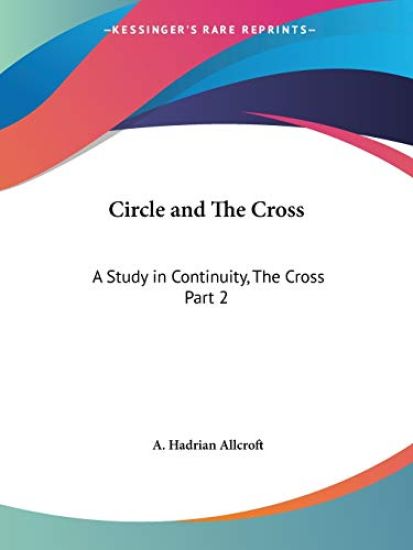
The Circle and the Cross: A Study in Continuity, the Cross, V2

The Circle and the Cross: A Study in Continuity, the Cross, V2

A. Hadrian Allcroft

Literary Licensing, LLC
2013
sidottu
The Circle And The Cross: A Study In Continuity, The Cross, V2 is a book written by A. Hadrian Allcroft. This book is a detailed study of the cross and its significance in various cultures and religions throughout history. The author explores the symbolism of the cross in ancient civilizations, such as the Egyptians and the Mayans, as well as its use in Christianity and other religions. The book also examines the continuity of the cross as a symbol of power and protection, from ancient times to the present day. The author provides a thorough analysis of the cross as a cultural and religious icon, and its impact on society. This book is a valuable resource for anyone interested in the history of the cross and its significance in different cultures and religions.This is a new release of the original 1927 edition.This scarce antiquarian book is a facsimile reprint of the old original and may contain some imperfections such as library marks and notations. Because we believe this work is culturally important, we have made it available as part of our commitment for protecting, preserving, and promoting the world's literature in affordable, high quality, modern editions, that are true to their original work.
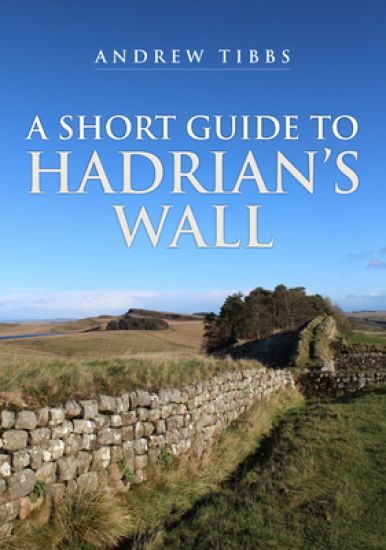
A Short Guide to Hadrian's Wall

A Short Guide to Hadrian's Wall

Andrew Tibbs

AMBERLEY PUBLISHING
2022
nidottu
Andrew Tibbs, the man behind the popular @RomanScotland account, brings together an overview of the history and archaeology of this famous monument, along with a guide to the key Roman sites to visit in and around Hadrian’s Wall. The history of the wall starts with the earliest Roman invasion of northern Britain. This led to the construction of the Stanegate, a chain of forts across northern England superseded by the construction of Hadrian’s Wall. Thirty key sites are examined, all of which can be visited, and Tibbs provides maps, illustrations and details of each of these. This is the perfect book for anybody interested in the history of the wall and the rich variety of interesting sites that can be found along it.
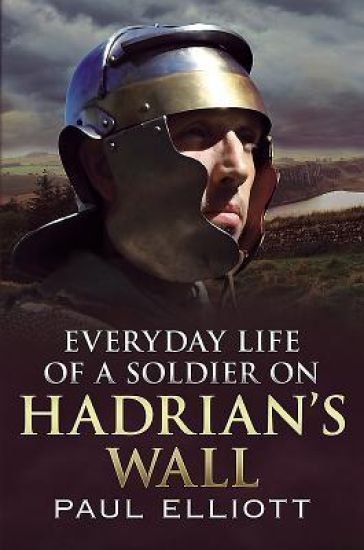
Everyday Life of a Soldier on Hadrian's Wall
Walk the Wall, gaze northwards across hostile territory, man the turrets and milecastles...What was life like for the Roman troops stationed on Hadrian's Wall? Follow the life of one man, a Tungrian soldier, through recruitment, training, garrison duty and war. Focussing on a single point in time and one fort on the Wall, we explore every aspect of military life on this bleak and remote frontier. Where was he born? What did he spend his money on? How did he fight? What did he eat? Did he have lice or fleas? Archaeology and the accounts of ancient writers come together to paint a vivid picture of a soldier on the Wall soon after its completion in AD 130. Historical reconstruction and experimentation fill in the gaps that are left. Step back into the past, step into the marching boots of Tungrian soldiers as they patrol Rome's greatest frontier.
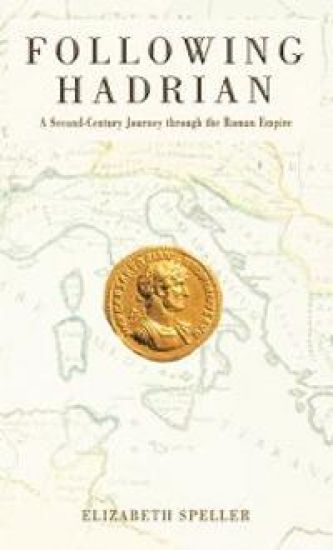
Following Hadrian: A Second-Century Journey Through the Roman Empire
One of the greatest--and most enigmatic--Roman emperors, Hadrian stabilized the imperial borders, established peace throughout the empire, patronized the arts, and built an architectural legacy that lasts to this day: the great villa at Tivoli, the domed wonder of the Pantheon, and the eponymous wall that stretches across Britain. Yet the story of his reign is also a tale of intrigue, domestic discord, and murder. In Following Hadrian, Elizabeth Speller captures the fascinating life of Hadrian, ruler of the most powerful empire on earth at the peak of its glory. Speller displays a superb gift for narrative as she traces the intrigue of Hadrian's rise: his calculated marriage to Emperor Trajan's closest female relative, a woman he privately tormented; Trajan's suspicious deathbed adoption of Hadrian as his heir, a stroke some thought to be a post-mortem forgery; and the ensuing slaughter of potential rivals by an ally of Hadrian's. Speller makes brilliant use of her sources, vividly depicting Hadrian's bouts of melancholy, his intellectual passions, his love for a beautiful boy (whose death sent him into a spiral), and the paradox of his general policies of peace and religious tolerance even as he conducted a bitter, three-year war with Judea. Most important, the author captures the emperor as both a builder and an inveterate traveler, guiding readers on a grand tour of the Roman Empire at the moment of its greatest extent and accomplishment, from the barren, windswept frontiers of Britain to the teeming streets of Antioch, from the dangers of the German forest to the urban splendor of Rome itself.
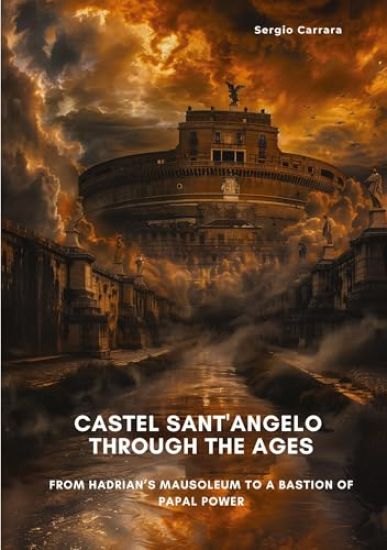
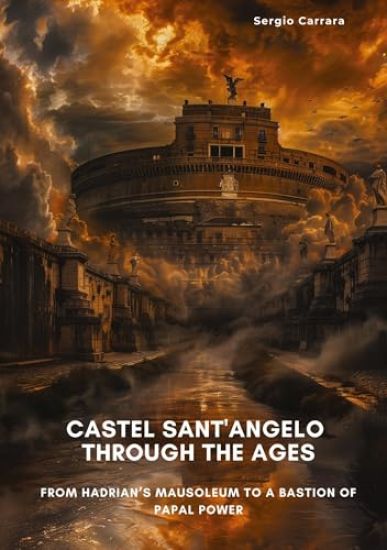
Castel Sant'Angelo Through the Ages: From Hadrian's Mausoleum to a Bastion of Papal Power
Perched along the banks of the Tiber River, Castel Sant'Angelo stands as a silent witness to nearly two millennia of Roman history. Originally conceived as Emperor Hadrian's monumental mausoleum, this iconic structure evolved into a medieval fortress, a papal residence, and a powerful symbol of resilience and authority. In "Castel Sant'Angelo Through the Ages," historian Sergio Carrara takes readers on an extraordinary journey through the layers of architectural innovation, political intrigue, and cultural transformation that shaped this enduring landmark. From its beginnings as a testament to imperial grandeur to its strategic role during the turbulent Middle Ages and Renaissance, the book explores how Castel Sant'Angelo mirrored the shifting tides of power in Rome. Richly illustrated and meticulously researched, this work unveils the stories behind the fortress's fortifications, the legends of the Archangel Michael, and its critical role during the Sack of Rome. A testament to the ingenuity and adaptability of human ambition, Castel Sant'Angelo continues to captivate as a bridge between the ancient and the modern. Whether you're a history enthusiast, an architecture aficionado, or simply curious about Rome's storied past, this book offers an unparalleled glimpse into the life of one of the Eternal City's most iconic monuments.
Castel Sant'Angelo Through the Ages: From Hadrian's Mausoleum to a Bastion of Papal Power
Perched along the banks of the Tiber River, Castel Sant'Angelo stands as a silent witness to nearly two millennia of Roman history. Originally conceived as Emperor Hadrian's monumental mausoleum, this iconic structure evolved into a medieval fortress, a papal residence, and a powerful symbol of resilience and authority. In "Castel Sant'Angelo Through the Ages," historian Sergio Carrara takes readers on an extraordinary journey through the layers of architectural innovation, political intrigue, and cultural transformation that shaped this enduring landmark. From its beginnings as a testament to imperial grandeur to its strategic role during the turbulent Middle Ages and Renaissance, the book explores how Castel Sant'Angelo mirrored the shifting tides of power in Rome. Richly illustrated and meticulously researched, this work unveils the stories behind the fortress's fortifications, the legends of the Archangel Michael, and its critical role during the Sack of Rome. A testament to the ingenuity and adaptability of human ambition, Castel Sant'Angelo continues to captivate as a bridge between the ancient and the modern. Whether you're a history enthusiast, an architecture aficionado, or simply curious about Rome's storied past, this book offers an unparalleled glimpse into the life of one of the Eternal City's most iconic monuments.
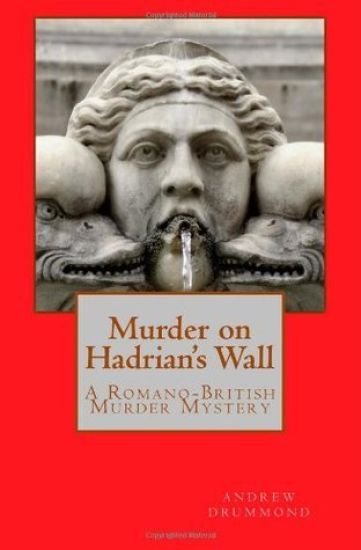
Murder on Hadrian's Wall: A Romano-British Murder Mystery

Murder on Hadrian's Wall: A Romano-British Murder Mystery

Andrew Drummond

Createspace Independent Publishing Platform
2014
nidottu
Have you ever wanted to know the Latin word for "underwear"? Or have you ever wondered what life was like for a soldier stationed on Hadrian's Wall? Maybe you just want to read a deviously and complicated historical "whodunnit", as Centurion Versillius faces down the Cult of Mithras, his superiors, the civil administration, the townspeople and even his own men in the search for a vicious killer. Travel back to AD 350, to find a Roman Britain which had existed for centuries, but was going through a period of dramatic change. The ties that held the empire together were fraying, as Britannia, the most northerly part of the empire, was finding out. Not altogether the best time to have a particularly nasty murderer stalking the streets of your Romano-British town... SOME COMMENTS MADE BY AMAZON READERS: "5.0 out of 5 stars Brilliant idea - A "Morse-like" detective who is a Roman Centurion" Best $1 I have ever spent...William E. Smith, Canada "Great debut novel" This novel had believable characters and excellent period detail throughout. And it kept me guessing " whodunit" right up until the final chapter...Empress Caramel, UK. "Very Good Book" I loved the historical detail and would definitely read another book by this writer...Bigdave, UK. "Authenticity is Credibility" Vivid description, accuracy, and a strong sense of place...Stephen S, USA. "Can't wait for more" Kept me guessing to the end, well written and the period detail was good...Angela L, UK. "It is very clever to write a believable story set in a historical context so I enjoyed the book very much and was dying to discover the murderer." Kendall, USA. "Excellent period detail" I did not guess "who dunnit"...I shall look out for more from this author...Sue, UK. "An entertaining tale" ...and a good murder story. I liked it very much. Andros. UK
Hadrian’s Wall: A study in archaeological exploration and interpretation
The lectures on which this publication is based were delivered as the Rhind Lectures to the Society of Antiquaries of Scotland in May 2019. The annual Rhind Lectures commemorate Alexander Henry Rhind (1833-1863), a Fellow of the Society renowned for his excavations (finds from which are now in the National Museum of Scotland) and publications. The 2019 lectures were generously sponsored by AOC Archaeology Group. The first two lectures – chapters in this book – provide the historiographical background to our present understanding of Hadrian’s Wall. They start with John Collingwood Bruce, the leading authority on the Wall, from 1848 until his death in 1892, who gave the Rhind lectures in 1883 and whose influence continues to this day. Research on the Wall in the field and in the study from 1892 to the present day are covered in the second lecture. The third and fourth lectures consider the purpose(s) and operation of Hadrian’s Wall from the first plan drawn up soon after Hadrian became emperor in 117 through to the final days of its existence as a frontier shortly after 400. Five distinct ‘plans’ for the Wall are promulgated. The fifth lecture examines the impact of the frontier on the people living in its shadow and beyond. The last lecture reviews the processes which have brought us to an understanding of Hadrian’s Wall and considers the value of research strategies, with some suggestions for the way forward. The chapters in this book reflect closely the lectures themselves with the main change being the addition of references.
The Emperor Hadrian; A Picture Of The Graeco-Roman World In His Time
This book has been considered by academicians and scholars of great significance and value to literature. This forms a part of the knowledge base for future generations. So that the book is never forgotten we have represented this book in a print format as the same form as it was originally first published. Hence any marks or annotations seen are left intentionally to preserve its true nature.