

Kirjahaku
Etsi kirjoja tekijän nimen, kirjan nimen tai ISBN:n perusteella.
1000 tulosta hakusanalla A. Kanni Raj


Modelling Works in Chemistry and Engineering Materials Technology
A. Kanni Raj; K. Uma Sudan
SCHOLARS' PRESS
2022
nidottu


Hybrid power are combinations between different technologies to produce power. For example, solar-wind, nuclear-cryogenic, etc.It discusses innovations in the field of hybrid energies and covers the durability, practicality, cost-effectiveness, and utility of this concept. It demonstrates how the coupling of two or more energy storage technologies can interact with and support renewable energy power systems. A detailed review of the state-of-the-art control strategies for renewable energy power systems with hybrid energy storage systems are highlighted. The future trends for combination and control of the two systems are also discussed.

Some Aspects of Research in Materials and Mechanical EngineeringIndige
A Kanni Raj
SCHOLARS' PRESS
2022
pokkari
Condición socioeconómica de los pescadores de la India:
R. Rajesh Kanna; A. Abdul Raheem
Ediciones Nuestro Conocimiento
2021
nidottu
Socio-economische toestand van de vissersbevolking in India:
R. Rajesh Kanna; A. Abdul Raheem
Uitgeverij Onze Kennis
2021
nidottu

Socio Economic Condition of the Fishers Folk in India
R Rajesh Kanna; A Abdul Raheem
Scholars' Press
2021
pokkari
Fishing communities have played a significant role in conserving their ecosystem through generation of interaction with the lake or lagoon system and other ecosystems around the lake region. Over the years they have developed immense empirical knowledge, about their resources in their immediate vicinity and developed a variety of traditional technology according to different ecological needs. The culture and life style of many indigenous and local communities were embodied on biological resources. Around 59 villages with more than one lakh people are dependent on the bio-resources of the Pulicat Lake. In this context, artisan fishing along the entire Coromandel Coast has been an old tradition, in which traditional management schemes have been developed by generations of fishing families. Padu literally means "fishing site" and has a temperamental connotation. It is used by some Indian and Sri Lankan fishermen communities who practice the system of rotating access to the fishing ground to denote their turn or allotted fishing ground.
Sozioökonomische Situation des Fischervolkes in Indien
R Rajesh Kanna; A Abdul Raheem
Verlag Unser Wissen
2021
pokkari
Fischereigemeinschaften haben eine bedeutende Rolle bei der Erhaltung ihres kosystems durch die Erzeugung von Interaktion mit dem See- oder Lagunensystem und anderen kosystemen rund um die Seenregion gespielt. Im Laufe der Jahre haben sie ein immenses Erfahrungswissen ber die Ressourcen in ihrer unmittelbaren Umgebung entwickelt und eine Vielzahl von traditionellen Technologien entsprechend den unterschiedlichen kologischen Bed rfnissen entwickelt. Die Kultur und der Lebensstil vieler indigener und lokaler Gemeinschaften waren auf biologischen Ressourcen aufgebaut. Etwa 59 D rfer mit mehr als einer Lakh Menschen sind von den Bioressourcen des Pulicat Sees abh ngig. In diesem Zusammenhang ist die handwerkliche Fischerei entlang der gesamten Coromandel-K ste eine alte Tradition, in der traditionelle Managementschemata von Generationen von Fischerfamilien entwickelt wurden. Padu bedeutet w rtlich "Angelplatz" und hat eine temperamentvolle Konnotation. Es wird von einigen indischen und srilankischen Fischergemeinschaften verwendet, die das System des rotierenden Zugangs zum Fischgrund praktizieren, um ihren turnusm igen oder zugewiesenen Fischgrund zu bezeichnen.
Conditions socio-économiques des pêcheurs en Inde
R Rajesh Kanna; A Abdul Raheem
Editions Notre Savoir
2021
pokkari
Les communaut s de p cheurs ont jou un r le important dans la conservation de leur cosyst me gr ce leur interaction avec le syst me du lac ou de la lagune et d'autres cosyst mes autour de la r gion du lac. Au fil des ans, elles ont acquis d'immenses connaissances empiriques sur les ressources de leur voisinage imm diat et ont d velopp une vari t de technologies traditionnelles en fonction des diff rents besoins cologiques. La culture et le mode de vie de nombreuses communaut s indig nes et locales reposent sur les ressources biologiques. Environ 59 villages comptant plus d'un million d'habitants d pendent des ressources biologiques du lac Pulicat. Dans ce contexte, la p che artisanale le long de toute la c te de Coromandel est une vieille tradition, dans laquelle des sch mas de gestion traditionnels ont t d velopp s par des g n rations de familles de p cheurs. Padu signifie litt ralement "site de p che" et a une connotation capricieuse. Il est utilis par certaines communaut s de p cheurs indiens et sri-lankais qui pratiquent le syst me d'acc s rotatif au lieu de p che pour d signer leur tour ou le lieu de p che qui leur est attribu .

Condizione socio-economica del popolo dei pescatori in India
R Rajesh Kanna; A Abdul Raheem
Edizioni Sapienza
2021
pokkari
Le comunit di pescatori hanno giocato un ruolo significativo nella conservazione del loro ecosistema attraverso la generazione di interazioni con il sistema lacustre o lagunare e altri ecosistemi intorno alla regione del lago. Nel corso degli anni hanno sviluppato un'immensa conoscenza empirica sulle risorse nelle loro immediate vicinanze e hanno sviluppato una variet di tecnologie tradizionali secondo le diverse esigenze ecologiche. La cultura e lo stile di vita di molte comunit indigene e locali erano incarnati dalle risorse biologiche. Circa 59 villaggi con pi di un lakh di persone dipendono dalle risorse biologiche del lago Pulicat. In questo contesto, la pesca artigianale lungo tutta la costa del Coromandel una vecchia tradizione, in cui gli schemi di gestione tradizionali sono stati sviluppati da generazioni di famiglie di pescatori. Padu significa letteralmente "luogo di pesca" e ha una connotazione temperamentale. usato da alcune comunit di pescatori indiani e dello Sri Lanka che praticano il sistema di accesso a rotazione alla zona di pesca per indicare il loro turno o la zona di pesca assegnata.
Spoleczno-ekonomiczna kondycja ludowych rybaków w Indiach
R Rajesh Kanna; A Abdul Raheem
Wydawnictwo Nasza Wiedza
2021
pokkari
Spoleczności rybackie odegraly znaczącą rolę w zachowaniu swojego ekosystemu poprzez generowanie interakcji z systemem jezior lub lagun i innych ekosystem w wok l regionu jeziora. Z biegiem lat rozwinęly one ogromną wiedzę empiryczną na temat zasob w znajdujących się w ich bezpośrednim sąsiedztwie i opracowaly szereg tradycyjnych technologii odpowiadających r żnym potrzebom ekologicznym. Kultura i styl życia wielu rdzennych i lokalnych spoleczności zostaly ucieleśnione na zasobach biologicznych. Okolo 59 wiosek zamieszkalych przez ponad 1 lakh os b jest uzależnionych od zasob w biologicznych jeziora Pulicat. W tym kontekście rybol wstwo rzemieślnicze wzdluż calego wybrzeża Coromandel jest starą tradycją, w kt rej tradycyjne systemy zarządzania zostaly opracowane przez pokolenia rodzin rybackich. Padu doslownie oznacza "miejsce polowu" i ma temperamentne konotacje. Jest ono używane przez niekt re spoleczności rybak w indyjskich i lankijskich, kt re praktykują system rotacyjnego dostępu do lowiska, aby oznaczyc swoją kolej lub przydzielone im lowisko.
Condição Socioeconômica do Povo Pescador na Índia
R Rajesh Kanna; A Abdul Raheem
Edicoes Nosso Conhecimento
2021
pokkari
As comunidades piscat rias t m desempenhado um papel significativo na conserva o de seu ecossistema atrav s da gera o de intera o com o sistema lacustre ou lagunar e outros ecossistemas ao redor da regi o dos lagos. Ao longo dos anos elas desenvolveram imenso conhecimento emp rico, sobre seus recursos em sua vizinhan a imediata e desenvolveram uma variedade de tecnologia tradicional de acordo com diferentes necessidades ecol gicas. A cultura e o estilo de vida de muitas comunidades ind genas e locais foram incorporados aos recursos biol gicos. Cerca de 59 aldeias com mais de uma popula o lakh dependem dos recursos biol gicos do Lago Pulicat. Neste contexto, a pesca artesanal ao longo de toda a Costa de Coromandel tem sido uma tradi o antiga, na qual esquemas tradicionais de gest o t m sido desenvolvidos por gera es de fam lias de pescadores. Padu significa literalmente "local de pesca" e tem uma conota o temperamental. utilizado por algumas comunidades de pescadores indianos e cingaleses que praticam o sistema de acesso rotativo ao local de pesca para denotar a sua vez ou o local de pesca que lhes foi atribu do.


Ich kann die Grundschrift A&B und Ich kann richtig schön schreiben - Grundschrift
Katrin Langhans
Sternchenverlag GmbH
2017
nidottu
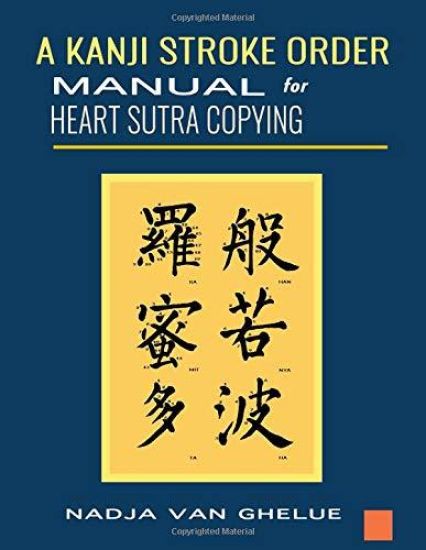
A Kanji Stroke Order Manual for Heart Sutra Copying
Nadja Van Ghelue
Independently Published
2018
nidottu
Write The Heart Sutra In Japanese Kanji With This Practical GuideWith her new book A Kanji Stroke Order Manual for Heart Sutra Copying, artist calligrapher Nadja Van Ghelue provides the Western reader with a practical guide for the actual copying of the Heart Sutra in Japanese kanji in regular script.Through a copy of the Heart Sutra in kaisho in large size characters, brushed by the artist herself, the Heart Sutra copying manual teaches the stroke order for each of the 276 kanji of the Heart Sutra. Knowing the stroke order of the kanji is an invaluable key to smooth and easy sutra copying. Each of the calligraphies comes with a table that shows the romanization and translation of each of the Heart Sutra characters.A Kanji Stroke Order Manual for Heart Sutra Copying is dedicated to beginners of Japanese calligraphy with a basic knowledge of the main brushstrokes and to all Dharma Zen students with a keen interest in studying and copying the Heart Sutra in Japanese kanji.As the manual approaches the copying of the Heart Sutra as a creative tool for body and mind integration, it also introduces some techniques which will allow you to find the right balance and mindset for a creative and meditative Heart Sutra session.Even if you don't know any Japanese or Japanese calligraphy, you can take a ballpoint pen and start drawing the kanji and enter the meditation of Heart Sutra copying right now.

Japanese Writing Practice: A Book for Kanji, Kana, Hiragana, Katakana & Genkouyoushi Alphabet - Textured (Black Gray)
Purple Dot
Independently Published
2019
nidottu
JAPANESE ALPHABET WRITING PRACTICE 110 PAGES PAPER FOR PRACTICING JAPANESE WRITING - HIRAGANA, KATAKANA, GENKOUYOUSHI & KANJIThis volume of Japanese Writing Practice contains 110 pages with columns of squares for practicing writing Japanese lettering. Each large square can hold one Japanese character (Kanji, Hiragana or Katakana) and is divided into four quadrants to guide the correct positioning of each element of the character. The books are available in separate volumes with different cover designs to match your personal preferences. Each volume contains: 110 pages, white paperSize 8.5" x 11" (A4)Non-spiral boundGood quality paperSoft, sturdy matte coverBook cover designs available include the following: Vol. 1 ISBN: 9781796711882 Vol. 2 ISBN: 9781796712308 Vol. 3 ISBN: 9781796712636Vol. 4 ISBN: 9781796713022 They can easily be located using the ISBN numbers provided. Just type (or copy & paste) the numbers onto the Amazon search bar and you would be able to find them.