Her mother loves her but needs some space. She doesn't know that teenage Daniela has a secret that she can't confide. Dani can't cope at school and tries to hide it. She's clever and has taught herself to be tough, but things go from bad to worse until she fears she will be thrown out. Dani has nowhere to turn. She sees her respectable mother going off the rails while the family falls apart and she struggles to stop it happening. Mother and daughter love and misunderstand each other until a crisis is reached and slowly new understandings emerge. This is a gripping family drama with a feel-good ending.
Teenage Daniela doesn't understand what happened with her first father but she still dreams about him. Daddy number two was kind and she loved him, but he's gone. Her family is falling apart and now there's the prospect of yet another father figure. Dani's mother is besotted with a man from overseas, but Dani has little sympathy. She is determined there will be no Daddy number three. Her mother is torn between the man she loves and the needs of her daughter. A family drama with the needs of a daughter and conflict with her mother at its heart.
Journalism in Context is an accessible introduction to the theory and practice of journalism in a changing world. The book looks at the way in which power flows through media organisations influencing not only what journalists choose to present to their audiences but how they present it and then in turn what their audiences do with it. Using examples from across the world, as well as from her own research, Angela Phillips uses them to explain complex theoretical concepts. She invites readers to consider how news is influenced by the culture from which it emerges, as well as the way it is paid for and how different countries have approached the problem of ensuring that democracy is served by its media, rather than being undermined by it. Journalism has always been an early adopter of new technologies and the most recent changes are examined in the light of a history in which, although platforms keep on changing, journalism always survives. The questions raised here are important for all students of journalism and all those who believe that journalism matters.
Journalism in Context is an accessible introduction to the theory and practice of journalism in a changing world. The book looks at the way in which power flows through media organisations influencing not only what journalists choose to present to their audiences but how they present it and then in turn what their audiences do with it. Using examples from across the world, as well as from her own research, Angela Phillips uses them to explain complex theoretical concepts. She invites readers to consider how news is influenced by the culture from which it emerges, as well as the way it is paid for and how different countries have approached the problem of ensuring that democracy is served by its media, rather than being undermined by it. Journalism has always been an early adopter of new technologies and the most recent changes are examined in the light of a history in which, although platforms keep on changing, journalism always survives. The questions raised here are important for all students of journalism and all those who believe that journalism matters.
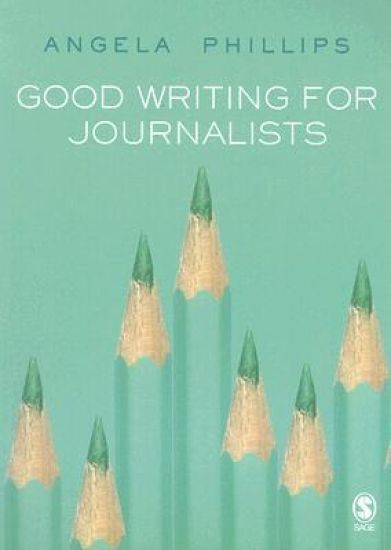
'The ultimate book on the creative skills of journalism' - Writing Magazine 'Useful and timely... it is refreshing to discover a book so overtly designed to inspire students to think about what can make writing good - or even great.' - Media International Australia This is a book about the art of writing for newspapers and magazine, but doesn't look at punctuation, spelling and the stylistic conventions of 'everyday' journalism. Instead, Good Writing For Journalists presents extended examples of writing which are powerful, memorable, colourful or funny. Each piece will be contextualised and analysed encouraging readers to learn from the best practitioners. This book will inspire those who want to make their writing individual and memorable. Along the way the major elements of non-fiction writing will be introduced, in chapters organised by genre - profile writing, reportage, news analysis, investigation, sports writing, personal and opinion columns and 'lifestyle' among them. Phillip's book sees itself as a natural successor to Wolfe & Johnson's seminal The New Journalism (1975). By adopting a larger sweeping and tailoring itself for the contemporary journalistic arena, this book will be an essential purchase for the discerning journalist and journalism student.
'The ultimate book on the creative skills of journalism' - Writing Magazine 'Useful and timely... it is refreshing to discover a book so overtly designed to inspire students to think about what can make writing good - or even great.' - Media International Australia This is a book about the art of writing for newspapers and magazine, but doesn't look at punctuation, spelling and the stylistic conventions of 'everyday' journalism. Instead, Good Writing For Journalists presents extended examples of writing which are powerful, memorable, colourful or funny. Each piece will be contextualised and analysed encouraging readers to learn from the best practitioners. This book will inspire those who want to make their writing individual and memorable. Along the way the major elements of non-fiction writing will be introduced, in chapters organised by genre - profile writing, reportage, news analysis, investigation, sports writing, personal and opinion columns and 'lifestyle' among them. Phillip's book sees itself as a natural successor to Wolfe & Johnson's seminal The New Journalism (1975). By adopting a larger sweeping and tailoring itself for the contemporary journalistic arena, this book will be an essential purchase for the discerning journalist and journalism student.
Drawing upon a range of theoretical perspectives, including cultural studies, postcolonial theory, critical race studies, political economy and sociology, Journalism, Culture and Society examines journalism as a democratic necessity that often fails to live up to its promise.This text takes a step back from prevailing idealistic approaches in which theory is often seen as a threat rather than a service to the better understanding of practice, and mainstream journalism in western democracies is seen as unproblematic. Instead, using international examples, the authors provide a critique for those who seek to improve journalistic practice, whilst not losing sight of the profound practical dilemmas that journalists around the world experience in their working lives – from the resources available to them, to the institutions and political contexts in which they work. Readers are encouraged to consider why journalists choose (or are expected to choose) particular subjects or tropes in their work, and the implications of these choices.Journalism, Culture and Society is a valuable resource for students, academics, and practitioners in the areas of media, journalism and communication.
Drawing upon a range of theoretical perspectives, including cultural studies, postcolonial theory, critical race studies, political economy and sociology, Journalism, Culture and Society examines journalism as a democratic necessity that often fails to live up to its promise.This text takes a step back from prevailing idealistic approaches in which theory is often seen as a threat rather than a service to the better understanding of practice, and mainstream journalism in western democracies is seen as unproblematic. Instead, using international examples, the authors provide a critique for those who seek to improve journalistic practice, whilst not losing sight of the profound practical dilemmas that journalists around the world experience in their working lives – from the resources available to them, to the institutions and political contexts in which they work. Readers are encouraged to consider why journalists choose (or are expected to choose) particular subjects or tropes in their work, and the implications of these choices.Journalism, Culture and Society is a valuable resource for students, academics, and practitioners in the areas of media, journalism and communication.
Journalism is in transition. Irrevocable decisions are being made, often based on flimsy evidence, which could change not only the future of journalism, but also the future of democracy. This book, based on extensive research, provides the opportunity to reflect upon these decisions and considers how journalism could change for the better and for the good of democracy. It covers: the business landscapework and employmentthe regulatory frameworkaudiences and interactionthe impact of technology on practices and contentethics in a converged worldThe book analyses research in both national and local journalism, broadcast, newspaper and online journalism, broadsheet and tabloid, drawing comparisons between the different outlets in the field of news journalism, making this essential reading for scholars and students of journalism and media studies.
Journalism is in transition. Irrevocable decisions are being made, often based on flimsy evidence, which could change not only the future of journalism, but also the future of democracy. This book, based on extensive research, provides the opportunity to reflect upon these decisions and considers how journalism could change for the better and for the good of democracy. It covers: the business landscapework and employmentthe regulatory frameworkaudiences and interactionthe impact of technology on practices and contentethics in a converged worldThe book analyses research in both national and local journalism, broadcast, newspaper and online journalism, broadsheet and tabloid, drawing comparisons between the different outlets in the field of news journalism, making this essential reading for scholars and students of journalism and media studies.
Misunderstanding News Audiences interrogates the prevailing myths around the impact of the Internet and social media on news consumption and democracy. The book draws on a broad range of comparative research into audience engagement with news, across different geographic regions, to provide insight into the experience of news audiences in the twenty-first century.From its inception, it was imagined that the Internet would benignly transform the nature of news media and its consumers. There were predictions that it would, for example, break up news oligarchies, improve plurality and diversity through news personalisation, create genuine social solidarity online, and increase political awareness and participation among citizens. However, this book finds that, while mainstream news media is still the major source of news, the new media environment appears to lead to greater polarisation between news junkies and news avoiders, and to greater political polarisation. The authors also argue that the dominant role of the USA in the field of news audience research has created myths about a global news audience, which obscures the importance of national context as a major explanation for news exposure differences.Misunderstanding News Audiences presents an important analysis of findings from recent audience studies and, in doing so, encourages readers to re-evaluate popular beliefs about the influence of the Internet on news consumption and democracy in the West.
Misunderstanding News Audiences interrogates the prevailing myths around the impact of the Internet and social media on news consumption and democracy. The book draws on a broad range of comparative research into audience engagement with news, across different geographic regions, to provide insight into the experience of news audiences in the twenty-first century.From its inception, it was imagined that the Internet would benignly transform the nature of news media and its consumers. There were predictions that it would, for example, break up news oligarchies, improve plurality and diversity through news personalisation, create genuine social solidarity online, and increase political awareness and participation among citizens. However, this book finds that, while mainstream news media is still the major source of news, the new media environment appears to lead to greater polarisation between news junkies and news avoiders, and to greater political polarisation. The authors also argue that the dominant role of the USA in the field of news audience research has created myths about a global news audience, which obscures the importance of national context as a major explanation for news exposure differences.Misunderstanding News Audiences presents an important analysis of findings from recent audience studies and, in doing so, encourages readers to re-evaluate popular beliefs about the influence of the Internet on news consumption and democracy in the West.
Improving Business Agility with EDA Going beyond SOA, enterprises can gain even greater agility by implementing event-driven architectures (EDAs) that automatically detect and react to significant business events. However, EDA planning and deployment is complex, and even experienced SOA architects and developers need expert guidance. In Event-Driven Architecture, four leading IT innovators present both the theory of EDA and practical, step-by-step guidance to implementing it successfully. The authors first establish a thorough and workable definition of EDA and explore how EDA can help solve many of today’s most difficult business and IT challenges. You’ll learn how EDAs work, what they can do today, and what they might be able to do as they mature. You’ll learn how to determine whether an EDA approach makes sense in your environment and how to overcome the difficult interoperability and integration issues associated with successful deployment. Finally, the authors present chapter-length case studies demonstrating how both full and partial EDA implementations can deliver exceptional business value. Coverage includes How SOA and Web services can power event-driven architectures The role of SOA infrastructure, governance, and security in EDA environments EDA core components: event consumers and producers, message backbones, Web service transport, and more EDA patterns, including simple event processing, event stream processing, and complex event processing Designing flexible stateless events that can respond to unpredictable customers, suppliers, and business partners Addressing technical and business challenges such as project management and communication EDA at work: real-world applications across multiple verticals Hugh Taylor is a social software evangelist for IBM Lotus Software. He coauthored Understanding Enterprise SOA and has written extensively on Web services and SOA. He holds an MBA from Harvard Business School. Angela Yochem is an executive in a multinational technology company and is a recognized thought leader in architecture and large-scale technology management. Les Phillips, VP, enterprise architecture, at SunTrust Banks Inc., is responsible for defining the strategic and business IT foundation for many areas of the enterprise. Frank Martinez, EVP, product strategy, at SOA Software, is a recognized expert on distributed, enterprise application, and infrastructure platforms. He has served as senior operating executive for several venture-backed firms and helped build Intershop Communications into a multibillion-dollar public company. Foreword xi Preface xii Introduction 1 Event-Driven Architecture: A Working Definition 1 The “New” Era of Interoperability Dawns 6 The ETA for Your EDA 9 Endnotes 9 PART I THE THEORY OF EDA Chapter 1 EDA: Opportunities and Obstacles 13 The Vortex 13 EDA: A Working Systemic Definition 14 The (Not So Smooth) Path to EDA 24 Defining Interoperability 26 Drivers of Interoperability 28 Application Integration: A Means to Interoperate 29 Interoperation and Business Process Management 31 Is There a Diet for All This Spaghetti? 35 How Architecture Promotes Integration 37 Management and Governance 39 Chapter Summary 43 Endnote 45 Chapter 2 SOA: The Building Blocks of EDA 47 Making You an Offer You Can’t Understand 47 SOA: The Big Picture 48 Defining Service 49 Service-Based Integration 50 Web Services 51 What Is SOA? 59 Loose Coupling in the SOA 60 Chapter Summary 61 Chapter 3 Characteristics of EDA 63 Firing Up the Corporate Neurons 63 Revisiting the Enterprise Nervous System 63 The Ideal EDA 78 BAM--A Related Concept 86 Chapter Summary 87 Endnotes 89 Chapter 4 The Potential of EDA 91 Introduction 91 EDA’s Potential in Enterprise Computing 91 EDA and Enterprise Agility 100 EDA and Society’s Computing Needs 102 EDA and Compliance 107 Chapter Summary 108 Chapter 5 The SOA-EDA Connection 111 Getting Real 111 Event Services 112 The Service Network 114 Implementing the SOA and Service Network 116 How to Design an SOA 122 The Real “Bottom Line” 134 Chapter Summary 137 PART II EDA IN PRACTICE Chapter 6 Thinking EDA 141 A Novel Mind-Set 141 Reducing Central Control 142 Thinking about EDA Implementation 148 When EDA Is Not the Answer 151 An EDA Product Examined 153 Chapter Summary 157 Endnotes 158 Chapter 7 Case Study: Airline Flight Control 159 Learning Objectives 160 Business Context: Airline Crunch Time 160 The Ideal Airline Flight Control EDA 167 What FEDA Might Look Like in Real Life 176 Program Success 197 Chapter Summary 206 Endnotes 207 Chapter 8 Case Study: Anti-Money Laundering 209 Learning Objectives 210 Cracking a Trillion Dollar, Global Crime Wave 210 IT Aspects of Anti-Money Laundering 216 EDA as a Weapon in the War on Money Laundering 221 Chapter Summary 259 Endnotes 260 Chapter 9 Case Study: Event-Driven Productivity Infrastructure 261 Learning Objectives 262 The Often Inadequate Human Link in the EDA 262 Overview of Productivity Infrastructure 264 The Potential Benefits of EDA-PI Integration 267 ProdCo, an EDA-PI Integration Scenario 273 Chapter Summary 293 Endnotes 294
Diana Alexander; Amaris Chase; Daphne Denley; J. J. Drover; Harriet Hitchen; Rebecca McDowall; Jane Phillips; Angela Reddaway; Margaret Royall; Stuart Samuel; Penny Wright
Heroes and danger, comfort and claws. A black cat dreams of finding a new family, and a vampire is woken by a brush with ancient folklore. Then a cat tests just how far his nine lives run, before a stray moves in, and a kitten discovers a thirst for adventure ... Full of playfulness and wildness, this is a vibrant collection from eleven UK authors about the reality of being owned by a cat