Kirjojen hintavertailu. Mukana 11 342 296 kirjaa ja 12 kauppaa.

Kirjahaku

Etsi kirjoja tekijän nimen, kirjan nimen tai ISBN:n perusteella.

1000 tulosta hakusanalla Aaron W. Hughes

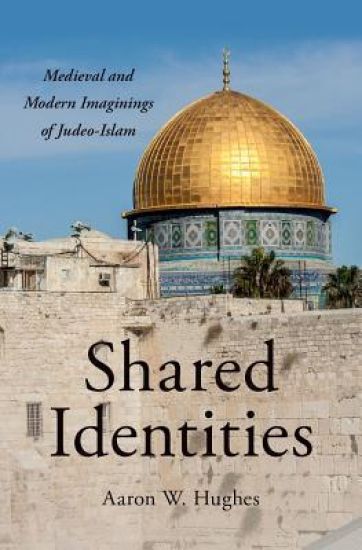
Shared Identities

Shared Identities

Aaron W. Hughes

Oxford University Press Inc
2017
sidottu
In this controversial study, Aaron W. Hughes breaks with received opinion, which imagines two distinct religions, Judaism and Islam, interacting in the centuries immediately following the death of Muhammad in the early seventh century. Tradition describes these relations using tropes such as that of "symbiosis." Hughes instead argues that various porous groups--neither fully Muslim nor Jewish--exploited a shared terminology to make sense of their social worlds in response to the rapid process of Islamicization. What emerged as normative rabbinic Judaism on the one hand, and Sunni and Shi'a Islam on the other were ultimately responses to such marginal groups. The so-called "Golden Age" in places such as Muslim Spain and North Africa continued to see the articulation of this "Islamic" Judaism in the writings of luminaries such as Bahya ibn Paquda, Abraham ibn Ezra, Judah Halevi, and Moses Maimonides. Drawing on social theory, comparative religion, and primary texts, Hughes presents a compelling case for rewriting our understanding of Jews and Muslims in their earliest centuries of interaction. Not content to remain solely in the past, he examines the continued interaction of Muslims and Jews, now reimagined as Palestinians and Israelis, into the present.
An Anxious Inheritance

An Anxious Inheritance

Aaron W. Hughes

OXFORD UNIVERSITY PRESS INC
2022
sidottu
An Anxious Inheritance reveals the tensions between the early framers of Islam and the ever-expandable category of non-Muslims. Examining the encounter with these religious others, and showing how the Qur'an functioned as both a script to understand them and a map to classify them, this study traces the key role that these religious others played in what would ultimately emerge as (Sunni) orthodoxy. This orthodoxy would appear to be the natural outgrowth of the Prophet Muhammad's preaching, but it ultimately amounted to little more than a retroactive projection of later ideas onto the earliest period. Non-Muslims (among them Christians, Jews, Zoroastrians) and the "wrong" kinds of Muslims (e.g., the Shi'a) became integral--by virtue of their perceived stubbornness, infidelity, heresy, or the like--to the understanding of what true religion was not and, just as importantly, what it should be. These non-Muslims were rarely real individuals or groups; rather, they functioned as textual foils that could be conveniently orchestrated, and ultimately controlled, to facilitate Muslim self-definition. Without such religious others proper belief could, quite literally, not be articulated. Shedding new light on the early history of Islam, while also problematizing the binary of orthodoxy/heresy in the study of religion, An Anxious Inheritance makes significant contributions to a number of diverse academic fields.
Rethinking Jewish Philosophy

Rethinking Jewish Philosophy

Aaron W. Hughes

Oxford University Press Inc
2014
sidottu
Jewish thought is, in many ways, a paradox. Is it theology or is it philosophy? Does it use universal methods to articulate Judaism's particularity or does it justify Judaism's particularity with appeals to illuminating the universal? These two sets of claims are difficult if not impossible to reconcile, and their tension reverberates throughout the length and breadth of Jewish philosophical writing, from Saadya Gaon in the ninth century to Emmanuel Levinas in the twentieth. Rather than assume, as most scholars of Jewish philosophy do, that the terms "philosophy" and "Judaism" simply belong together, Hughes explores the juxtaposition and the creative tension that ensues from their cohabitation, examining adroitly the historical, cultural, intellectual, and religious filiations between Judaism and philosophy. Breaking with received opinion, this book seeks to challenge the exclusionary, particularist, and essentialist nature that is inherent to the practice of something problematically referred to as "Jewish philosophy." Hughes begins with the premise that Jewish philosophy is impossible and begins the process of offering a sophisticated and constructive rethinking of the discipline that avoids the traditional extremes of universalism and particularism.
Abrahamic Religions

Abrahamic Religions

Aaron W. Hughes

Oxford University Press Inc
2012
sidottu
Recent years have witnessed the emergence of a virtual cottage industry in all things ''Abrahamic.'' Directly proportionate to the rise of religious exclusivism, perhaps best epitomized by the attacks of 9/11 and the problems now plaguing the Middle East and Afghanistan, there has been a real desire both to find and map a set of commonalities between Judaism, Christianity, and Islam. This is often done, however, for the sake of interfaith dialogue, rather than scholarship. Recently, however, the term "Abrahamic religions" has been used with exceeding frequency in the academy. We now regularly encounter academic books, conferences, and even positions (including endowed chairs) devoted to the so-called "Abrahamic religions." But what exactly are "Abrahamic religions"? Although many perceive him as the common denominator of Judaism, Christianity and Islam, Abraham remains deceptively out of reach. An ahistorical figure, some contend he holds the seeds for historical reconciliation. Touted as symbol of ecumenicism, Abraham can just as easily function as one of division and exclusivity. Like our understanding of Abraham, the category "Abrahamic religions" is vague and nebulous. Usually lost in contemporary discussions is a set of crucial questions: Whence does the term "Abrahamic religions" derive? Who created it and for what purposes? What sort of intellectual work is it perceived to perform? In order to answer these and related questions, Aaron Hughes examines the creation and dissemination of this category in Abrahamic Religions. Part genealogical and part analytical, his study seeks to raise and answer questions about the appropriateness and usefulness of employing "Abrahamic religions" as a vehicle for understanding and classifying data. In so doing, this monograph can be taken as a case study that examines the construction of categories within the academic study of religion, showing how the categories we employ can become more an impediment than an expedient to understanding.
Muslim Identities

Muslim Identities

Aaron W. Hughes

Columbia University Press
2013
sidottu
Rather than focus solely on theological concerns, this well-rounded introduction takes an expansive view of Islamic ideology, culture, and tradition, sourcing a range of historical, sociological, and literary perspectives. Neither overly critical nor apologetic, this book reflects the rich diversity of Muslim identities across the centuries and counters the unflattering, superficial portrayals of Islam that are shaping public discourse today. Aaron W. Hughes uniquely traces the development of Islam in relation to historical, intellectual, and cultural influences, enriching his narrative with the findings, debates, and methodologies of related disciplines, such as archaeology, history, and Near Eastern studies. Hughes's work challenges the dominance of traditional terms and concepts in religious studies, recasting religion as a set of social and cultural facts imagined, manipulated, and contested by various actors and groups over time. Making extensive use of contemporary identity theory, Hughes rethinks the teaching of Islam and religions in general and helps facilitate a more critical approach to Muslim sources. For readers seeking a non-theological, unbiased, and richly human portrait of Islam, as well as a strong grasp of Islamic study's major issues and debates, this textbook is a productive, progressive alternative to more classic surveys.
Muslim Identities

Muslim Identities

Aaron W. Hughes

Columbia University Press
2013
pokkari
Rather than focus solely on theological concerns, this well-rounded introduction takes an expansive view of Islamic ideology, culture, and tradition, sourcing a range of historical, sociological, and literary perspectives. Neither overly critical nor apologetic, this book reflects the rich diversity of Muslim identities across the centuries and counters the unflattering, superficial portrayals of Islam that are shaping public discourse today. Aaron W. Hughes uniquely traces the development of Islam in relation to historical, intellectual, and cultural influences, enriching his narrative with the findings, debates, and methodologies of related disciplines, such as archaeology, history, and Near Eastern studies. Hughes's work challenges the dominance of traditional terms and concepts in religious studies, recasting religion as a set of social and cultural facts imagined, manipulated, and contested by various actors and groups over time. Making extensive use of contemporary identity theory, Hughes rethinks the teaching of Islam and religions in general and helps facilitate a more critical approach to Muslim sources. For readers seeking a non-theological, unbiased, and richly human portrait of Islam, as well as a strong grasp of Islamic study's major issues and debates, this textbook is a productive, progressive alternative to more classic surveys.
The Art of Dialogue in Jewish Philosophy

The Art of Dialogue in Jewish Philosophy

Aaron W. Hughes

Indiana University Press
2007
pokkari
Aaron W. Hughes presents the first major study of dialogue as a Jewish philosophical practice. Examining connections between Jewish philosophy, the literary form in which it is expressed, and the culture in which it is produced, Hughes shows how Jews understood and struggled with their social, religious, and intellectual environments. In this innovative and insightful book, Hughes addresses various themes associated with the literary form of dialogue as well as its philosophical reception: Why did various thinkers choose dialogue? What did it allow them to accomplish? How do the literary features of dialogue construct philosophical argument? As a history of philosophical form, context, and practice, this book will interest scholars and students working at the intersections of religious studies, philosophy, and literature.
The Invention of Jewish Identity

The Invention of Jewish Identity

Aaron W. Hughes

Indiana University Press
2010
pokkari
Jews from all ages have translated the Bible for their particular times and needs, but what does the act of translation mean? Aaron W. Hughes believes translation has profound implications for Jewish identity. The Invention of Jewish Identity presents the first sustained analysis of Bible translation and its impact on Jewish philosophy from the medieval period to the 20th century. Hughes examines some of the most important Jewish thinkers—Saadya Gaon, Moses ibn Ezra, Maimonides, Judah Messer Leon, Moses Mendelssohn, Martin Buber, and Franz Rosenzweig—and their work on biblical narrative, to understand how linguistic and conceptual idioms change and develop into ideas about the self. The philosophical issues behind Bible translation, according to Hughes, are inseparable from more universal sets of questions that affect Jewish life and learning.
Jewish Philosophy AZ

Jewish Philosophy AZ

Aaron W. Hughes

Edinburgh University Press
2005
nidottu
A concise alphabetical guide to the major thinkers, concepts and issues in the history of Jewish philosophy from antiquity to the present. Jewish Philosophy A-Z covers the major traditions of thought from Philo to Levinas and, since Jewish philosophy has occurred in broader environments (e.g., Hellenistic Alexandria, Medieval Baghdad, Weimar Germany), non-Jewish thinkers who have had an important influence on Jewish philosophy are also included (e.g., Plotinus, Alfarabi, Heidegger). Extensive cross-references allows the reader to examine topics to the desired degree of depth, making it easy to follow connections and pursue larger themes. An important pedagogical resource, Jewish Philosophy A-Z is suitable for undergraduate or postgraduate students as well as the interested general reader.
Jewish Philosophy AZ

Jewish Philosophy AZ

Aaron W. Hughes

Edinburgh University Press
2005
sidottu
A concise alphabetical guide to the major thinkers, concepts and issues in the history of Jewish philosophy from antiquity to the present. Jewish Philosophy A-Z covers the major traditions of thought from Philo to Levinas and, since Jewish philosophy has occurred in broader environments (e.g., Hellenistic Alexandria, Medieval Baghdad, Weimar Germany), non-Jewish thinkers who have had an important influence on Jewish philosophy are also included (e.g., Plotinus, Alfarabi, Heidegger). Extensive cross-references allows the reader to examine topics to the desired degree of depth, making it easy to follow connections and pursue larger themes. An important pedagogical resource, Jewish Philosophy A-Z is suitable for undergraduate or postgraduate students as well as the interested general reader.
The Study of Judaism

The Study of Judaism

Aaron W. Hughes

State University of New York Press
2014
pokkari
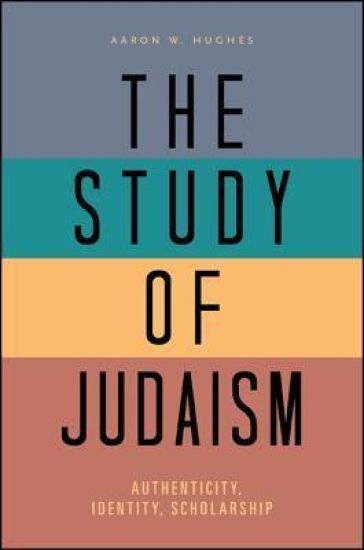
Considers Jewish studies as an academic discipline from its origins to the present.The relationship between Jewish studies and religious studies is a long and complicated one, full of tensions and possibilities. Whereas the majority of scholars working within Jewish studies contend that the discipline is in a very healthy state, many who work in theory and method in religious studies disagree. For them, Jewish studies represents all that is wrong with the modern academic study of religion: too introspective, too ethnic, too navel-gazing, and too willing to reify or essentialize data that it constructs in its own image. In this book, Aaron W. Hughes explores the unique situation of Jewish studies and how it intersects with religious studies, noting particular areas of concern for those interested in the field's intellectual health and future flourishing. Hughes provides a detailed study of origins, principles, and assumptions, documenting the rise of Jewish studies in Germany and its migration to Israel and the United States. Current issues facing the academic study of Judaism are discussed, including the role of private foundations that seek inroads into the academy.
Jacob Neusner

Jacob Neusner

Aaron W. Hughes

New York University Press
2016
sidottu
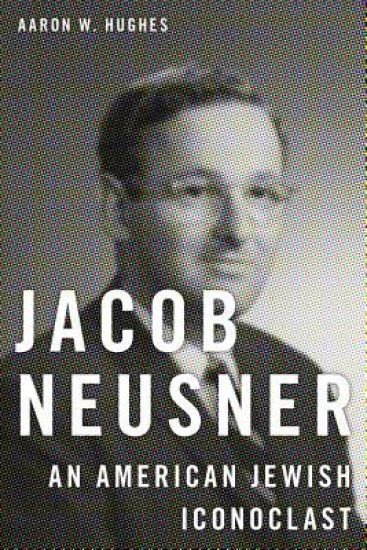
Biography: Neusner is a social commentator, a post-Holocaust theologian, and an outspoken political figure. Jacob Neusner (born 1932) is one of the most important figures in the shaping of modern American Judaism. He was pivotal in transforming the study of Judaism from an insular project only conducted by—and of interest to—religious adherents to one which now flourishes in the secular setting of the university. He is also one of the most colorful, creative, and difficult figures in the American academy. But even those who disagree with Neusner's academic approach to ancient rabbinic texts have to engage with his pioneering methods. In this comprehensive biography, Aaron Hughes shows Neusner to be much more than a scholar of rabbinics. He is a social commentator, a post-Holocaust theologian, and was an outspoken political figure during the height of the cultural wars of the 1980s. Neusner's life reflects the story of what happened as Jews migrated to the suburbs in the late 1940s, daring to imagine new lives for themselves as they successfully integrated into the fabric of American society. It is also the story of how American Jews tried to make sense of the world in the aftermath of the extermination of European Jewry and the subsequent creation of the State of Israel in 1948, and how they sought to define what it meant to be an American Jew. Unlike other great American Jewish thinkers, Neusner was born in the U.S., and his Judaism was informed by an American ethos. His Judaism is open, informed by and informing the world. It is an American Judaism, one that has enabled American Jews—the freest in history—to be fully American and fully Jewish.
Islam and the Tyranny of Authenticity

Islam and the Tyranny of Authenticity

Aaron W. Hughes

Equinox Publishing Ltd
2016
sidottu
Many scholars of Islam are interested in creating a liberal, inclusive, pluralistic, feminist, and modern version of the religion that they believe to be explicit in the pages of the Qur'an, but missed by earlier interpreters. In so doing, they create "good" Islam and, in the process, seek to define what does and does not get to count as authentic. As the purveyors of what they now believe to be veritable Islam, they subsequently claim that rival presentations are bastardizations based either on Orientalism and Islamophobia (if one is a non-Muslim) or misogyny and homophobia (if one is a Muslim that disagrees with them). Instead of engaging in critical scholarship, they engage in a constructive and theological project that they deceive themselves into thinking is both analytical and empirical. This book provides a hard-hitting examination of the spiritual motivations, rhetorical moves, and political implications associated with these apologetical discourses. It argues that what is at stake is relevance, and examines the consequences of engaging in mythopoesis as opposed to scholarship.
Islam and the Tyranny of Authenticity

Islam and the Tyranny of Authenticity

Aaron W. Hughes

Equinox Publishing Ltd
2016
nidottu
Many scholars of Islam are interested in creating a liberal, inclusive, pluralistic, feminist, and modern version of the religion that they believe to be explicit in the pages of the Qur'an, but missed by earlier interpreters. In so doing, they create "good" Islam and, in the process, seek to define what does and does not get to count as authentic. As the purveyors of what they now believe to be veritable Islam, they subsequently claim that rival presentations are bastardizations based either on Orientalism and Islamophobia (if one is a non-Muslim) or misogyny and homophobia (if one is a Muslim that disagrees with them). Instead of engaging in critical scholarship, they engage in a constructive and theological project that they deceive themselves into thinking is both analytical and empirical. This book provides a hard-hitting examination of the spiritual motivations, rhetorical moves, and political implications associated with these apologetical discourses. It argues that what is at stake is relevance, and examines the consequences of engaging in mythopoesis as opposed to scholarship.
Comparison

Comparison

Aaron W. Hughes

Equinox Publishing Ltd
2017
sidottu
Comparison is held to be one of the central methods of the academic study of religion. While many ostensibly engage in the comparative act, often overlooked is what it actually means to do this. What is comparison? Why engage in it and for what purposes? Can there be such a thing as a valid or invalid comparison? Can comparison itself be compared to anything? This book starts with the premise that while there are good comparisons and bad comparisons, what is common to both is the sheer artificiality of the enterprise and develops an analytical framework for using the method in the context of religious studies. After briefly tracing the history and genealogy of the category, Hughes draws on his own extensive work in Judaism and Islam to argue that comparison can be a useful method, but only under strictly controlled conditions.
Comparison

Comparison

Aaron W. Hughes

Equinox Publishing Ltd
2017
pokkari
Comparison is held to be one of the central methods of the academic study of religion. While many ostensibly engage in the comparative act, often overlooked is what it actually means to do this. What is comparison? Why engage in it and for what purposes? Can there be such a thing as a valid or invalid comparison? Can comparison itself be compared to anything? This book starts with the premise that while there are good comparisons and bad comparisons, what is common to both is the sheer artificiality of the enterprise and develops an analytical framework for using the method in the context of religious studies. After briefly tracing the history and genealogy of the category, Hughes draws on his own extensive work in Judaism and Islam to argue that comparison can be a useful method, but only under strictly controlled conditions.
Theorizing Islam

Theorizing Islam

Aaron W. Hughes

Acumen Publishing Ltd
2014
nidottu
The scholarly study of Islam has become ever more insular and apologetic. Academic Islamic Studies has tried to maintain a focus on truth, authenticity, experience and meaning and has effectively avoided discussion of larger social, cultural and ideological issues. Many scholars of Islam have presented themselves to their colleagues, the media and the public as the interpreters of Islam and have done so with an interpretation which tends, almost universally, to the liberal and egalitarian. The ignorance and hostility which the Islamic faith has faced since 9/11 has partly necessitated the taking of such a position. But, as 'Theorizing Islam' argues, the issue remains that only one interpretation of Islam is generally being presented and, as with any interpretation, this has its own assumptions. The aim of 'Theorizing Islam' is to explore the potential for a fuller, more honest and more sophisticated approach to both theory and methodology in the academic study of Islam.
Defining Judaism

Defining Judaism

Aaron W. Hughes

Equinox Publishing Ltd
2010
sidottu
Judaism is a monotheistic religion with a history of over 3,500 years. 'Defining Judaism' illustrates the range of theoretical and practical issues required for comparative and historical study of the faith. The texts range from historical attempts to define individual 'Jews' to imagining Judaism as a religion like other religions, to modern and post-modern attempts to decentre these earlier definitions. The reader brings together a wide range of essays from influential scholars of ancient and contemporary Judaism to attempt a full picture of Judaism that will be of interest to all those involved in the study of religion.
Defining Judaism

Defining Judaism

Aaron W. Hughes

Equinox Publishing Ltd
2010
nidottu
Judaism is a monotheistic religion with a history of over 3,500 years. 'Defining Judaism' illustrates the range of theoretical and practical issues required for comparative and historical study of the faith. The texts range from historical attempts to define individual 'Jews' to imagining Judaism as a religion like other religions, to modern and post-modern attempts to decentre these earlier definitions. The reader brings together a wide range of essays from influential scholars of ancient and contemporary Judaism to attempt a full picture of Judaism that will be of interest to all those involved in the study of religion.
Theorizing Islam

Theorizing Islam

Aaron W. Hughes

Equinox Publishing Ltd
2012
sidottu
The scholarly study of Islam has become ever more insular and apologetic. Academic Islamic Studies has tried to maintain a focus on truth, authenticity, experience and meaning and has effectively avoided discussion of larger social, cultural and ideological issues. Many scholars of Islam have presented themselves to their colleagues, the media and the public as the interpreters of Islam and have done so with an interpretation which tends, almost universally, to the liberal and egalitarian. The ignorance and hostility which the Islamic faith has faced since 9/11 has partly necessitated the taking of such a position. But, as Theorizing Islam argues, the issue remains that only one interpretation of Islam is generally being presented and, as with any interpretation, this has its own assumptions. The aim of Theorizing Islam is to explore the potential for a fuller, more honest and more sophisticated approach to both theory and methodology in the academic study of Islam.