Kirjojen hintavertailu. Mukana 11 717 486 kirjaa ja 12 kauppaa.

Kirjahaku

Etsi kirjoja tekijän nimen, kirjan nimen tai ISBN:n perusteella.

1000 tulosta hakusanalla Abdul Karim Ash-Shaami

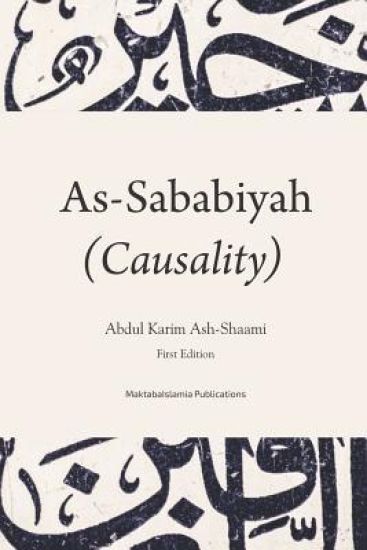
Causality (As-Sababiya): The Principle to Accomplish the Actions and Realise the Objectives and Its Role in the Life of the Muslim
The concept of As-Sababiyah (causality) is from the fundamental concepts of the Muslims and which must remain clear to them. That is because their message in life is a message of action and because they live in the life for the sake of a specific objective. As-Sababiyah is from the Islamic concepts that connects to the Muslim's daily conduct in the case where the accomplishment of an action from amongst his daily actions does not occur without observing this Qaa'idah (principle), the Qaa'idah of As-Sababiyah. When the early Muslims from the era of the Sahaabah, the Taabi'een, the Taabi'ee At-Taabi'een and those who followed from the generation of Nahdah (revival) comprehended the concept of As-Sababiyah, when they comprehended it completely and understood it in a sound and crystallised manner, and practised their understanding in their behaviours and conducts they accomplished actions that resembled miracles if we were to compare them to our current time. That is because they carried Islaam, spread its Da'wah and opened up lands across the corners of the earth in the fasted time that history has known for a nation from amongst its nations that have passed. That was at a time when the means of communication and transportation were the camel in the best of circumstances.

Abdul-Karim Ha'eri Yazdi

Abdul-Karim Ha'eri Yazdi

VDM Publishing House
2010
nidottu
Observera att förlaget som ger ut denna produkt baserar innehållet i sina produkter på fria källor som Wikipedia. Boken är med stor sannolikhet endast ett utdrag ur dessa informationskällor, alltså inte en vanlig bok i den bemärkelsen.
Corpus of the Muslim Coins of Bengal

Corpus of the Muslim Coins of Bengal

Abdul Karim

MANOHAR PUBLISHERS AND DISTRIBUTORS
2023
sidottu
Bengal in the medieval period came to be ruled by the Muslim Sultans with the establishment of Bakhtiyar Khalji (r.1203-1206). Apart from official and non-official literature and archaeological findings, numismatic studies too plays a very important role in understanding the socio-economic and political history of any region, nation, or confederation of states. In this book, we find that it is in Bengal the collection and publication of coins minted under the Muslim Sultans during the Delhi Sultanate and independent Sultanates, in the various museums and libraries. The book is divided into two major parts, one is the critical analysis of coins and the other is the study of coins issued by Muslim dynasts of Bengal. The first part covers the coins minted from the time of Sultan Iltutmish till Muhammad bin Tughluq. It also covers the coins issued by the Bengal governors under the rule of the Delhi Sultans. This section also covers the analysis of coins from Sultan Ghiyas-ud-Din Iwad Khalji (r.1533-1538) of the Hussain Shahi Sultanate, who was defeated by Sher Shah Suri (r.1537- 1545). The second part of this book covers the issues concerning the numismatic studies done with the help of tables and places made by the author.
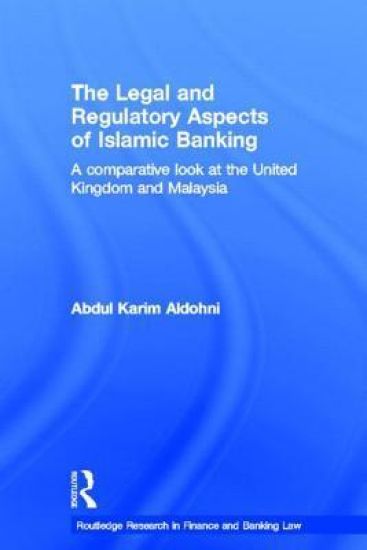
The Legal and Regulatory Aspects of Islamic Banking
During the last ten years the Islamic banking sector has grown rapidly, at an international level, as well as in individual jurisdictions including the UK. Islamic finance differs quite substantially from conventional banking, using very different mechanisms, and operating according to a different theory as it is based on Islamic law. Yet at the same time it is always subject to the law of the particular financial market in which it operates. This book takes a much-needed and comprehensive look at the legal and regulatory aspects which affect Islamic finance law, and examines the current UK and international banking regulatory frameworks which impact on this sector. The book examines the historical genesis of Islamic banking, looking at how it has developed in Muslim countries before going on to consider the development of Islamic banking in the UK and the legal position of Islamic banks within English law. The book explores company, contract, and some elements of tax law and traces the impact it has had on the development of Islamic banking in the UK, before going on to argue that the current legal and regulatory framework which affects the Islamic banking sector has on certain occasions had an unintended adverse impact on Islamic banking in the UK. The book also provides an overview of the Malaysian experience in relation to some of the main legal and regulatory challenges in the context of Islamic banking and finance.
The Legal and Regulatory Aspects of Islamic Banking
During the last ten years the Islamic banking sector has grown rapidly, at an international level, as well as in individual jurisdictions including the UK. Islamic finance differs quite substantially from conventional banking, using very different mechanisms, and operating according to a different theory as it is based on Islamic law. Yet at the same time it is always subject to the law of the particular financial market in which it operates. This book takes a much-needed and comprehensive look at the legal and regulatory aspects which affect Islamic finance law, and examines the current UK and international banking regulatory frameworks which impact on this sector. The book examines the historical genesis of Islamic banking, looking at how it has developed in Muslim countries before going on to consider the development of Islamic banking in the UK and the legal position of Islamic banks within English law. The book explores company, contract, and some elements of tax law and traces the impact it has had on the development of Islamic banking in the UK, before going on to argue that the current legal and regulatory framework which affects the Islamic banking sector has on certain occasions had an unintended adverse impact on Islamic banking in the UK. The book also provides an overview of the Malaysian experience in relation to some of the main legal and regulatory challenges in the context of Islamic banking and finance.