Kirjojen hintavertailu. Mukana 12 390 323 kirjaa ja 12 kauppaa.

Kirjahaku

Etsi kirjoja tekijän nimen, kirjan nimen tai ISBN:n perusteella.

1000 tulosta hakusanalla Abraham Isaac Kook; Chanan Morrison

Gold from the Land of Israel: A New Light on the Weekly Torah Portion From the Writings of Rabbi Abraham Isaac HaKohen Kook
"Inspiring This book is truly wonderful. Rav Kook zt"l is one of the most important Jewish thinkers and leaders of the last century... This book makes his words accessible and understandable. I highly recommend it." -- Rabbi Shmuel Jablon Rav Kook's writings, due to their poetic and mystical nature, are difficult even for those fluent in Hebrew and rabbinical texts. Gold from the Land of Israel uses a clear, succinct style to grant the reader a window into his original and creative insights. This book elucidates his thoughts on many fascinating topics in the format of a commentary to the Torah portion. Discussed are subjects such as: Can we reconcile the Torah's account of creation with modern science?What is the Torah's view on vegetarianism?What is the purpose of death?Why do bad things happen to good people?Why do we have dreams?Will the Third Temple have animal sacrifices?How can one attain joy in serving God?How should we balance our time between Torah study and work? "Rav Chanan Morrison explains Rav Kook's Torah like no one else... Purchase this book if you truly want to understand Rav Kook and bring the fulfillment of his teachings into your heart." -- Yoely Zipkin
Silver from the Land of Israel

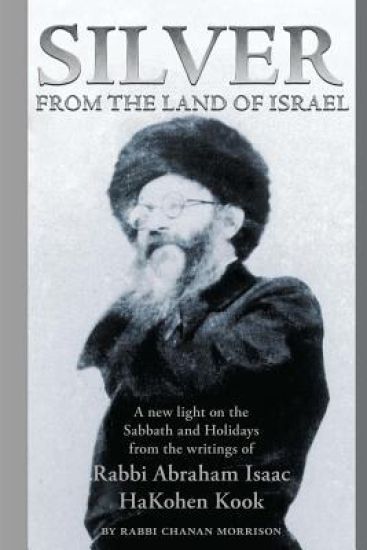
Silver from the Land of Israel

Abraham Isaac Kook; Chanan Morrison

Createspace Independent Publishing Platform
2017
pokkari
"Such an uplifting collection of essays... a wonderful gift."--Douglas Wertheimer, Chicago Jewish StarBecause of their poetic and mystical nature, Rav Kook's writings are difficult even for readers who are fluent in Hebrew and rabbinic texts. Silver from the Land of Israel uses a clear, succinct style to provide the reader with a window into Rav Kook's original and creative insights.A companion volume to Gold from the Land of Israel on the Torah, this book presents Rav Kook's thoughts on Shabbat and Jewish holidays. It elucidates his views on many topics, including: How is the Sabbath like a bride?What is the inner meaning of the shofar blasts?Why are we instructed to drink on Purim?What were Rav Kook's views on secular Zionism?Why do we need both an oral and written Torah?Why must the Jewish calendar be set in the land of Israel?Why does a Jewish king need his own sefer Torah?Why is the Temple so central to Judaism?"Readers will find these Divrei Torah inspiring and meaningful. I highly recommend this book." --Rabbi Shmuel Jablon"Rabbi Morrison presents these lessons in easy to read language... they are gems that will delight." --Rabbi Israel Drazin
Sapphire from the Land of Israel

Sapphire from the Land of Israel

Abraham Isaac Kook; Rabbi Chanan Morrison

Createspace Independent Publishing Platform
2013
pokkari
Sapphire from the Land of Israel brings texts from Rav Kook's writings that deepen our understanding of each Torah portion, while providing a window into Rav Kook's thought. Rabbi Morrison's explanations are clear and meaningful, offering lessons that impact our religious and practical lives. -- Rabbi Shmuel JablonBecause of their poetic and mystical nature, Rav Kook's writings are difficult even for readers who are fluent in Hebrew and rabbinic texts. Sapphire from the Land of Israel uses a clear, succinct style to provide the reader with a window into Rav Kook's original and creative insights.A companion volume to Gold from the Land of Israel, this book presents more of Rav Kook's thoughts on the weekly Torah reading (parasha). It elucidates his views on many topics, including: Why do we find different names for God in the Torah?Why are first-born donkeys holy? Why did the Torah need to give doctors permission to heal?If "eye for an eye" means monetary compensation, why does the Torah not say that explicitly?Why are only kohanim allowed to serve in the Temple?Why doesn't the Torah explicitly state where to build the Temple?Rabbi Abraham Isaac Kook (1865-1935), the celebrated first Chief Rabbi of pre-state Israel, is recognized as being among the most important Jewish thinkers of all times. His writings reflect the mystic's search for underlying unity in all aspects of life and the world, and his unique personality similarly united a rare combination of talents and gifts. Rav Kook was a prominent rabbinical authority and active public leader, but at the same time, a deeply religious mystic. He was both Talmudic scholar and poet, original thinker and saintly tzaddik.
Abraham Isaac Kook

Abraham Isaac Kook

Paulist Press International,U.S.
1978
nidottu
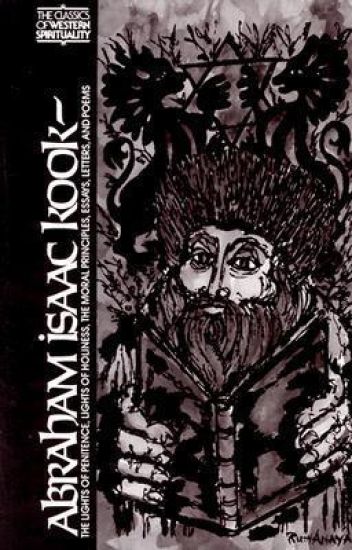
"Precisely the dimension of our heritage that most needs to be recovered....I cannot imagine a more timely publishing venture." Huston Smith Thomas J. Watson Professor of Religion and Adjunct Professor of Philosophy, Syracuse University ABRAHAM ISAAC KOOK-THE LIGHTS OF PENITENCE, LIGHTS OF HOLINESS, THE MORAL PRINCIPLES, ESSAYS, LETTERS, AND POEMS, translation and introduction by Ben Zion Bokser, preface by Rivka Schatz and Jacob Agus Confirm me not in cages Of substance or of spirit I am lovesick. I thirst, I thirst for God. More than the deer for water brooks. I am bound to the world, to life, All creatures are my brothers. But how can I share with them my light? Abraham Isaac Kook (1865–1935) A spiritual master of our own times, Rabbi Abraham Isaac Kook was the Chief Rabbi of Palestine prior to the establishment of the State of Israel. Rabbi Kook represents the most significant renewal of the Jewish mystical tradition in modern times. This volume presents to the English reader the major expressions of his thought, and a biographical sketch sums up his basic teachings. Ben Zion Bokser observes that, "Rabbi Kook's thought was dominated by two primary concepts, particularity and universality…Born into the restricted world of the Jewish ghetto in Eastern Europe, he was in constant rebellion against all that restricts and narrows the human spirit...In Rabbi Kook's world of thought, the love of God carried with it a love for all God's creatures, an openness to all ideas, and a continued passion to perfect life through reconciliation, harmony, and peace…" Rivka Schatz, Associate Professor in the Department of Jewish Philosophy and Kabbalah at Hebrew University in Jerusalem, and Rabbi Jacob Agus, author of eight books, including Banner of Jerusalem, have both contributed prefatory statements to this volume. †
The Essential Writings of Abraham Isaac Kook

The Essential Writings of Abraham Isaac Kook

Abraham Isaac Kook

Ben Yehuda Press
2006
sidottu
Abraham Isaac Kook (1865-1935) was the first chief rabbi of pre-state Israel. A philosopher and a poet, his creative accomplishments have often been overshadowed by his role as the Orthodox rabbi who embraced the Zionist pioneers.A deeply religious mystic and a progressive universalist, Rabbi Kook thought it as important to improve the world as to improve one's own soul.Ben Zion Bokser (1907-1824), the translator of this volume, heard Rabbi Kook speak in New York in 1924 and became an avid student and great proponent of his teachings. Rabbi Bokser's articles on Rav Kook were published in Tradition and Judaism.
Rabbi Abraham Isaac Kook and Jewish Spirituality
Rabbi Abraham Isaac Kook (1865-1935) was the first Ashkenazic chief rabbi of mandatory Palestine. Admired for the incredible diversity of his talents and interests--talmudist, halakhist, kabbalist, mystic, theologian, moralist, poet, and communal leader--Rav Kook's world outlook extolled breadth and derided narrow specialization. More than any other Orthodox thinker in modern times, he addressed, squarely and boldly, the confrontation between Judaism and the modern world. Kook serves as a natural model to those Jews who seek a religious understanding of and response to the culture and politics of the modern age. These essays, most published here for the first time, offer a range of analyses and interpretations covering, in an accessible, systematic, and comprehensive fashion the major areas of Rav Kook's thought. Among the issues discussed are: his relationship to the Jewish mystical, philosophical, and halakhic traditions; poetry and spirituality; harmonism and pluralism; tolerance and its limits; Zionism, messianism, and politics; and Rav Kook today.
Rabbi Abraham Isaac Kook and Jewish Spirituality
Rabbi Abraham Isaac Kook (1865-1935) was the first Ashkenazic chief rabbi of mandatory Palestine. Admired for the incredible diversity of his talents and interests--talmudist, halakhist, kabbalist, mystic, theologian, moralist, poet, and communal leader--Rav Kook's world outlook extolled breadth and derided narrow specialization. More than any other Orthodox thinker in modern times, he addressed, squarely and boldly, the confrontation between Judaism and the modern world. Kook serves as a natural model to those Jews who seek a religious understanding of and response to the culture and politics of the modern age. These essays, most published here for the first time, offer a range of analyses and interpretations covering, in an accessible, systematic, and comprehensive fashion the major areas of Rav Kook's thought. Among the issues discussed are: his relationship to the Jewish mystical, philosophical, and halakhic traditions; poetry and spirituality; harmonism and pluralism; tolerance and its limits; Zionism, messianism, and politics; and Rav Kook today.
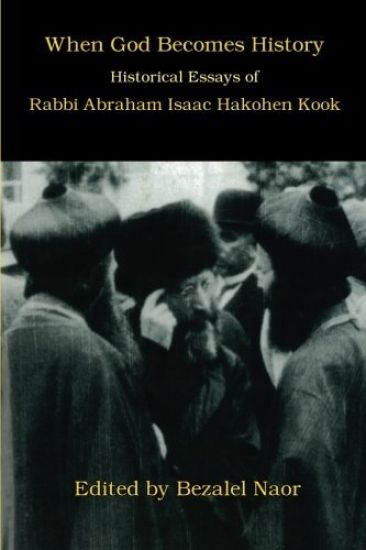
When God Becomes History: Historical Essays of Rabbi Abraham Isaac Hakohen Kook
When God Becomes History is a landmark anthology that opens a new chapter in the study of one of Judaism's most profound and visionary thinkers-Rabbi Abraham Isaac Hakohen Kook (Rav Kook). Translated, edited, and annotated by Bezalel Naor, this volume brings together Rav Kook's major historical essays, illuminating his rarely explored role as a Jewish philosopher of history, a Zionist theologian, and a spiritual interpreter of Jewish destiny.In this intellectually rich and spiritually provocative work, Rav Kook grapples with the meaning of Jewish history, the challenges of secular Zionism, the place of Theodor Herzl in messianic consciousness, and the theological implications of modernity. These essays reveal a Rav Kook who is both rooted in the mystical tradition of Kabbalah and fully engaged with the philosophical crises of the modern Jewish people.Bezalel Naor-the leading interpreter of Rav Kook and leading scholar of modern Jewish thought and mysticism-offers a masterful translation that preserves the lyrical power and conceptual depth of the original Hebrew. His annotations and introductions provide invaluable historical and theological context, making these essays accessible to both scholars and lay readers.Highlights Include: "The Lamentation in Jerusalem" - Rav Kook's bold meditation on Theodor Herzl and the figure of Messiah ben Joseph, offered at Herzl's 1904 memorial."To the Process of Ideas in Israel" - An exploration of the evolution of Jewish intellectual life through the Sephardi and Ashkenazi traditions.Letters to figures such as Eliezer Ben-Yehuda, Prof. Abraham Fraenkel, and Rabbi Joseph Messas - showcasing Rav Kook's global engagement and theological outreach.Essays on Hebrew University, Zionism, secularism, and the relationship between Judaism, Christianity, and Islam - offering a window into Rav Kook's complex vision for Jewish renewal.This second edition includes additional materials such as previously omitted passages from Rav Kook's letters, an appendix on Maimonides and Christianity, and reflections on Rav Kook's evolving stance toward other faiths.Who Should Read This Book: Students and scholars of Jewish studies, Zionism, and theologyFollowers of Rav Kook's thought and Religious ZionismEnthusiasts of Jewish mysticism, messianism, and KabbalahThose interested in modern Orthodox Judaism and its intellectual responses to secularism and nationalismRav Naor's introduction highlights a religious visionary negotiating between tradition and revolution, exile and redemption.
The Legends of Rabbah Bar Bar Hannah with the Commentary of Rabbi Abraham Isaac Hakohen Kook
Rabbah bar Bar Hannah has been referred to as the Jewish Sinbad the Sailor. His tall tales, fifteen in all, are recorded in the Babylonian Talmud in Tractate Bava Batra (73a-74a). The particular chapter in which they are situated is named "The Seller of the Ship" ("HaMokher et ha-Sefinah"). Appropriately, these tales of seafarers (ne{utei yama) were inserted in that legal discussion, as is the wont of the Talmud to mix Aggadah with Halakhah, thus tempering law with lore and legend.Rav Kook's commentary to the Legends first appeared in print in Jerusalem in 1984 in the second volume of his collected essays, Ma'amrei ha-Rayah. In this early work (written at age twenty-five), Rav Kook yet cites sources. Later, when his style of writing switched to "stream of consciousness," sources were eliminated. For this very reason, the commentary to the Rabbah bar Bar }annah legends is of extreme importance. Here, Rav Kook divulges the many and varied Kabbalistic sources that informed his view. We see him equally at home in the world of the Vilna Gaon and of his rival Rabbi Shneur Zalman of Liadi. A great influence upon Rav Kook's thought was the earlier Italian mystic, Rabbi Moses Hayyim Luzzatto In Ma'amrei ha-Rayah, Rav Kook's commentary was provided by Rabbi Shlomo Aviner with brief summaries as well as an index. These are certainly helpful to the reader. The present edition is the first time in any language that the commentary of Rav Kook is presented complete with much needed explanatory notes.
When God Becomes History: Historical Essays of Rabbi Abraham Isaac Hakohen Kook

When God Becomes History: Historical Essays of Rabbi Abraham Isaac Hakohen Kook

Bezalel Naor; Abraham Isaac Hakohen Kook

Kodesh Press L.L.C.
2019
sidottu
Abraham Isaac Hakohen Kook (1865-1935) served as the Ashkenazic Chief Rabbi of Erets Israel during the period of the British mandate. Rav Kook was a polymath, equally talented as a Talmudic legalist and rationalist philosopher, on the one hand, and as a mystic and poet, on the other. Today, we would say that he was both "left and right hemisphere." The present collection brings together in English translation Rav Kook's contributions to the field of Jewish history, though perhaps "historiosophy" would be the better word. Rav Kook joins the ranks of those great Jewish thinkers who preceded him in interpretation of history: Maharal of Prague, Moses Hayyim Luzzatto and Zadok Hakohen of Lublin. If Rav Kook's philosophy were to be summed up in a single word, it would be: Kelaliyut or universality. Whereas most of us are held captive by individual events, Rav Kook has a great gift for the overview of history. He brings this gift to bear in his ability to provide perspective on the modern rebirth of Israel against the backdrop of mankind's ongoing spiritual evolution. In the latter regard, his vision has sometimes been compared to that of Teilhard de Chardin and Sri Aurobido, or more recently Ken Wilber. Contained in this collection are Rav Kook's eulogy for Herzl and Rav Kook's remarks at the opening of Hebrew University in Jerusalem. The essays are placed in historic context and provided with copious scholarly endnotes.
Abraham & Isaac

Abraham & Isaac

Tammy Tarlton

Trilogy Christian Publishing
2021
pokkari
"Carry God's promises with you all the way to your mountain."Tammy takes you on an extensive walk with Abraham to that mountain where he is to sacrifice Isaac. It is uplifting and inspiring as it reveals the faithfulness of God and His promises, along with Abraham's determination to hold onto those promises. This journey is certain to bring you encouragement, strength, and hope through difficult and trying times. This is a great book for small groups and men's or women's Bible studies.
A Doctor's Memoirs

A Doctor's Memoirs

Abraham Isaac 1885- Willinsky

Hassell Street Press
2021
sidottu
This work has been selected by scholars as being culturally important and is part of the knowledge base of civilization as we know it.This work is in the public domain in the United States of America, and possibly other nations. Within the United States, you may freely copy and distribute this work, as no entity (individual or corporate) has a copyright on the body of the work.Scholars believe, and we concur, that this work is important enough to be preserved, reproduced, and made generally available to the public. To ensure a quality reading experience, this work has been proofread and republished using a format that seamlessly blends the original graphical elements with text in an easy-to-read typeface.We appreciate your support of the preservation process, and thank you for being an important part of keeping this knowledge alive and relevant.