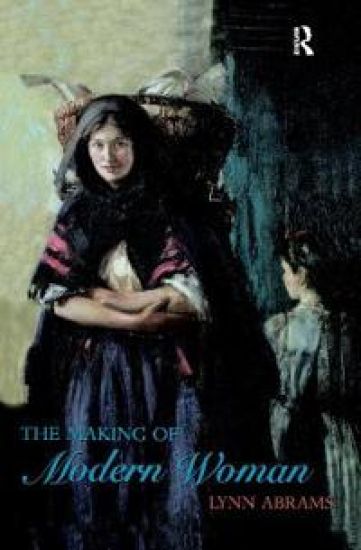
Modern woman was made between the French Revolution and the end of the First World War. In this time, the women of Europe crafted new ideas about their sexuaity, motherhood, the home, the politics of femininity, and their working roles. They faced challenges about what a woman should be and how she should act. From domestic ideology to women's suffrage, this book charts the contests for woman's identity in the epoch-shaping nineteenth century.
Could women be feminist without feminism? Could they foster feminist activism without a movement or an ideology? Could they recraft ways of being female without a plan? Feminist Lives adopts a woman-centred approach to explore these questions and to understand how British women charted a new way of being female in the three decades before the Women's Liberation Movement. By focusing on the 'transition' generation of women who were born in the long 1940s and who grew to maturity in the 1950s, 60s, and 70s, the book demonstrates that it was they who developed the aspirational model of womanhood that then emerged after 1970 as the norm amongst women in the global north. In doing so, Feminist Lives seeks to fill 'the feminist history gap', countering a narrative that has for too long neglected this generation of women as fusty and failing, and as just not feminist enough. Using women's voices as the book's evidential and emotional core as they describe themselves, their relationships, their feelings and actions, this volume analyses the modes by which women constructed a modern self, built upon new ways of living, feeling, and being.
In the wake of an unparalleled housing crisis at the end of the Second World War, Glasgow Corporation rehoused the tens of thousands of private tenants who were living in overcrowded and unsanitary conditions in unimproved Victorian slums. Adopting the designs, the materials and the technologies of modernity they built into the sky, developing high-rise estates on vacant sites within the city and on its periphery. This book uniquely focuses on the people's experience of this modern approach to housing, drawing on oral histories and archival materials to reflect on the long-term narrative and significance of high-rise homes in the cityscape. It positions them as places of identity formation, intimacy and well-being. With discussions on interior design and consumption, gender roles, children, the elderly, privacy, isolation, social networks and nuisance, Glasgow examines the connections between architectural design, planning decisions and housing experience to offer some timely and prescient observations on the success and failure of this very modern housing solution at a moment when high flats are simultaneously denigrated in the social housing sector while being built afresh in the private sector.Glasgow is aimed at an academic readership, including postgraduate students, scholars and researchers. It will be of interest to social, cultural and urban historians particularly interested in the United Kingdom.
Workers Culture in Imperial Germany represents the first alternative approach to the study of workers' culture in Imperial Germany. It is also the first comprehensive historical analysis of the emergence of Germany's modern leisure industry. The central concern of the book is the emergence of a distinct workers' culture which provided a disparate and heterogeneous working class with a focus of identity in an alien and hostile society. Lynn Abrams focuses on the leisure activities enjoyed by workers in the major cities of Bochum and Dusseldorf. She provides a comprehensive coverage of a whole range of popular amusements and recreations on offer including festivals, pubs, Tingel-Tangels, dance halls, clubs and cinema. The book is also a major contribution to the social history of working-class life in the nineteenth century, contributing to the debate over the role of a working class culture in Imperial Germany.
Updated and expanded, this second edition of Bismarck and the German Empire, 1871–1918 is an accessible introduction to this important period in German history. Providing both a narrative of events at the time and an analysis of social and cultural developments across the period, Lynn Abrams examines the political, economic and social structures of the Empire. Including the latest research, the book also covers:how Bismarck consolidated his regimethe Wilhelmian periodthe factors that led to the outbreak of World War One.With a new introduction and updated further reading section – including a guide to useful websites – this book gives students the ideal introduction to this key period of German history.
Updated and expanded, this second edition of Bismarck and the German Empire, 1871–1918 is an accessible introduction to this important period in German history. Providing both a narrative of events at the time and an analysis of social and cultural developments across the period, Lynn Abrams examines the political, economic and social structures of the Empire. Including the latest research, the book also covers:how Bismarck consolidated his regimethe Wilhelmian periodthe factors that led to the outbreak of World War One.With a new introduction and updated further reading section – including a guide to useful websites – this book gives students the ideal introduction to this key period of German history.
Shetland has a history unique in Europe, for over the past two centuries it was a place where women dominated the family, economy, and the cultural imagination. Women ran households and crofts without men. They maintained families and communities because men were absent. And they constructed in their minds an identity of themselves as 'liberated' long before organised feminism was invented. And yet, Shetland is a place which was made by the most masculine of societies - those of the Picts, Scots and above all the Vikings - and its contemporary identity still draws on the heroic exploits and sagas of medieval Norsemen. This book examines how against this tradition Shetland became a female place, and offers answers as to how, in this most isolated island community, the inhabitants transgressed and reversed their traditional gender roles. Reconstructing this 'woman's world' from fragments of cultural experience captured in written and oral sources, this book will appeal to scholars in the fields of social and cultural history, social anthropology, gender and women's studies.
The place of women in Shetland society is unique. In this isolated island group off the north of Scotland, women dominated the family, economy and the cultural imagination for 200 years. Here, women were numerically preponderant and economically vital. They maintained families and communities because men were absent. In their minds they constructed an identity of themselves as ‘liberated’ long before organised feminism was invented. It examines the opportunities and life experiences of women in a place where more of them worked and fewer got married than anywhere else in the British Isles. And it is about the relationship between myth-making and historical materiality and the ways in which the people of this northern archipelago have imagined their past. Reconstructing this ‘woman’s world’ from fragments of cultural experience captured in written and oral sources, the author recreates and explores Shetland using its inhabitants’ material experience and personal testimony.
Workers Culture in Imperial Germany represents the first alternative approach to the study of workers' culture in Imperial Germany. It is also the first comprehensive historical analysis of the emergence of Germany's modern leisure industry. The central concern of the book is the emergence of a distinct workers' culture which provided a disparate and heterogeneous working class with a focus of identity in an alien and hostile society. Lynn Abrams focuses on the leisure activities enjoyed by workers in the major cities of Bochum and Dusseldorf. She provides a comprehensive coverage of a whole range of popular amusements and recreations on offer including festivals, pubs, Tingel-Tangels, dance halls, clubs and cinema. The book is also a major contribution to the social history of working-class life in the nineteenth century, contributing to the debate over the role of a working class culture in Imperial Germany.
Modern woman was made between the French Revolution and the end of the First World War. In this time, the women of Europe crafted new ideas about their sexuaity, motherhood, the home, the politics of femininity, and their working roles. They faced challenges about what a woman should be and how she should act. From domestic ideology to women's suffrage, this book charts the contests for woman's identity in the epoch-shaping nineteenth century.
In the wake of an unparalleled housing crisis at the end of the Second World War, Glasgow Corporation rehoused the tens of thousands of private tenants who were living in overcrowded and unsanitary conditions in unimproved Victorian slums. Adopting the designs, the materials and the technologies of modernity they built into the sky, developing high-rise estates on vacant sites within the city and on its periphery. This book uniquely focuses on the people's experience of this modern approach to housing, drawing on oral histories and archival materials to reflect on the long-term narrative and significance of high-rise homes in the cityscape. It positions them as places of identity formation, intimacy and well-being. With discussions on interior design and consumption, gender roles, children, the elderly, privacy, isolation, social networks and nuisance, Glasgow examines the connections between architectural design, planning decisions and housing experience to offer some timely and prescient observations on the success and failure of this very modern housing solution at a moment when high flats are simultaneously denigrated in the social housing sector while being built afresh in the private sector.Glasgow is aimed at an academic readership, including postgraduate students, scholars and researchers. It will be of interest to social, cultural and urban historians particularly interested in the United Kingdom.
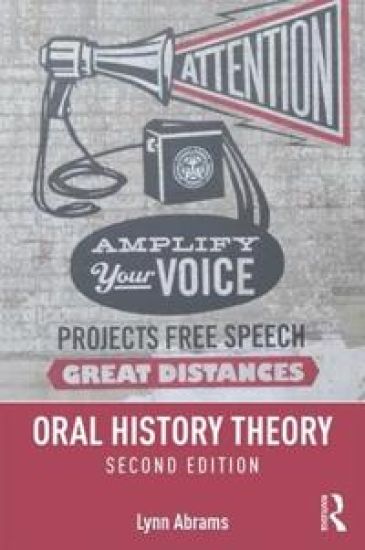
Oral history is increasingly acknowledged as a key tool for anyone studying the history of the recent past, and Oral History Theory provides a comprehensive, systematic and accessible overview of this important field. Combining the study of theories drawn from disciplines ranging from linguistics to psychoanalysis with the observations of practitioners and including extensive examples of oral history practice from around the world, this book constitutes the first integrated discussion of oral history theory.Structured around key themes such as the peculiarities of oral history, the study of the self, subjectivity and intersubjectivity, memory, narrative, performance, power and trauma, each chapter provides a clear and user-friendly explanation of the various theoretical approaches, illustrating these with examples from the rich field of published oral history and making suggestions for the practicing oral historian. This second edition includes a new chapter on trauma and ethics, a preface discussing new developments in the field and updated glossary and further reading sections. Supplemented by a new companion website (www.routledge.com/cw/abrams) containing a comprehensive range of case studies, audio material and further resources, this book will be invaluable to experienced and novice oral historians, professionals, and students who are new to the discipline.
Oral history is increasingly acknowledged as a key tool for anyone studying the history of the recent past, and Oral History Theory provides a comprehensive, systematic and accessible overview of this important field. Combining the study of theories drawn from disciplines ranging from linguistics to psychoanalysis with the observations of practitioners and including extensive examples of oral history practice from around the world, this book constitutes the first integrated discussion of oral history theory.Structured around key themes such as the peculiarities of oral history, the study of the self, subjectivity and intersubjectivity, memory, narrative, performance, power and trauma, each chapter provides a clear and user-friendly explanation of the various theoretical approaches, illustrating these with examples from the rich field of published oral history and making suggestions for the practicing oral historian. This second edition includes a new chapter on trauma and ethics, a preface discussing new developments in the field and updated glossary and further reading sections. Supplemented by a new companion website (www.routledge.com/cw/abrams) containing a comprehensive range of case studies, audio material and further resources, this book will be invaluable to experienced and novice oral historians, professionals, and students who are new to the discipline.
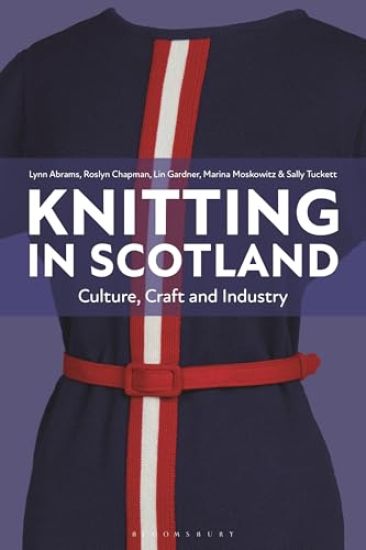
The story of Scottish knitting: the first critical history and analysis of a local craft turned international icon.From Fair Isle patterning to Pringle jumpers, Scottish knitwear is internationally renowned and instantly recognisable. This open access study unpicks the distinctive place of knitting in the Scottish landscape, economy, and culture from the 19th century to today.Recent reappraisals of the industrial revolution and traditional craft economies, and the recent revival of hobby knitting during the Covid-19 pandemic, have raised new questions about the roles of social communities, sustainability and women’s domestic work in the textile industries. Tracing its story from raw material to final product, from home-spun clothes and crafts to luxury markets and industrial-scale production, Knitting in Scotland investigates the Scottish knitting trade’s remarkable survival across two centuries of economic and cultural modernisation.The ebook editions of this book are available open access under a CC BY-NC-ND 4.0 licence on bloomsburycollections.com. Open access was funded by UKRI.
A SMALL BOOK WITH POWERFUL WORDS The title of this book "Black Girls Lives Matter Too " is derived from personal experiences. Valerie and her daughter continue to be affected by the challenges and harmfulness that confronts them. Valerie's daughter wants you to know that she was adopted as an infant and her parents are magnificent parents Even with a great upbringing with both Christian parents in their home, she faces many challenges in this life. It causes both to be in unfamiliar places and having ongoing therapy. Even though in some black communities there is a sigma about trusting therapists with your personal business, so far, it's been a positive experience for them. Furthermore, they believe strongly when all else fails, "Jesus never fails, He is always there to bring healing." You can open your heart to Him today. Romans 10:9-13CSB Thank you, Valerie, for sharing with us the way to salvation
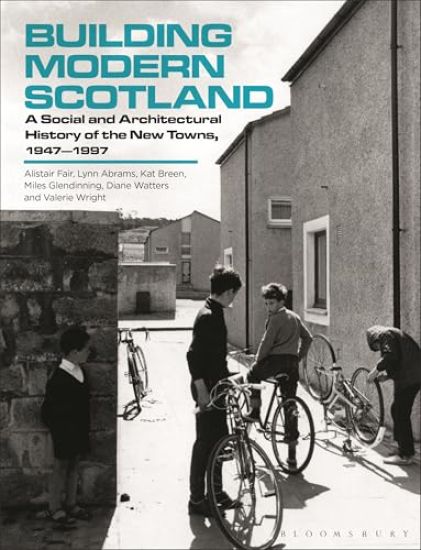
Combining architectural and social history, this open access book tells for the first time the in-depth story of Scotland’s new towns.One of the most significant episodes in modern architectural, urban and social history, Scotland’s postwar new towns offered new housing, new ways of life and new jobs. Begun between the late 1940s and the late 1960s, the new towns – East Kilbride, Glenrothes, Cumbernauld, Livingston and Irvine – were a key element of the planned Welfare State, attracting international attention and widespread publicity. These were places of architectural innovation, and economic and social change.Building Modern Scotland tells a new history of the new towns, combining architectural and social history to illustrate what was planned, what was built, and how these places were experienced by the communities who lived and worked in them. It positions the new towns at the heart of modern Scottish history, showing how they represented an ambition to make a modern, transformed nation. The book surveys each new town’s planning and design before turning to key topics such as housing, family life, work and opportunity, and community. Drawing on archives and oral history, the book will appeal to historians of modern architecture and design as well as readers interested in modern social history. It provides a new account of modern Scotland, its buildings, places and people, and argues that a better understanding of the new towns’ history and value should inform present-day decision-making.The ebook editions of this book are available open access under a CC BY-NC-ND 4.0 licence on bloomsburycollections.com. Open access was funded by the Leverhulme Trust.
Combining architectural and social history, this open access book tells for the first time the in-depth story of Scotland’s new towns. One of the most significant episodes in modern architectural, urban and social history, Scotland’s postwar new towns offered new housing, new ways of life and new jobs. Begun between the late 1940s and the late 1960s, the new towns – East Kilbride, Glenrothes, Cumbernauld, Livingston and Irvine – were a key element of the planned Welfare State, attracting international attention and widespread publicity. These were places of architectural innovation, and economic and social change. Building Modern Scotland tells a new history of the new towns, combining architectural and social history to illustrate what was planned, what was built, and how these places were experienced by the communities who lived and worked in them. It positions the new towns at the heart of modern Scottish history, showing how they represented an ambition to make a modern, transformed nation. The book surveys each new town’s planning and design before turning to key topics such as housing, family life, work and opportunity, and community. Drawing on archives and oral history, the book will appeal to historians of modern architecture and design as well as readers interested in modern social history. It provides a new account of modern Scotland, its buildings, places and people, and argues that a better understanding of the new towns’ history and value should inform present-day decision-making. The ebook editions of this book are available open access under a CC BY-NC-ND 4.0 licence on bloomsburycollections.com. Open access was funded by the Leverhulme Trust.
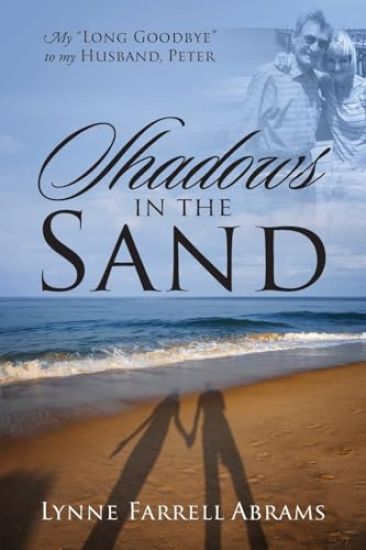
Loss is an unavoidable component of life. And yet, advertisers and gurus alike promote longevity and vitality as a means of prolonging life's pleasures. We are not encouraged or conditioned to face reality until it is forced upon us. But when we do summon the courage to look ahead, sometimes we find that what we fear most may not be as unbearable as what we had first thought. Lynne Farrell Abrams was compelled to open her heart to her sorrow by sharing her grief journey with readers, born of a column she was given by her local newspaper, The Citrus County Chronicle. She lost her husband to Lewy Body Dementia in 2023. She watched her once vibrant, witty, talented husband become a shadow of his former self after he had been diagnosed with Lewy Body Dementia. From a practicing speech pathologist, a veteran actor and director, to someone resembling many of the patients he used to treat, Ms. Abrams watched the symptoms take their toll. as her husband ended up losing a quarter of his body weight before passing away. Since first being published, readers have expressed an interest in following her journey in its entirety. Thus this compilation of her columns, with a few extra articles included. The author hopes her articles serve to inspire other caregivers that, though the journey can be arduous and lonely, memories keep our loved ones alive. Eventually, if you are as lucky as she feels, your loved one can become assimilated into your very soul.