
Kirjahaku
Etsi kirjoja tekijän nimen, kirjan nimen tai ISBN:n perusteella.
1000 tulosta hakusanalla Adam D Levine


A recipepacked reference guide filled with practical tasks that are concisely explained to develop and broaden the user's abilities with the D programming language. If you are an experienced programmer who is looking to explore a language that offers plenty of advantages over more established programming languages, this is the book for you. We assume that you are already familiar with general programming language basics, but you do not need to be a proficient user of D.

Globalization is a dominant feature and force in the contemporary world, impacting all areas of business, economics, and society. This accessibly written overview of contemporary capitalism shows how the development of global supply chains, the global division of labour, and, in particular, the globalization of financial markets have become the drivers of this process, and assesses the consequences. Not only does this affect the way firms operate, it also presents challenges for the nation state. The changing geography of capitalism underpinned by an expanding global division of labour and the integration of financial markets has undercut the bordering logics necessary for the maintenance of national systems of production, national varieties of capitalism, and national systems of social protection. Reviewing a range of debates and theories across the contemporary social sciences - varieties of capitalism, financialization, global production networks - the book shows how the insights of economic geography can be usefully brought to bear in understanding current trends, and the changing relationships between global financial markets, multinational firms, and contemporary welfare states. Wide-ranging, accessibly written, and inter-disciplinary, this short book is a most useful guide for researchers and students across the social sciences.

Globalization is a dominant feature and force in the contemporary world, impacting all areas of business, economics, and society. This accessibly written overview of contemporary capitalism shows how the development of global supply chains, the global division of labour, and, in particular, the globalization of financial markets have become the drivers of this process, and assesses the consequences. Not only does this affect the way firms operate, it also presents challenges for the nation state. The changing geography of capitalism underpinned by an expanding global division of labour and the integration of financial markets has undercut the bordering logics necessary for the maintenance of national systems of production, national varieties of capitalism, and national systems of social protection. Reviewing a range of debates and theories across the contemporary social sciences - varieties of capitalism, financialization, global production networks - the book shows how the insights of economic geography can be usefully brought to bear in understanding current trends, and the changing relationships between global financial markets, multinational firms, and contemporary welfare states. Wide-ranging, accessibly written, and inter-disciplinary, this short book is a most useful guide for researchers and students across the social sciences.

Beginning in the fall of 1914, every French soldier on the Western Front received a daily ration of wine from the army. At first it was a modest quarter litre, but by 1917 it had increased to the equivalent of a full bottle each day. The wine ration was intended to sustain morale in the trenches, making the men more willing to endure suffering and boredom. The army also supplied soldiers with doses of distilled alcohol just before attacks to increase their ferocity and fearlessness. This strategic distribution of alcohol was a defining feature of French soldiers’ experiences of the war and amounted to an experimental policy of intoxicating soldiers for military ends.A Thirst for Wine and War explores the French army’s emotional and behavioural conditioning of soldiers through the distribution of a mind-altering drug that was later hailed as one of the army’s “fathers of victory.” The daily wine ration arose from an unexpected set of factors including the demoralization of trench warfare, the wine industry’s fear of losing its main consumers, and medical consensus about the benefits of wine drinking. The army’s related practice of distributing distilled alcohol to embolden soldiers was a double-edged sword, as the men might become unruly. The army implemented regulations and surveillance networks to curb men’s drinking behind the lines, in an attempt to ensure they only drank when it was useful to the war effort. When morale collapsed in spring 1917, the army lost control of this precarious system as drunken soldiers mutinied in the thousands. Discipline was restored only when the army regained command of soldiers’ alcohol consumption.Drawing on a range of archives, personal narratives, and trench journals, A Thirst for Wine and War shows how the French army’s intoxication of its soldiers constituted a unique exercise of biopower deployed on a mass scale.

Beginning in the fall of 1914, every French soldier on the Western Front received a daily ration of wine from the army. At first it was a modest quarter litre, but by 1917 it had increased to the equivalent of a full bottle each day. The wine ration was intended to sustain morale in the trenches, making the men more willing to endure suffering and boredom. The army also supplied soldiers with doses of distilled alcohol just before attacks to increase their ferocity and fearlessness. This strategic distribution of alcohol was a defining feature of French soldiers’ experiences of the war and amounted to an experimental policy of intoxicating soldiers for military ends.A Thirst for Wine and War explores the French army’s emotional and behavioural conditioning of soldiers through the distribution of a mind-altering drug that was later hailed as one of the army’s “fathers of victory.” The daily wine ration arose from an unexpected set of factors including the demoralization of trench warfare, the wine industry’s fear of losing its main consumers, and medical consensus about the benefits of wine drinking. The army’s related practice of distributing distilled alcohol to embolden soldiers was a double-edged sword, as the men might become unruly. The army implemented regulations and surveillance networks to curb men’s drinking behind the lines, in an attempt to ensure they only drank when it was useful to the war effort. When morale collapsed in spring 1917, the army lost control of this precarious system as drunken soldiers mutinied in the thousands. Discipline was restored only when the army regained command of soldiers’ alcohol consumption.Drawing on a range of archives, personal narratives, and trench journals, A Thirst for Wine and War shows how the French army’s intoxication of its soldiers constituted a unique exercise of biopower deployed on a mass scale.

We all know that Google stores huge amounts of information about everyone who uses its search tools, that Amazon can recommend new books to us based on our past purchases, and that the U.S. government engaged in many data-mining activities during the Bush administration to acquire information about us, including involving telecommunications companies in monitoring our phone calls (currently the subject of a bill in Congress). Control over access to our bodies and to special places, like our homes, has traditionally been the focus of concerns about privacy, but access to information about us is raising new challenges for those anxious to protect our privacy. In Privacy Rights, Adam Moore adds informational privacy to physical and spatial privacy as fundamental to developing a general theory of privacy that is well grounded morally and legally.

We all know that Google stores huge amounts of information about everyone who uses its search tools, that Amazon can recommend new books to us based on our past purchases, and that the U.S. government engaged in many data-mining activities during the Bush administration to acquire information about us, including involving telecommunications companies in monitoring our phone calls (currently the subject of a bill in Congress). Control over access to our bodies and to special places, like our homes, has traditionally been the focus of concerns about privacy, but access to information about us is raising new challenges for those anxious to protect our privacy. In Privacy Rights, Adam Moore adds informational privacy to physical and spatial privacy as fundamental to developing a general theory of privacy that is well grounded morally and legally.

David Hammons
Adam D. Weinberg; Kellie Jones; Guy Nordenson; Ben Okri
YALE UNIVERSITY PRESS
2024
sidottu
An in-depth look at a public art project by David Hammons with an overview of the enigmatic artist’s career Published to commemorate David Hammons’s (b. 1943) public art project Day’s End, located in New York City, this book documents the sculpture and offers broader context into Hammons’s enigmatic work. In 2014, Hammons sent the Whitney Museum of American Art a sketch for a monument to Gordon Matta-Clark (1943–1978), paying homage to Matta-Clark’s legendary Day’s End (1975)—an industrial, cathedral-like space of altered architecture—once located near today’s Whitney in Manhattan’s Meatpacking District. Completed in 2021, Hammons’s work, also titled Day’s End, was realized by the Whitney in collaboration with Hudson River Park, and is on permanent view. One of the most important artists working in the United States, Hammons makes art across mediums, often outside traditional venues. In addition to photographic documentation, the book includes essays on the origins of Day’s End, Hammons’s career scope, and a contribution by poet Ben Okri. Distributed for the Whitney Museum of American Art
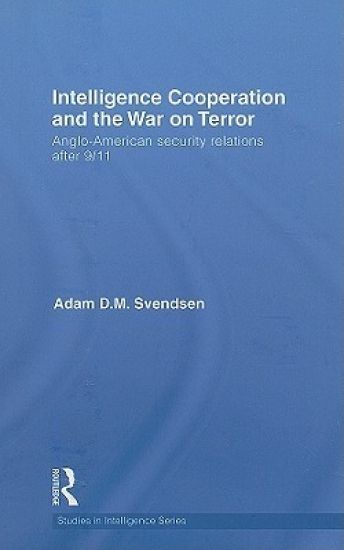
This book provides an in-depth analysis of UK-US intelligence cooperation in the post-9/11 world.Seeking to connect an analysis of intelligence liaison with the wider realm of Anglo-American Relations, the book draws on a wide range of interviews and consultations with key actors in both countries. The book is centred around two critical and empirical case studies, focusing on the interactions on the key issues of counterterrorism and weapons of mass destruction (WMD) counter-proliferation. These case studies provide substantive insights into a range of interactions such as 9/11, the 7/7 London bombings, the A.Q. Khan nuclear network, the prelude to the 2003 Iraq War, extraordinary rendition and special forces deployments. Drawing on over 60 interviews conducted in the UK and US with prominent decision-makers and practitioners, these issues are examined in the contemporary historical context, with the main focus being on the years 2000-05.This book will be of much interest to students of intelligence studies, foreign policy, security studies and International Relations in general.Adam Svendsen has a Phd in International History from the University of Warwick. He has been a Visiting Scholar at the Center for Peace and Security Studies, Georgetown University, and has contributed to the International Security Programme at Chatham House and to the work of IISS, London.

This book provides an in-depth analysis of UK-US intelligence cooperation in the post-9/11 world.Seeking to connect an analysis of intelligence liaison with the wider realm of Anglo-American Relations, the book draws on a wide range of interviews and consultations with key actors in both countries. The book is centred around two critical and empirical case studies, focusing on the interactions on the key issues of counterterrorism and weapons of mass destruction (WMD) counter-proliferation. These case studies provide substantive insights into a range of interactions such as 9/11, the 7/7 London bombings, the A.Q. Khan nuclear network, the prelude to the 2003 Iraq War, extraordinary rendition and special forces deployments. Drawing on over 60 interviews conducted in the UK and US with prominent decision-makers and practitioners, these issues are examined in the contemporary historical context, with the main focus being on the years 2000-05.This book will be of much interest to students of intelligence studies, foreign policy, security studies and International Relations in general.Adam Svendsen has a Phd in International History from the University of Warwick. He has been a Visiting Scholar at the Center for Peace and Security Studies, Georgetown University, and has contributed to the International Security Programme at Chatham House and to the work of IISS, London.
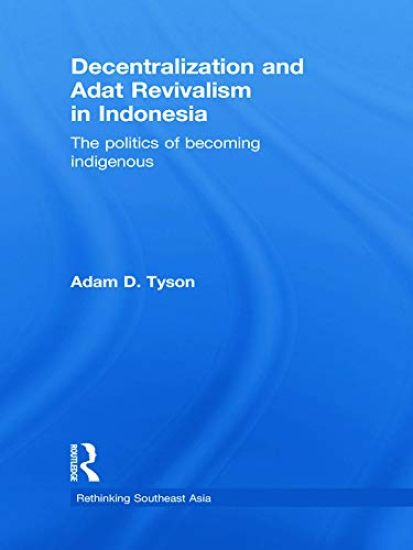
This book examines the dynamic process of political transition and indigenous (adat) revival in newly decentralized Indonesia. The political transition in May 1998 set the stage for the passing of Indonesia’s framework decentralization laws. These laws include both political and technocratic efforts to devolve authority from the centre (Jakarta) to the peripheries. Contrary to expectations, enhanced public participation often takes the form of adat revivalism - a deliberate, highly contested and contingent process linked to intensified political struggles throughout the Indonesian archipelago. The author argues adat is aligned with struggles for recognition and remedial rights, including the right to autonomous governance and land. It cannot be understood in isolation, nor can it be separated from the wider world.Based on original fieldwork and using case studies from Sulawesi to illustrate the key arguments, this book provides an overview of the key analytical concepts and a concise review of relevant stages in Indonesian history. It considers struggles for rights and recognition, focusing on regulatory processes and institutional control. Finally, Tyson examines land disputes and resource conflicts. Regional and local conflicts often coalesce around forms of ethnic representation, which are constantly being renegotiated, along with resource allocations and entitlements, and efforts to preserve or reinvent cultural identities.This will be valuable reading for students and researchers in Political Studies, Development Studies, Anthropology and Southeast Asian Studies and Politics.
This book examines the dynamic process of political transition and indigenous (adat) revival in newly decentralized Indonesia. The political transition in May 1998 set the stage for the passing of Indonesia’s framework decentralization laws. These laws include both political and technocratic efforts to devolve authority from the centre (Jakarta) to the peripheries. Contrary to expectations, enhanced public participation often takes the form of adat revivalism - a deliberate, highly contested and contingent process linked to intensified political struggles throughout the Indonesian archipelago. The author argues adat is aligned with struggles for recognition and remedial rights, including the right to autonomous governance and land. It cannot be understood in isolation, nor can it be separated from the wider world.Based on original fieldwork and using case studies from Sulawesi to illustrate the key arguments, this book provides an overview of the key analytical concepts and a concise review of relevant stages in Indonesian history. It considers struggles for rights and recognition, focusing on regulatory processes and institutional control. Finally, Tyson examines land disputes and resource conflicts. Regional and local conflicts often coalesce around forms of ethnic representation, which are constantly being renegotiated, along with resource allocations and entitlements, and efforts to preserve or reinvent cultural identities.This will be valuable reading for students and researchers in Political Studies, Development Studies, Anthropology and Southeast Asian Studies and Politics.

Covenant Relationships and the Editing of the Hebrew Psalter
Adam D. Hensley
T. T.Clark Ltd
2018
sidottu
An examination of the relationship between the Davidic covenant and Abrahamic and Mosaic covenants reflected in the editorial shape and shaping of the Masoretic Psalter. Hensley proposes that the editors of the Psalter understood these covenants as a theological unity, whose common fulfilment centres on an anticipated royal successor to David. To test this hypothesis Hensley examines the Psalter’s references and allusions to covenant(s) in light of editorial evidence. The book is split into three parts. Part I reassesses different kinds of editorial evidence, their implications, and their utility for discerning editorial intent. It also re-evaluates the Qumran Psalms Hypothesis championed by Sanders, Wilson, and others. Part II engages in extensive survey work on references and allusions to covenant(s) in the Psalter, assessing the extent to which they gravitate around David. Hensley traces phraseological and intertextual allusions to covenant promises and obligations, providing the first survey of its kind on the subject of covenant in the Psalter. Part III then investigates a strong allusion to the Abrahamic covenantal promises in Ps 72:17 in the context of Book II of the Psalter, and the Psalter’s fullest echoes of the “grace formula” (Exod 34:6) in Psalm 86:15, 103:8, and 145:8 in the contexts of Books III, IV, and V respectively. Hensley shows that rather than the Davidic covenantal promises being “democratized,” the promises and obligations of the pre-monarchic covenants are consistently “royalized” throughout the Psalter and its books, depicting the anticipated Davidic figure as a Moses-like intercessor and mediator of covenant renewal, and the leader of a “new song” for a “new exodus.”

Covenant Relationships and the Editing of the Hebrew Psalter
Adam D. Hensley
T. T.Clark Ltd
2019
nidottu
An examination of the relationship between the Davidic covenant and Abrahamic and Mosaic covenants reflected in the editorial shape and shaping of the Masoretic Psalter. Hensley proposes that the editors of the Psalter understood these covenants as a theological unity, whose common fulfilment centres on an anticipated royal successor to David. To test this hypothesis Hensley examines the Psalter’s references and allusions to covenant(s) in light of editorial evidence. The book is split into three parts. Part I reassesses different kinds of editorial evidence, their implications, and their utility for discerning editorial intent. It also re-evaluates the Qumran Psalms Hypothesis championed by Sanders, Wilson, and others. Part II engages in extensive survey work on references and allusions to covenant(s) in the Psalter, assessing the extent to which they gravitate around David. Hensley traces phraseological and intertextual allusions to covenant promises and obligations, providing the first survey of its kind on the subject of covenant in the Psalter. Part III then investigates a strong allusion to the Abrahamic covenantal promises in Ps 72:17 in the context of Book II of the Psalter, and the Psalter’s fullest echoes of the “grace formula” (Exod 34:6) in Psalm 86:15, 103:8, and 145:8 in the contexts of Books III, IV, and V respectively. Hensley shows that rather than the Davidic covenantal promises being “democratized,” the promises and obligations of the pre-monarchic covenants are consistently “royalized” throughout the Psalter and its books, depicting the anticipated Davidic figure as a Moses-like intercessor and mediator of covenant renewal, and the leader of a “new song” for a “new exodus.”



Step-by-step instructions for requirements through black belt.