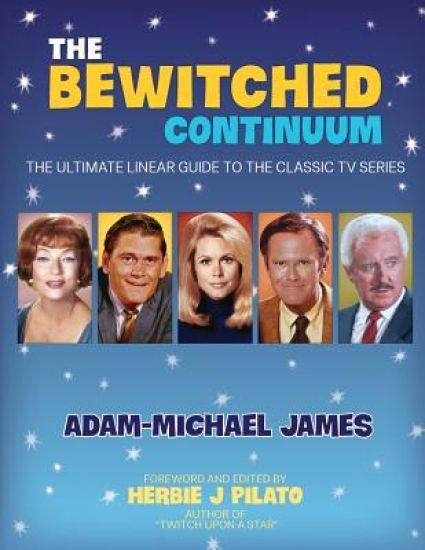
Mortal ad man Darrin Stephens has finally been bumped up to partner at his agency, so devoted wife - and witch - Samantha throws him a funky party, inviting familiar and long-forgotten faces. But when one careless display of witchcraft from someone Samantha never expected forces her to tell her guests she's a witch, she gets swept into a high-stakes fight for her very way of life and finds out in no uncertain terms who her friends truly are. Bewitched expert Adam-Michael James brings the supernatural sitcom full circle in I, Samantha, Take This Mortal, Darrin - a series finale concept he originated in The Bewitched Continuum, his ultimate linear guide to the series. Smoothly needle-dropping into 1972, this two-part "episode" puts favorite Bewitched characters in the spotlight once again, creates backstories for the Stephenses, and builds on the show's message of equality and acceptance while giving casual and hardcore fans alike all the witchy goodness and closure they deserve.
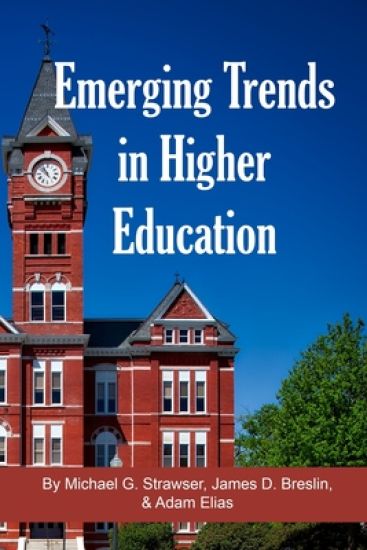
As the higher education market becomes more saturated with competition and as enrollment demographics continue to shift, universities must become more adept at developing, implementing, and promoting strategic initiatives. Recently, Bellarmine University, a private liberal arts institution in Louisville, KY, created a new strategic plan. The strategic planning process was a campus-wide initiative bringing together faculty, staff, and administrators. This resource was inspired by that strategic planning process. The authors played integral roles in the strategic planning process during their time at Bellarmine. Each author created a section that either connects directly to their expertise or is connected to their experiences during the strategic planning process. This resource is applicable for any institution and provides a structured, readable, and applicable strategic planning resource. As an overview of emerging trends, this book can be used by faculty, staff, and administrators alike to evaluate current institutional dynamics in light of national and international trends. The authors, like those in your own institutions, may not agree on every point, and you will see that play out across these pages, but differing perspectives provide value. This resource includes questions to ponder at the end of every chapter that can help small groups and work groups think strategically about next steps. The book is divided into three easy to read sections: Institutional Economics (exploring university finances); Student Services; and Teaching and Learning.
Michael Ignatieff; Laura Kipnis; David Grossman; Ramachandra Guha; Thomas Chatterton Williams; Hannah Sullivan; Mark Lilla; Helen Vendler; Sean Wilentz; Adam Zagajewski; Louise Glück; James Wolcott; Andrea Marcolongo; Eli Lake; Sally Satel; Moshe Halbertal; Joshua Bennett; David Thomson; Julius Margolin; Clara Collier; Shawn McCreesh
Liberties - A Journal of Culture and Politics features new essays and poetry from some of today’s best writers and artists, along with introducing new talent, to inspire and impact the intellectual and creative lifeblood of culture and politics. This inaugural issue of Liberties includes: Michael Ignatieff on liberalism and the environment; Laura Kipnis cheers transgression; David Grossman on literature and peace; Ramachandra Guha on the Indian tragedy; Thomas Chatterton Williams on the real James Baldwin; Mark Lilla on the power of indifference; Helen Vendler on Yeats' The Second Coming; Sean Wilentz on abolition and American origins; Adam Zagajeweski on Gustav Mahler; James Wolcott on America’s modern Jacobins; Andrea Marcolongo on how language defines us; Eli Lake on the birth of American unexceptionalism; Sally Satel on the riddle of addiction; Moshe Halbertal on creating a democratic Jewish state; David Thomson on the wonder of Terrence Malick; Julius Margolin’s memoir confronting hatred; Clara Collier on plague literature; Shawn McCreesh’s personal look at a youthful community of addiction; new poetry from the most recent winner of the Nobel Prize in Literature, Louise Glück, Joshua Bennett, and Hannah Sullivan; and, Leon Wieseltier (editor) and Celeste Marcus (managing editor).
Melinda Moore; Michael A. Wermuth; Adam C. Resnick; Harold D. Green; James R. Broyles; Scot Hickey; Jordan Ostwald; Kristin J. Leuschner; Kimberlie Biever
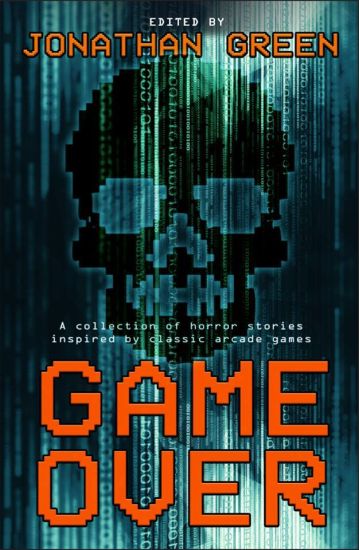
Jonathan Green; James Wallis; Sarah Peploe; Jonathan Oliver; Simon Bestwick; Gav Thorpe; James Swallow; Laurel Sills; Alexandra Peel; Tim Major; Adam Chillman; George Pickett; Michael Carroll
In the cavern-like darkness of the arcade, the neon phosphor-glow of the screen beckons you close. Drawn to the dancing pixels like a moth to a flame, digging deep in your pocket you pull out a shiny coin and thumb it into the slot as the electronic siren sings the fanfare that marks your arrival. One hand on the joystick, the other splayed across the control buttons, your pulse begins to quicken. Ready Player One Press StartYou've barely begun but suddenly the discordant bleeps are trumpeting your failure as your 8-bit adventure comes to an abrupt end. At least in the world of the video arcade you get a second chance. But what is the true price you pay when you make a pact with the digital demon? There's always another coin, an extra life to be earned, a second chance...Isn't there?GAME OVERA dozen stories of creeping dread and savage horror inspired by the humble amusement arcade and the classic coin-ops of yesteryear. Twelve tales to chill your blood by twelve masters of the malevolent and the macabre.Just keep reminding yourself, it's only a game...Isn't it?
Rachel Stenner; Kaley Kramer; Adam James Smith; Georgina E. M. Wilson; Joe Saunders; William Clayton; Jennifer Young; Alan B. Farmer; Benjamin Woodring; Michael Durrant; Verônica Calsoni Lima; Rosalind Johnson
This collection profiles understudied figures in the book and print trades of the seventeenth century. With an equal balance between women and men, it intervenes in the history of the trades, emphasising the broad range of material, cultural, and ideological work these people undertook. It offers a biographical introduction to each figure, placing them in their social, professional, and institutional settings. The collection considers varied print trade roles including that of the printer, publisher, paper-maker, and bookseller, as well as several specific trade networks and numerous textual forms. The biographies draw on extensive new archival research, with details of key sources for further study on each figure. Chronologically organised, this Element offers a primer both on numerous individual figures, and on the tribulations and innovations of the print trade in the century of revolution.
Olga Oliker; Richard Kauzlarich; James Dobbins; Kurt W. Basseuner; Donald L. Sampler; John G. McGinn; Michael J. Dziedzic; Adam Grissom; Bruce R. Pirnie; Nora Bensahel; A.Istar Guven
An assessment of humanitarian-assistance efforts by and interaction between civilian and military providers in the early phases of Operation Enduring Freedom in Afghanistan Description and evaluation of relief, reconstruction, humanitarian, and humanitarian-type aid efforts in Afghanistan during the most intense phase of military operations, from September 2001 to June 2002. The efforts were generally successful, but there were serious coordination problems among the various civilian and military aid providers. Critical issues, both positive and negative, are identified, and a list of recommendations is provided for policymakers, implementers, and aid providers, based on lessons learned.
Aaron B Frank; Elizabeth M Bartels; Adam R Grissom; Jonathan S Blake; Gabrielle Tarini; Kelly Elizabeth Eusebi; Joseph N Mait; Elisa Jayne Bienenstock; Andrew M Parker; Steven W Popper; Paul K Davis; Edward Geist; Ben Connable; Zev Winkelman; Robert L Axtell; Justin Grana; Robert J Lempert; Kelly Klima; Sara Turner; James R Watson; Michael J Gaines; Yuna Huh Wong; Jasmin Léveillé; Timothy Marler
Robin Dunbar; Andreas Winkler; Daniel Reynolds; James Simpson; Malise Ruthven; Michael Freeden; Ingrid Dunér; Marie Kawthar Daouda; Peter Jackson Rova; Joel Halldorf; Natalie Lantz; Per-Arne Bodin; Nathan Shachar; Jesper Huor; Svante Nordin; Adam Cwejman
Ikonoklasm, eller bildstormande, är en del av vår historia: från förstörelsen av religiösa bilder under den tidiga kristendomen till dagens nedrivning av statyer på sydstatsgeneraler och slavhandlare. Bilder, byggnader och föremål som strider mot religiös eller ideologisk övertygelse måste förstöras. De som utför rensningen, ikonoklasterna, är övertygade om att de utför en reningsaktion. Det förflutna välts över ända i en önskan att börja om från början. De olika bidragen till antologin Ikonoklasm: förkastandet av det förflutna visar med all önskvärd tydlighet konsekvenserna. Inte bara ovärderliga kulturskatter utan också människoliv går förlorade när fanatismen får fritt spelrum. Vi ser det när Islamiska staten slår sönder flera tusen år gamla museiföremål, när Maos rödgardister bränner böcker och förföljer oliktänkande under den kinesiska kulturrevolutionen eller när ryska bolsjeviker spränger kyrkor och skändar ikoner. Exemplen på de destruktiva krafternas skadegörelse genom seklen kan mångfaldigas. Att ikonoklasmens stridsrop ljuder så starkt i vår tid visar på dess fortsatta lockelse. Ikonoklasm är en varningsklocka, ett larm för hotet mot det demokratiska samhällets tolerans och öppenhet.
How poor migrants shape city politics during urbanizationAs the Global South rapidly urbanizes, millions of people have migrated from the countryside to urban slums, which now house one billion people worldwide. The transformative potential of urbanization hinges on whether and how poor migrants are integrated into city politics. Popular and scholarly accounts paint migrant slums as exhausted by dispossession, subdued by local dons, bought off by wily politicians, or polarized by ethnic appeals. Migrants and Machine Politics shows how slum residents in India routinely defy such portrayals, actively constructing and wielding political machine networks to demand important, albeit imperfect, representation and responsiveness within the country’s expanding cities.Drawing on years of pioneering fieldwork in India’s slums, including ethnographic observation, interviews, surveys, and experiments, Adam Michael Auerbach and Tariq Thachil reveal how migrants harness forces of political competition—as residents, voters, community leaders, and party workers—to sow unexpected seeds of accountability within city politics. This multifaceted agency provokes new questions about how political networks form during urbanization. In answering these questions, this book overturns longstanding assumptions about how political machines exploit the urban poor to stifle competition, foster ethnic favoritism, and entrench vote buying.By documenting how poor migrants actively shape urban politics in counterintuitive ways, Migrants and Machine Politics sheds new light on the political consequences of urbanization across India and the Global South.
How poor migrants shape city politics during urbanizationAs the Global South rapidly urbanizes, millions of people have migrated from the countryside to urban slums, which now house one billion people worldwide. The transformative potential of urbanization hinges on whether and how poor migrants are integrated into city politics. Popular and scholarly accounts paint migrant slums as exhausted by dispossession, subdued by local dons, bought off by wily politicians, or polarized by ethnic appeals. Migrants and Machine Politics shows how slum residents in India routinely defy such portrayals, actively constructing and wielding political machine networks to demand important, albeit imperfect, representation and responsiveness within the country’s expanding cities.Drawing on years of pioneering fieldwork in India’s slums, including ethnographic observation, interviews, surveys, and experiments, Adam Michael Auerbach and Tariq Thachil reveal how migrants harness forces of political competition—as residents, voters, community leaders, and party workers—to sow unexpected seeds of accountability within city politics. This multifaceted agency provokes new questions about how political networks form during urbanization. In answering these questions, this book overturns longstanding assumptions about how political machines exploit the urban poor to stifle competition, foster ethnic favoritism, and entrench vote buying.By documenting how poor migrants actively shape urban politics in counterintuitive ways, Migrants and Machine Politics sheds new light on the political consequences of urbanization across India and the Global South.
India's urban slums exhibit dramatic variation in their access to local public goods and services - paved roads, piped water, trash removal, sewers, and streetlights. Why are some vulnerable communities able to demand and secure development from the state while others fail? Drawing on more than two years of fieldwork in the north Indian cities of Bhopal and Jaipur, Demanding Development accounts for the uneven success of India's slum residents in securing local public goods and services. Auerbach's theory centers on the political organization of slum settlements and the informal slum leaders who spearhead resident efforts to make claims on the state - in particular, those slum leaders who are party workers. He finds striking variation in the extent to which networks of party workers have spread across slum settlements. Demanding Development shows how this variation in the density and partisan distribution of party workers across settlements has powerful consequences for the ability of residents to politically mobilize to improve local conditions.
India's urban slums exhibit dramatic variation in their access to local public goods and services - paved roads, piped water, trash removal, sewers, and streetlights. Why are some vulnerable communities able to demand and secure development from the state while others fail? Drawing on more than two years of fieldwork in the north Indian cities of Bhopal and Jaipur, Demanding Development accounts for the uneven success of India's slum residents in securing local public goods and services. Auerbach's theory centers on the political organization of slum settlements and the informal slum leaders who spearhead resident efforts to make claims on the state - in particular, those slum leaders who are party workers. He finds striking variation in the extent to which networks of party workers have spread across slum settlements. Demanding Development shows how this variation in the density and partisan distribution of party workers across settlements has powerful consequences for the ability of residents to politically mobilize to improve local conditions.
Sometimes, life can be really hard. A lot of times we make our own life difficult with the bad choices we make. Other times we grow up in a bad environment, and never had a chance before we got started. Then there are cases where you do your best and life just deals you a really bad hand. Life is not easy for most of us. I can sympathize because it wasn't easy for me either. The question is... What do we do with the broken messes we call ourselves? Do we give up? Do we use our hard circumstances as a crutch for the rest of our lives to excuse the fact that we will never be happy? Or, do we pick ourselves up out of the dust and fight for our happiness? Maybe your situation is so bad that there will never be a chance to change things around. Well, if I can go through hell and back and end up where I'm at today than anyone can. The reason I wrote this book is to show others the first steps to take who don't think there is a way out. I'm telling my story to help people in the most extreme hopeless situations that even they can find a happy ending to their story. I've always said, "Yeah though I walk through the valley of the shadow of death I shall fear no evil", not because I needed a false protection from God, I fear no evil because I was something a whole lot worse. I realize using the phrase, "I went through hell and back", has become a clich . Well, what if you witness your mother being physically abused daily. While suffering violent beatings yourself on a normal basis you became so pathetically addicted to drugs that you constantly attempt suicide. Due to the overwhelming stress on your body and mind you develop multiple personality disorder. You become a violent sociopath, and survive ten years in prison after escaping constant hits on your life due to the fact that there is a murder contract on your head. Living your whole life breaking anyone's heart who ever cared about you, all the while suffering the deepest emotional torment, and hate ever known to man. In this case I don't see anything clich about my life's story. This was just the beginning of my life. I could have lay down and died and nobody would have blamed me for giving up. Where you have been in life doesn't define who you are now. Society, people around you, and even your own mind may tell you there is no way you will ever be happy, but if I can beat the odds by overcoming the past then anyone can. My story is proof of that.