This work has been selected by scholars as being culturally important and is part of the knowledge base of civilization as we know it.This work is in the public domain in the United States of America, and possibly other nations. Within the United States, you may freely copy and distribute this work, as no entity (individual or corporate) has a copyright on the body of the work.Scholars believe, and we concur, that this work is important enough to be preserved, reproduced, and made generally available to the public. To ensure a quality reading experience, this work has been proofread and republished using a format that seamlessly blends the original graphical elements with text in an easy-to-read typeface.We appreciate your support of the preservation process, and thank you for being an important part of keeping this knowledge alive and relevant.
Claiming Sacred Ground Pilgrims and Politics at Glastonbury and Sedona Adrian J. Ivakhiv A study of people and politics at two New Age spiritual sites. In this richly textured account, Adrian Ivakhiv focuses on the activities of pilgrim-migrants to Glastonbury, England and Sedona, Arizona. He discusses their efforts to encounter and experience the spirit or energy of the land and to mark out its significance by investing it with sacred meanings. Their endeavors are presented against a broad canvas of cultural and environmental struggles associated with the incorporation of such geographically marginal places into an expanding global cultural economy. Ivakhiv sees these contested and "heterotopic" landscapes as the nexus of a complex web of interestes and longings: from millennial anxieties and nostalgic re-imaginings of history and prehistory; to real-estate power grabs; contending religious visions; and the free play of ideas from science, pseudo-science, and popular culture. Looming over all this is the nonhuman life of these landscapes, an"otherness" that alternately reveals and conceals itself behind a pagenant of beliefs, images, and place-myths. A significant contribution to scholarship on alternative spirituality, sacred space, and the politics of natural landscapes, Claiming Sacred Ground will interest scholars and students of environmental and cultural studies, and the sociology of religious movements and pilgrimage. Non-specialist readers will be stimulated by the cultural, ecological, and spiritual dimensions of extraordinary natural landscapes. Adrian Ivakhiv teaches in the Faculty of Environmental Studies at York University in Toronto, and is President of the Environmental Studies Association of Canada. April 2001 384 pages, 24 b&w photos, 2 figs., 9 maps, 6 1/8 x 9 1/4, index, append. cloth 0-253-33899-9$37.40 s / £28.50 Contents IDEPARTURES 1Power and Desire in Earth's Tangled Web 2Reimagining Earth 3Orchestrating Sacred Space IIGlastonbury 4Stage, Props, and Players of Avalon 5Many Glastonburys: Place-Myths and Contested Spaces IIISEDONA 6Red Rocks to Real Estate 7New Agers, Vortexes, and the Sacred Landscape IVARRIVALS 8Practices of Place: Nature and Heterotopia Beyond the New Age
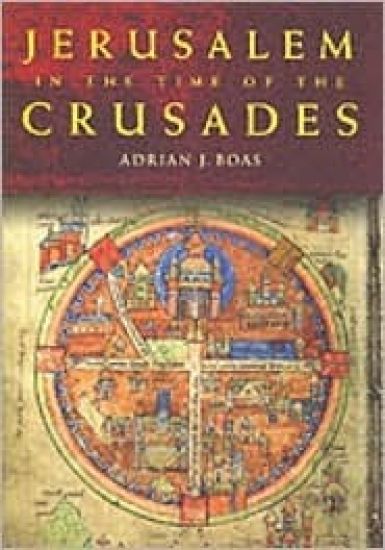
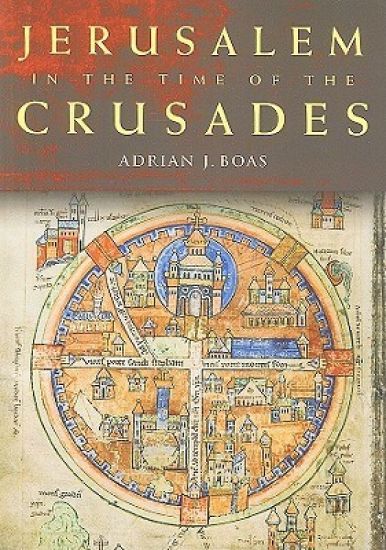
Adrian Boas's combined use of historical and archaeological evidence together with first-hand accounts written by visiting pilgrims results in a multi-faceted perspective on Crusader Jerusalem. Generously illustrated, this book will serve both as a scholarly account of this city's archaeology and history, and a useful guide for the interested reader to a city at the centre of international and religious interest and conflict today.
Adrian Boas's combined use of historical and archaeological evidence together with first-hand accounts written by visiting pilgrims results in a multi-faceted perspective on Crusader Jerusalem. Generously illustrated, this book will serve both as a scholarly account of this city's archaeology and history, and a useful guide for the interested reader to a city at the centre of international and religious interest and conflict today.
Profile of ten of the world's greatest business personalities - such as Roberto Goizueta of Coca-Cola, Bill Gates of Microsoft and Andrew Grove of Intel, showing how they achieved profit zone. * Provides a road map to making more profit by focusing - or refocusing - on the customer. * Includes worksheets and checklists, as well as charts and graphs, to illustrate the authors' points.
Does the human being really have a soul? Is the idea of 'soul' a matter of religious faith? If science cannot detect the soul, how can reasonable people speak of it?The Soul of the Person is a contemporary account of the metaphysical basis for the transcendence of the human person. In being directed toward truth, beauty, and goodness, the human person transcends the physical order and reveals himself as a spiritual, as well as a material, being. The metaphysical principle for this transcendence is what we call the soul. In this book, Adrian Reimers presents a rereading and interpretation of Thomas Aquinas's account of human nature. The book's argument is based principally on two modern thinkers: Charles Sanders Peirce and his theory of habit and sign, and Karol Wojtyla and his notion of the transcendence of the acting person. According to Reimers, the person is constantly in the process of self-realization, which occurs through the rational adoption and development of habits. ""Rationality"" is not a purely mental phenomenon; rather, it imbues our entire being. The human person forms his behavior--habits--rationally according to his ideals of what is truly good, even if that vision of the good is flawed, incomplete, or unacknowledged. This development of habits directed toward values is the root of the person's consciousness of self. Furthermore, the values by which one forms his life define the self that he more clearly becomes as a person. The rational principle by which he develops these habits is called the soul. The text concludes with an explanation of the immortality of the soul.ABOUT THE AUTHOR:Adrian J. Reimers is adjunct assistant professor of philosophy at the University of Notre Dame. He is the author An Analysis of the Concepts of Self-Fulfillment and Self-Realization in the Thought of Karol Wojtyla, Pope John Paul II. PRAISE FOR THE BOOK:""One of the underlying concerns animating the writing of this book is the challenge posed by the pervasive contemporary agnosticism concerning the existence of the soul. Many students today, including Catholics, consider the soul to be a purely religious matter, a mere tenet of personal faith. Reimers is sensitive to this challenge, and The Soul of the Person is his answer. While parts of the book are technical and obviously intended for philosophers, most of it should be accessible to any educated and attentive reader. . . . In this respect, probably not since David Braine's The Human Person: Animal and Spirit (1992) has there been such a thoroughgoing analysis of philosophical anthropology based on such a thoroughgoing synthesis of the contemporary literature. . . . [T]he book is also distinguished by Reimers's impressive gift for providing numerous helpful illustrations and sometimes humorous examples . . . and his extensive discussion of various scientific, mathematical, and logical cases. One gets the sense that Reimers is most likely an engaging instructor in his classroom."" -- Philip Blosser, The Thomist""He has produced a helpful contribution to the literature on the soul, aiming to steer a course between the two poles of mind -- body dualism and materialism and to come up with a holistic solution which recognizes both the spiritual and material nature of human beings. . . . I recommend this book to all who are interested in the fundamental question of what it means to be a person."" -- Rodney Holder, The Journal of Theological Studies""[An] important contribution to contemporary philosophical psychology. . . . In this book, Reimers has, in the present reviewer's view, made a significant contribution to present debates concerning the human person. . . . This work deserves a wide readership. Those who wish to promote a culture of life ought to take it up straight away."" -- Kevin E. O'Reilly, Review of Metaphysics
If God is truly merciful and loving, perfect in goodness, how can he consign human beings created in his own image to eternal torment in hell? God’s goodness seems incompatible with inflicting horrible evil upon those who oppose his will and defy his law. If to this paradox we add the metaphysical requirement that God be perfect in goodness, the eternal evil of hell seems to be contradictory to God’s own nature. Catholic philosopher Adrian Reimers takes on these challenges in Hell and the Mercy of God, drawing on relevant sources from Aristotle to Aquinas, from Dante to Tolkien, from Wagner to John Paul II, along with Billie Holliday, The Godfather, and the music of George Gershwin. He presents a philosophical theology, grounded in Scripture, of the nature of goodness and evil, exploring various types of pain, the seven capital sins, the resurrection of the body, the meaning of mammon, the core meaning of idolatry, the psychology of Satan and those who choose his path, and the moral responsibility of the human person. These reflections illuminate the intelligibility of orthodox Catholic teachings on the goodness of God and the reality of hell. Hell is not an arbitrary imposition set up for human rule-breakers but a continuation of a freely chosen way of life manifest even in this world. Examples from history, art, and contemporary culture lead the author to conclude that anyone who does not believe in the reality of hell is not paying enough attention. And yet, mercy and hope remain triumphant, because, just as Christ offers entrance into paradise to the “good thief” Dismas on the cross, God continues to offer repentance and salvation to all who live.
According to Slywotzky, value migration is the flow of economic and shareholder value away from an increasingly outmoded business design toward others that are better equipped to create utility for customers and profit for the company. This book describes the skills that managers will need to identify value shifts in their own industries and to craft the key moves that will determine their ability to achieve and sustain value growth.
The first ever compilation of the Irish Army's Orders of Battle, from its formation in 1923 to 2004.Includes several current Tables of Organization and Equipment. 140 content pages.
Fully revised and expanded, this book presents a unique visual approach to academic writing and composition tailored to the needs of students with dyslexia in Higher Education. It will help you to successfully structure and articulate your ideas, get to grips with critical reading, thinking and writing and fulfil your full academic potential. The ‘writing process’ (e.g. genre and style, critical thinking and reading, writing, sentence construction, and proofreading editing) is de-mystified and translated into innovative, meaningful visual representations in the form of templates, images, icons and prompts designed to meet the visual and ‘big picture’ learning styles and strengths of your dyslexia. Underpinned by extensive research, this book will help you to present your thoughts and evaluate and critique competing arguments in a compelling way. It is written to help you bridge the gap between your existing coping strategies and the increased demands and rigours of academic writing at university. This second edition features enhanced visual techniques for reading online, expanded material to cover scientific writing, literature reviews, reflective writing and academic style, and detailed explanations of how dyslexia affects writing, how to reduce pressure on your working memory and how to get your creativity and ideas onto the page in order to excel. This book serves as an invaluable resource for dyslexic students, academics, dyslexia specialists, learning developers, and writing tutors throughout the Higher Education sector.
Fully revised and expanded, this book presents a unique visual approach to academic writing and composition tailored to the needs of students with dyslexia in Higher Education. It will help you to successfully structure and articulate your ideas, get to grips with critical reading, thinking and writing and fulfil your full academic potential. The ‘writing process’ (e.g. genre and style, critical thinking and reading, writing, sentence construction, and proofreading editing) is de-mystified and translated into innovative, meaningful visual representations in the form of templates, images, icons and prompts designed to meet the visual and ‘big picture’ learning styles and strengths of your dyslexia. Underpinned by extensive research, this book will help you to present your thoughts and evaluate and critique competing arguments in a compelling way. It is written to help you bridge the gap between your existing coping strategies and the increased demands and rigours of academic writing at university. This second edition features enhanced visual techniques for reading online, expanded material to cover scientific writing, literature reviews, reflective writing and academic style, and detailed explanations of how dyslexia affects writing, how to reduce pressure on your working memory and how to get your creativity and ideas onto the page in order to excel. This book serves as an invaluable resource for dyslexic students, academics, dyslexia specialists, learning developers, and writing tutors throughout the Higher Education sector.
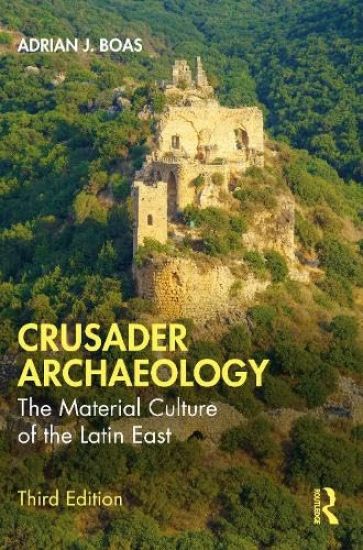
The third edition of Crusader Archaeology updates previous editions to include coverage of important recent work in the field. It examines what life was like for European settlers and travellers to the crusader states during the centuries of Latin rule.Examining past, recent and ongoing archaeological discoveries, and research in the field from Israel, Jordan, Syria, Turkey and Cyprus, this volume includes recent findings and approaches including new exploration work in urban sites such as Jerusalem, Acre and Caesarea, new work on industrial sites and new discoveries in research including DNA studies, the field of weaponry and many other topics. It covers such topics as settlement types, fortification, daily life, day-to-day activities, warfare, religious life, arts, industry, leisure pursuits, building technology, agriculture, medicine, death and burial. It considers, in all these fields, the manner in which the Frankish population was influenced by the local and neighbouring populations, and how, in many of their endeavours, the Franks evolved and developed their own, unique and often remarkably advanced material culture. Together with the archaeological evidence, Crusader Archaeology provides a historical background to the various topics in order to give context to each of the discussions. Crusader Archaeology remains the only comprehensive study of the architecture and material finds of the Crusader period.This well-illustrated volume serves as a basic textbook for students and scholars with an interest in the Middle Ages and in particular the Crusades and the Latin East.
The third edition of Crusader Archaeology updates previous editions to include coverage of important recent work in the field. It examines what life was like for European settlers and travellers to the crusader states during the centuries of Latin rule.Examining past, recent and ongoing archaeological discoveries, and research in the field from Israel, Jordan, Syria, Turkey and Cyprus, this volume includes recent findings and approaches including new exploration work in urban sites such as Jerusalem, Acre and Caesarea, new work on industrial sites and new discoveries in research including DNA studies, the field of weaponry and many other topics. It covers such topics as settlement types, fortification, daily life, day-to-day activities, warfare, religious life, arts, industry, leisure pursuits, building technology, agriculture, medicine, death and burial. It considers, in all these fields, the manner in which the Frankish population was influenced by the local and neighbouring populations, and how, in many of their endeavours, the Franks evolved and developed their own, unique and often remarkably advanced material culture. Together with the archaeological evidence, Crusader Archaeology provides a historical background to the various topics in order to give context to each of the discussions. Crusader Archaeology remains the only comprehensive study of the architecture and material finds of the Crusader period.This well-illustrated volume serves as a basic textbook for students and scholars with an interest in the Middle Ages and in particular the Crusades and the Latin East.
This book presents fifty neurological cases form on which consultant neurologists at the National Hospital for Neurology and Neurosurgery have provided their expert comments. Each case is presented with history, examination, investigations, diagnosis and comment by an expert.
First published in 1997. Adrian Walsh develops an original account of social justice using neo-Aristotelian value theory. At the heart of the book is an account of the human good in which human interests are divided into three main categories: the basal interests, the eudaimonian interests and the interests in subjectivity. Subsequently, the distributive goods, to which distributive principles are to apply, are divided into three main spheres; the basal sphere, the eudaimonian sphere and the sphere of subjectivity. While the overall orientation of the project is egalitarian, different distributive principles are applied in each of the three spheres, with the intention ultimately of realising the egalitarian ideal. The main feature of the book is the development of a pluralist egalitarian theory of social justice using a distinctive account of the human good.
First published in 1997. Adrian Walsh develops an original account of social justice using neo-Aristotelian value theory. At the heart of the book is an account of the human good in which human interests are divided into three main categories: the basal interests, the eudaimonian interests and the interests in subjectivity. Subsequently, the distributive goods, to which distributive principles are to apply, are divided into three main spheres; the basal sphere, the eudaimonian sphere and the sphere of subjectivity. While the overall orientation of the project is egalitarian, different distributive principles are applied in each of the three spheres, with the intention ultimately of realising the egalitarian ideal. The main feature of the book is the development of a pluralist egalitarian theory of social justice using a distinctive account of the human good.