Now in its third edition, The American Culture of War presents a sweeping critical examination of every major American war since 1941: World War II, Korea, Vietnam, the First and Second Persian Gulf Wars, U.S. operations in Iraq and Afghanistan, and the war against ISIS. As he carefully considers the cultural forces that surrounded each military engagement, Adrian Lewis offers an original and provocative look at the motives, people and governments used to wage war, the discord among military personnel, the flawed political policies that guided military strategy, and the civilian perceptions that characterized each conflict. This third edition features: A new structure focused more exclusively on the character and conduct of the wars themselves Updates to account for the latest, evolving scholarship on these conflicts An updated account of American military involvement in the Middle East, including the abrupt rise of ISISThe new edition of The American Culture of War remains a comprehensive and essential resource for any student of American wartime conduct.
Now in its third edition, The American Culture of War presents a sweeping critical examination of every major American war since 1941: World War II, Korea, Vietnam, the First and Second Persian Gulf Wars, U.S. operations in Iraq and Afghanistan, and the war against ISIS. As he carefully considers the cultural forces that surrounded each military engagement, Adrian Lewis offers an original and provocative look at the motives, people and governments used to wage war, the discord among military personnel, the flawed political policies that guided military strategy, and the civilian perceptions that characterized each conflict. This third edition features: A new structure focused more exclusively on the character and conduct of the wars themselves Updates to account for the latest, evolving scholarship on these conflicts An updated account of American military involvement in the Middle East, including the abrupt rise of ISISThe new edition of The American Culture of War remains a comprehensive and essential resource for any student of American wartime conduct.
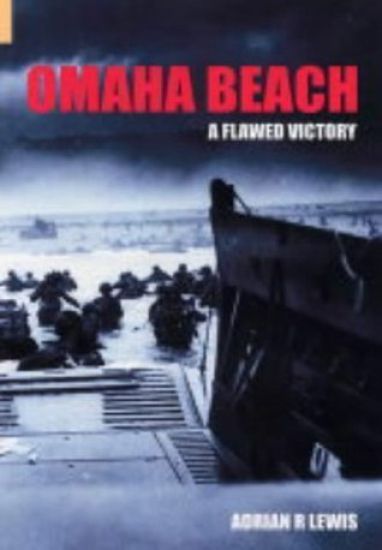
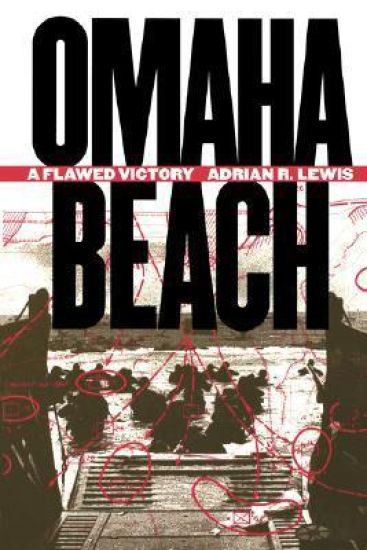
The Allied victory at Omaha Beach was a costly one. A direct infantry assault against a defense that was years in the making, undertaken in daylight following a mere thirty-minute bombardment, the attack had neither the advantage of tactical surprise nor that of overwhelming firepower. American forces were forced to improvise under enemy fire, and although they were ultimately victorious, they suffered devastating casualties. Why did the Allies embark on an attack with so many disadvantages? Making extensive use of primary sources, Adrian Lewis traces the development of the doctrine behind the plan for the invasion of Normandy to explain why the battles for the beaches were fought as they were. Although blame for the Omaha Beach disaster has traditionally been placed on tactical leaders at the battle site, Lewis argues that the real responsibility lay at the higher levels of operations and strategy planning. Ignoring lessons learned in the Mediterranean and Pacific theaters, British and American military leaders employed a hybrid doctrine of amphibious warfare at Normandy, one that failed to maximize the advantages of either British or U.S. doctrine. Had Allied forces at the other landing sites faced German forces of the quality and quantity of those at Omaha Beach, Lewis says, they too would have suffered heavy casualties and faced the prospect of defeat. |A soldier-scholar reveals the flaws in the Allied invasion at Omaha Beach. Reanalyzing military records and battle plans, Adrian Lewis traces the evolution of combined operations (more than one nation) and joint operations (more than one service) to explain how the plan for swift victory at Omaha Beach went terribly wrong and turned into the bloodiest of the Allied invasions.
A bitter controversy rages in Western society today: Is it unreasonably cruel to conduct biomedical research on animals? On one side lies a devoted (and, at times, aggressive and even violent) group of activists who believe animals are not human property, subject to our influence and interference. On the other are the researchers whose work developing life-saving medical treatments has hinged on the use of laboratory animals--and the patients who benefit from those treatments. As a veterinarian and sleep researcher, Adrian Morrison understands both sides of the issue, as well as the passions it arouses. Animal use in biomedical research, he argues, is a necessary part of medical advancements that improve human health and quality of life. This is not a position Morrison takes lightly, for he has been the victim of repeated acts of intimidation by animal-rights extremists, who vandalized his office and threatened his family. Refusing to be silenced, Morrison has written extensively on the humane but necessary use of laboratory animals, and was for three years director of the NIMH Program for Animal Research Issues. In this book, he offers the culmination of decades of reflection, scholarly research into the animal rights issue, and first-hand work with animals. The result is a thought-provoking, intelligent, and fair-minded discussion of an emotionally charged subject.
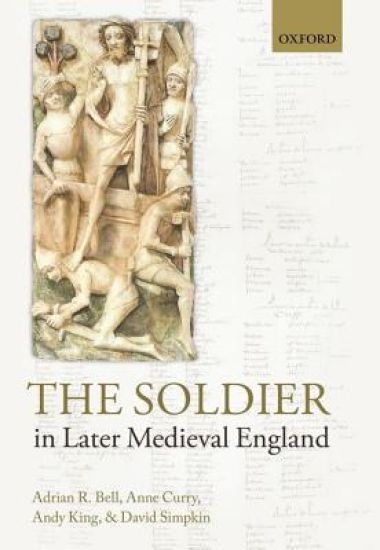
The Hundred Years War was a struggle for control over the French throne, fought as a series of conflicts between England, France, and their respective allies. The Soldier in Later Medieval England is the outcome of a project which collects the names of every soldier known to have served the English Crown from 1369 to the loss of Gascony in 1453, the event which is traditionally accepted as the end-date of the Hundred Years War. The data gathered throughout the project has allowed the authors of this volume to compare different forms of war, such as the chevauchées of the late fourteenth century and the occupation of French territories in the fifteenth century, and thus to identify longer-term trends. It also highlights the significance of the change of dynasty in England in the early 1400s. The scope of the volume begins in 1369 because of the survival from that point of the 'muster roll', a type of documentary record in which soldiers names are systematically recorded. The muster roll is a rich resource for the historian, as it allows closer study to be made of the peerage, the knights, the men-at-arms (the esquires), and especially the lower ranks of the army, such as the archers, who contributed the largest proportion of troops to English royal service. The Soldier in Later Medieval England seeks to investigate the different types of soldier, their regional and national origins, and movement between ranks. This is a wide-ranging volume, which offers invaluable insights into a much-neglected subject, and presents many opportunities for future research.
An innovative, new approach to risk assessment and management that will help you uncover countless opportunities for your company If a business wants to be sustainable in the twenty-first century, it should focus on the continuous improvements and potential opportunities that risk management offers. Written by risk management experts, this book will provide you with the necessary tools and guidance for the successful management of business risk so you can improve your companys triple bottom line the social, environmental, and financial accountability of your business. The authors introduce the RISQUE method, which was specifically developed to address a diverse range of events and issues. It offers a multifaceted approach, using a rational process, which will help you make informed, defensible risk management decisions. Youll gain a better understanding of the methodology, assumptions, advantages, and disadvantages of this approach. Youll also see how the method can be applied to specific areas within your business to reduce risk and increase opportunities. And youll learn the necessary skills to implement a risk management process that will demonstrate commitment to triple bottom line management. To enhance the material presented, numerous case studies are included that will help you understand how to: *Select and justify the best option for a project *Determine how much additional liability youll gain through an acquisition *Account for nonquantifiable events *Understand how much your company needs to set aside for future liabilities *Discover which asset management strategy gives you the best return *Use loss of life as a measure of risk to public safety *Calculate and report contingent liability on your balance sheet *Develop an insurance strategy based on your profile of risk
The wool market was extremely important to the English medieval economy and wool dominated the English export trade from the late-thirteenth century to its decline in the late-fifteenth century. Wool was at the forefront of the establishment of England as a European political and economic power and this volume was the first study of the medieval wool market in over 20 years. It investigates in detail the scale and scope of advance contracts for the sale of wool; the majority of these agreements were formed between English monasteries and Italian merchants, and the book focuses on the data contained within them. The pricing structures and market efficiency of the agreements are examined, employing practices from modern finance. A detailed case study of the impact of entering into such agreements on medieval English monasteries is also presented, using the example of Pipewell Abbey in Northamptonshire.
The wool market was extremely important to the English medieval economy and wool dominated the English export trade from the late-thirteenth century to its decline in the late-fifteenth century. Wool was at the forefront of the establishment of England as a European political and economic power and this volume was the first study of the medieval wool market in over 20 years. It investigates in detail the scale and scope of advance contracts for the sale of wool; the majority of these agreements were formed between English monasteries and Italian merchants, and the book focuses on the data contained within them. The pricing structures and market efficiency of the agreements are examined, employing practices from modern finance. A detailed case study of the impact of entering into such agreements on medieval English monasteries is also presented, using the example of Pipewell Abbey in Northamptonshire.
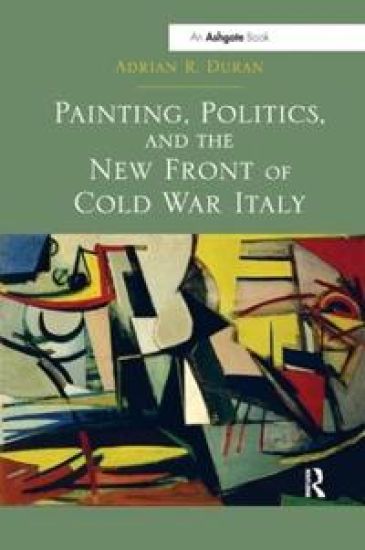
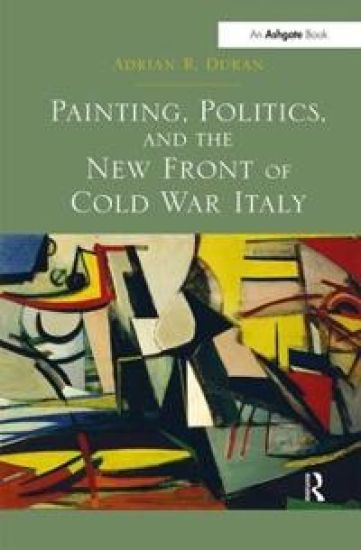
The first English-language monograph on Il Fronte Nuovo delle Arti, this study explores the rise and fall of this postwar Italian artists' group as a representative instance of the tensions facing Italian painting during the transition out of two decades of Fascism and into the global divisions of the Cold War. Adrian Duran argues that the binary structures of the era - realism vs. abstraction, Communism vs. democracy, conformism vs. freedom - have monopolized the discourse surrounding the Fronte Nuovo and, with it, the historiography of Italian painting during this period, 1944-50. Beginning with the dialogues that framed the formation of the Fronte Nuovo, this book reconsiders artists' works, correspondence, critical writings, and manifestos. These are married to examinations of specific exhibitions, the most important of which are the group's 1947 inaugural exhibition and the 1948 and 1950 Venice Biennali. The critical responses to these exhibitions are reconsidered in light of their groundings in the heated political debates of the period. In total, these diverse sources reveal the vast divide between the internal discourse of the arts, generated by the participant artists and their works, and the surrounding politics of Cold War Italy.
The first English-language monograph on Il Fronte Nuovo delle Arti, this study explores the rise and fall of this postwar Italian artists' group as a representative instance of the tensions facing Italian painting during the transition out of two decades of Fascism and into the global divisions of the Cold War. Adrian Duran argues that the binary structures of the era - realism vs. abstraction, Communism vs. democracy, conformism vs. freedom - have monopolized the discourse surrounding the Fronte Nuovo and, with it, the historiography of Italian painting during this period, 1944-50. Beginning with the dialogues that framed the formation of the Fronte Nuovo, this book reconsiders artists' works, correspondence, critical writings, and manifestos. These are married to examinations of specific exhibitions, the most important of which are the group's 1947 inaugural exhibition and the 1948 and 1950 Venice Biennali. The critical responses to these exhibitions are reconsidered in light of their groundings in the heated political debates of the period. In total, these diverse sources reveal the vast divide between the internal discourse of the arts, generated by the participant artists and their works, and the surrounding politics of Cold War Italy.
They went in as confident young warriors. They came out as battle-scarred veterans, POW camp survivors . . . or worse. The Army Air Corps’ 27th Bombardment Group arrived in the Philippines in November 1941 with 1,209 men; one year later, only 20 returned to the United States. The Japanese attacked the Philippines on the same morning as Pearl Harbor and invaded soon after. Allied air routes back to the Philippines were soon cut, forcing pilots to fight their air war from bases in Java, Australia, and New Guinea. The men on Bataan were eventually taken prisoner and forced into the infamous Death March. The 27th and other such units were pivotal in delaying the Japanese timetable for conquest. If not for these units, some have suggested, the Allied offensive in the Pacific might have started in Hawaii or even California instead of New Guinea and the surrounding islands. Based largely on primary materials, including a fifty-nine-page report written by the surviving unit members in September 1942, Operation PLUM (from the code name for the U.S. Army in the Philippines) gives an account of the 27th Bombardment Group and, through it, the opening months of the Pacific theater. Military historians and readers interested in World War II will appreciate the rich perspective presented in Operation PLUM
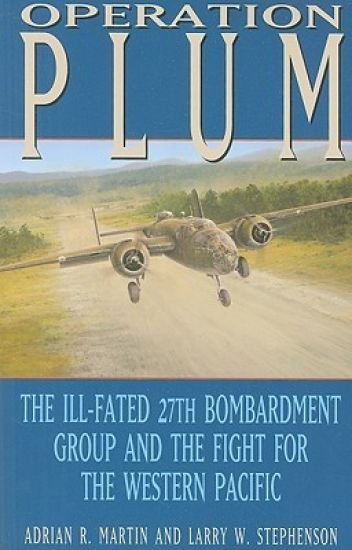
They went in as confident young warriors. They came out as battle-scarred veterans, POW camp survivors. . . or worse. The Army Air Corps’ 27th Bombardment Group arrived in the Philippines in November 1941 with 1,209 men; one year later, only 20 returned to the United States. The Japanese attacked the Philippines on the same morning as Pearl Harbor and invaded soon after. Allied air routes back to the Philippines were soon cut, forcing pilots to fight their air war from bases in Java, Australia, and New Guinea. The men on Bataan were eventually taken prisoner and forced into the infamous Death March. The 27th and other such units were pivotal in delaying the Japanese timetable for conquest. If not for these units, some have suggested, the Allied offensive in the Pacific might have started in Hawaii or even California instead of New Guinea and the surrounding islands. Based largely on primary materials, including a fifty-nine-page report written by the surviving unit members in September 1942, Operation PLUM (from the code name for the U.S. Army in the Philippines) gives an account of the 27th Bombardment Group and, through it, the opening months of the Pacific theater. Military historians and readers interested in World War II will appreciate the rich perspective presented in Operation PLUM