Kirjojen hintavertailu. Mukana 11 244 527 kirjaa ja 12 kauppaa.

Kirjahaku

Etsi kirjoja tekijän nimen, kirjan nimen tai ISBN:n perusteella.

599 tulosta hakusanalla Agnieszka Kijewska

Economy and Theology

Economy and Theology

Agnieszka Kijewska

TAYLOR FRANCIS LTD
2024
sidottu
Economy and Theology: Cusanus's Theory of Value, a study from the field of the history of philosophy, responds to the present-day interest in what is referred to as economic theology. This study aims to show that value (valor), one of the fundamental concepts of contemporary philosophy and economics, has its genealogy in the thought of Nicholas of Cusa. Starting from the economic context (the concept of price/pretium), Cusanus proposes the theory of value that, on the one hand, is objectively rooted in the Divine act of creation (God as the Minter) and, on the other hand, requires reading by human beings (human mind as a banker). While this theory appears in Cusanus’s late work The Bowling-Game, it is underpinned by his theory of knowledge, theory of human beings and human cognition against the background of his vision of the universe. Thus, the aim of the book is to try to answer the question about the role and tasks of human beings as a principal player in economic and social game. This description of human position emerges from the creative tension between human philosophical and theological reflection and certain economic solutions.
Economy and Theology

Economy and Theology

Agnieszka Kijewska

TAYLOR FRANCIS LTD
2025
nidottu
Economy and Theology: Cusanus's Theory of Value, a study from the field of the history of philosophy, responds to the present-day interest in what is referred to as economic theology. This study aims to show that value (valor), one of the fundamental concepts of contemporary philosophy and economics, has its genealogy in the thought of Nicholas of Cusa. Starting from the economic context (the concept of price/pretium), Cusanus proposes the theory of value that, on the one hand, is objectively rooted in the Divine act of creation (God as the Minter) and, on the other hand, requires reading by human beings (human mind as a banker). While this theory appears in Cusanus’s late work The Bowling-Game, it is underpinned by his theory of knowledge, theory of human beings and human cognition against the background of his vision of the universe. Thus, the aim of the book is to try to answer the question about the role and tasks of human beings as a principal player in economic and social game. This description of human position emerges from the creative tension between human philosophical and theological reflection and certain economic solutions.

The Cinema of Agnieszka Holland

The Cinema of Agnieszka Holland

Agnieszka Piotrowska

TAYLOR FRANCIS LTD
2026
sidottu
The Cinema of Agnieszka Holland: Anger and Ethics uniquely combines academic film analysis, biographical detail and personal interviews with the filmmaker, conducted over the course of a year, to trace the development of Agnieszka Holland’s female characters and how they have been reshaped across half a century. Piotrowska considers Holland’s distinctive and evolving vision of society, history, gender and family relationships, with particular attention to how the filmmaker’s own background has influenced this vision. The study engages with Freud’s notion of afterwardness, Marianne Hirsch’s concept of posthistory, and the author’s theorisations of female authorship and the figure of the “nasty woman” in cinema. Through detailed readings of six feature films, it highlights Holland’s extraordinary contribution to global film and television culture, and her movement from despair to a creative rage through collaborations and adaptations. This original and insightful work will be essential reading for students and scholars of European and world cinema, feminism, gender studies, European history, filmmaking, authorship and applied psychoanalysis and ethics.
Agnieszka Kurant Collective Intelligence
Conceptual artist Agnieszka Kurant's work alongside newly commissioned texts by renowned thinkers across science, philosophy, technology, anthropology, and economics. Collective Intelligence documents the last ten years of Polish-born conceptual artist Agnieszka Kurant's interdisciplinary practice. Kurant's experimental work investigates collective and nonhuman intelligences and their impact on transformations of the human, the future of labor and creativity, and the exploitations within digital capitalism. Questioning the ideology of individualism, Kurant proposes that we rethink human and more-than-human worlds from a perspective of plural subjectivity. Her work probes the replacement of individual authorship with collective intelligence--a phenomenon observed in slime molds, termite colonies, social movements, cities, the internet, and inside our brains. Collaborating with scientists and academics, the artist investigates emergence, cybernetics, automation, artificial life, mining industries, and energy circuits to explore our collective evolution and the shifting status of objects in relation to agency, value, circulation, and re-distribution. Through crowdsourcing the production of her artworks to thousands of humans and non-humans, Kurant creates unstable, hybrid forms that constantly evolve. Her works, oscillating between biological, digital and geological embody the crumbling distinctions between what is natural and artificial, real and synthetic, life and nonlife. Co-edited by Stefanie Hessler and Jenny Jaskey, Collective Intelligence presents Kurant's practice alongside newly commissioned texts by some of the most renowned thinkers in their fields: curators and writers Carolyn Christov-Bakargiev and Nicolas Bourriaud; philosophers Franco "Bifo" Berardi, Rosi Braidotti, and Graham Harman; art historian Caroline A. Jones; media theorists Matteo Pasquinelli and Jussi Parikka; writers Kate Crawford, Diedrich Diederichsen, Nora Khan, Elvia Wilk, Esther Leslie, Shumon Basar, and Philip Ball; historian of science Jessica Riskin; and anthropologist Stefan Helmreich, among others. Copublished by the Berggruen Institute.
Refocus: the Films of Agnieszka Holland

Refocus: the Films of Agnieszka Holland

Elzbieta Ostrowska

EDINBURGH UNIVERSITY PRESS
2024
sidottu
The Films of Agnieszka Holland is the first monograph devoted to the internationally most famous Polish filmmaker, a three times Oscar nominee and the recipient of numerous film festival prizes. It examines her rich, original oeuvre, which ranges from Holocaust dramas such as Europa, Europa (1990) to episodes of the HBO series The Wire. In examining the multifaceted nature of Holland's authorship, the study situates her work in the context of art, popular, national, European, Hollywood, transnational, women's, and queer cinema, as well as global television projects. Her colourful public persona oscillates among auteur, celebrity director, and political activist in an extraordinary professional trajectory, which started in the Eastern Bloc, continued in Western Europe and North America, then backtracked to a unified Europe. That zigzagged route conveys the unique nature of Holland's career while epitomising the transformations of post-Cold War cultural production.
ReFocus: The Films of Agnieszka Holland

ReFocus: The Films of Agnieszka Holland

Elzbieta Ostrowska

EDINBURGH UNIVERSITY PRESS
2026
nidottu
The Films of Agnieszka Holland is the first monograph devoted to the internationally most famous Polish filmmaker, a three times Oscar nominee and the recipient of numerous film festival prizes. It examines her rich, original oeuvre, which ranges from Holocaust dramas such as Europa, Europa (1990) to episodes of the HBO series The Wire. In examining the multifaceted nature of Holland's authorship, the study situates her work in the context of art, popular, national, European, Hollywood, transnational, women's, and queer cinema, as well as global television projects. Her colourful public persona oscillates among auteur, celebrity director, and political activist in an extraordinary professional trajectory, which started in the Eastern Bloc, continued in Western Europe and North America, then backtracked to a unified Europe. That zigzagged route conveys the unique nature of Holland's career while epitomising the transformations of post-Cold War cultural production.
Hello, Agnieszka!

Hello, Agnieszka!

E. Journey

Sojourner Books
2015
nidottu
A raw tale of early love, rivalry and betrayal.A 70s story of love and the healing power of musicShort SynopsisA passion for music. Her oldest son's suicide attempt forces Agnieszka to reveal a past she has kept from her children. A young Agnieszka discovers a passion for music upon hearing her grand-aunt Jola, a concert pianist in Poland, give a recital. Jola hones her talent and feeds her dreams of becoming a concert pianist.Shattered dreams. But real-world problems, thorny relations with a mother tied to her roots and betrayal by lusty Aunt Jola a shatter her dreams.A 70s love story. Young Agnieszka finds love that renews her hopes for happiness. Sadly, it ends, cut short by forces outside anyone's control. Sustained by music and memories of her first love, Agnieszka grows and gets a second chance at happiness.
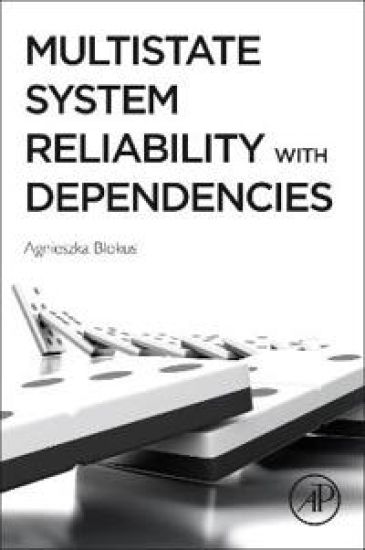
Multistate System Reliability with Dependencies

Multistate System Reliability with Dependencies

Agnieszka Blokus

Academic Press Inc
2020
nidottu
Multistate System Reliability with Dependencies explains how to select a model of load sharing that best describes the impact of changes in reliability states of components. This is mainly achieved via a generalization of two-state system reliability analysis, where equal load sharing and local load sharing rules are commonly used. The material covers basic concepts of traditional reliability theory, including the concept of probability, failures, series and parallel systems, k-out-of-n systems, and more. It features cutting-edge theorems on the reliability analysis of multistate systems that take into account component degradation and dependencies between subsystems and components in subsystems. Other themes addressed include renewable systems and the availability analysis of multistate systems. Combining results of the reliability analysis of multistate systems with dependent components and the results of the classical renewal theory, the availability analysis of multistate systems under the assumption of imperfect renovation is also provided.
Social Psychology of Social Problems

Social Psychology of Social Problems

Agnieszka Golec de Zavala; Aleksandra Cichocka

Red Globe Press
2012
nidottu
Why do we protest? What compels us to participate in crowd violence? Can gender discrimination in the workplace be explained in psychological terms?From terrorist attacks to political uprisings, the social problems that have shaped the beginning of the new millenium can be explained using the theories and application of social psychology. Social Psychology of Social Problems does just that, with top international experts examining real-life issues. The book takes the view that if a problem and its origins can be understood, then perhaps it can be prevented from happening again.Social Psychology of Social Problems is required reading for students and practitioners of psychology, social policy and international relations. Provocative and challenging, it will be an essential resource for those who are seeking a deeper understanding of how social psychology can explain our complex world.
Gender, Pleasure, and Violence

Gender, Pleasure, and Violence

Agnieszka Koscianska

Indiana University Press
2021
sidottu
Behind the Iron Curtain, the politics of sexuality and gender were, in many ways, more progressive than the West. While Polish citizens undoubtedly suffered under the oppressive totalitarianism of socialism, abortion was legal, clear laws protected victims of rape, and it was relatively easy to legally change one's gender. In Gender, Pleasure, and Violence, Agnieszka Koscianska reveals that sexologists—experts such as physicians, therapists, and educators—not only treated patients but also held sex education classes at school, published regular columns in the press, and authored highly popular sex manuals that sold millions of copies. Yet strict gender roles within the home meant that true equality was never fully within reach. Drawing on interviews, participant observation, and archival work, Koscianska shares how professions like sexologists defined the notions of sexual pleasure and sexual violence under these sweeping cultural changes. By tracing the study of sexual human behavior as it was developed and professionalized in Poland since the 1960s, Gender, Pleasure, and Violence explores how the collapse of socialism brought both restrictions in gender rights and new opportunities.
Gender, Pleasure, and Violence

Gender, Pleasure, and Violence

Agnieszka Koscianska

Indiana University Press
2021
pokkari
Behind the Iron Curtain, the politics of sexuality and gender were, in many ways, more progressive than the West. While Polish citizens undoubtedly suffered under the oppressive totalitarianism of socialism, abortion was legal, clear laws protected victims of rape, and it was relatively easy to legally change one's gender. In Gender, Pleasure, and Violence, Agnieszka Koscianska reveals that sexologists—experts such as physicians, therapists, and educators—not only treated patients but also held sex education classes at school, published regular columns in the press, and authored highly popular sex manuals that sold millions of copies. Yet strict gender roles within the home meant that true equality was never fully within reach. Drawing on interviews, participant observation, and archival work, Koscianska shares how professions like sexologists defined the notions of sexual pleasure and sexual violence under these sweeping cultural changes. By tracing the study of sexual human behavior as it was developed and professionalized in Poland since the 1960s, Gender, Pleasure, and Violence explores how the collapse of socialism brought both restrictions in gender rights and new opportunities.
Exposing Violence

Exposing Violence

Agnieszka Jelewska; Michal Krawczak

MIT PRESS LTD
2026
nidottu
How small groups and grassroots collectives can act for justice and leverage contemporary media to document violence. Exposing Violence gathers, for the first time, new tendencies in contemporary media practices that engage in exposing the violence inflicted upon human beings and the environment. It focuses on projects that emerged in the second and third decades of the twenty-first century as forms of socially engaged media activities initiated by independent groups of artists and researchers, interdisciplinary teams emerging at universities, and small laboratory groups. Agnieszka Jelewska and Michal Krawczak propose an original analytical concept, the aesthetics of radical truth (AeRT), as a modus operandi to understand the specific nature of these projects situated at the intersection of art, science, activism, and engaged journalism. Their primary goal is the development of experimental, innovative, and collective forms of recording, revealing, tracing, identifying, and critically analyzing various manifestations of violence. The book outlines the beginning of recent developments within "open justice," including the creation of new digital archives and platforms that gather data on violence, interactive environments that facilitate new understanding through the emotional experience of evidence, and tools produced from the grassroots that allow for the tracking and disclosure of violence. The authors also highlight strategies for resisting violence in a media-dense environment.
State, Labor, and the Transition to a Market Economy

State, Labor, and the Transition to a Market Economy

Agnieszka Paczynska

Pennsylvania State University Press
2012
pokkari
In response to mounting debt crises and macroeconomic instability in the 1980s, many countries in the developing world adopted neoliberal policies promoting the unfettered play of market forces and deregulation of the economy and attempted large-scale structural adjustment, including the privatization of public-sector industries. How much influence did various societal groups have on this transition to a market economy, and what explains the variances in interest-group influence across countries? In this book, Agnieszka Paczynska explores these questions by studying the role of organized labor in the transition process in four countries in different regions—the Czech Republic and Poland in eastern Europe, Egypt in the Middle East, and Mexico in Latin America. In Egypt and Poland, she shows, labor had substantial influence on the process, whereas in the Czech Republic and Mexico it did not. Her explanation highlights the complex relationship between institutional structures and the “critical junctures” provided by economic crises, revealing that the ability of groups like organized labor to wield influence on reform efforts depends to a great extent on not only their current resources (such as financial autonomy and legal prerogatives) but also the historical legacies of their past ties to the state.This new edition features an epilogue that analyzes the role of organized labor uprisings in 2011, the protests in Egypt, the overthrow of Mubarak, and the post-Mubarak regime.