Kirjojen hintavertailu. Mukana 11 342 296 kirjaa ja 12 kauppaa.

Kirjahaku

Etsi kirjoja tekijän nimen, kirjan nimen tai ISBN:n perusteella.

1000 tulosta hakusanalla Ahmed Honeini

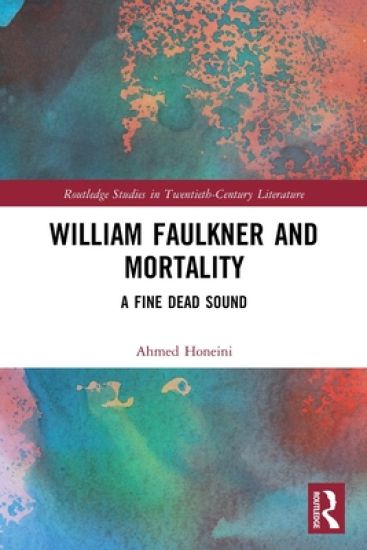
William Faulkner and Mortality

William Faulkner and Mortality

Ahmed Honeini

Routledge
2021
sidottu
William Faulkner and Mortality is the first full-length study of mortality in William Faulkner’s fiction. The book challenges earlier, influential scholarly considerations of death in Faulkner’s work that claimed that writing was his authorial method of ‘saying No to death’. Through close-readings of six key works – The Sound and the Fury, As I Lay Dying, "A Rose for Emily", Light in August, Absalom, Absalom!, and Go Down, Moses – this book examines how Faulkner’s characters confront various experiences of human mortality, including grief, bereavement, mourning, and violence. The trauma and ambivalence caused by these experiences ultimately compel these characters to ‘say Yes to death’. The book makes a clear distinction between Faulkner’s quest for literary immortality through writing and the desire for death exhibited by the principal characters in the works analysed. William Faulkner and Mortality: A Fine Dead Sound offers a new paradigm for reading Faulkner’s oeuvre, and adds an alternative voice to a debate within Faulkner scholarship long thought to have ended.
William Faulkner and Mortality

William Faulkner and Mortality

Ahmed Honeini

TAYLOR FRANCIS LTD
2023
nidottu
William Faulkner and Mortality is the first full-length study of mortality in William Faulkner’s fiction. The book challenges earlier, influential scholarly considerations of death in Faulkner’s work that claimed that writing was his authorial method of ‘saying No to death’. Through close-readings of six key works – The Sound and the Fury, As I Lay Dying, "A Rose for Emily", Light in August, Absalom, Absalom!, and Go Down, Moses – this book examines how Faulkner’s characters confront various experiences of human mortality, including grief, bereavement, mourning, and violence. The trauma and ambivalence caused by these experiences ultimately compel these characters to ‘say Yes to death’. The book makes a clear distinction between Faulkner’s quest for literary immortality through writing and the desire for death exhibited by the principal characters in the works analysed. William Faulkner and Mortality: A Fine Dead Sound offers a new paradigm for reading Faulkner’s oeuvre, and adds an alternative voice to a debate within Faulkner scholarship long thought to have ended.

Tennessee Williams’s America

Tennessee Williams’s America

Ahmed Honeini

TAYLOR FRANCIS LTD
2025
sidottu
Tennessee Williams’s America is the first full-length study of homes, families, and familial exile in the plays of Tennessee Williams. The central argument of this book is that Williams’s vision of American life in his plays is predicated upon challenging the traditional idea of the home and family. Throughout his plays, the patriarchal space of the American home and family is shown to victimize and oppress two of society’s most marginalized groups: women and queer people; in Williams's plays, the experiences of one group often mirror and intersect with those of the other. From his earliest plays, such as Candles to the Sun and Fugitive Kind, to the masterpieces of his major phase, including Battle of Angels/Orpheus Descending, The Rose Tattoo, Cat on a Hot Tin Roof, Period of Adjustment, Suddenly Last Summer, and Sweet Bird of Youth, through to the much maligned but equally rich works of his late period, such as Vieux Carré and Something Cloudy, Something Clear, Williams depicts the home as a place which restricts and suffocates those who fail to perform their expected gender role in the wider patriarchal framework of American life. In its extended, full-length treatment of homes, families, and familial exiles in his theatrical output, this book adds a new perspective to Williams scholarship by examining the desperate and, at times, futile search for love, relationality, and belonging that his marginalized and alienated characters frequently pursue in alternative avenues of existence.
Ahmed Aziz’s Epic Year

Ahmed Aziz’s Epic Year

Nina Hamza

HarperCollins Publishers
2021
sidottu
This hilarious and poignant tween debut—which SLJ heralded as “destined to become a classic” in a starred review—tackles evergreen topics like dealing with bullies, making friends, and the power of good books. A great next read for fans of Merci Suárez Changes Gears and John David Anderson.Ahmed Aziz is having an epic year—epically bad.After his dad gets sick, the family moves from Hawaii to Minnesota for his dad’s treatment. Even though his dad grew up there, Ahmed can’t imagine a worse place to live. He’s one of the only brown kids in his school. And as a proud slacker, Ahmed doesn’t want to deal with expectations from his new teachers.Ahmed surprises himself by actually reading the assigned books for his English class: Holes, Bridge to Terabithia, and From the Mixed-Up Files of Mrs. Basil E. Frankweiler. Shockingly, he doesn’t hate them. Ahmed also starts learning about his uncle, who died before Ahmed was born.Getting bits and pieces of his family’s history might be the one upside of the move, even as his dad’s health hangs in the balance and the school bully refuses to leave him alone. Will Ahmed ever warm to Minnesota?* A Chicago Public Library Kids Best Book of the Year * A BookPage Best Book of the Year * A Bank Street Best Book of the Year * Finalist for the Minnesota Book Award *
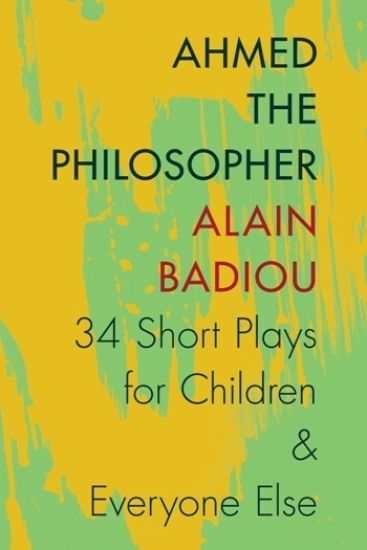
Ahmed the Philosopher

Ahmed the Philosopher

Alain Badiou

Columbia University Press
2014
sidottu
English-speaking readers might be surprised to learn that Alain Badiou writes fiction and plays along with his philosophical works and that they are just as important to understanding his larger intellectual project. In Ahmed the Philosopher, Badiou's most entertaining and accessible play, translated into English here for the first time, readers are introduced to Badiou's philosophy through a theatrical tour de force that has met with much success in France. Ahmed the Philosopher presents its comic hero, the "treacherous servant" Ahmed, as a seductively trenchant philosopher even as it casts philosophy itself as a comic performance. The comedy unfolds as a series of lessons, with each "short play" or sketch illuminating a different Badiousian concept. Yet Ahmed does more than illustrate philosophical abstractions; he embodies and vivifies the theatrical and performative aspects of philosophy, mobilizing a comic energy that exposes the emptiness and pomp of the world. Through his example, the audience is moved to a living engagement with philosophy, discovering in it the power to break through the limits of everyday life.
Ahmed the Philosopher

Ahmed the Philosopher

Alain Badiou

Columbia University Press
2014
pokkari
English-speaking readers might be surprised to learn that Alain Badiou writes fiction and plays along with his philosophical works and that they are just as important to understanding his larger intellectual project. In Ahmed the Philosopher, Badiou's most entertaining and accessible play, translated into English here for the first time, readers are introduced to Badiou's philosophy through a theatrical tour de force that has met with much success in France. Ahmed the Philosopher presents its comic hero, the "treacherous servant" Ahmed, as a seductively trenchant philosopher even as it casts philosophy itself as a comic performance. The comedy unfolds as a series of lessons, with each "short play" or sketch illuminating a different Badiousian concept. Yet Ahmed does more than illustrate philosophical abstractions; he embodies and vivifies the theatrical and performative aspects of philosophy, mobilizing a comic energy that exposes the emptiness and pomp of the world. Through his example, the audience is moved to a living engagement with philosophy, discovering in it the power to break through the limits of everyday life.
Ahmed's Geistesblitze - Dinge, die du nicht verstehen würdest, also - Finger weg! Private: Cooles Notizbuch ca. A5 für alle Männer 108 Seiten mit Punk
Zauberhaftes Notizbuch f r M dchen / ca. A5 liniert / 108 SeitenDieses Notizbuch ist eine tolle, kleine Geschenkidee f r M dchen, ideal f r Notizen und Mitteilungen, die Schule, zur Einschulung oder als Tagebuch.PRODUKT DETAILS: ca. A5 (15,2 x 22,8 cm)Taschenbuch (soft cover)Zauberhaftes Design mit tanzendem M dchengl nzender Umschlag 108 Seiten liniertstarkes creme wei es Papierperfekt f r Notizen, Skizzen, Adressen, Mitteilungen, als Tagebuch, ...Es stehen viele andere Namen zur Verf gung. Gib einfach in die Amazon-Suche "DanceNotes Vorname" ein.
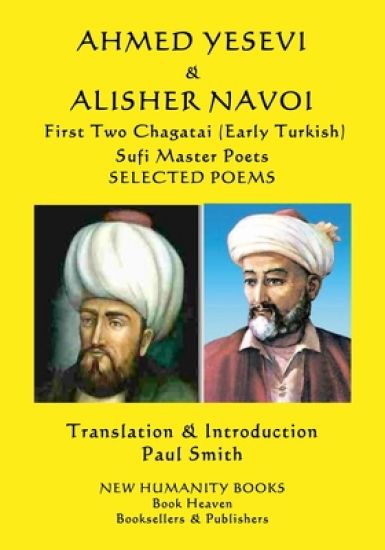
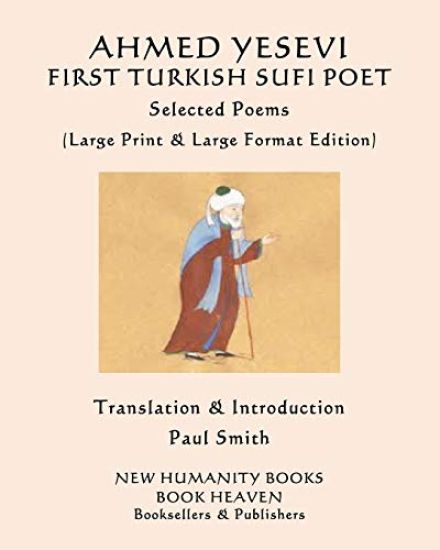
AHMED YESEVI & ALISHER NAVOI First Two Chagatai (Early Turkish) Sufi Master Poets: Selected Poems
AHMED YESEVI & ALISHER NAVOI First Two Chagatai (Early Turkish) Sufi Master Poets SELECTED POEMS Translation & Introduction Paul Smith Ahmed Yesevi, born in Sayram in 1093, and died in 1166 in Hazrat-e Turkestan, (both cities now in Kazakhstan), was a Turkish poet and Sufi or Dervish who exerted a powerful influence on the development of mystical orders throughout the Turkish-speaking world. Yesevi is the earliest known Turkish poet who composed poetry in an early Turkish dialect, Chagatai. He was a pioneer of popular mysticism, founded the first Turkish order, (the Yeseviye), that quickly spread over the Turkish-speaking areas. Yesevi had numerous students/followers in the region. His poems created a new genre of mystical folk poetry in Central Asia and influenced many Sufi/Dervish poets including 'Attar, Rumi, Hafiz (who both knew Turkish) and Yunus Emre. The book of his poems, the Divan-e Hikmet (Book of Wisdom), consists mainly of gazels and murabbas (foursomes), Kosmos (robi'as srung together) and munajat (prayers). All are generously represented in this translation in the correct forms for the first time. Alisher Navoi (1441 - 1501) a truly universal man, was of Uyghur origin who was born and lived in Herat (now north-western Afghanistan) like Jami who he knew. He is generally known by his pen name Navoi ('the weeper'). Alisher Navoi was among the key writers who revolutionized the literary use of the Turkic languages. Navoi himself wrote primarily in the Chagatai language and produced 30 works over a period of 30 years, during which Chagatai became accepted as a prestigious and well-respected literary language. Navoi also wrote in Persian (under the pen name of Fani), and to a much lesser degree in Arabic and Hindi. Navoi's best-known poems are found in his four divans, or poetry collections, which total 50,000 couplets. Each part of the work corresponds to a different period of a person's life. He is still greatly revered throughout the Middle East, Asia & Russia and there are many building etc. named after him. Many of his gazels & robai's are represented in this translation in the correct forms for the first time. Introduction: Turkish & Sufi Poetry & Life & Times & Poetry of both poets, On the Gazel & the Roba'i in Turkish Sufi Poetry, Selected Bibliographies. Large Format Paperback 7" x 10" 415 pages. Illustrated
AHMED YESEVI FIRST TURKISH SUFI POET Selected Poems: (Large Print & Large Format Edition)
AHMED YESEVI FIRST TURKISH SUFI POET Selected Poems (Large Print & Large Format Edition) Translation & Introduction Paul Smith Ahmed Yesevi, born in Sayram in 1093, and died in 1166 in Hazrat-e Turkestan, (both cities now in Kazakhstan), was a Turkish poet and Sufi or Dervish who exerted a powerful influence on the development of mystical orders throughout the Turkish-speaking world. Yesevi is the earliest known Turkish poet who composed poetry in an early Turkish dialect, Chagatai. He was a pioneer of popular mysticism, founded the first Turkish order, (the Yeseviye), that quickly spread over the Turkish-speaking areas. Yesevi had numerous students/followers in the region. His poems created a new genre of mystical folk poetry in Central Asia and influenced many Sufi/Dervish poets including 'Attar, Rumi, Hafiz (who both knew Turkish) and Yunus Emre. The book of his poems, the Divan-e Hikmet (Book of Wisdom), consists mainly of gazels and murabbas (foursomes), Kosmos (robi'as srung together) and munajat (prayers). All are generously represented in this translation in the correct forms for the first time in English. Introduction: On Turkish & Turkish Sufi Poetry & The Life & Times & Poetry of Ahmed Yesevi, On the Gazel in Turkish Sufi Poetry, Selected Bibliography. Large Print (18pt) & Large Format (8" x 10") Edition. 370 pages
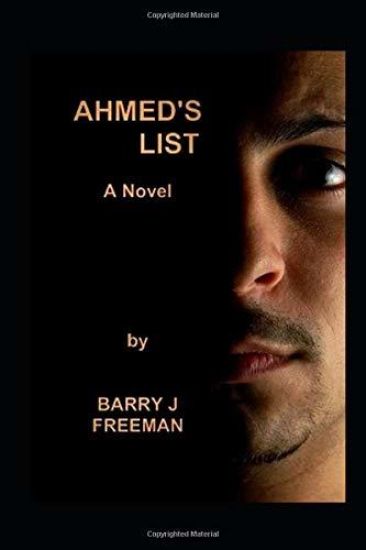
Ahmed's List

Ahmed's List

Barry Jay Freeman

Independently Published
2019
nidottu
Ahmed, born and raised in war-ravaged Yemen, is recruited by Al-Qaeda and sent to the US to attend college and become an Islamic martyr by joining a group planning a deadly terrorist attack on the Naval Training Station at Great Lakes. On the way to fulfilling his oath as a terrorist, he falls in love with Fida, a fellow Yemeni student and member of the terrorist group, and comes into contact with Sarah and Bruce Benson, lawyers who provide him with free legal service, and their close Israeli friends, Leah and Ari Stern (a member of Israeli Intelligence). The book describes the colorful story of Ahmed's and Fida's experiences leading up to and through the exciting conclusion of the terrorist attack on the naval base..
Ahmed's Journey from Screen Time to Reading Time
A children's book series that follows Ahmed, a Muslim boy who discovers the joys of reading and coloring instead of spending too much time watching TV. He seeks inspiration and guidance from God to create his own coloring books for children with themes like Ramadhan, Islamic Art and Architecture. Ahmed shares his own amazing coloring patterns in this book (from page 10 and forward) to inspire and encourage children to explore their own creativity and stay away from screens
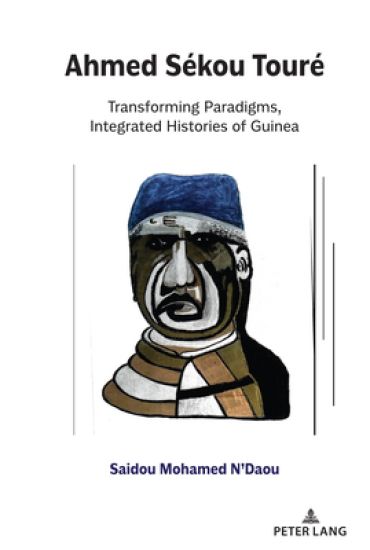
Ahmed Sékou Touré

Ahmed Sékou Touré

Saidou Mohamed N’Daou

Peter Lang Publishing Inc
2021
sidottu
This book is different from existing works on Ahmed Sékou Touré and the Guinean Democratic Party (PDG) and their struggle for national independence. Its uniqueness stems from the fact that all the chapters focus on the Guinean traditions of struggle over memories between the elites and the subordinates, highlighting the independent initiatives of the latter. Other books on Ahmed Sékou Touré are primarily based on their writers’ political or social history perspectives. This is the first study that equally integrates political and social history to address the theoretical and methodological issues of identity and construction of identity as necessary for understanding the roles of the elites and the subordinates in their struggles for access to power and resources in colonial and postcolonial Guinea. In this book, Saidou Mohamed N’Daou provides equal space for the initiatives and interests of the elites and the subordinates. Ahmed Sékou Touré used the ideology of the PDG as a mirror reflection of the social changes that he and his party intended to create. N’Daou argues that one must displace the ideology of the PDG from the center to understand Ahmed Sékou Touré's personality, his role in Guinea’s independence and his leadership of the PDG as well as expand the analytical space to allow other voices to be heard. N’Daou reaches this goal by discovering Ahmed Sékou Touré’s first order of knowledge, another unique feature of this book.
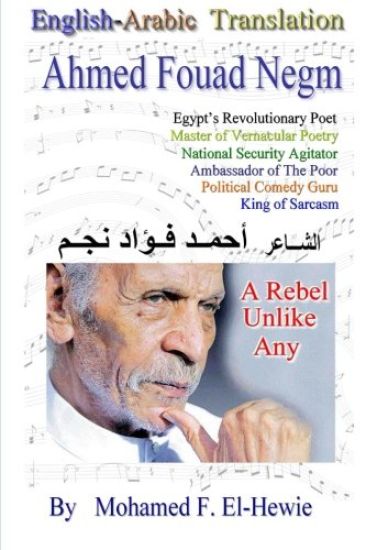
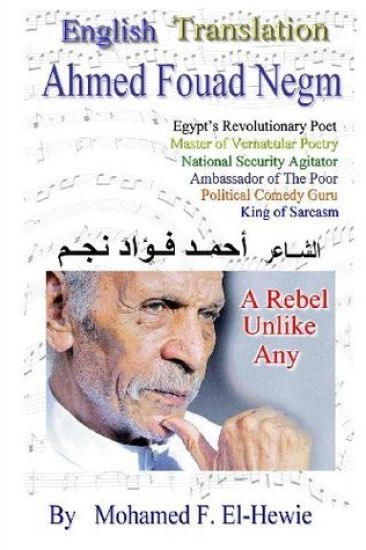
Ahmed Fouad Negm Egypt's Revolutionary Poet. English -Translated Poetry

Ahmed Fouad Negm Egypt's Revolutionary Poet. English -Translated Poetry

Mohamed F. El-Hewie

Createspace Independent Publishing Platform
2013
nidottu
This edition comprises the English-Arabic translation and analysis of the poetry of Ahmed Fouad Negm. The work of poet Ahmed Fouad Negm has sparked flashes from my past, as all his sceneries, vernacular, and intimate connection to the poorest peasants of Egypt revived my dormant memories as never before. Negm's brilliant and acute artistic senses enabled him to spare great traditional rituals from the sprawl of urbanization and global invasion of foreign cultures, throughout all corners of the universe. His unwavering expression of ideas, over many decades ahead of his own generation, has concluded mostly in realistic prophecies. That made the profane and rejected poet a true prophet of his era. The myth of how a poor orphaned city dweller could have expanded his knowledge, where many affluent figures of society failed to attain, invoked my deepest curiosity. The poem "Ward", or "Al Anbarra" in Arabic, is an emotional depiction of the salute of release of an imprisoned person by the prison guards. This is a traditional Opera-styled salute executed by all prison guards when a release order arrives "Al-Anbara" Waaaaaaaaaaard .. All hear me I Shook the dice.. Never aided me even once Gambled with dowry and tipping.. Over One Imprisonment for the free... Even was bitter Not once ..Reminded me with repentance of that turn Not once The first to the Prophet .. The second to Ayoub .. Third my solitude.. And the Fourth the fate of And the fifth..That bullied Must end up defeated The first, O Prophet liberator of man, the balsam for the afflicted and rescue of the oppressed Honored the class of men over all animals And raised the sword of guidance higher against tyranny And shouted O my people .. At all times Injustice if ever rules .. And right if ever demeaned Deprives you of rain and harvest and civilization Seas turn thirsty - In man and plants Snakes run loose.. Vultures fill skies Ruin falls on the mountain and the valley and the plains Light parts skies.. Moon's face disappear Sight lost in blindness and darkness and grief And fear topples humans by the cruelty of the jailer People fear each other ..Scare Sultan The Second, I said, Ayoub and I are two examples Ayoub when afflicted...Ayoub persevered two days Stories about Ayoub gave him two names Considered amongst prophets and illuminators together And my patience here ..in the asylum is two My patience for snatching me ..from knowledge and love My patience on ..the rule of the age The bully among us rules ..and the bully's rule shame Rule of animals over men ..rule of two horns I swear by the grave of prophet ..Mohamed with his straight eyes One day, will be erected..two scales not one I look with satisfaction for ..justice in the two scales And the Third, my solitude ..in the world of bullies The bully is protected.. the free is afflicted The jerk when empowered ..hired few drummers Hustlers, imposters, thieves, and muggers Those who love the prophet ..give another applause Dancing spread in the country right and left Flesh exposed.. Rose above words Sounds of tunes unheard..Lyrics of poetry unnoticed Strangulated words of sons..Tunes of bracelets One for the one God Two for the seriousness of Hussein Three for the misery of envy Four for the printing ink Five for my living will Six for coming tomorrow Seven for my broken heart Eight for the wanting of fellows Nine for the world at large Ten for the traitor insect I inform all of you that the prison is a fence .. I inform all of you that the thought is a light I inform all of you that the prison is senile I inform all of you that its door is fragile I inform all of you that the revolution is a thought I inform all of you that it will become a memorial I promise all of you that the gathering is tomorrow And the light within us and you.. Friends.