

Kirjahaku
Etsi kirjoja tekijän nimen, kirjan nimen tai ISBN:n perusteella.
1000 tulosta hakusanalla Al Mathison

The United States of America Et Al., Appellants, V. the Alton Railroad Company Et Al. U.S. Supreme Court Transcript of Record with Supporting Pleadings
Carney D Matheson
Gale, U.S. Supreme Court Records
2011
pokkari

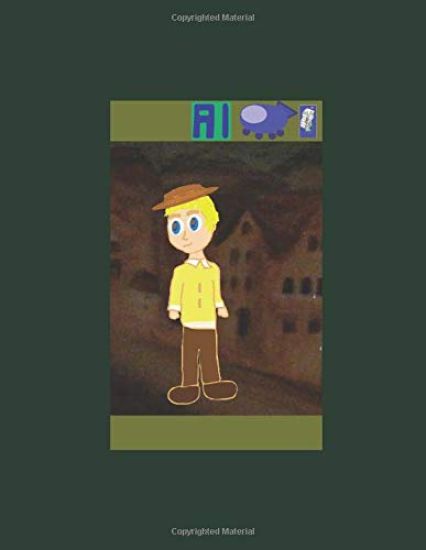
Al has found a magic violin that he will use to play a concert at his town's picnic. But what happens when the violin opens up a new world?

This is a cryptic allusion to the author's first name, Al. There turn out to be many Al's and many Alice's with stepchildren Allen and Alan as well as Al Jr.Al takes on his personal take of the Twelve Steps and Twelve Traditions as well as the Ten Commandments and the Boy Scout Code.His view is somewhat cryptic and somewhat aligned. Finally, he convinces himself he has alien charm and takes off on a galloping journey of marriage, politicking, death, and posterity.The book ends with a humorous tag on one of our nation's many health kicks, 'drink plenty of water.'

This is a cryptic allusion to the author's first name, Al. There turn out to be many Al's and many Alice's with stepchildren Allen and Alan as well as Al Jr.Al takes on his personal take of the Twelve Steps and Twelve Traditions as well as the Ten Commandments and the Boy Scout Code.His view is somewhat cryptic and somewhat aligned. Finally, he convinces himself he has alien charm and takes off on a galloping journey of marriage, politicking, death, and posterity.The book ends with a humorous tag on one of our nation's many health kicks, 'drink plenty of water.'


Ål er et lesehefte med egne oppgaver.Leseheftet er godt egnet til veiledet lesing. Det er trinnuavhengig og kan brukes ut fra elevens nivå.Temaet i heftet har tilknytning til tema i Salto Elevbok, men kan fint brukes som et frittstående lesehefte.

Ål er et lesehefte med egne oppgaver.Leseheftet er godt egnet til veiledet lesing. Det er trinnuavhengig og kan brukes ut fra elevens nivå.Temaet i heftet har tilknytning til tema i Salto Elevbok, men kan fint brukes som et frittstående lesehefte.
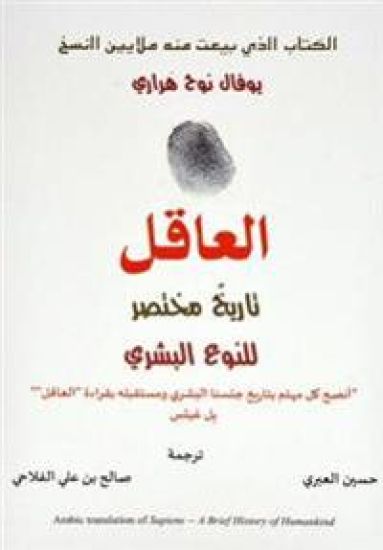
Arabic translation of Sapiens: A Brief History of Humankind is a book by Professor Yuval Noah Harari first published in Hebrew in Israel in 2011, and in English in 2014. Harari cites Jared Diamond's Guns, Germs, and Steel (1997) as one of the greatest inspirations for the book by showing that it was possible to "ask very big questions and answer them scientifically".

Al Roker's Extreme Weather: Tornadoes, Typhoons, and Other Weather Phenomena
Al Roker
Harpercollins
2017
sidottu
New York Times bestselling author, award-winning meteorologist, and Today Show co-anchor Al Roker explores extreme weather phenomena in his first book for kids. This middle grade book is an excellent choice for tween readers in grades 5 to 6, especially during homeschooling. It's a fun way to keep your child entertained and engaged while not in the classroom. Dive deep into a world of fascinating weather with everyone's favorite meteorologist, Al Roker With this mesmerizing book that covers a wide range of topics, readers will learn about the conditions that generate unique weather occurrences like red sprites, thundersnow, and fogsicles.Surprising facts, colorful spreads, and captivating pictures will hook children and adults alike as they uncover the mysteries of extreme weather--some they never even knew existed

A twelve-year-old boy named Moose moves to Alcatraz Island in 1935 when guards' families were housed there, and has to contend with his extraordinary new environment in addition to life with his autistic sister Natalie. A Newbery Honor Book & ALA Notable Book. Reprint. Jr Lib Guild & Children's BOMC.

What do you do when your neighbors are a bunch of hit men, con men, and mad dog murderers? Well, if you're Moose Flanagan, you ask the most notorious convict of them all, Al Capone, for help. But when that convict comes through for you and then asks you for a favor in return suddenly it's a whole different ball game. Picking up where the Newbery Honor winning Al Capone Does My Shirts left off, this lively second romp featuring Moose, his friends, and some of Alcatraz's "finest" is just as satisfying as the first.

Alcatraz Island in the 1930s isn't the most normal place to grow up, but it's home for Moose Flanagan, his autistic sister, Natalie, and all the families of the guards. When Moose's dad gets promoted to Associate Warden, despite being an unlikely candidate, it's a big deal. But the cons have a point system for targeting prison employees, and his dad is now in serious danger. After a fire starts in the Flanagan's apartment, Natalie is blamed, and Moose bands with the other kids to track down the possible arsonist. Then Moose gets a cryptic note from the notorious Al Capone himself. Is Capone trying to protect Moose's dad too? If Moose can't figure out what Capone's note means, it may be too late. The last heart-pounding installment in the New York Times bestselling, Newbery Honor-winning Alcatraz trilogy is not to be missed "Superlative historical fiction." -- School Library Journal (starred review for Al Capone Shines My Shoes)

Al Qaeda, the Islamic State, and the Global Jihadist Movement
Daniel Byman
Oxford University Press Inc
2015
sidottu
On the morning of September 11, 2001, the entire world was introduced to Al Qaeda and its enigmatic leader, Osama bin Laden. But the organization that changed the face of terrorism forever and unleashed a whirlwind of counterterrorism activity and two major wars had been on the scene long before that eventful morning. In Al Qaeda, the Islamic State, and the Global Jihadist Movement: What Everyone Needs to Know, Daniel L. Byman, an eminent scholar of Middle East terrorism and international security who served on the 9/11 Commission, provides a sharp and concise overview of Al Qaeda, from its humble origins in the mountains of Afghanistan to the present, explaining its perseverance and adaptation since 9/11 and the limits of U.S. and allied counterterrorism efforts. The organization that would come to be known as Al Qaeda traces its roots to the anti-Soviet jihad in Afghanistan in the 1980s. Founded as the Soviets withdrew from Afghanistan, Al Qaeda achieved a degree of international notoriety with a series of spectacular attacks in the 1990s; however, it was the dramatic assaults on the World Trade Center and the Pentagon on 9/11 that truly launched Al Qaeda onto the global stage. The attacks endowed the organization with world-historical importance and provoked an overwhelming counterattack by the United States and other western countries. Within a year of 9/11, the core of Al Qaeda had been chased out of Afghanistan and into a variety of refuges across the Muslim world. Splinter groups and franchised offshoots were active in the 2000s in countries like Pakistan, Iraq, and Yemen, but by early 2011, after more than a decade of relentless counterterrorism efforts by the United States and other Western military and intelligence services, most felt that Al Qaeda's moment had passed. With the death of Osama bin Laden in May of that year, many predicted that Al Qaeda was in its death throes. Shockingly, Al Qaeda has staged a remarkable comeback in the last few years. In almost every conflict in the Muslim world, from portions of the Xanjing region in northwest China to the African subcontinent, Al Qaeda franchises or like-minded groups have played a role. Al Qaeda's extreme Salafist ideology continues to appeal to radicalized Sunni Muslims throughout the world, and it has successfully altered its organizational structure so that it can both weather America's enduring full-spectrum assault and tailor its message to specific audiences. Authoritative and highly readable, Byman's account offers readers insightful and penetrating answers to the fundamental questions about Al Qaeda: who they are, where they came from, where they're going-and, perhaps most critically-what we can do about it.
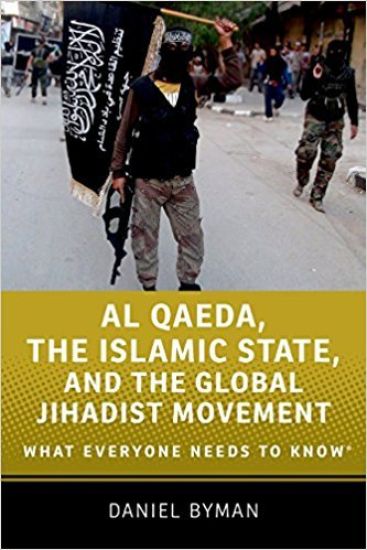
Al Qaeda, the Islamic State, and the Global Jihadist Movement
Daniel Byman
Oxford University Press Inc
2015
nidottu
On the morning of September 11, 2001, the entire world was introduced to Al Qaeda and its enigmatic leader, Osama bin Laden. But the organization that changed the face of terrorism forever and unleashed a whirlwind of counterterrorism activity and two major wars had been on the scene long before that eventful morning. In Al Qaeda, the Islamic State, and the Global Jihadist Movement: What Everyone Needs to Know, Daniel L. Byman, an eminent scholar of Middle East terrorism and international security who served on the 9/11 Commission, provides a sharp and concise overview of Al Qaeda, from its humble origins in the mountains of Afghanistan to the present, explaining its perseverance and adaptation since 9/11 and the limits of U.S. and allied counterterrorism efforts. The organization that would come to be known as Al Qaeda traces its roots to the anti-Soviet jihad in Afghanistan in the 1980s. Founded as the Soviets withdrew from Afghanistan, Al Qaeda achieved a degree of international notoriety with a series of spectacular attacks in the 1990s; however, it was the dramatic assaults on the World Trade Center and the Pentagon on 9/11 that truly launched Al Qaeda onto the global stage. The attacks endowed the organization with world-historical importance and provoked an overwhelming counterattack by the United States and other western countries. Within a year of 9/11, the core of Al Qaeda had been chased out of Afghanistan and into a variety of refuges across the Muslim world. Splinter groups and franchised offshoots were active in the 2000s in countries like Pakistan, Iraq, and Yemen, but by early 2011, after more than a decade of relentless counterterrorism efforts by the United States and other Western military and intelligence services, most felt that Al Qaeda's moment had passed. With the death of Osama bin Laden in May of that year, many predicted that Al Qaeda was in its death throes. Shockingly, Al Qaeda has staged a remarkable comeback in the last few years. In almost every conflict in the Muslim world, from portions of the Xanjing region in northwest China to the African subcontinent, Al Qaeda franchises or like-minded groups have played a role. Al Qaeda's extreme Salafist ideology continues to appeal to radicalized Sunni Muslims throughout the world, and it has successfully altered its organizational structure so that it can both weather America's enduring full-spectrum assault and tailor its message to specific audiences. Authoritative and highly readable, Byman's account offers readers insightful and penetrating answers to the fundamental questions about Al Qaeda: who they are, where they came from, where they're going-and, perhaps most critically-what we can do about it.

Al-Shabaab in Somalia: The History and Ideology of a Militant Islamist Group
Stig Jarle Hansen
Oxford University Press
2016
nidottu
Since early 2007 a new breed of combatants has appeared on the streets of Mogadishu and other towns in Somalia: the 'Shabaab', or youth, the only self-proclaimed branch of al-Qaeda to have gained acceptance (and praise) from Ayman al-Zawahiri and 'AQ centre' in Afghanistan. Itself an offshoot of the Islamic Courts Union, which split in 2006, Shabaab has imposed Sharia law and is also heavily influenced by local clan structures within Somalia itself. It remains an infamous and widely discussed, yet little-researched and understood, Islamist group. Hansen's remarkable book attempts to go beyond the media headlines and simplistic analyses based on alarmist or localist narratives and, by employing intensive field research conducted within Somalia, as well as on the ground interviews with Shabaab leaders themselves, explores the history of a remarkable organisation, one that has survived predictions of its collapse on several occasions. Hansen portrays al-Shabaab as a hybrid Islamist organization that combines a strong streak of Somali nationalism with the rhetorical obligations of international jihadism, thereby attracting a not insignificant number of foreign fighters to its ranks. Both these strands of Shabaab have been inadvertently boosted by Ethiopian, American and African Union attempts to defeat it militarily, all of which have come to nought.

On 16 June 2011, three days before his sixtieth birthday, Ayman al-Zawahiri was declared the new leader of Al- Qaeda, replacing the fallen Osama bin Laden. The veteran Egyptian jihadist had little of his predecessor's charisma and enjoyed much less popularity, respect and celebrity. Yet, as scores of jihadi commanders from different organisations have succumbed to their enemies' missiles, bombs and bullets, Zawahiri has soldiered on. His tenure as Al-Qaeda's leader has been marked by some of its darkest and most challenging moments, which have threatened the viability and future of Al-Qaeda's central leadership. The gravest such development has been the emergence of Islamic State as a separate and rival jihadist entity. The best way to gauge Zawahiri's response to these threats is by studying the official statements and public communiqu s that he has issued since taking the reins. This book provides the reader with professional translations of Zawahiri's key statements during his first five years as leader of Al-Qaeda. These official communications are introduced and contextualised to provide the reader with a comprehensive sourcebook, outlining the Al-Qaeda leadership's stance on the challenges to its existence since the death of bin Laden.

Al hanisim (For the miracles)
Oxford University Press
2004
muu
for SSAATTBB unaccompanied This prayer briefly recounts the miraculous story of Chanukah as told in the first book of Maccabeus. It combines traditional Jewish melodic cantillation modes with more modern harmonies and compositional techniques.

The first book in the Great Medieval Thinkers series to focus on an Islamic philosopher. It offers a brief, accessible introduction to the thought of the philosopher al -Kindi (died roughly 870 AD). His works, though brief, are of great historical importance. Al-Kindi was the first philosopher of the Islamic world. Peter Adamson will survey what is known of al-Kindi's life, examine his thought on a wide range of topics, and consider the relationship of al-Kindi's work to his Greek sources.