Kirjojen hintavertailu. Mukana 11 239 951 kirjaa ja 12 kauppaa.

Kirjahaku

Etsi kirjoja tekijän nimen, kirjan nimen tai ISBN:n perusteella.

1000 tulosta hakusanalla Al Olinde MD

Wheeling Into Manhood

Wheeling Into Manhood

Al Olinde MD

Createspace Independent Publishing Platform
2015
nidottu
"Wheeling Into Manhood" is a collection of short stories exploring my love affair with wheels bicycles, cars, trains, etc] as an adolescent. All of these stories are true stories except for "Betsy". Most of them are humorous except for a few that quickly matured me into manhood. I hope these stories bring back nostalgic memories of your coming of age.
Barriere legate al linguaggio e interazioni insegnante-bambino nella scuola dell'infanzia
Gli insegnanti della scuola dell'infanzia devono affrontare diverse sfide quando istruiscono i bambini. Ci dovuto alle differenze tra la lingua d'insegnamento utilizzata dall'insegnante e quella parlata dai bambini. La politica linguistica in materia di istruzione richiede che i bambini in et prescolare vengano istruiti nella loro lingua madre. Si tratta di una sfida, soprattutto quando la lingua dell'insegnante e quella dei bambini in et prescolare sono diverse. Precedenti studi di ricerca, sia a livello globale che locale, si sono concentrati principalmente sull'importanza dell'uso della lingua madre come lingua di insegnamento nella scuola dell'infanzia, ma non hanno identificato le sfide affrontate dagli insegnanti della scuola dell'infanzia nell'istruire bambini provenienti da contesti linguistici diversi. Questo studio ha cercato di identificare le barriere linguistiche nell'interazione insegnante-bambino nelle scuole dell'infanzia. Gli obiettivi di questo studio erano: stabilire la diversit linguistica tra i bambini che entrano nella scuola dell'infanzia, scoprire le barriere linguistiche affrontate dagli insegnanti che insegnano a bambini che non parlano e non comprendono la lingua con cui l'allievo ha familiarit e scoprire le barriere linguistiche sperimentate dai bambini della scuola dell'infanzia che non parlano o non comprendono la lingua d'insegnamento.
Al

Al

K E C

Independently Published
2019
pokkari
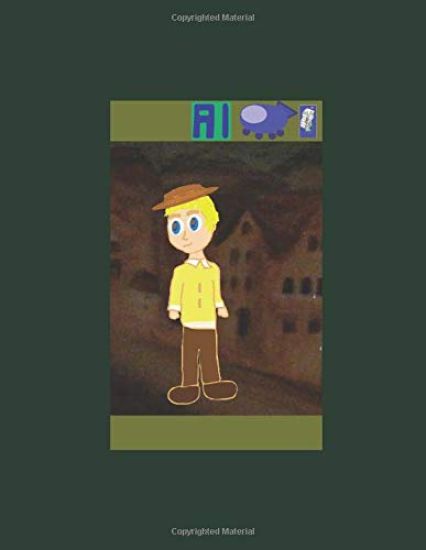
Al has found a magic violin that he will use to play a concert at his town's picnic. But what happens when the violin opens up a new world?
Al

Al

Al Lucas

Lime Press LLC
2020
pokkari
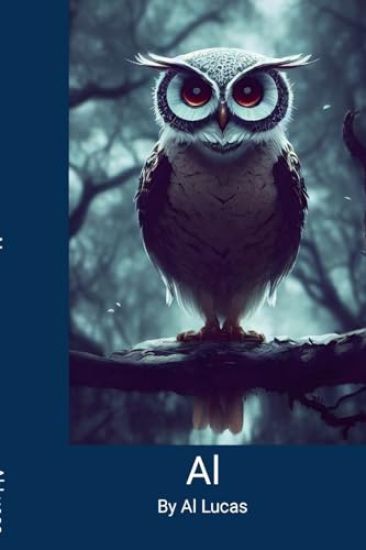
This is a cryptic allusion to the author's first name, Al. There turn out to be many Al's and many Alice's with stepchildren Allen and Alan as well as Al Jr.Al takes on his personal take of the Twelve Steps and Twelve Traditions as well as the Ten Commandments and the Boy Scout Code.His view is somewhat cryptic and somewhat aligned. Finally, he convinces himself he has alien charm and takes off on a galloping journey of marriage, politicking, death, and posterity.The book ends with a humorous tag on one of our nation's many health kicks, 'drink plenty of water.'
Al

Al

Al Lucas

Lime Press LLC
2021
sidottu
This is a cryptic allusion to the author's first name, Al. There turn out to be many Al's and many Alice's with stepchildren Allen and Alan as well as Al Jr.Al takes on his personal take of the Twelve Steps and Twelve Traditions as well as the Ten Commandments and the Boy Scout Code.His view is somewhat cryptic and somewhat aligned. Finally, he convinces himself he has alien charm and takes off on a galloping journey of marriage, politicking, death, and posterity.The book ends with a humorous tag on one of our nation's many health kicks, 'drink plenty of water.'
Ål

Ål

Synnøve Borge

Gyldendal
2016
nidottu
Ål er et lesehefte med egne oppgaver.Leseheftet er godt egnet til veiledet lesing. Det er trinnuavhengig og kan brukes ut fra elevens nivå.Temaet i heftet har tilknytning til tema i Salto Elevbok, men kan fint brukes som et frittstående lesehefte.
Ål

Ål

Synnøve Borge

Gyldendal
2016
nidottu
Ål er et lesehefte med egne oppgaver.Leseheftet er godt egnet til veiledet lesing. Det er trinnuavhengig og kan brukes ut fra elevens nivå.Temaet i heftet har tilknytning til tema i Salto Elevbok, men kan fint brukes som et frittstående lesehefte.
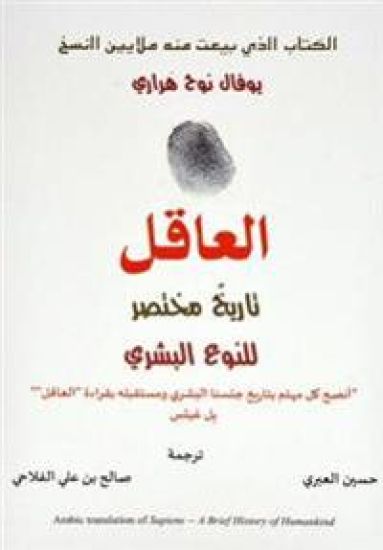
Al-'Aqil tarikh mukhta?ar lilnaw' al-bashari
Arabic translation of Sapiens: A Brief History of Humankind is a book by Professor Yuval Noah Harari first published in Hebrew in Israel in 2011, and in English in 2014. Harari cites Jared Diamond's Guns, Germs, and Steel (1997) as one of the greatest inspirations for the book by showing that it was possible to "ask very big questions and answer them scientifically".
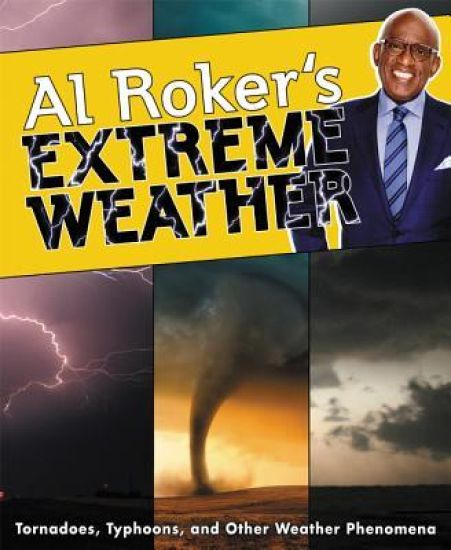
Al Roker's Extreme Weather: Tornadoes, Typhoons, and Other Weather Phenomena
New York Times bestselling author, award-winning meteorologist, and Today Show co-anchor Al Roker explores extreme weather phenomena in his first book for kids. This middle grade book is an excellent choice for tween readers in grades 5 to 6, especially during homeschooling. It's a fun way to keep your child entertained and engaged while not in the classroom. Dive deep into a world of fascinating weather with everyone's favorite meteorologist, Al Roker With this mesmerizing book that covers a wide range of topics, readers will learn about the conditions that generate unique weather occurrences like red sprites, thundersnow, and fogsicles.Surprising facts, colorful spreads, and captivating pictures will hook children and adults alike as they uncover the mysteries of extreme weather--some they never even knew existed
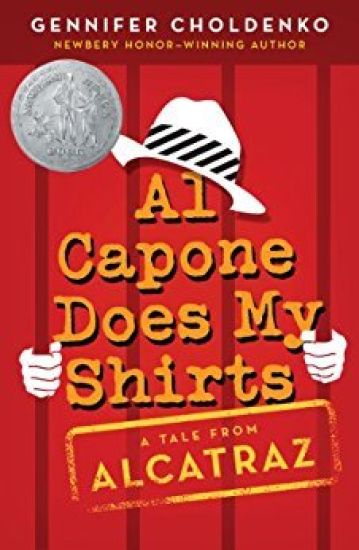
Al Capone Does My Shirts

Al Capone Does My Shirts

Gennifer Choldenko

Penguin Young Readers Group
2006
nidottu
A twelve-year-old boy named Moose moves to Alcatraz Island in 1935 when guards' families were housed there, and has to contend with his extraordinary new environment in addition to life with his autistic sister Natalie. A Newbery Honor Book & ALA Notable Book. Reprint. Jr Lib Guild & Children's BOMC.
Al Capone Shines My Shoes

Al Capone Shines My Shoes

Gennifer Choldenko

Puffin Books
2011
nidottu
What do you do when your neighbors are a bunch of hit men, con men, and mad dog murderers? Well, if you're Moose Flanagan, you ask the most notorious convict of them all, Al Capone, for help. But when that convict comes through for you and then asks you for a favor in return suddenly it's a whole different ball game. Picking up where the Newbery Honor winning Al Capone Does My Shirts left off, this lively second romp featuring Moose, his friends, and some of Alcatraz's "finest" is just as satisfying as the first.
Al Capone Does My Homework

Al Capone Does My Homework

Gennifer Choldenko

Penguin Young Readers Group
2014
nidottu
Alcatraz Island in the 1930s isn't the most normal place to grow up, but it's home for Moose Flanagan, his autistic sister, Natalie, and all the families of the guards. When Moose's dad gets promoted to Associate Warden, despite being an unlikely candidate, it's a big deal. But the cons have a point system for targeting prison employees, and his dad is now in serious danger. After a fire starts in the Flanagan's apartment, Natalie is blamed, and Moose bands with the other kids to track down the possible arsonist. Then Moose gets a cryptic note from the notorious Al Capone himself. Is Capone trying to protect Moose's dad too? If Moose can't figure out what Capone's note means, it may be too late. The last heart-pounding installment in the New York Times bestselling, Newbery Honor-winning Alcatraz trilogy is not to be missed "Superlative historical fiction." -- School Library Journal (starred review for Al Capone Shines My Shoes)
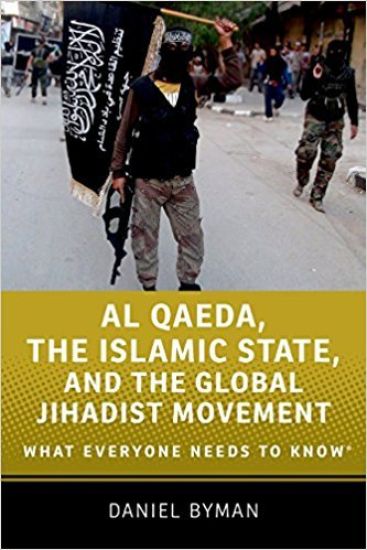
Al Qaeda, the Islamic State, and the Global Jihadist Movement
On the morning of September 11, 2001, the entire world was introduced to Al Qaeda and its enigmatic leader, Osama bin Laden. But the organization that changed the face of terrorism forever and unleashed a whirlwind of counterterrorism activity and two major wars had been on the scene long before that eventful morning. In Al Qaeda, the Islamic State, and the Global Jihadist Movement: What Everyone Needs to Know, Daniel L. Byman, an eminent scholar of Middle East terrorism and international security who served on the 9/11 Commission, provides a sharp and concise overview of Al Qaeda, from its humble origins in the mountains of Afghanistan to the present, explaining its perseverance and adaptation since 9/11 and the limits of U.S. and allied counterterrorism efforts. The organization that would come to be known as Al Qaeda traces its roots to the anti-Soviet jihad in Afghanistan in the 1980s. Founded as the Soviets withdrew from Afghanistan, Al Qaeda achieved a degree of international notoriety with a series of spectacular attacks in the 1990s; however, it was the dramatic assaults on the World Trade Center and the Pentagon on 9/11 that truly launched Al Qaeda onto the global stage. The attacks endowed the organization with world-historical importance and provoked an overwhelming counterattack by the United States and other western countries. Within a year of 9/11, the core of Al Qaeda had been chased out of Afghanistan and into a variety of refuges across the Muslim world. Splinter groups and franchised offshoots were active in the 2000s in countries like Pakistan, Iraq, and Yemen, but by early 2011, after more than a decade of relentless counterterrorism efforts by the United States and other Western military and intelligence services, most felt that Al Qaeda's moment had passed. With the death of Osama bin Laden in May of that year, many predicted that Al Qaeda was in its death throes. Shockingly, Al Qaeda has staged a remarkable comeback in the last few years. In almost every conflict in the Muslim world, from portions of the Xanjing region in northwest China to the African subcontinent, Al Qaeda franchises or like-minded groups have played a role. Al Qaeda's extreme Salafist ideology continues to appeal to radicalized Sunni Muslims throughout the world, and it has successfully altered its organizational structure so that it can both weather America's enduring full-spectrum assault and tailor its message to specific audiences. Authoritative and highly readable, Byman's account offers readers insightful and penetrating answers to the fundamental questions about Al Qaeda: who they are, where they came from, where they're going-and, perhaps most critically-what we can do about it.
Al Qaeda, the Islamic State, and the Global Jihadist Movement
On the morning of September 11, 2001, the entire world was introduced to Al Qaeda and its enigmatic leader, Osama bin Laden. But the organization that changed the face of terrorism forever and unleashed a whirlwind of counterterrorism activity and two major wars had been on the scene long before that eventful morning. In Al Qaeda, the Islamic State, and the Global Jihadist Movement: What Everyone Needs to Know, Daniel L. Byman, an eminent scholar of Middle East terrorism and international security who served on the 9/11 Commission, provides a sharp and concise overview of Al Qaeda, from its humble origins in the mountains of Afghanistan to the present, explaining its perseverance and adaptation since 9/11 and the limits of U.S. and allied counterterrorism efforts. The organization that would come to be known as Al Qaeda traces its roots to the anti-Soviet jihad in Afghanistan in the 1980s. Founded as the Soviets withdrew from Afghanistan, Al Qaeda achieved a degree of international notoriety with a series of spectacular attacks in the 1990s; however, it was the dramatic assaults on the World Trade Center and the Pentagon on 9/11 that truly launched Al Qaeda onto the global stage. The attacks endowed the organization with world-historical importance and provoked an overwhelming counterattack by the United States and other western countries. Within a year of 9/11, the core of Al Qaeda had been chased out of Afghanistan and into a variety of refuges across the Muslim world. Splinter groups and franchised offshoots were active in the 2000s in countries like Pakistan, Iraq, and Yemen, but by early 2011, after more than a decade of relentless counterterrorism efforts by the United States and other Western military and intelligence services, most felt that Al Qaeda's moment had passed. With the death of Osama bin Laden in May of that year, many predicted that Al Qaeda was in its death throes. Shockingly, Al Qaeda has staged a remarkable comeback in the last few years. In almost every conflict in the Muslim world, from portions of the Xanjing region in northwest China to the African subcontinent, Al Qaeda franchises or like-minded groups have played a role. Al Qaeda's extreme Salafist ideology continues to appeal to radicalized Sunni Muslims throughout the world, and it has successfully altered its organizational structure so that it can both weather America's enduring full-spectrum assault and tailor its message to specific audiences. Authoritative and highly readable, Byman's account offers readers insightful and penetrating answers to the fundamental questions about Al Qaeda: who they are, where they came from, where they're going-and, perhaps most critically-what we can do about it.