Kirjojen hintavertailu. Mukana 11 213 693 kirjaa ja 12 kauppaa.

Kirjahaku

Etsi kirjoja tekijän nimen, kirjan nimen tai ISBN:n perusteella.

1000 tulosta hakusanalla Alan D. Rendall

Partial Differential Equations in General Relativity

Partial Differential Equations in General Relativity

Alan D. Rendall

Oxford University Press
2008
sidottu
A graduate level text on a subject which brings together several areas of mathematics and physics: partial differential equations, differential geometry and general relativity. It explains the basics of the theory of partial differential equations in a form accessible to physicists and the basics of general relativity in a form accessible to mathematicians. In recent years the theory of partial differential equations has come to play an ever more important role in research on general relativity. This is partly due to the growth of the field of numerical relativity, stimulated in turn by work on gravitational wave detection, but also due to an increased interest in general relativity among pure mathematicians working in the areas of partial differential equations and Riemannian geometry, who have realized the exceptional richness of the interactions between geometry and analysis which arise. This book provides the background for those wishing to learn about these topics. It treats key themes in general relativity including matter models and symmetry classes and gives an introduction to relevant aspects of the most important classes of partial differential equations, including ordinary differential equations, and material on functional analysis. These elements are brought together to discuss a variety of important examples in the field of mathematical relativity, including asymptotically flat spacetimes, which are used to describe isolated systems, and spatially compact spacetimes, which are of importance in cosmology.
Partial Differential Equations in General Relativity

Partial Differential Equations in General Relativity

Alan D. Rendall

Oxford University Press
2008
nidottu
A graduate level text on a subject which brings together several areas of mathematics and physics: partial differential equations, differential geometry and general relativity. It explains the basics of the theory of partial differential equations in a form accessible to physicists and the basics of general relativity in a form accessible to mathematicians. In recent years the theory of partial differential equations has come to play an ever more important role in research on general relativity. This is partly due to the growth of the field of numerical relativity, stimulated in turn by work on gravitational wave detection, but also due to an increased interest in general relativity among pure mathematicians working in the areas of partial differential equations and Riemannian geometry, who have realized the exceptional richness of the interactions between geometry and analysis which arise. This book provides the background for those wishing to learn about these topics. It treats key themes in general relativity including matter models and symmetry classes and gives an introduction to relevant aspects of the most important classes of partial differential equations, including ordinary differential equations, and material on functional analysis. These elements are brought together to discuss a variety of important examples in the field of mathematical relativity, including asymptotically flat spacetimes, which are used to describe isolated systems, and spatially compact spacetimes, which are of importance in cosmology.

An Analysis of Alan D. Baddeley and Graham Hitch's Working Memory

An Analysis of Alan D. Baddeley and Graham Hitch's Working Memory

Birgit Koopmann-Holm; Alexander O'Connor

Macat International Limited
2017
nidottu
The work of memory researchers Alan Baddeley and Graham Hitch is a prime example of the ways in which good critical thinkers approach questions and the problems they raise. In the 1960s, researchers into human memory began to understand memory as comprising not one, but two systems. The first was a short-term system handling information for mere seconds. The second was a long-term system capable of managing information indefinitely. They also discovered, however, that short-term memory was not simply a ‘filing cabinet,’ as many had thought, but was actively working on cognitive – or mental – tasks. This is how the phrase “working memory” developed. The hypothesis remained unproven, however, presenting Baddeley and Hitch with the problem of working out how to produce definitive evidence that short term memory was a working system that actively manipulated and processed information. They responded by designing a series of ten experiments aimed at showing just this – presenting the results in their 1974 article, ‘Working memory.’ The research was a masterpiece of problem-solving that proved revelatory. The authors not only generated new solutions and made sound decisions between alternative possibilities – they also showed that short-term memory is indeed an active system responsible for information processing and managing, while also influencing attention, reasoning, reading comprehension and learning.While their work has since been refined by others, Baddeley and Hitch’s problem-solving approach helped to create the dominant understanding of working memory that underpins psychological research throughout the world today.
An Analysis of Alan D. Baddeley and Graham Hitch's Working Memory

An Analysis of Alan D. Baddeley and Graham Hitch's Working Memory

Birgit Koopmann-Holm; Alexander O'Connor

Macat International Limited
2017
sidottu
The work of memory researchers Alan Baddeley and Graham Hitch is a prime example of the ways in which good critical thinkers approach questions and the problems they raise. In the 1960s, researchers into human memory began to understand memory as comprising not one, but two systems. The first was a short-term system handling information for mere seconds. The second was a long-term system capable of managing information indefinitely. They also discovered, however, that short-term memory was not simply a ‘filing cabinet,’ as many had thought, but was actively working on cognitive – or mental – tasks. This is how the phrase “working memory” developed. The hypothesis remained unproven, however, presenting Baddeley and Hitch with the problem of working out how to produce definitive evidence that short term memory was a working system that actively manipulated and processed information. They responded by designing a series of ten experiments aimed at showing just this – presenting the results in their 1974 article, ‘Working memory.’ The research was a masterpiece of problem-solving that proved revelatory. The authors not only generated new solutions and made sound decisions between alternative possibilities – they also showed that short-term memory is indeed an active system responsible for information processing and managing, while also influencing attention, reasoning, reading comprehension and learning. While their work has since been refined by others, Baddeley and Hitch’s problem-solving approach helped to create the dominant understanding of working memory that underpins psychological research throughout the world today.
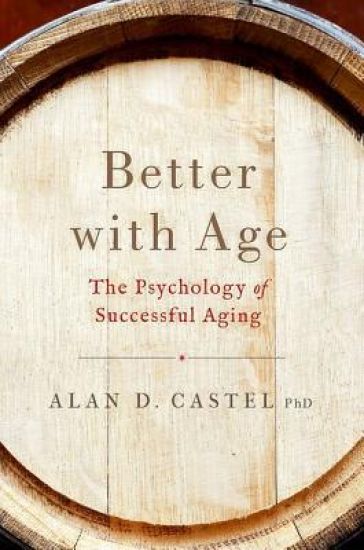
Better With Age

Better With Age

Alan D. Castel

Oxford University Press Inc
2018
sidottu
We are all aging, yet most adults say they don't feel all that old. Our age is an important number, but it can also be deceiving. After the age of 40, most people say they feel younger than their age, some lie about their age, and many attempt to hide the signs of aging. The psychology of aging tries to make sense of not only how people age, but how our beliefs, behaviors, and expectations influence how well we age. Better with Age addresses the many myths and paradoxes about aging. Often, peoples' expectations of old age do not match what is actually experienced in old age. For example, most people think of old age in terms of decline, grumpiness, aches and pains, but healthy older people report high levels of happiness, focus on positive emotions and enjoy humor. Older people may be forgetful, but selectively remember what is important. By having more experiences to draw on, wisdom and creativity can blossom. Walking and physical exercise, not just brain training exercises, keeps our mind sharp. Old and new habits, hobbies, and friends keep us connected. Retirement is initially confusing, and sometimes avoided, but is often busy and rewarding. Balance, both physical and mental, becomes more important in older age. Successful aging involves leading a productive, healthy, happy life, and can start well before you reach old age. We have older role models who provide inspiring examples of what we can do in older age. This book presents the paradoxes and pleasures of old age, new research and role models of successful aging, and what we can do now to enjoy old age.
Into Russian Nature

Into Russian Nature

Alan D. Roe

Oxford University Press Inc
2020
sidottu
Since the early twentieth century, nations around the world have set aside protected areas for tourism, recreation, scenery, wildlife, and habitat conservation. In Russia, biologists and geographers had been intrigued with the idea of establishing national parks before the Revolution, but instead persuaded the government successfully to establish nature reserves (zapovedniki) for scientific research during the USSR's first decades. However, as the state pushed scientists to make zapovedniki more useful during the 1930s, some of the system's staunchest defenders started supporting tourism in them. In Into Russian Nature, Alan D. Roe offers the first history of the Russian national park movement. In the decades after World War II, the USSR experienced a tourism boom and faced a chronic shortage of tourism facilities. During these years, Soviet scientists took active part in Western-dominated international environmental protection organizations and enthusiastically promoted parks for the USSR as a means to expand recreational opportunities and reconcile environmental protection and economic development goals. In turn, they hoped they would bring international respect to Soviet nature protection efforts and help instill in Russian/Soviet citizens a love for the country's nature and a desire to protect it. By the end of the millennium, Russia had established thirty-five parks to protect iconic landscapes in places such as Lake Baikal. Meanwhile, national park opponents presented them as an unaffordable luxury during a time of economic struggle, especially after the USSR's collapse. Despite unprecedented collaboration with international organizations, Russian national parks received little governmental support as they became mired in land-use conflicts with local populations. Exploring parks from European Russia to Siberia and the Far East, Into Russian Nature narrates efforts, often frustrated by the state, to protect Russia's vast and unique physical landscape.
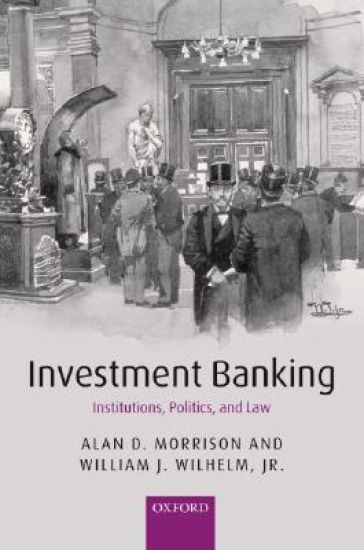
Investment Banking

Investment Banking

Alan D. Morrison; Jr. Wilhelm

Oxford University Press
2007
sidottu
Investment Banking: Institutions, Politics, and Law provides an economic rationale for the dominant role of investment banks in the capital markets, and uses it to explain both the historical evolution of the investment banking industry and also recent changes to its organization. Although investment decisions rely upon price-relevant information, it is impossible to establish property rights over it and hence it is very hard to coordinate its exchange. The authors argue that investment banks help to resolve this problem by managing "information marketplaces," within which extra-legal institutions support the production and dissemination of information that is important to investors. Reputations and relationships are more important in fulfilling this role than financial capital. The authors substantiate their theory with reference to the industry's evolution during the last three centuries. They show how investment banking networks were formed, and identify the informal contracts that they supported. This historical development points to tensions between the relational contracting of investment banks and the regulatory impulses of the State, thus providing some explanation for the periodic large-scale State intervention in the operation of capital markets. Their theory also provides a technological explanation for the massive restructuring of the capital markets in recent decades, which the authors argue can be used to think about the likely future direction of the investment banking industry.
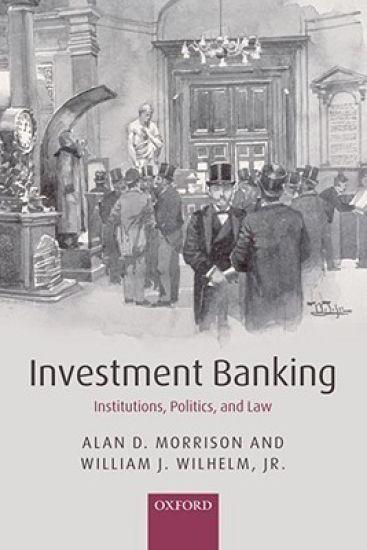
Investment Banking

Investment Banking

Alan D. Morrison; Jr. Wilhelm

Oxford University Press
2008
nidottu
Investment Banking: Institutions, Politics, and Law provides an economic rationale for the dominant role of investment banks in the capital markets, and uses it to explain both the historical evolution of the investment banking industry and also recent changes to its organization. Although investment decisions rely upon price-relevant information, it is impossible to establish property rights over it and hence is very hard to coordinate its exchange. The authors argue that investment banks help to resolve this problem by managing "information marketplaces," within which extra-legal institutions support the production and dissemination of information that is important to investors. Reputations and relationships are more important in fulfilling this role than financial capital. The authors substantiate their theory with reference to the industry's evolution during the last three centuries. They show how investment banking networks were formed, and identify the informal contracts that they supported. This historical development points to tensions between the relational contracting of investment banks and the regulatory impulses of the State, thus providing some explanation for the periodic large-scale State intervention in the operation of capital markets. Their theory also provides a technological explanation for the massive restructuring of the capital markets in recent decades, which the authors argue can be used to think about the likely future direction of the investment banking industry.
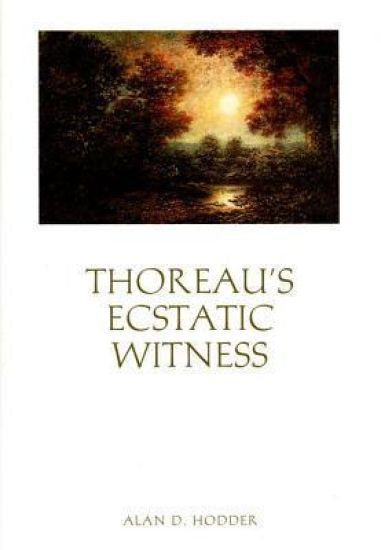
Thoreau’s Ecstatic Witness

Thoreau’s Ecstatic Witness

Alan D. Hodder

Yale University Press
2002
sidottu
When Henry David Thoreau died in 1862, friends and admirers remembered him as an eccentric man whose outer life was continuously fed by deeper spiritual currents. But scholars have since focused almost exclusively on Thoreau’s literary, political, and scientific contributions. This book offers the first in-depth study of Thoreau’s religious thought and experience. In it Alan D. Hodder recovers the lost spiritual dimension of the writer’s life, revealing a deeply religious man who, despite his rejection of organized religion, possessed a rich inner life, characterized by a sort of personal, experiential, nature-centered, and eclectic spirituality that finds wider expression in America today.At the heart of Thoreau’s life were episodes of exhilaration in nature that he commonly referred to as his ecstasies. Hodder explores these representations of ecstasy throughout Thoreau’s writings—from the riverside reflections of his first book through Walden and the later journals, when he conceived his journal writing as a spiritual discipline in itself and a kind of forum in which to cultivate experiences of contemplative non-attachment. In doing so, Hodder restores to our understanding the deeper spiritual dimension of Thoreau’s life to which his writings everywhere bear witness.
Pharmacology, An Issue of Anesthesiology Clinics

Pharmacology, An Issue of Anesthesiology Clinics

Alan D. Kaye

Elsevier - Health Sciences Division
2017
sidottu
This issue of Anesthesiology Clinics focuses on Pharmacology. Editor Alan Kaye has assembled an expert team of authors on topics such as: Ketorolac, Oxymorphone and Tapentadol; Anticoagulation and Neuraxial/Peripheral Anesthesia; Pharmacologic Update on Antiemetics: Total parenteral nutrition/enteral nutrition in the ICU, Evolving Concepts; Reversal of Anticoagulants and Anesthesia Considerations; Non-opioids Intravenous or Oral Analgesics for Perioperative Pain Management, Update; Uterotonic Medications and Anesthesia Considerations: oxytocin, misoprostol, methylergonovine, carboprost; Pulmonary Vascular Mediating Drugs, Evolving Concepts; Alpha 2 Modulators and Anesthesia Considerations; Pharmacologic Considerations of Anesthetic Agents in the Obese Patient; Pharmacologic Considerations of Anesthetic Agents in the Geriatric Patient; Pharmacologic Considerations of Anesthetic Agents in the Pediatric Patient; Anesthesia CV Drug Update; Pharmacogenomics: Anesthesia; Pharmacogenomics: Pain; Novel anticoagulants; Novel anesthetic agents; Novel opioids; Pharmacology of Newer Local anesthetics; Pharmacology of Nonsteroidal Antiinflammatory and Steroid Medications. Implications for Anesthesia or Unique Associated Risks; Pharmacology of Octreotide. Implications for Anesthesia and Associated Risks.
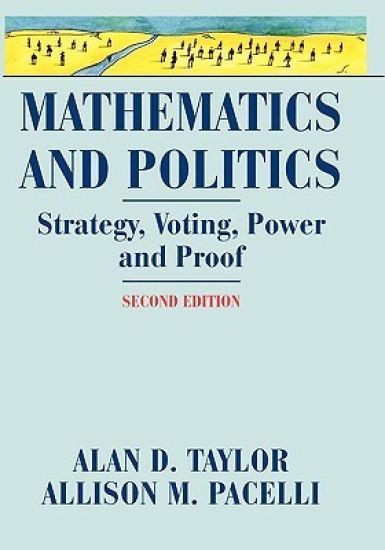
Mathematics and Politics

Mathematics and Politics

Alan D. Taylor; Allison M. Pacelli

Springer-Verlag New York Inc.
2008
sidottu
Why would anyone bid $3. 25 in an auction where the prize is a single dollar bill? Can one “game” explain the apparent irrationality behind both the arms race of the 1980s and the libretto of Puccini’s opera Tosca? How can one calculation suggest the president has 4 percent of the power in the United States federal system while another s- gests that he or she controls 77 percent? Is democracy (in the sense of re?ecting the will of the people) impossible? Questionslikethesequitesurprisinglyprovideaveryniceforumfor some fundamental mathematical activities: symbolic representation and manipulation, model–theoretic analysis, quantitative represen- tionandcalculation,anddeductionasembodiedinthepresentationof mathematical proof as convincing argument. We believe that an ex- sure to aspects of mathematics such as these should be an integral part of a liberal arts education. Our hope is that this book will serve as a text for freshman-sophomore level courses, aimed primarily at students in the humanities and social sciences, that will provide this sort of exposure. A number of colleges and universities already have interdisciplinary freshman seminars where this could take place. Most mathematics texts for nonscience majors try to show that mathematics can be applied to many different disciplines. A student’s viii PREFACE interest in a particular application, however, often depends on his or hergeneralinterestintheareainwhichtheapplicationistakingplace. Our experience at Union College and Williams College has been that there is a real advantage in having students enter the course knowing that virtually all the applications will focus on a single discipline—in this case, political science.
Mathematics and Politics

Mathematics and Politics

Alan D. Taylor

Springer-Verlag New York Inc.
1995
nidottu
interest in a particular application, however, often depends on his or hergeneralinterestintheareainwhichtheapplicationistakingplace. My experience at Union College has been that there is a real advan­ tage in having students enter the course knowing thatvirtually all the applications will focus on a single discipline-in this case, political science. The level ofpresentation assumes no college-level mathematicalor social science prerequisites. The philosophy underlying the approach we have taken in this book is based on the sense that we (mathemati­ cians)havetendedtomaketwoerrorsinteachingnonsciencestudents: wehaveoverestimatedtheircomfortwithcomputationalmaterial,and we have underestimated their ability to handle conceptual material. Thus, while there is very little algebra (and certainly no calculus) in our presentation, we have included numerous logical arguments that students in the humanitiesand the socialscienceswill find accessible, but not trivial. The book contains five main topics: a m.odel of escalation, game­ theoretic models of international conflict, yes-no voting systems, political power, and social choice. The first partofthe text is made up of a single chapter devoted to each topic. The second part of the text revisits each topic, again with a single chapter devoted to each. The organizationofthe bookisbasedonpedagogicalconsiderations, with the material becoming somewhat more sophisticated as one moves through the ten chapters. On the other hand, within any given chap­ terthere is little reliance on material from earlierchapters, except for those devoted to the same topic.
Fundamental Techniques of Plastic Surgery

Fundamental Techniques of Plastic Surgery

Alan D. McGregor; Ian A. McGregor

Churchill Livingstone
2000
nidottu
The 10th edition of Fundamental Techniques of Plastic Surgery provides a straightforward account of the principles and practice of the basic techniques of plastic and reconstructive surgery that every surgeon should know. The management, repair and reconstruction of defects and wounds using skin and other tissues are discussed in detail, and potential problems and complications are also reviewed.Complete coverage of all key plastic and reconstructive surgery techniques needed by all trainee surgeons. Outstanding illustrations support straightforward, step-by-step descriptions of all techniques.Written by experts with clarity and simplicity, in an easy-to-use format. Brand-new section on osseointegration of the nose and ears prior to prosthetic treatment. Brand-new section on pelvic reconstruction following colorectal, urological and gynaecological malignancy. Moreon radiation injuries after radiotherapy. Moreon the use of the gracilis and myocutaneous flaps. Expandedlasers section to include resurfacing, treatment of pigmented lesions and tattoos. Increasedcoverage of chemical vs surgical wound debridement prior to surgery.
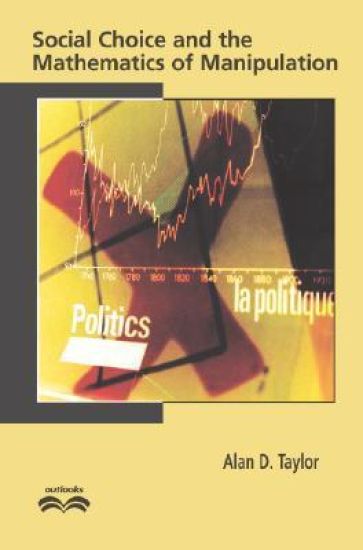
Social Choice and the Mathematics of Manipulation

Social Choice and the Mathematics of Manipulation

Alan D. Taylor

Cambridge University Press
2005
pokkari
Honesty in voting, it turns out, is not always the best policy. Indeed, in the early 1970s, Allan Gibbard and Mark Satterthwaite, building on the seminal work of Nobel laureate Kenneth Arrow, proved that with three or more alternatives there is no reasonable voting system that is non-manipulable; voters will always have an opportunity to benefit by submitting a disingenuous ballot. The ensuing decades produced a number of theorems of striking mathematical naturality that dealt with the manipulability of voting systems. This 2005 book presents many of these results from the last quarter of the twentieth century, especially the contributions of economists and philosophers, from a mathematical point of view, with many new proofs. The presentation is almost completely self-contained, and requires no prerequisites except a willingness to follow rigorous mathematical arguments. Mathematics students, as well as mathematicians, political scientists, economists and philosophers will learn why it is impossible to devise a completely unmanipulable voting system.
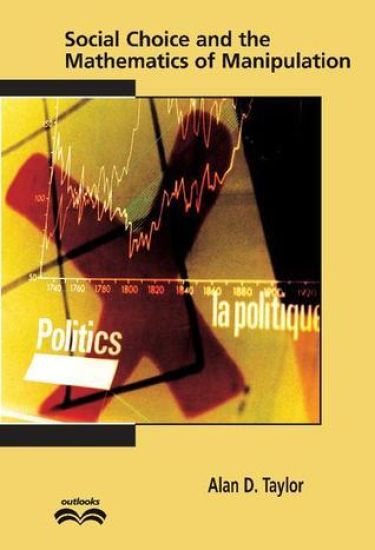
Social Choice and the Mathematics of Manipulation

Social Choice and the Mathematics of Manipulation

Alan D. Taylor

Cambridge University Press
2005
sidottu
Honesty in voting, it turns out, is not always the best policy. Indeed, in the early 1970s, Allan Gibbard and Mark Satterthwaite, building on the seminal work of Nobel laureate Kenneth Arrow, proved that with three or more alternatives there is no reasonable voting system that is non-manipulable; voters will always have an opportunity to benefit by submitting a disingenuous ballot. The ensuing decades produced a number of theorems of striking mathematical naturality that dealt with the manipulability of voting systems. This 2005 book presents many of these results from the last quarter of the twentieth century, especially the contributions of economists and philosophers, from a mathematical point of view, with many new proofs. The presentation is almost completely self-contained, and requires no prerequisites except a willingness to follow rigorous mathematical arguments. Mathematics students, as well as mathematicians, political scientists, economists and philosophers will learn why it is impossible to devise a completely unmanipulable voting system.
How to Cash in on Distressed Real Estate in a Down Market

How to Cash in on Distressed Real Estate in a Down Market

Alan D. Pollack

Delta Investment Group, Inc
2011
nidottu
Now Released: "How to Cash in on Distressed Real Estate in a Down Market" The "new economy" is often used to identify the way things are, not the way they used to be. This book is for experienced and novice opportunity investors interested in being successful in acquisition and repositioning distressed real estate. It's a book about what to do and what not to do get deals done now. Many that have made fortunes in the past in real estate and may have lost it in more recent years have reinvented the way they do business and that is taking advantage of distressed assets. Enjoy the ride. Order now. The book website is: www.howtocashinondistressedrealestateinadownmarket.com