Kirjojen hintavertailu. Mukana 12 390 323 kirjaa ja 12 kauppaa.

Kirjahaku

Etsi kirjoja tekijän nimen, kirjan nimen tai ISBN:n perusteella.

1000 tulosta hakusanalla Alan France; Steven Roberts

Youth and Social Class

Youth and Social Class

Alan France; Steven Roberts

Palgrave Macmillan
2015
sidottu
This book addresses the recent marginalisation of class theory in youth sociology. The authors argue for the importance of reinstating class analysis as central to understanding young people’s lives in the United Kingdom, Australia and New Zealand. Their analysis recognises that in periods of social change, class relationships and processes can and do get reconfigured, but by drawing on the work of Pierre Bourdieu, they show that class, while being dynamic, remains core to shaping the everyday lives of young people. Students and scholars across a range of areas including the sociology of youth, sociology of education, social work and social policy will find this book of interest.
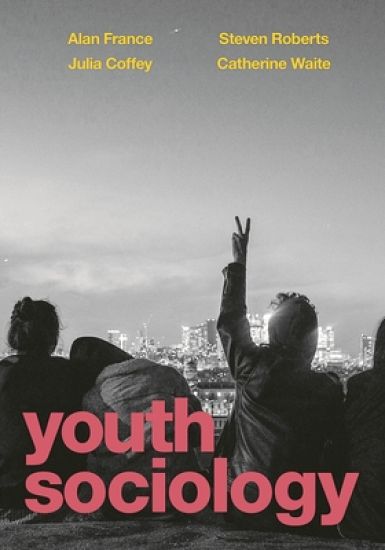
Youth Sociology

Youth Sociology

Alan France; Julia Coffey; Steven Roberts; Catherine Waite

Red Globe Press
2020
sidottu
Falling somewhere between childhood and adulthood, ‘Youth’ is a key period of transition. It can be difficult to define and make sense of this period in one’s life.However it is categorised, young people face a number of challenges and issues growing up in today’s world. From the pressures created by social media to the increasing precarity of employment, the major social, cultural and economic developments of our time are each impacting this period of the lifecourse in myriad ways. Youth Sociology helps readers to understand how such changes factor into the experience of being young today, and illuminates the realities of the world in which young people live.Embedding perspectives and insights from a wide range of disciplines beyond sociology, this authoritative new textbook will be incredibly useful for all students of youth.
Youth Sociology

Youth Sociology

Alan France; Julia Coffey; Steven Roberts; Catherine Waite

Red Globe Press
2020
nidottu
Falling somewhere between childhood and adulthood, ‘Youth’ is a key period of transition. It can be difficult to define and make sense of this period in one’s life.However it is categorised, young people face a number of challenges and issues growing up in today’s world. From the pressures created by social media to the increasing precarity of employment, the major social, cultural and economic developments of our time are each impacting this period of the lifecourse in myriad ways. Youth Sociology helps readers to understand how such changes factor into the experience of being young today, and illuminates the realities of the world in which young people live.Embedding perspectives and insights from a wide range of disciplines beyond sociology, this authoritative new textbook will be incredibly useful for all students of youth.
Understanding Youth in the Global Economic Crisis
In this innovative book, Professor Alan France tells the story of what impact the 2007 global crisis and the great recession that followed has had on our understandings of youth. Drawing on eight countries as case studies he undertakes an in-depth sociological analysis of historical and contemporary developments in post-sixteen education, training, work, and welfare policy to show how the ecological landscape of youth has been affected. He maps the growing influence of neoliberalism as a political strategy in each of the countries, showing how, after the crisis, it is accelerating the reconfiguration of institutions and practices that are central to the lives of the young. This book is essential reading for students of youth studies, sociology and policy, seeking a greater understanding of international public and social policy in relation to the youth question.
Understanding Youth in the Global Economic Crisis
In this innovative book, Professor Alan France tells the story of what impact the 2007 global crisis and the great recession that followed has had on our understandings of youth. Drawing on eight countries as case studies he undertakes an in-depth sociological analysis of historical and contemporary developments in post-sixteen education, training, work, and welfare policy to show how the ecological landscape of youth has been affected. He maps the growing influence of neoliberalism as a political strategy in each of the countries, showing how, after the crisis, it is accelerating the reconfiguration of institutions and practices that are central to the lives of the young. This book is essential reading for students of youth studies, sociology and policy, seeking a greater understanding of international public and social policy in relation to the youth question.
Fleeing France

Fleeing France

Alan Hlad

KENSINGTON PUBLISHING
2024
nidottu
Driving an ambulance in France after the fall of Dunkirk, an American nightclub singer races to evacuate a British pilot and a Jewish orphan across more than 4,000 miles towards a precarious freedom in this emotional, action-packed story of sacrifice, hope, and devotion inspired by real wartime events. France, 1939: A talented singer, Ruth Lacroix has left Maine to live with her aunt and uncle, dreaming of performing at the Casino de Paris. But with the outbreak of war, and the heartbreaking news that her cousin has been killed by German forces, that goal is supplanted by another--to support France in any way she can. Though Ruth has never driven a vehicle larger than the tractor on her parents' farm, she joins a friend in enlisting as a driver for the French ambulance corps. On their way to transfer injured soldiers to Dunkirk for evacuation, they encounter Jimmie, a British Royal Air Force pilot with No. 73 Squadron RAF, who has bailed out of his burning plane. As Dunkirk falls, blocking off the route to the northern coast, word spreads of a daring Allied plan to rescue the remaining troops and civilians from ports in western France: code name Operation Aerial. Over two hazardous weeks, Ruth and Jimmie will journey hundreds of miles together, helping other refugees as they rush to reach the sea before they are overtaken by the Germany army. But all their courage and resilience offer no certainty in wartime, when a single stroke of luck, or a split-second decision, can mean the difference between life and death . . .
Atheism in France, 1650-1729, Volume I

Atheism in France, 1650-1729, Volume I

Alan Charles Kors

Princeton University Press
2014
pokkari
Although most historians have sought the roots of atheism in the history of "free thought," Alan Charles Kors contends that attacks on the existence of God were generated above all by the vitality and controversies of orthodox theistic culture itself. In this first volume of a planned two-volume inquiry into the sources and nature of atheism, he shows that orthodox teachers and apologists in seventeenth-century France were obliged by the logic of their philosophical and pedagogical systems to create many models of speculative atheism for heuristic purposes. Unusual in its broad sampling of the religious literature of the early-modern learned world, this book reveals that the "great fratricide" among bitterly competing schools of Aristotelian, Cartesian, and Malebranchist Christian thought encouraged theologians to refute each other's proofs of God and to depict the ideas of their theological opponents as atheistic. Such "fratricide" was not new in the history of Christendom, but Kors demonstrates that its influence was dramatically amplified by the expanding literacy of the seventeenth century. Capturing the attention of the reading public, theological debate provided intellectual grounds for the disbelief of the first generation of atheistic thinkers. Originally published in 1990. The Princeton Legacy Library uses the latest print-on-demand technology to again make available previously out-of-print books from the distinguished backlist of Princeton University Press. These editions preserve the original texts of these important books while presenting them in durable paperback and hardcover editions. The goal of the Princeton Legacy Library is to vastly increase access to the rich scholarly heritage found in the thousands of books published by Princeton University Press since its founding in 1905.
Atheism in France, 1650-1729, Volume I

Atheism in France, 1650-1729, Volume I

Alan Charles Kors

Princeton University Press
2016
sidottu
Although most historians have sought the roots of atheism in the history of "free thought," Alan Charles Kors contends that attacks on the existence of God were generated above all by the vitality and controversies of orthodox theistic culture itself. In this first volume of a planned two-volume inquiry into the sources and nature of atheism, he shows that orthodox teachers and apologists in seventeenth-century France were obliged by the logic of their philosophical and pedagogical systems to create many models of speculative atheism for heuristic purposes. Unusual in its broad sampling of the religious literature of the early-modern learned world, this book reveals that the "great fratricide" among bitterly competing schools of Aristotelian, Cartesian, and Malebranchist Christian thought encouraged theologians to refute each other's proofs of God and to depict the ideas of their theological opponents as atheistic. Such "fratricide" was not new in the history of Christendom, but Kors demonstrates that its influence was dramatically amplified by the expanding literacy of the seventeenth century. Capturing the attention of the reading public, theological debate provided intellectual grounds for the disbelief of the first generation of atheistic thinkers. Originally published in 1990. The Princeton Legacy Library uses the latest print-on-demand technology to again make available previously out-of-print books from the distinguished backlist of Princeton University Press. These editions preserve the original texts of these important books while presenting them in durable paperback and hardcover editions. The goal of the Princeton Legacy Library is to vastly increase access to the rich scholarly heritage found in the thousands of books published by Princeton University Press since its founding in 1905.
France 1940

France 1940

Alan Shepperd

Osprey Publishing
1990
nidottu
Featuring archive photography and full-colour maps, a rich analysis of the Germans' early success in France.The German victory of 1940 stunned the world. France, major European power and owner of the world's largest armies had fallen in less than seven weeks to the might of the German Wehrmacht. The secret of the Wehrmacht's success lay in its carefully thought out organization and the tactics of blitzkrieg. Fast moving tank divisions supported by armoured, mobile infantry swept over opposition, helped by both conventional bombers and deadly Stuka dive-bombers.Alan Shepperd's highly detailed text examines the tactics, organization and equipment of the Allied and German forces, and provides a daily account of the most crucial period of the battle.
Hero in France

Hero in France

Alan Furst

Orion Publishing Co
2017
pokkari
The alternative le Carré: Alan Furst returns with his most commercial novel to date, a nail-biting spy story set against the French Resistance. It was Top 20 in hardback.
France Travel Guide

France Travel Guide

Alan Harrington

Createspace Independent Publishing Platform
2018
nidottu
France is a country with which almost every traveler has a relationship. Many dream of its joie de vivre shown by the countless restaurants, picturesque villages and world-famous gastronomy. Some come to follow the trail of France's great philosophers, writers and artists, or to immerse in the beautiful language it gave the world. And others still are drawn to the country's geographical diversity with its long coastlines, massive mountain ranges and breathtaking farmland vistas. France has been the world's most popular tourist destination for over twenty years. It received 83.7 million visitors in 2014, although these figures are highly skewed by the number of people who frequent the country for the weekend, particularly to visit Disneyland Paris, Europe's most popular visitor attraction. All these people come to France for many a reason: its cities contain some of the greatest treasures on the continent, its countryside is prosperous and well-tended and it boasts dozens of major tourist attractions. France is one of the most geographically diverse countries in Europe, containing areas as different from each other as urban chic Paris, the sunny French Riviera, long Atlantic beaches, the winter sports resorts of the French Alps, the castles of the Loire Valley, rugged Celtic Brittany and the historian's dream that is Normandy. France is a country of rich emotions and turbulent politics but also a place of rational thinking and Enlightenment treasures. Above all, it is renowned for its cuisine, culture and history. Whatever you want from a holiday, you're about to find it in France.
The Revolution in Provincial France

The Revolution in Provincial France

Alan Forrest

Clarendon Press
1996
sidottu
This book presents a provincial view of the French Revolution and assesses the experience of revolution across a broad swathe of south-western France, in an area which increasingly looked to Bordeaux as its capital city. Here the Revolution was not simply a pale reflection of events in Paris. Local conflicts and personal rivalries are vital to our understanding of the shape of events in the region, as are contrasting traditions of religious affiliation, peasant radicalism, and obedience to the state. The book examines the Revolution within a thematic framework, and discusses such aspects as the growth of a local political culture, the incidence of rural insurrection, religious responses to the Revolution, the chequered appeal of federalism, and the uneven experience of Terror and political repression.
Employment Relations in France

Employment Relations in France

Alan Jenkins

Kluwer Academic/Plenum Publishers
2000
sidottu
Thisbook is the fruit of a number of years of assimilating another culture and learning about the evolution of its institutions, altogether an incr- iblyrich andrewarding experience. Ihopetopassonto the reader some of that richness in the belief that, even in a “globalizing” context, learning about other nations and cultures is more and more necessary. The reasons andvalues behind this belief are perhaps evident,but I amconvincedthat they bear repeating here. To begin with, the hasty generalizations that often liebehind the cynicism—and ultimately the violence—of ethnocentrism and xe- phobia are still being aired today and still need to be fought, even in “unified and advanced” regions of the world like Europe and the United States. The historical and social sciences disciplines need to be solicited constantly in this combat, even though they themselves are terrains of controversy and contestation. I personally have not lost faith in their “progressive” potential and character. Second, my belief is that only through this process of appeal to these disciplines and their findings can we resist a dangerous contemporary slide into simplisticand sensation- ist pictures of the world—viewpoints often associated with an implicit assumption that social and economic change are linear processes, so- how unfolding according to the same neat “logic” wherever they are at work.
Church Architecture in New France

Church Architecture in New France

Alan Gowans

Hassell Street Press
2021
sidottu
This work has been selected by scholars as being culturally important and is part of the knowledge base of civilization as we know it.This work is in the public domain in the United States of America, and possibly other nations. Within the United States, you may freely copy and distribute this work, as no entity (individual or corporate) has a copyright on the body of the work.Scholars believe, and we concur, that this work is important enough to be preserved, reproduced, and made generally available to the public. To ensure a quality reading experience, this work has been proofread and republished using a format that seamlessly blends the original graphical elements with text in an easy-to-read typeface.We appreciate your support of the preservation process, and thank you for being an important part of keeping this knowledge alive and relevant.
Church Architecture in New France

Church Architecture in New France

Alan Gowans

Hassell Street Press
2021
nidottu
This work has been selected by scholars as being culturally important and is part of the knowledge base of civilization as we know it.This work is in the public domain in the United States of America, and possibly other nations. Within the United States, you may freely copy and distribute this work, as no entity (individual or corporate) has a copyright on the body of the work.Scholars believe, and we concur, that this work is important enough to be preserved, reproduced, and made generally available to the public. To ensure a quality reading experience, this work has been proofread and republished using a format that seamlessly blends the original graphical elements with text in an easy-to-read typeface.We appreciate your support of the preservation process, and thank you for being an important part of keeping this knowledge alive and relevant.
Naturalism and Unbelief in France, 1650–1729

Naturalism and Unbelief in France, 1650–1729

Alan Charles Kors

Cambridge University Press
2016
sidottu
Atheism was the most fundamental challenge to early-modern French certainties. Leading educators, theologians and philosophers labelled such atheism as manifestly absurd, confident that neither the fact nor behaviour of nature was explicable without reference to God. The alternative was a categorical naturalism. This book demonstrates that the Christian learned world had always contained the naturalistic 'atheist' as an interlocutor and a polemical foil, and its early-modern engagement and use of the hypothetical atheist were major parts of its intellectual life. In the considerations and polemics of an increasingly fractious orthodox culture, the early-modern French learned world gave real voice and eventually life to that atheistic presence. Without understanding the actual context and convergence of the inheritance, scholarship, fierce disputes, and polemical modes of orthodox culture, the early-modern generation and dissemination of absolute naturalism are inexplicable. This book brings to life that Christian learned culture, its dilemmas, and its unintended consequences.
Epicureans and Atheists in France, 1650–1729

Epicureans and Atheists in France, 1650–1729

Alan Charles Kors

Cambridge University Press
2016
sidottu
Atheism was the most foundational challenge to early-modern French certainties. Theologians and philosophers labelled such atheism as absurd, confident that neither the fact nor behaviour of nature was explicable without reference to God. The alternative was a categorical naturalism, whose most extreme form was Epicureanism. The dynamics of the Christian learned world, however, which this book explains, allowed the wide dissemination of the Epicurean argument. By the end of the seventeenth century, atheism achieved real voice and life. This book examines the Epicurean inheritance and explains what constituted actual atheistic thinking in early-modern France, distinguishing such categorical unbelief from other challenges to orthodox beliefs. Without understanding the actual context and convergence of the inheritance, scholarship, protocols, and polemical modes of orthodox culture, the early-modern generation and dissemination of atheism are inexplicable. This book brings to life both early-modern French Christian learned culture and the atheists who emerged from its intellectual vitality.
Naturalism and Unbelief in France, 1650–1729

Naturalism and Unbelief in France, 1650–1729

Alan Charles Kors

Cambridge University Press
2018
pokkari
Atheism was the most fundamental challenge to early-modern French certainties. Leading educators, theologians and philosophers labelled such atheism as manifestly absurd, confident that neither the fact nor behaviour of nature was explicable without reference to God. The alternative was a categorical naturalism. This book demonstrates that the Christian learned world had always contained the naturalistic 'atheist' as an interlocutor and a polemical foil, and its early-modern engagement and use of the hypothetical atheist were major parts of its intellectual life. In the considerations and polemics of an increasingly fractious orthodox culture, the early-modern French learned world gave real voice and eventually life to that atheistic presence. Without understanding the actual context and convergence of the inheritance, scholarship, fierce disputes, and polemical modes of orthodox culture, the early-modern generation and dissemination of absolute naturalism are inexplicable. This book brings to life that Christian learned culture, its dilemmas, and its unintended consequences.
Epicureans and Atheists in France, 1650–1729

Epicureans and Atheists in France, 1650–1729

Alan Charles Kors

Cambridge University Press
2018
pokkari
Atheism was the most foundational challenge to early-modern French certainties. Theologians and philosophers labelled such atheism as absurd, confident that neither the fact nor behaviour of nature was explicable without reference to God. The alternative was a categorical naturalism, whose most extreme form was Epicureanism. The dynamics of the Christian learned world, however, which this book explains, allowed the wide dissemination of the Epicurean argument. By the end of the seventeenth century, atheism achieved real voice and life. This book examines the Epicurean inheritance and explains what constituted actual atheistic thinking in early-modern France, distinguishing such categorical unbelief from other challenges to orthodox beliefs. Without understanding the actual context and convergence of the inheritance, scholarship, protocols, and polemical modes of orthodox culture, the early-modern generation and dissemination of atheism are inexplicable. This book brings to life both early-modern French Christian learned culture and the atheists who emerged from its intellectual vitality.