Kirjojen hintavertailu. Mukana 11 244 527 kirjaa ja 12 kauppaa.

Kirjahaku

Etsi kirjoja tekijän nimen, kirjan nimen tai ISBN:n perusteella.

1000 tulosta hakusanalla Alan G. Heath

Water Pollution and Fish Physiology
This book provides a concise synthesis of how toxic chemical pollutants affect physiological processes in teleost fish. This Second Edition of the well-received Water Pollution and Fish Physiology has been completely updated, and chapters have been added on immunology and acid toxicity. The emphasis, as in the first edition, is on understanding mechanisms of sublethal effects on fish and their responses to these environmental stressors. The first chapter covers the basic principles involved in understanding how fish respond, in general, to environmental alterations. Each subsequent chapter is devoted to a particular organ system or physiological function and begins with a short overview of normal physiology of that system/function. This is followed by a review of how various toxic chemicals may alter normal conditions in fish. Chapters covering environmental hypoxia, behavior, cellular enzymes, and acid toxicity are also included. The book closes with a discussion on the practical application of physiological and biochemical measurements of fish in water pollution control in research and regulatory settings.
Water Pollution and Fish Physiology

Water Pollution and Fish Physiology

Alan G. Heath

CRC Press Inc
1995
sidottu
This book provides a concise synthesis of how toxic chemical pollutants affect physiological processes in teleost fish. This Second Edition of the well-received Water Pollution and Fish Physiology has been completely updated, and chapters have been added on immunology and acid toxicity. The emphasis, as in the first edition, is on understanding mechanisms of sublethal effects on fish and their responses to these environmental stressors. The first chapter covers the basic principles involved in understanding how fish respond, in general, to environmental alterations. Each subsequent chapter is devoted to a particular organ system or physiological function and begins with a short overview of normal physiology of that system/function. This is followed by a review of how various toxic chemicals may alter normal conditions in fish. Chapters covering environmental hypoxia, behavior, cellular enzymes, and acid toxicity are also included. The book closes with a discussion on the practical application of physiological and biochemical measurements of fish in water pollution control in research and regulatory settings.
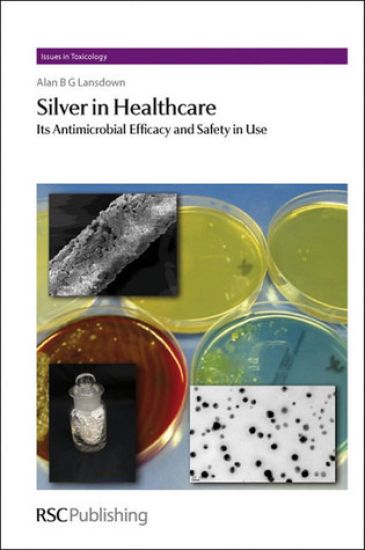
Silver in Healthcare

Silver in Healthcare

Alan B. G. Lansdown

Royal Society of Chemistry
2010
sidottu
Silver in healthcare has many different facets and since the early concepts of microbiology of the 1880's, has been developed from usage in surgical clips, staples, foil wound dressings and surgical implants, to the widespread and clinically effective antiseptic wound dressings, sutures, catheters, bone and dental implants, and cardiovascular devices of today. From the dawn of human civilisation, silver has had a role of water purification and even now has a role in hospital water systems for control of MRSA and legionnaires disease. Biotechnological advances in recent years have extended the antimicrobial properties of silver into production of hygiene textiles and use in domestic products. Important advances have been made in understanding mechanisms of antimicrobial action of silver, the central importance of ionisation patterns in the presence of body fluids and secretion, and the genetical and molecular profiles of silver resistance. This publication is a comprehensive account of the history of silver in medicine, its clinical benefits and wide advantages as a broad spectrum antimicrobial agent. It is clear from the extensive array of publications in recognised and unofficial press, that many misconceptions and misleading conceptions have been perpetuated, leading to errors in evaluation of the safety of the metal in occupational, domestic and therapeutic situations. The book is unique in that it is the only comprehensive presentation of the toxicology of silver and it identifies the major misconceptions in the safety of silver and interpretation of argyria and argyrosis as central features of silver toxicity. In this book, Dr Lansdown reviews the literature from a clinical and experimental viewpoint, with the benefit of his many years research on silver and experience gained in working with clinicians, healthcare product manufacturers and microbiologists. There is also discussion in the book on the relevance of antimicrobial resistance to silver and deficiencies in present day clinical practice in not evaluating incidences of resistance on a routine basis. The subject matter is presented in a readable fashion and includes reference to use of the metal in such practices as acupuncture and treatment of tropical diseases as practised in some parts of the world, each of which is accompanied by special clinical risk. It is also a collation of current views on the use and efficacy of silver as a broad spectrum antibiotic. The chapters which deal specifically with toxicological aspects of silver in clinical, occupational and environmental issues are central to the book's value. The book is aimed at clinicians, research scientists and product manufacturers and will provide ideas for new research and academic endeavour. It is also essential reading for research students with an interest in metal toxicity and its management in mammalian tissues.
Radar and ARPA Manual

Radar and ARPA Manual

Alan G. Bole; Alan D. Wall; Andy Norris

Butterworth-Heinemann Ltd
2013
nidottu
This fully revised new edition covers the complete radar/ARPA installation and serves as the most comprehensive and up-to-date reference on equipment and techniques for radar observers using older and newer systems alike. Suitable for use as a professional reference or as a training text, the book covers all aspects of radar, ARPA and integrated bridge systems technology (including AIS, ECDIS and GNSS) and their role in shipboard operations. It is a valuable resource for larger vessels and also covers the needs of leisure and amateur sailors for whom this technology is now accessible. Radar and ARPA Manual provides essential information for professional mariners, including those on training courses for electronic navigation systems and professional certificates internationally. Reference is made throughout to IMO (International Maritime Organization) Performance Standards, the role of radar in navigation and in collision avoidance, and to international professional and amateur marine operations qualifications.
The Internet Revolution in the Sciences and Humanities

The Internet Revolution in the Sciences and Humanities

Alan G. Gross; Joseph E. Harmon

Oxford University Press Inc
2016
sidottu
The Internet Revolution in the Sciences and Humanities takes a new look at C.P. Snow's distinction between the two cultures, a distinction that provides the driving force for a book that contends that the Internet revolution has sown the seeds for transformative changes in both the sciences and the humanities. It is because of this common situation that the humanities can learn from the sciences, as well as the sciences from the humanities, in matters central to both: generating, evaluating, and communicating knowledge on the Internet. In a succession of chapters, the authors deal with the state of the art in web-based journal articles and books, web sites, peer review, and post-publication review. In the final chapter, they address the obstacles the academy and scientific organizations face in taking full advantage of the Internet: outmoded tenure and promotion procedures, the cost of open access, and restrictive patent and copyright law. They also argue that overcoming these obstacles does not require revolutionary institutional change. In their view, change must be incremental, making use of the powers and prerogatives scientific and academic organizations already have.
The Internet Revolution in the Sciences and Humanities

The Internet Revolution in the Sciences and Humanities

Alan G. Gross; Joseph E. Harmon

Oxford University Press Inc
2016
nidottu
The Internet Revolution in the Sciences and Humanities takes a new look at C.P. Snow's distinction between the two cultures, a distinction that provides the driving force for a book that contends that the Internet revolution has sown the seeds for transformative changes in both the sciences and the humanities. It is because of this common situation that the humanities can learn from the sciences, as well as the sciences from the humanities, in matters central to both: generating, evaluating, and communicating knowledge on the Internet. In a succession of chapters, the authors deal with the state of the art in web-based journal articles and books, web sites, peer review, and post-publication review. In the final chapter, they address the obstacles the academy and scientific organizations face in taking full advantage of the Internet: outmoded tenure and promotion procedures, the cost of open access, and restrictive patent and copyright law. They also argue that overcoming these obstacles does not require revolutionary institutional change. In their view, change must be incremental, making use of the powers and prerogatives scientific and academic organizations already have.
The Scientific Sublime

The Scientific Sublime

Alan G. Gross

Oxford University Press Inc
2018
sidottu
The sublime evokes our awe, our terror, and our wonder. Applied first in ancient Greece to the heights of literary expression, in the 18th-century the sublime was extended to nature and to the sciences, enterprises that viewed the natural world as a manifestation of God's goodness, power, and wisdom. In The Scientific Sublime, Alan Gross reveals the modern-day sublime in popular science. He shows how the great popular scientists of our time--Richard Feynman, Stephen Hawking, Steven Weinberg, Brian Greene, Lisa Randall, Rachel Carson, Stephen Jay Gould, Steven Pinker, Richard Dawkins, and E. O. Wilson--evoke the sublime in response to fundamental questions: How did the universe begin? How did life? How did language? These authors maintain a tradition initiated by Joseph Addison, Edmund Burke, Immanuel Kant, and Adam Smith, towering 18th-century figures who adapted the literary sublime first to nature, then to science--though with one crucial difference: religion has been replaced wholly by science. In a final chapter, Gross explores science's attack on religion, an assault that attempts to sweep permanently under the rug two questions science cannot answer: What is the meaning of life? What is the meaning of the good life?
Communicating Science

Communicating Science

Alan G. Gross; Joseph E. Harmon; Michael S. Reidy

Oxford University Press Inc
2002
sidottu
This book describes the development of the scientific article from its modest beginnings to the global phenomenon that it has become today. Their analysis of a large sample of texts in French, English, and German focuses on the changes in the style, oganization, and argumentative structure of scientific communication over time. They also speculate on the future currency of the scientific article, as it enters the era of the World Wide Web. This book is an outstanding resource text in the rhetoric of science, and will stand as the definitive study on the topic.
Aquatic Environmental Chemistry

Aquatic Environmental Chemistry

Alan G. Howard

Oxford University Press
1998
nidottu
Equilibrium inorganic chemistry underlies the composition and properties of the aquatic environment and provides a sound basis for understanding both natural geochemical processes and the behaviour of inorganic pollutants in the environment. Designed for readers having basic chemical and mathematical knowledge, this book includes material and examples suitable for undergraduate students in the early stages of chemistry, environmental science, geology, irrigation science and oceanography courses. Aquatic Environmental Chemistry covers the composition and underlying properties of both freshwater and marine systems and, within this framework, explains the effects of acidity, complexation, oxidation and reduction processes, and sedimentation. The format adopted for the book consists of two parallel columns. The inner column is the main body of the book and can be read on its own. The outer column is a source of useful secondary material where comments on the main text, explanations of unusual terms and guidance through mathematical steps are to be found. A wide range of examples to explain the behaviour of inorganic species in freshwater and marine systems are used throughout, making this clear and progressive text an invaluable introduction to equilibrium chemistry in solution.
Science from Sight to Insight

Science from Sight to Insight

Alan G. Gross; Joseph E. Harmon

University of Chicago Press
2013
sidottu
John Dalton's molecular structures. Scatter plots and geometric diagrams. Watson and Crick's double helix. The way in which scientists understand the world - and the key concepts that explain it - is undeniably bound up in not only words, but images. Moreover, from PowerPoint presentations to articles in academic journals, scientific communication routinely relies on the relationship between words and pictures. In Science from Sight to Insight, Alan G. Gross and Joseph E. Harmon present a short history of the scientific visual, and then formulate a theory about the interaction between the visual and textual. With great insight and admirable rigor, the authors argue that scientific meaning itself comes from the complex interplay between the verbal and the visual in the form of graphs, diagrams, maps, drawings, and photographs. The authors use a variety of tools to probe the nature of scientific images, from Heidegger's philosophy of science to Peirce's semiotics of visual communication. Their synthesis of these elements offers readers an examination of scientific visuals at a much deeper and more meaningful level than ever before.
Science from Sight to Insight

Science from Sight to Insight

Alan G. Gross; Joseph E. Harmon

University of Chicago Press
2013
nidottu
John Dalton's molecular structures. Scatter plots and geometric diagrams. Watson and Crick's double helix. The way in which scientists understand the world - and the key concepts that explain it - is undeniably bound up in not only words, but images. Moreover, from PowerPoint presentations to articles in academic journals, scientific communication routinely relies on the relationship between words and pictures. In Science from Sight to Insight, Alan G. Gross and Joseph E. Harmon present a short history of the scientific visual, and then formulate a theory about the interaction between the visual and textual. With great insight and admirable rigor, the authors argue that scientific meaning itself comes from the complex interplay between the verbal and the visual in the form of graphs, diagrams, maps, drawings, and photographs. The authors use a variety of tools to probe the nature of scientific images, from Heidegger's philosophy of science to Peirce's semiotics of visual communication. Their synthesis of these elements offers readers an examination of scientific visuals at a much deeper and more meaningful level than ever before.
Human Rights and Choice in Poverty

Human Rights and Choice in Poverty

Alan G. Smith

Praeger Publishers Inc
1997
sidottu
This interdisciplinary study applies human rights theory to the problems of rural poverty in the Third World. Considering the interdependence of minimal food and health security with minimal assurance of basic freedoms, political scientist Alan G. Smith traces the linkage to the need of the food-insecure to seek clientelistic dependencies on better-off neighbors—relationships that often operate to restrict freedom of choice. In contrast to conventional rural development aid, which can introduce new client dependency if pursued alone, Smith stresses the need to find other forms of aid that would provide the option of assured minimal survival while avoiding the constraints imposed by dependency. Arguing for bolstering bottom-up human rights momentum, he suggests the transfer of appropriate tools into the hands of the target group. Recipients would make use of them to enhance autonomous food-crop production, thereby making client dependency a matter of choice rather than necessity.Smith illustrates the Third World predicament of food insecurity leading to infringement of rights by drawing together empirical evidence from Bangladesh, Botswana, and Tanzania. He further argues that respect for human rights involves a duty on the part of advantaged nations to address the Third World predicament with practical measures fully consistent with human rights, and for each of these three country cases, Smith recommends direct locally specific minimalist aid. His model, its practical illustration, and recommendations should be valuable to academics and students in the fields of rural sociology, anthropology, and political science—especially those focusing on human rights, poverty, and Third World development—as well as bureaucrats and consultants in the development aid field.
Class and Consciousness

Class and Consciousness

Alan G. Cobley

Praeger Publishers Inc
1990
sidottu
This is the first book to discuss the emergence and nature of the black bourgeoisie in South Africa in its historical context as a class in itself and for itself. It reveals how, by the 1920s, the black petty bourgeoisie was emerging in South Africa through the process of capitalist development, out of pre-existing elites and out of new elites based mainly in the new industrial centers. The book then discusses how the black petty bourgeoise deployed, in the 1930s, a wide range of class-specific social and cultural networks (using forms borrowed from the dominant classes) as a means of entrenching and reproducing its class position.The book details the significant differentiation within the black petty bourgeoisie--revealing it to be divided into a more economically secure upper stratum and a much larger lower stratum which was always vulnerable to proletarianisation. The book also shows that members of the petty black bourgeoisie virtually monopolized political leadership in black communities up to 1950 and beyond. This had very important consequences for the formulation and articulation of black political objectives at both the local and national levels and especially for the developing African nationalist movement.
The Rules of the Game

The Rules of the Game

Alan G. Cobley

Praeger Publishers Inc
1997
sidottu
Cobley presents five interconnected case studies of previously neglected aspects of recreation and social welfare policy in South Africa. He charts their historical development and poses the critical question: In shaping recreation and social welfare policy, by what rules did the protagonists play? Drawing on current conceptual debates concerning the roles of ordinary people and the nature of the colonial state, Cobley seeks to develop an understanding of the operation of power relations—the rules of the game—in twentieth-century South Africa. Some considerations on the current challenges facing social historians of South Africa are set out in a short introductory chapter. Cobley then presents five interconnected case studies: the rise of African sport in the towns; the politics of reading and the provision of libraries; the control and training of African women in towns; the role of alcohol in the black community; and the emergence of social work as a profession for blacks in the 1930s and 1940s. Throughout the text he poses the critical question: In shaping recreation and social welfare policy, by what rules did the protagonists play? This work is full of provocative analyses for researchers and scholars dealing with power and the state in colonial societies, particularly in Africa.
Britain and World War One

Britain and World War One

Alan G. V. Simmonds

Routledge
2011
sidottu
The First World War appears as a fault line in Britain’s twentieth-century history. Between August 1914 and November 1918 the titanic struggle against Imperial Germany and her allies consumed more people, more money and more resources than any other conflict that Britain had hitherto experienced. For the first time, it opened up a Home Front that stretched into all parts of the British polity, society and culture, touching the lives of every citizen regardless of age, gender and class: vegetables were even grown in the gardens of Buckingham Palace.Britain and World War One throws attention on these civilians who fought the war on the Home Front. Harnessing recent scholarship, and drawing on original documents, oral testimony and historical texts, this book casts a fresh look over different aspects of British society during the four long years of war. It revisits the early war enthusiasm and the making of Kitchener’s new armies; the emotive debates over conscription; the relationships between politics, government and popular opinion; women working in wartime industries; the popular experience of war and the question of social change.This book also explores areas of wartime Britain overlooked by recent histories, including the impact of the war on rural society; the mobilization of industry and the importance of technology; responses to air raids and food and housing shortages; and the challenges to traditional social and sexual mores and wartime culture. Britain and World War One is essential reading for all students and interested lay readers of the First World War.
Britain and World War One

Britain and World War One

Alan G. V. Simmonds

Routledge
2011
nidottu
The First World War appears as a fault line in Britain’s twentieth-century history. Between August 1914 and November 1918 the titanic struggle against Imperial Germany and her allies consumed more people, more money and more resources than any other conflict that Britain had hitherto experienced. For the first time, it opened up a Home Front that stretched into all parts of the British polity, society and culture, touching the lives of every citizen regardless of age, gender and class: vegetables were even grown in the gardens of Buckingham Palace.Britain and World War One throws attention on these civilians who fought the war on the Home Front. Harnessing recent scholarship, and drawing on original documents, oral testimony and historical texts, this book casts a fresh look over different aspects of British society during the four long years of war. It revisits the early war enthusiasm and the making of Kitchener’s new armies; the emotive debates over conscription; the relationships between politics, government and popular opinion; women working in wartime industries; the popular experience of war and the question of social change.This book also explores areas of wartime Britain overlooked by recent histories, including the impact of the war on rural society; the mobilization of industry and the importance of technology; responses to air raids and food and housing shortages; and the challenges to traditional social and sexual mores and wartime culture. Britain and World War One is essential reading for all students and interested lay readers of the First World War.
Hashing in Computer Science

Hashing in Computer Science

Alan G. Konheim

John Wiley Sons Inc
2010
sidottu
Written by one of the developers of the technology, Hashing is both a historical document on the development of hashing and an analysis of the applications of hashing in a society increasingly concerned with security. The material in this book is based on courses taught by the author, and key points are reinforced in sample problems and an accompanying instructor s manual. Graduate students and researchers in mathematics, cryptography, and security will benefit from this overview of hashing and the complicated mathematics that it requires.
Practical Statistics and Experimental Design for Plant and Crop Science

Practical Statistics and Experimental Design for Plant and Crop Science

Alan G. Clewer; David H. Scarisbrick

John Wiley Sons Inc
2001
sidottu
Presents readers with a user-friendly, non-technical introductionto statistics and the principles of plant and crop experimentation.Avoiding mathematical jargon, it explains how to plan and design anexperiment, analyse results, interpret computer output and presentfindings. Using specific crop and plant case studies, this guidepresents: * The reasoning behind each statistical method is explained beforegiving relevant, practical examples * Step-by-step calculations with examples linked to three computerpackages (MINITAB, GENSTAT and SAS) * Exercises at the end of many chapters * Advice on presenting results and report writing Written by experienced lecturers, this text will be invaluable toundergraduate and postgraduate students studying plant sciences,including plant and crop physiology, biotechnology, plant pathologyand agronomy, plus ecology and environmental science students andthose wanting a refresher or reference book in statistics.
Practical Statistics and Experimental Design for Plant and Crop Science

Practical Statistics and Experimental Design for Plant and Crop Science

Alan G. Clewer; David H. Scarisbrick

JOHN WILEY SONS INC
2001
nidottu
Presents readers with a user-friendly, non-technical introductionto statistics and the principles of plant and crop experimentation.Avoiding mathematical jargon, it explains how to plan and design anexperiment, analyse results, interpret computer output and presentfindings. Using specific crop and plant case studies, this guidepresents: * The reasoning behind each statistical method is explained beforegiving relevant, practical examples * Step-by-step calculations with examples linked to three computerpackages (MINITAB, GENSTAT and SAS) * Exercises at the end of many chapters * Advice on presenting results and report writing Written by experienced lecturers, this text will be invaluable toundergraduate and postgraduate students studying plant sciences,including plant and crop physiology, biotechnology, plant pathologyand agronomy, plus ecology and environmental science students andthose wanting a refresher or reference book in statistics.
Computer Security and Cryptography

Computer Security and Cryptography

Alan G. Konheim

John Wiley Sons Inc
2007
sidottu
Gain the skills and knowledge needed to create effective data security systems This book updates readers with all the tools, techniques, and concepts needed to understand and implement data security systems. It presents a wide range of topics for a thorough understanding of the factors that affect the efficiency of secrecy, authentication, and digital signature schema. Most importantly, readers gain hands-on experience in cryptanalysis and learn how to create effective cryptographic systems. The author contributed to the design and analysis of the Data Encryption Standard (DES), a widely used symmetric-key encryption algorithm. His recommendations are based on firsthand experience of what does and does not work. Thorough in its coverage, the book starts with a discussion of the history of cryptography, including a description of the basic encryption systems and many of the cipher systems used in the twentieth century. The author then discusses the theory of symmetric- and public-key cryptography. Readers not only discover what cryptography can do to protect sensitive data, but also learn the practical limitations of the technology. The book ends with two chapters that explore a wide range of cryptography applications. Three basic types of chapters are featured to facilitate learning: Chapters that develop technical skillsChapters that describe a cryptosystem and present a method of analysisChapters that describe a cryptosystem, present a method of analysis, and provide problems to test your grasp of the material and your ability to implement practical solutions With consumers becoming increasingly wary of identity theft and companies struggling to develop safe, secure systems, this book is essential reading for professionals in e-commerce and information technology. Written by a professor who teaches cryptography, it is also ideal for students.