Kirjojen hintavertailu. Mukana 11 244 527 kirjaa ja 12 kauppaa.

Kirjahaku

Etsi kirjoja tekijän nimen, kirjan nimen tai ISBN:n perusteella.

1000 tulosta hakusanalla Alan H. Adamson

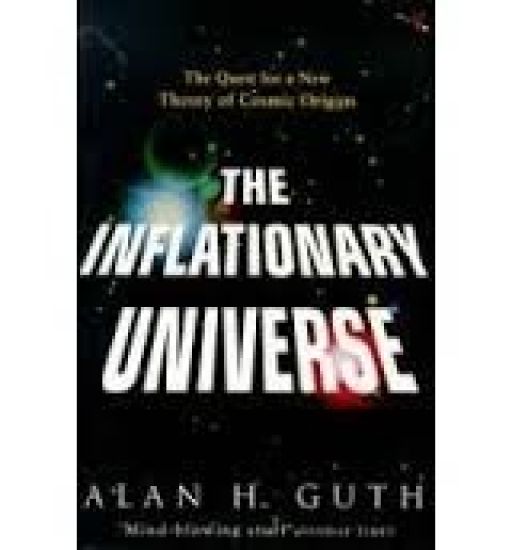
Inflationary Universe

Inflationary Universe

Alan H Guth

Vintage
1998
pokkari
The author, one of the world's foremost cosmologists, sets out to answer the vexed question surrounding the Big Bang Theory: if matter can neither be created nor destroyed, how could so much matter arise from nothing? This is the story of Guth's quest to understand the origins of the universe.
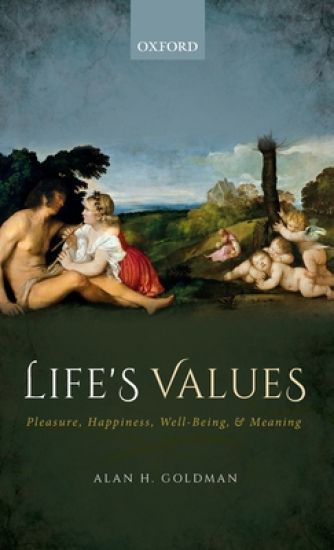
Life's Values

Life's Values

Alan H. Goldman

Oxford University Press
2021
nidottu
In Life's Values Alan H. Goldman seeks to explain what is of ultimate value in individual lives. The proposed candidates include pleasure, happiness, meaning, and well-being. Only the latter is the all-inclusive category of personal value, and it consists in the satisfaction of deep rational desires. Since individuals' rational desires differ, the book cannot dictate what will maximize your own well-being and what in particular you ought to pursue. However it can tell you to make your desires rational (that is, informed and coherent) and it can also explain the nature of these states that typically enter into well-being: pleasure, happiness, and meaning being typically partial causes as well as effects of well-being. All are by-products of satisfying rational desires and rarely successfully aimed at directly. Pleasure comes in sensory, intentional, and pure feeling forms, each with an opposite in pain or distress. Happiness in its primary sense is an emotion, not a constant state as some philosophers assume, and in secondary senses a mood (disposition to have an emotion) or temperament (disposition to be in a mood). Meaning in life is a matter of events in one's life fitting into intelligible narratives. Events in narratives are understood teleologically as well as causally, in terms of outcomes aimed at as well antecedent events. So, in the briefest terms, this book distinguishes and relates pleasure, happiness, well-being, and meaning, and relates each to motivation and value.
Philosophy and the Novel

Philosophy and the Novel

Alan H. Goldman

Oxford University Press
2016
nidottu
Alan H. Goldman presents an original and lucid account of the relationship between philosophy and the novel. In the first part, on philosophy of novels, he defends theories of literary value and interpretation. Literary value, the value of literary works as such, is a species of aesthetic value. Goldman argues that works have aesthetic value when they simultaneously engage all our mental capacities: perceptual, cognitive, imaginative, and emotional. This view contrasts with now prevalent narrower formalist views of literary value. According to it, cognitive engagement with novels includes appreciation of their broad themes and the theses these imply, often moral and hence philosophical theses, which are therefore part of the novels' literary value. Interpretation explains elements of works so as to allow readers maximum appreciation, so as to maximize the literary value of the texts as written. Once more, Goldman's view contrasts with narrower views of literary interpretation, especially those which limit it to uncovering what authors intended. One implication of Goldman's broader view is the possibility of incompatible but equally acceptable interpretations, which he explores through a discussion of rival interpretations of Ernest Hemingway's The Sun Also Rises. Goldman goes on to test the theory of value by explaining the immense appeal of good mystery novels in its terms. The second part of the book, on philosophy in novels, explores themes relating to moral agency--moral development, motivation, and disintegration--in Jane Austen's Pride and Prejudice, Mark Twain's Huckleberry Finn, John Irving's The Cider House Rules, and Joseph Conrad's Nostromo. By narrating the course of characters' lives, including their inner lives, over extended periods, these novels allow us to vicariously experience the characters' moral progressions, positive and negative, to learn in a more focused way moral truths, as we do from real life experiences.
Life's Values

Life's Values

Alan H. Goldman

Oxford University Press
2018
sidottu
In Life's Values Alan H. Goldman seeks to explain what is of ultimate value in individual lives. The proposed candidates include pleasure, happiness, meaning, and well-being. Only the latter is the all-inclusive category of personal value, and it consists in the satisfaction of deep rational desires. Since individuals' rational desires differ, the book cannot dictate what will maximize your own well-being and what in particular you ought to pursue. However it can tell you to make your desires rational (that is, informed and coherent) and it can also explain the nature of these states that typically enter into well-being: pleasure, happiness, and meaning being typically partial causes as well as effects of well-being. All are by-products of satisfying rational desires and rarely successfully aimed at directly. Pleasure comes in sensory, intentional, and pure feeling forms, each with an opposite in pain or distress. Happiness in its primary sense is an emotion, not a constant state as some philosophers assume, and in secondary senses a mood (disposition to have an emotion) or temperament (disposition to be in a mood). Meaning in life is a matter of events in one's life fitting into intelligible narratives. Events in narratives are understood teleologically as well as causally, in terms of outcomes aimed at as well antecedent events. So, in the briefest terms, this book distinguishes and relates pleasure, happiness, well-being, and meaning, and relates each to motivation and value.
Environmental Biotechnology

Environmental Biotechnology

Alan H. Scragg

Oxford University Press
2005
nidottu
Continued advances in biotechnology have driven forward the harnessing of micro-organisms and plants to help protect our fragile environment from the impact of human activity in increasingly targeted yet diverse ways. Environmental Biotechnology provides a broad overview of the subject, focusing on how biotechnological techniques are applied to solve environmental problems, rather than giving detailed explanations of the techniques themselves. Opening with an overview of environmental biotechnology, and a review of the key aspects of microbiology upon which the field is based, the book goes on to explore the diverse way in which biotechnology is applied to tackle environmental problems and issues, from monitoring of the environment and treatment of waste, to the removal of pollutants and extraction of oil and minerals. The book closes with a discussion of the ways in which future advances in biotechnology are likely to be harnessed to address current and emerging issues and problems in increasingly effective and powerful ways. Capturing the current excitement in a field reinvigorated by advances in genetic manipulation, and emerging genomic and proteomic technologies, Environmental Biotechnology is the perfect resource for any student needing to develop a sound understanding of biotechnology, and the diverse ways it can be applied to address important environmental issues. Online Resource Centre - Figures from the book available to download, to facilitate lecture preparation - Library of web links cited in the book, to give students ready access to these additional resources
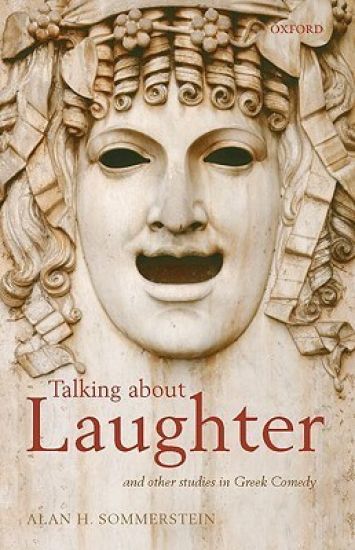
Talking about Laughter

Talking about Laughter

Alan H. Sommerstein

Oxford University Press
2009
sidottu
This book brings together fourteen studies by Alan Sommerstein on Aristophanes and his fellow comic dramatists, some of which have not previously appeared in print. The studies cover almost all the major topics of Sommerstein's work - the nature and functions of comedy in Aristophanes' time, its connections with the society and politics of its day, the question of Aristophanes' own political stances, the light comedy can throw on classical Athenians' perception of basic social divisions (age, gender, citizen/alien, free/slave), comedy's exploitation of the expressive resources of the Greek language, the composition and production history of individual plays, and the history of the genre as a whole.
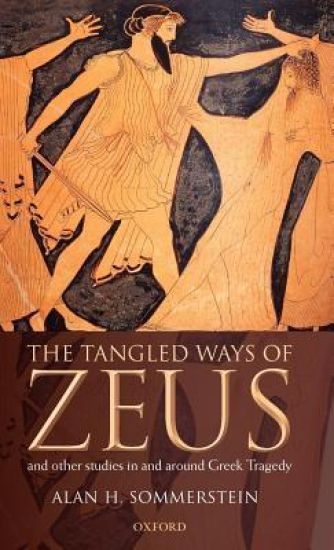
The Tangled Ways of Zeus

The Tangled Ways of Zeus

Alan H. Sommerstein

Oxford University Press
2010
sidottu
The Tangled Ways of Zeus is a collection of studies written over the last twenty years by the distinguished classicist Alan Sommerstein about various aspects of ancient Greek tragedy (and, in some cases, other related genres). It complements his recent collection of studies in Greek comedy, Talking about Laughter (OUP, 2009). Some of the essays have not been published previously, others have appeared in books or journals hard to find outside major academic libraries. Each chapter deals with its own topic, but between them they build up a multifaceted picture of the dramatists (especially Aeschylus and Sophocles), the genre, and its interactions with the society, culture, and religion of classical Athens.
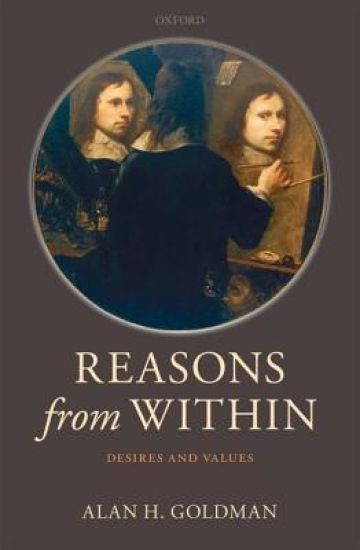
Reasons from Within

Reasons from Within

Alan H. Goldman

Oxford University Press
2009
sidottu
Do the reasons we have for acting as we do derive from our concerns and desires, or are there objective values in the world that we are rationally required to pursue and protect? Alan H. Goldman argues for the internalist or subjectivist view of practical reasons on the grounds that it is simpler, more unified, and more comprehensible than the rival objectivist position. He provides a naturalistic account of practical rationality in terms of coherence within sets of desires or motivational states, and between motivations, intentions, and actions. Coherence is defined as the avoidance of self-defeat, the defeat of one's own deepest concerns. The demand for coherence underlies both practical and theoretical reason and derives from the natural aims of belief and action. In clarifying which desires create reasons, drawing on the literature of cognitive psychology, Goldman offers conceptual analyses of desires, emotions, and attitudes. Reasons are seen to derive ultimately from our deepest occurrent concerns. These concerns require no reasons themselves but provide reasons for many more superficial desires. In defense of this theory, Goldman argues that rational agents need not be morally motivated or concerned for their narrow self-interest. Objective values would demand such concern. They would be independent of our desires but would provide reasons for us to pursue and protect them. They would require rational agents to be motivated by them. But, Goldman argues, we are not motivated in that way, and it makes no sense to demand that our informed and coherent desires be generally other than they are. We need not appeal to such objective values in order to explain how our lives can be good and meaningful. Reasons from Within will appeal to anyone interested in the nature of values and reasons, particularly students of philosophy, psychology, and decision theory.
Reasons from Within

Reasons from Within

Alan H. Goldman

Oxford University Press
2012
nidottu
Do the reasons we have for acting as we do derive from our concerns and desires, or are there objective values in the world that we are rationally required to pursue and protect? Alan Goldman argues for the internalist or subjectivist view of practical reasons on the grounds that it is simpler, more unified, and more comprehensible than the rival objectivist position. He provides a naturalistic account of practical rationality in terms of coherence within sets of desires or motivational states, and between motivations, intentions, and actions. Coherence is defined as the avoidance of self-defeat, the defeat of one's own deepest concerns. The demand for coherence underlies both practical and theoretical reason and derives from the natural aims of belief and action. In clarifying which desires create reasons, drawing on the literature of cognitive psychology, Goldman offers conceptual analyses of desires, emotions, and attitudes. Reasons are seen to derive ultimately from our deepest occurrent concerns. These concerns require no reasons themselves but provide reasons for many more superficial desires. In defense of this theory, Goldman argues that rational agents need not be morally motivated or concerned for their narrow self-interest. Objective values would demand such concern. They would be independent of our desires but would provide reasons for us to pursue and protect them. They would require rational agents to be motivated by them. But, Goldman argues, we are not motivated in that way, and it makes no sense to demand that our informed and coherent desires be generally other than they are. We need not appeal to such objective values in order to explain how our lives can be good and meaningful. Reasons from Within will appeal to anyone interested in the nature of values and reasons, particularly students of philosophy, psychology, and decision theory.
Philosophy and the Novel

Philosophy and the Novel

Alan H. Goldman

Oxford University Press
2013
sidottu
Alan H. Goldman presents an original and lucid account of the relationship between philosophy and the novel. In the first part, on philosophy of novels, he defends theories of literary value and interpretation. Literary value, the value of literary works as such, is a species of aesthetic value. Goldman argues that works have aesthetic value when they simultaneously engage all our mental capacities: perceptual, cognitive, imaginative, and emotional. This view contrasts with now prevalent narrower formalist views of literary value. According to it, cognitive engagement with novels includes appreciation of their broad themes and the theses these imply, often moral and hence philosophical theses, which are therefore part of the novels' literary value. Interpretation explains elements of works so as to allow readers maximum appreciation, so as to maximize the literary value of the texts as written. Once more, Goldman's view contrasts with narrower views of literary interpretation, especially those which limit it to uncovering what authors intended. One implication of Goldman's broader view is the possibility of incompatible but equally acceptable interpretations, which he explores through a discussion of rival interpretations of Ernest Hemingway's The Sun Also Rises. Goldman goes on to test the theory of value by explaining the immense appeal of good mystery novels in its terms. The second part of the book, on philosophy in novels, explores themes relating to moral agency--moral development, motivation, and disintegration--in Jane Austen's Pride and Prejudice, Mark Twain's Huckleberry Finn, John Irving's The Cider House Rules, and Joseph Conrad's Nostromo. By narrating the course of characters' lives, including their inner lives, over extended periods, these novels allow us to vicariously experience the characters' moral progressions, positive and negative, to learn in a more focused way moral truths, as we do from real life experiences.
Heat Advisory

Heat Advisory

Alan H. Lockwood

MIT Press
2017
pokkari
How climate change can affect our health, from heat-related illnesses to extreme weather events.Climate change affects not just the planet but the people who live on it. In this book, physician Alan Lockwood describes how global warming will be bad for our health. Drawing on peer-reviewed scientific and medical research, Lockwood meticulously details the symptoms of climate change and their medical side effects. Our global ecosystems create webs of interdependence that support life on the planet. Lockwood shows how climate change is affecting these ecosystems and describes the resulting impact on health. For example, rising temperatures create long-duration heat waves during which people sicken and die. Climate change increases the risk for certain infectious diseases, including malaria, dengue fever, West Nile virus, Zika, and Lyme disease. Extreme weather and poor soil conditions cause agricultural shortfalls, leading to undernutrition and famine. There is even evidence that violence increases in warmer weather-including a study showing that pitchers throw "beanballs" (balls thrown with the intention of hitting the batter) significantly more often in hot weather.Climate change is real and it is happening now. We must use what we know to adapt to a warmer world and minimize adverse health effects: make city buildings cooler with air conditioning and "cool roofs," for example, and mobilize resources for predicted outbreaks of disease. But, Lockwood points out, we also need prevention. The ultimate preventive medicine is reducing greenhouse gas emissions and replacing energy sources that depend on fossil fuels with those that do not.
Faunal Extinction in an Island Society

Faunal Extinction in an Island Society

Alan H. Simmons; G.A. Clarke

Kluwer Academic/Plenum Publishers
1999
sidottu
The multidisciplinary research program at Akrotiri Aetokremnos is important, in my op- ion, for three reasons: two empirical and one conceptual. Quite apart from the archaeology, work at the site is a major contribution to island biogeography, in that the Phanourios sample—certainly the best from Cyprus and probably the best anywhere in the world—has already provided, and will continue to provide, important ecological and behavioral data on these intriguing creatures. Dwarfed island faunas are important to our understanding of the complex factors that shape natural selection in ecologically closed environments over the evolutionary long term. At Aetokremnos, we seem to have the “end” of a long sequence of hippo evolution on the island. With comparative studies of other Cypriot hippo faunas, we should be able to pin down the interval of initial colonization by what were, pres- ably, normal-sized hippos, and—if the other sites can be dated—document the dwarfing process in considerable detail. Aetokremnos would still be a significant paleontological - cality, even in the absence of evidence of a human presence there. While reading the text of the monograph, a number of questions strictly related to the paleontology occurred to me. One was how to model the colonization process. There seems to be little question that the large mammals colonized the island by swimming to it (because, I gather, Cyprus has not been connected to the mainland for roughly 5–6 m- lion years).
Moral Knowledge

Moral Knowledge

Alan H. Goldman

Routledge
2020
sidottu
Originally published in 1988, this book discusses if moral knowledge exists, and if so, if it is similar to other forms of knowledge. This book approaches the issues from both historical and contemporary perspectives and in order to determine whether there is a real property of rightness, looks to the ethical theories of Hobbes, Hume and Kant. This historical analysis leads to a systematic comparison of three theories of the nature of ethics: realism, emotivism and coherentism. The nature of coherence is explained using legal reasoning as a model. Moral reasoning is compared and contrasted with reasoning both in science and law, showing how ethics differs from science and empirical disciplines.
Moral Knowledge

Moral Knowledge

Alan H. Goldman

Routledge
2022
nidottu
Originally published in 1988, this book discusses if moral knowledge exists, and if so, if it is similar to other forms of knowledge. This book approaches the issues from both historical and contemporary perspectives and in order to determine whether there is a real property of rightness, looks to the ethical theories of Hobbes, Hume and Kant. This historical analysis leads to a systematic comparison of three theories of the nature of ethics: realism, emotivism and coherentism. The nature of coherence is explained using legal reasoning as a model. Moral reasoning is compared and contrasted with reasoning both in science and law, showing how ethics differs from science and empirical disciplines.
Russia and the World Economy

Russia and the World Economy

Alan H Smith; Alan Smith

TAYLOR FRANCIS LTD
1993
sidottu
Russia and the World Economy analyses the major economic, historical and political obstacles to the successful integration of the Russian economy into the world economy. Alan Smith examines the role of Western assistance and advice in this process, and the potential implications of failure of reforms in Russia for global stability and international economic relations.
Russia and the World Economy

Russia and the World Economy

Alan H Smith; Alan Smith

Routledge
1993
nidottu
Russia and the World Economy analyses the major economic, historical and political obstacles to the successful integration of the Russian economy into the world economy. Alan Smith examines the role of Western assistance and advice in this process, and the potential implications of failure of reforms in Russia for global stability and international economic relations.
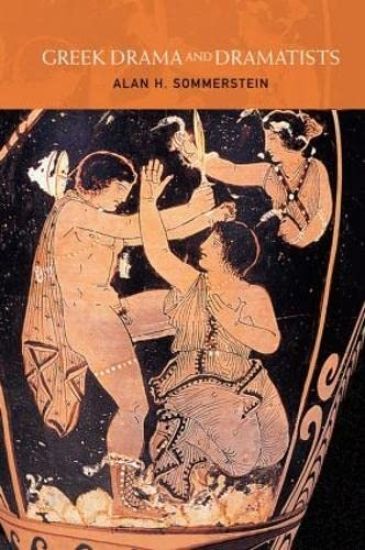
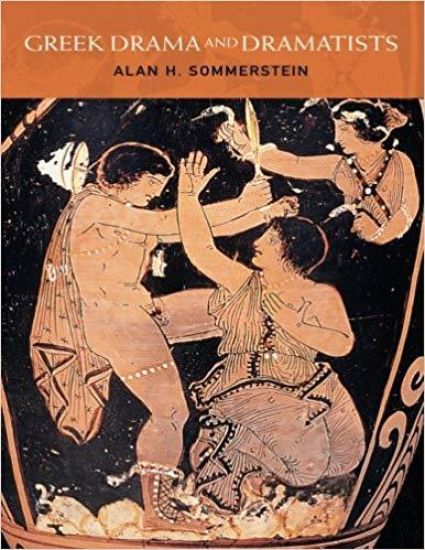
Greek Drama and Dramatists

Greek Drama and Dramatists

Alan H. Sommerstein

Routledge
2002
sidottu
The history of European drama began at the festivals of Dionysus in ancient Athens, where tragedy, satyr-drama and comedy were performed. Understanding this background is vital for students of classical, literary and theatrical subjects, and Alan H. Sommerstein's accessible study is the ideal introduction. The book begins by looking at the social and theatrical contexts and different characteristics of the three genres of ancient Greek drama. It then examines the five main dramatists whose works survive - Aeschylus, Sophocles, Euripides, Aristophanes and Menander - discussing their styles, techniques and ideas, and giving short synopses of all their extant plays. Additional helpful features include succinct coverage of almost sixty other authors, a chronology of significant people and events, and an anthology of translated texts, all of which have been previously inaccessible to students. An up-to-date study bibliography of further reading concludes the volume. Clear, concise and comprehensive, and written by an acknowledged expert in the field, Greek Drama and Dramatists will be a valuable orientation text at both sixth form and undergraduate level.
Greek Drama and Dramatists

Greek Drama and Dramatists

Alan H. Sommerstein

Routledge
2002
nidottu
The history of European drama began at the festivals of Dionysus in ancient Athens, where tragedy, satyr-drama and comedy were performed. Understanding this background is vital for students of classical, literary and theatrical subjects, and Alan H. Sommerstein's accessible study is the ideal introduction. The book begins by looking at the social and theatrical contexts and different characteristics of the three genres of ancient Greek drama. It then examines the five main dramatists whose works survive - Aeschylus, Sophocles, Euripides, Aristophanes and Menander - discussing their styles, techniques and ideas, and giving short synopses of all their extant plays. Additional helpful features include succinct coverage of almost sixty other authors, a chronology of significant people and events, and an anthology of translated texts, all of which have been previously inaccessible to students. An up-to-date study bibliography of further reading concludes the volume. Clear, concise and comprehensive, and written by an acknowledged expert in the field, Greek Drama and Dramatists will be a valuable orientation text at both sixth form and undergraduate level.