Kirjojen hintavertailu. Mukana 11 342 296 kirjaa ja 12 kauppaa.

Kirjahaku

Etsi kirjoja tekijän nimen, kirjan nimen tai ISBN:n perusteella.

1000 tulosta hakusanalla Alan J. Richardson

Dear Evil Tester: Provocative Advice That Could Change Your Approach To Testing Forever
Are you in charge of your own testing? Do you have the advice you need to advance your test approach?"Dear Evil Tester" contains advice about testing that you won't hear anywhere else."Dear Evil Tester" is a three pronged publication designed to: -provoke not placate, -make you react rather than relax, -help you laugh not languish.Starting gently with the laugh out loud Agony Uncle answers originally published in 'The Testing Planet'. "Dear Evil Tester" then provides new answers, to never before published questions, that will hit your beliefs where they change. Before presenting you with essays that will help you unleash your own inner Evil Tester.With advice on automating, communication, talking at conferences, psychotherapy for testers, exploratory testing, tools, technical testing, and more. Dear Evil Tester randomly samples the Software Testing stomping ground before walking all over it."Dear Evil Tester" is a revolutionary testing book for the mind which shows you an alternative approach to testing built on responsibility, control and laughter.Read what our early reviewers had to say: "Wonderful stuff there. Real deep."Rob Sabourin, @RobertASabourinAuthor of "I Am a Bug""The more you know about software testing, the more you will find to amuse you."Dot Graham, @dorothygrahamAuthor of "Experiences of Test Automation""laugh-out-loud episodes"Paul Gerrard, @paul_gerrardAuthor of "The Tester's Pocketbook""A great read for every Tester."Andy Glover, @cartoontesterAuthor of "Cartoon Tester"
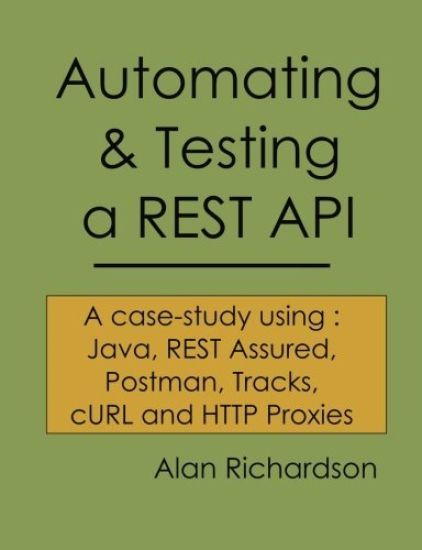
Automating and Testing a REST API: A Case Study in API testing using: Java, REST Assured, Postman, Tracks, cURL and HTTP Proxies
Have you ever wished that you had a worked example of how to test a REST API? Not just automate the API, but how to interact with it, using command line and GUI tools, to support your manual interactive testing. Then take your testing forward into automating the API? That's what this book provides. A step by step case study covering: - How to read the REST API documentation.- How to tell if the application is using the API.- How to interact with the API from the command line with cURL.- Automating with BASH and Windows Command Line.- Sending API requests through an HTTP Proxy so you can see in detail the requests and responses.- How to use HTTP Proxies to create data in the application through Fuzzing.- Postman REST API GUI tool.- Automate 'under the GUI' parts of the application that don't have an API.- Automate the API with Java using REST Assured.- Build abstraction code to make your automated efforts readable and maintainable.- JSON and XML parsing with Serialization and Deserialization.The book is fully supported by executable code which you can find on GitHub, and the support page for the book has sample videos showing some of the early steps in the case study in detail. By working through this case study you will be able to interact with an API from the command line, GUI tools, HTTP messages in Proxies and with Java code. Over the last few years, the Author has used the Open Source Tracks application as an example testing target to teach: Technical Web Testing, Automating GUIs and REST API Testing. This book collates the preparatory work and teaching from the REST API workshops. The code from the workshops is included: for creating users, generating random data, testing basic API calls with PUT, GET, POST and DELETE. Also the early steps of exploring and investigating the API interactively to support manual technical testing are explained in depth
The Roman Survey of Britain

The Roman Survey of Britain

Alan Richardson; Michael J. Ferrar

BAR Publishing
2003
nidottu
Did the Romans survey the lands that they conquered? This study puts forward evidence in support of the idea that geometric patterns can be discerned in the angles of road alignments and the position of forts and towns to suggest that the Romans surveyed Britain shortly after the invasion. With lots of maps and diagrams, Ferrar and Richardson combine cartography, history and mathematics to argue for the use of surveying and centuration in Britain, going on to suggest how and why this was carried out. Detailed examinations of the geometric landscape of The Mickle Ditch in Manchester, and of the Antonine and Hadrian's Wall are included.
Alan J. Pakula

Alan J. Pakula

UNIVERSITY PRESS OF MISSISSIPPI
2024
pokkari
Renowned for his masterful storytelling, Alan J. Pakula (1928–1998) left an indelible mark on cinema history. Alan J. Pakula: Interviews offers a concise yet comprehensive overview of the director’s illustrious career, from his early days in Hollywood to his rise as a major filmmaker. From the famous ""paranoid trilogy"" of Klute, The Parallax View, and All the President’s Men to the gripping psychological drama of Sophie’s Choice and his often-undervalued later work, Pakula’s diverse filmography has captivated audiences and critics alike. The first published collection of interviews with the acclaimed director, this volume presents an illuminating portrait of Pakula as a filmmaker, an artist, and a man of many parts. The eighteen pieces compiled here, including an illuminating introduction and previously unpublished 1983 interview by editor Tom Ryan, provide a broad overview of Pakula’s career. In his own words, Pakula recounts his experience as Robert Mulligan’s producer, reflects on the bulk of films he made as director, and outlines his approach to the art of filmmaking. Taken as a whole, Alan J. Pakula: Interviews is a treasure trove of cinematic wisdom and a fitting tribute to the legacy of an important American filmmaker.
Alan J. Pakula

Alan J. Pakula

UNIVERSITY PRESS OF MISSISSIPPI
2024
sidottu
Renowned for his masterful storytelling, Alan J. Pakula (1928–1998) left an indelible mark on cinema history. Alan J. Pakula: Interviews offers a concise yet comprehensive overview of the director’s illustrious career, from his early days in Hollywood to his rise as a major filmmaker. From the famous ""paranoid trilogy"" of Klute, The Parallax View, and All the President’s Men to the gripping psychological drama of Sophie’s Choice and his often-undervalued later work, Pakula’s diverse filmography has captivated audiences and critics alike. The first published collection of interviews with the acclaimed director, this volume presents an illuminating portrait of Pakula as a filmmaker, an artist, and a man of many parts. The eighteen pieces compiled here, including an illuminating introduction and previously unpublished 1983 interview by editor Tom Ryan, provide a broad overview of Pakula’s career. In his own words, Pakula recounts his experience as Robert Mulligan’s producer, reflects on the bulk of films he made as director, and outlines his approach to the art of filmmaking. Taken as a whole, Alan J. Pakula: Interviews is a treasure trove of cinematic wisdom and a fitting tribute to the legacy of an important American filmmaker.
Sherrington's Loom

Sherrington's Loom

Alan J. McComas

Oxford University Press Inc
2019
sidottu
In Sherrington's Loom, Alan McComas provides a historical account of the research that has led to recognition of key mechanisms underlying consciousness. Evidence is assembled from a rich variety of sources--neurological patients, animal behavior, laboratory studies, and especially brain stimulation and recording in humans and animals. Among the remarkable advances in the field has been the ability to identify nerve cells in the human brain that store memories of specific people, places, and objects. In addition to dealing with the issue of "free will," the book assembles the information into possible working models for sensations, intentions, and actions. McComas concludes by considering the possibility of consciousness in artificially intelligent systems.
Epidemiology of the Rheumatic Diseases

Epidemiology of the Rheumatic Diseases

Alan J. Silman; Marc C. Hochberg

Oxford University Press
1993
sidottu
This major reference work is the first comprehensive text to review in detail the data currently available on the epidemiology of the main rheumatic and musco-skeletal diseases. The problems of disease definition and criteria are considered with data on the occurrence of these diseases, both prevalence and incidence, and their variation with age, sex, geographical area, ethnic group, and trends over time. The results of epidemiological investigations,looking at both genetic and environmental risk factors, are considered and the impact of specific diseases of survival is also considered. Covering 15 disease areas from inflammatory joint disease and connective tissue disease to degenerative joint disease and non-articular conditions, such as low back pain and carpel tunnel syndrome, this is the only text available which offers full coverage of the subject with a truly international perspective.
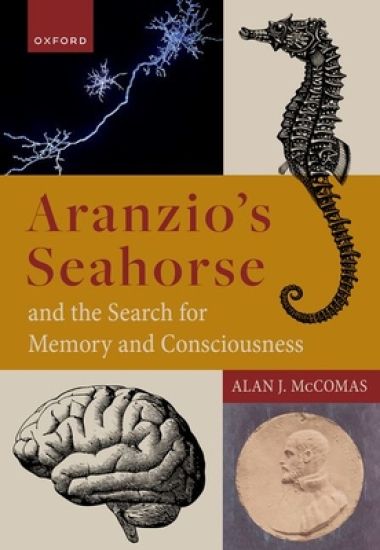
Aranzio's Seahorse and the Search for Memory and Consciousness
In the final volume of his historical neuroscience trilogy, prize-winning author Alan J. McComas recounts the research that led to recognition of the hippocampus, a structure deep within the brain, as being primarily responsible for memory. This intriguing and exciting account includes observations on patients with memory loss as well as insights from ingenious laboratory experiments. Using several arguments in support, McComas suggests that it is the electrical impulse activity of neurons in the hippocampus that creates consciousness and that the latter is, in fact, the ever-changing sequence of short-term memories. He show us how a deeper knowledge of the hippocampus can help us develop a fuller understanding of Alzheimer's disease and other disorders of memory and behaviour, including 'long COVID. Lavishly illustrated, Aranzio's Seahorse will be of value not only to neuroscientists, psychologists, and philosophers but to all those interested in the workings of the brain and in the history of its exploration.
Confronting the Racist Legacy of the American Child Welfare System
In Confronting the Racist Legacy of the American Child Welfare System, Alan J. Dettlaff presents a call to abolish the American child welfare system due to the harm and destruction it causes Black families. Dettlaff traces the origins of the modern child welfare system, which emerged following the abolition of slavery, to demonstrate that the harm and oppression that result from child welfare intervention are not the result of "unintended consequences" but rather are the clear intents of the system and the foreseeable results of the policies that have been put in place over decades. By tracing the history of family separations in the United States since the era of slavery, Confronting the Racist Legacy of the American Child Welfare System demonstrates that the intended outcomes of those separations--the subjugation of Black Americans and the maintenance of white supremacy--are the same intended outcomes of the family separations done today. What distinguishes contemporary family separations from those that occurred during slavery is that today's separations occur under a facade of benevolence, a myth that has been perpetuated over decades that family separations are necessary to "save" the most vulnerable children. Confronting the Racist Legacy of the American Child Welfare System presents evidence of the vast harms that result from family separations to make a case that the child welfare system is beyond reform. Rather, the only solution to ending these harms is complete abolition of this system and a fundamental reimagining of the way society cares for children, families, and communities.
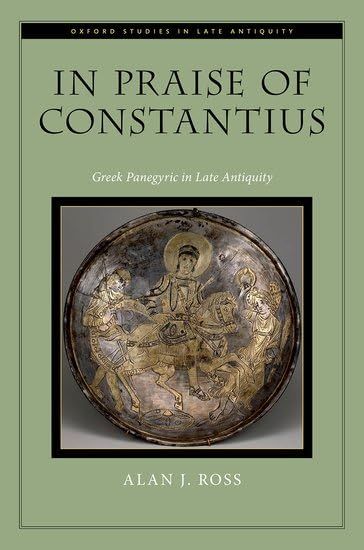
In Praise of Constantius

In Praise of Constantius

Alan J. Ross

OXFORD UNIVERSITY PRESS INC
2026
sidottu
In Praise of Constantius offers historical and literary analysis of eight Greek panegyrics composed by Libanius, Themistius, and Julian in the 340s and 350s CE, and addressed to Constantius II and his wife, the empress Eusebia. Its central concerns are the role that the composition, performance, and dissemination of imperial panegyric played in establishing the careers of the three most prominent Greek pagans of the fourth century; and their development of Greek epideictic literature in an era beyond the Second Sophistic. The book deftly exposes the rich intertextual dynamics between these eight speeches, other contemporary works, and canonical works of Greek political literature. It revises standard interpretations of panegyric's communicative function, and treats the orator less as a vector for others' messaging and instead as an active agent in political discourse in pursuit of his own ends. The volume substantially re-writes the early careers of each of its subjects, emphasizing their precarity and the utilization of performed paideia in managing moments of personal and political upheaval.
Semiconducting and Metallic Polymers

Semiconducting and Metallic Polymers

Alan J. Heeger; Niyazi Serdar Sariciftci; Ebinazar B. Namdas

Oxford University Press
2010
sidottu
Conducting and semiconducting (conjugated) polymers have a unique set of properties, combining the electronic properties of metals and semiconductors with the processing advantages and mechanical properties of polymers. Now, thirty-five years after their discovery, metallic conducting polymers have been demonstrated in the laboratory to have electrical conductivities approaching that of copper, and mechanical strengths exceeding that of steel, a remarkable achievement. A wide variety of electrical and optical devices have been demonstrated using semiconducting polymers. Light-emitting devices have been made which are as bright as fluorescent lamps at applied voltages of only a few volts; photovoltaic solar energy conversion using conjugated polymer composites is in industrial production; conjugated polymer transistors, circuits and chips have been demonstrated. Indeed, semiconducting and metallic polymers can be thought of as electronic 'inks'. The advances in printing technology (ink-jet printing, off-set printing, etc) combined with the science and technology of conducting polymers will revolutionize the way in which electronic devices are manufactured. In addition, semiconducting and metallic polymers can be used in applications which require special mechanical properties such as flexibility. The field of semiconducting and conducting polymers has become one of the most attractive areas of interdisciplinary materials science and technology. Ranging from physics, chemistry, electrical and electronic engineering to the optical sciences, this field covers a wide range of competences and interdisciplinary knowledge.
Ammianus' Julian

Ammianus' Julian

Alan J. Ross

Oxford University Press
2016
sidottu
Ammianus Marcellinus' Res Gestae holds a prominent position in modern studies of the emperor Julian as the fullest extant narrative of the reign of the last 'pagan' emperor. Ammianus' Julian: Narrative and Genre in the Res Gestae offers a major reinterpretation of the work, which is one of the main narrative sources for the political history of the later Roman Empire, and argues for a re-examination of Ammianus' agenda and methods in narrating the reign of Julian. Building on recent developments in the application of literary approaches and critical theories to historical texts, Ammianus' presentation of Julian is evaluated by considering the Res Gestae within three interrelated contexts: as a work of Latin historiography, which consciously sets itself within a classical and classicizing generic tradition; in a more immediate literary and political context, as the final contribution by a member of an 'eyewitness' generation to a quarter century of intense debate over Julian's legacy by several authors who had lived through his reign and had been in varying degrees of proximity to Julian himself; and as a narrative text, in which narratorial authority is closely associated with the persona of the narrator, both as an external narrating agent and an occasional participant in the events he relates. This is complemented by a literary survey and a re-analysis of Ammianus' depiction of several key moments in Julian's reign, such as his appointment as Caesar, the battle of Strasbourg in 357AD, his acclamation as Augustus, and the disastrous invasion of Persia in 363AD. It suggests that the Res Gestae presents a Latin-speaking, western audience with an idiosyncratic and 'Romanized' depiction of the philhellene emperor and that, consciously exploiting his position as a Greek writing in Latin and as a contemporary of Julian, Ammianus wished his work to be considered a culminating and definitive account of the man and his life.
Epidemiological Studies: A Practical Guide

Epidemiological Studies: A Practical Guide

Alan J. Silman; Gary J. Macfarlane; Tatiana Macfarlane

Oxford University Press
2018
nidottu
To successfully conduct an epidemiological study, academic subject knowledge must be combined with careful consideration of the practical elements involved. From an academic perspective, insights into the basis of epidemiology, the concepts behind how we study diseases, and the challenges and limitations of the results that emerge are prioritised. However, the success of the academic analysis depends on how, when, and where the data used is collected. Epidemiological Studies: A Practical Guide focuses on the practical challenges of epidemiological data collection. Essential topics, such as how to choose the population to study, how to maximise participation and retention, and how to frame questions so that subjects provide the information required, are the core of the material presented. The book explains the skills needed to conduct a study where data is collected and presented accurately, and in appropriate formats. In addition to presenting a step-by-step guide to epidemiological investigations, the chapters in the book are accompanied by examples of how to phrase the letters and forms needed for each stage of conducting a study. Focusing on measurement, study designs, statistics, methodological issues, and key skills, the book provides a valuable background to epidemiological study. With detailed tables and figures, a clear chapter outline, and a straightforward index, the information presented is easily accessible and can quickly be applied to the reader's own work. Extensively revised, this new edition includes updates on case-crossover, Mendelian randomisation, and case-cohort. New chapters have been added to reflect the areas a student is now likely to encounter in an introductory epidemiological course, such as evidence synthesis, use of routine data, association or causation, feasibility, and pilot studies. Epidemiological Studies: A Practical Guide is ideal for students in epidemiology, public health, health research, and health services research. It is also highly relevant to post-graduate research students, and early stage clinical and non-clinical researchers.
Image and Reality

Image and Reality

Alan J. Rocke

University of Chicago Press
2010
sidottu
Chemists in the nineteenth century were faced with a particular problem: how to depict the atoms and molecules beyond the direct reach of our bodily senses. In visualizing this microworld, these scientists were the first to move beyond high-level philosophical speculations regarding the unseen. In "Image and Reality", Alan J. Rocke focuses on the community of organic chemists in Germany to provide the basis for a fuller understanding of the nature of scientific creativity. Arguing that visual mental images assisted many of these scientists in thinking through old problems and new possibilities, Rocke uses a variety of sources, including private correspondence, diagrams and illustrations, scientific papers, and public statements to investigate their ability to not only imagine the invisibly tiny atoms and molecules upon which they operated daily, but to build detailed and empirically based pictures of them. These portrayals of 'chemical structures' gradually became an accepted part of science and are now regarded as one of the defining features of chemistry. In telling this fascinating story, Rocke also suggests that imagistic thinking is often at the heart of creative thinking in all fields.