Explores the structure of human participation in the triune life. Focuses on the question of describing the 'members' of the Trinity as 'persons'; how language functions in describing God in such terms; and the underlying models which shape our theological perspective.
Explores the structure of human participation in the triune life. Focuses on the question of describing the 'members' of the Trinity as 'persons'; how language functions in describing God in such terms; and the underlying models which shape our theological perspective.
A Fresh Look at the Doctrine of Christ,Essential for Modern Theological Work Christology was the central doctrine articulated by the early church councils, and it remains the subject of vigorous theological investigation today. The study of the doctrine of Christ is a field of broad ecumenical convergence, inviting theologians from all denominational settings to fruitful collaborative exploration. In the contemporary setting, it is especially crucial for theologians to investigate the scriptural witness afresh, to retrieve classical criteria and categories from the tradition, and to consider the generative pressure of soteriology for Christology proper.The first annual Los Angeles Theology Conference sought to make a positive contribution to contemporary dogmatics in intentional engagement with the Christian tradition. Christology, Ancient and Modern brings together conference proceedings, surveying the field and articulating the sources, norms, and criteria for constructive theological work in Christology.
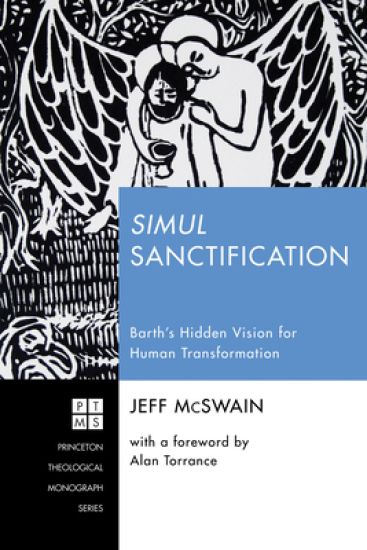
Why do we see so much fruitful good in unbelievers and so much evil in believers? What could it mean for a believer that the old is ""gone,"" especially when it doesn't feel that way? What does it mean for humans who are simul iustus et peccator (simultaneously righteous and sinner) to be transformed in Christ and by his Spirit? We typically think of sanctification as pertaining to humans being conformed to Jesus, but what could it mean when Jesus speaks of himself as being sanctified for our sakes (John 17:19)? Jeff McSwain mines the theology of Karl Barth to engage such questions. In looking ""through the simul,"" he concludes with Barth that universal human transformation is a reality before it is a possibility, and that, despite our contradictory state, we may live Spirit-filled lives as we participate in Christ's true humanity that determines ours--a humanity which never gets old. ""In an original contribution, McSwain succeeds in demonstrating how Barth's version of the Lutheran 'simul iustus et peccator' is radicalized by its extension to the incarnate Son and thereby to the race as a whole, transferring the pattern of Chalcedonian Christology (the so-called 'two natures' doctrine) into the field of anthropology. The result is a significant recasting of our ways of thinking about numerous core doctrines, including creation, atonement and incarnation as well as redemption and fall."" --Trevor Hart, author of Regarding Karl Barth ""I have literally been waiting for years for this book--a book that explores in depth what the sanctification of Jesus Christ means for the sanctification of humanity. In this excellent, accessible, and innovative work, Jeff McSwain carefully examines how Karl Barth reappropriates the classic doctrine simul iustus et peccator while also creatively imagining ways Barth's understanding could enliven the life and ministry of the church today. This is a beautiful contribution to the growing theological literature on sanctification and discipleship."" --Kristen Deede Johnson, award winning author of The Justice Calling ""McSwain argues persuasively that the simul . . . is a powerful key to Barth's theology as a whole. Breaking new ground, yet firmly committed to all the key truths championed by Barth, McSwain's theological insightfulness is evident on every page. An impressively comprehensive knowledge of Barth's Dogmatics is also on display, along with a truly Barthian passion for the truth and the importance of the gospel . . . McSwain's thesis is both fascinating and challenging. It will richly reward careful engagement."" --Douglas Campbell, Duke University ""There's a remarkable single-mindedness about Jeff McSwain, a theological determination that yields insights impossible to ignore. Here he presses us to read Barth's doctrine of sanctification through Luther's simul iustus et peccator, and in the process uncovers a wealth of connections and resonances with immense practical consequences for the life of the church. Provocative and game-changing, Barth--and the gospel --will never sound quite the same again."" --Jeremy Begbie, Duke University ""Birthed in the fires of real world missional controversy, this book crackles with the urgency of the gospel. Drawing from the deep well of Barth's Church Dogmatics, Jeff McSwain offers a refreshing vision of Christian life freed to live wholly in this world by seeking the true life hidden in Christ."" --Brian Brock, University of Aberdeen ""McSwain casts his net wide, but discerningly, fastidiously mirroring Barth's understanding of tradition and the Bible. Simul Sanctification: Jesus Christ incarnate is at once the Righteous One of God, and the One who assumes sinful human flesh. With echoes of Gregory, what McSwain calls 'Chalcedonian anthropology' adds to the corpus of Barthian studies and provides enhanced perspective on Barth's theological actualism: the sanctified life of a singular Jewish human of humble origins who re-presents in every hum
Why do we see so much fruitful good in unbelievers and so much evil in believers? What could it mean for a believer that the old is ""gone,"" especially when it doesn't feel that way? What does it mean for humans who are simul iustus et peccator (simultaneously righteous and sinner) to be transformed in Christ and by his Spirit? We typically think of sanctification as pertaining to humans being conformed to Jesus, but what could it mean when Jesus speaks of himself as being sanctified for our sakes (John 17:19)? Jeff McSwain mines the theology of Karl Barth to engage such questions. In looking ""through the simul,"" he concludes with Barth that universal human transformation is a reality before it is a possibility, and that, despite our contradictory state, we may live Spirit-filled lives as we participate in Christ's true humanity that determines ours--a humanity which never gets old. ""In an original contribution, McSwain succeeds in demonstrating how Barth's version of the Lutheran 'simul iustus et peccator' is radicalized by its extension to the incarnate Son and thereby to the race as a whole, transferring the pattern of Chalcedonian Christology (the so-called 'two natures' doctrine) into the field of anthropology. The result is a significant recasting of our ways of thinking about numerous core doctrines, including creation, atonement and incarnation as well as redemption and fall."" --Trevor Hart, author of Regarding Karl Barth ""I have literally been waiting for years for this book--a book that explores in depth what the sanctification of Jesus Christ means for the sanctification of humanity. In this excellent, accessible, and innovative work, Jeff McSwain carefully examines how Karl Barth reappropriates the classic doctrine simul iustus et peccator while also creatively imagining ways Barth's understanding could enliven the life and ministry of the church today. This is a beautiful contribution to the growing theological literature on sanctification and discipleship."" --Kristen Deede Johnson, award winning author of The Justice Calling ""McSwain argues persuasively that the simul . . . is a powerful key to Barth's theology as a whole. Breaking new ground, yet firmly committed to all the key truths championed by Barth, McSwain's theological insightfulness is evident on every page. An impressively comprehensive knowledge of Barth's Dogmatics is also on display, along with a truly Barthian passion for the truth and the importance of the gospel . . . McSwain's thesis is both fascinating and challenging. It will richly reward careful engagement."" --Douglas Campbell, Duke University ""There's a remarkable single-mindedness about Jeff McSwain, a theological determination that yields insights impossible to ignore. Here he presses us to read Barth's doctrine of sanctification through Luther's simul iustus et peccator, and in the process uncovers a wealth of connections and resonances with immense practical consequences for the life of the church. Provocative and game-changing, Barth--and the gospel --will never sound quite the same again."" --Jeremy Begbie, Duke University ""Birthed in the fires of real world missional controversy, this book crackles with the urgency of the gospel. Drawing from the deep well of Barth's Church Dogmatics, Jeff McSwain offers a refreshing vision of Christian life freed to live wholly in this world by seeking the true life hidden in Christ."" --Brian Brock, University of Aberdeen ""McSwain casts his net wide, but discerningly, fastidiously mirroring Barth's understanding of tradition and the Bible. Simul Sanctification: Jesus Christ incarnate is at once the Righteous One of God, and the One who assumes sinful human flesh. With echoes of Gregory, what McSwain calls 'Chalcedonian anthropology' adds to the corpus of Barthian studies and provides enhanced perspective on Barth's theological actualism: the sanctified life of a singular Jewish human of humble origins who re-presents in every hum
This volume brings together decades of research in philosophical theology on the concepts of justice, art, and liturgy. One might be inclined to think that reflections on these topics should take place in isolation from one another, but as Wolterstorff masterfully demonstrates, they are indeed united in love. Inherent in each of these topics is a logic that affirms its object. Whether the dignity of the other, the desire for creative and enhancing understanding of the other, or the infinite goodness of the creator, all these things and practices find their completion in a unitive core of love. Which is to say, ultimately, they find their fulfillment in the worship of God and in the affirmation of the image of God in each of us.
This volume brings together decades of research in philosophical theology on the concepts of justice, art, and liturgy. One might be inclined to think that reflections on these topics should take place in isolation from one another, but as Wolterstorff masterfully demonstrates, they are indeed united in love. Inherent in each of these topics is a logic that affirms its object. Whether the dignity of the other, the desire for creative and enhancing understanding of the other, or the infinite goodness of the creator, all these things and practices find their completion in a unitive core of love. Which is to say, ultimately, they find their fulfillment in the worship of God and in the affirmation of the image of God in each of us.
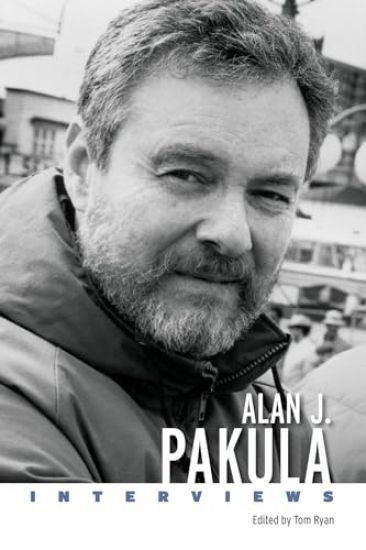
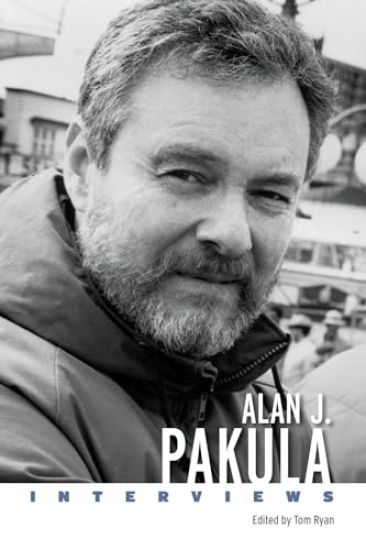
Renowned for his masterful storytelling, Alan J. Pakula (1928–1998) left an indelible mark on cinema history. Alan J. Pakula: Interviews offers a concise yet comprehensive overview of the director’s illustrious career, from his early days in Hollywood to his rise as a major filmmaker. From the famous ""paranoid trilogy"" of Klute, The Parallax View, and All the President’s Men to the gripping psychological drama of Sophie’s Choice and his often-undervalued later work, Pakula’s diverse filmography has captivated audiences and critics alike. The first published collection of interviews with the acclaimed director, this volume presents an illuminating portrait of Pakula as a filmmaker, an artist, and a man of many parts. The eighteen pieces compiled here, including an illuminating introduction and previously unpublished 1983 interview by editor Tom Ryan, provide a broad overview of Pakula’s career. In his own words, Pakula recounts his experience as Robert Mulligan’s producer, reflects on the bulk of films he made as director, and outlines his approach to the art of filmmaking. Taken as a whole, Alan J. Pakula: Interviews is a treasure trove of cinematic wisdom and a fitting tribute to the legacy of an important American filmmaker.
Renowned for his masterful storytelling, Alan J. Pakula (1928–1998) left an indelible mark on cinema history. Alan J. Pakula: Interviews offers a concise yet comprehensive overview of the director’s illustrious career, from his early days in Hollywood to his rise as a major filmmaker. From the famous ""paranoid trilogy"" of Klute, The Parallax View, and All the President’s Men to the gripping psychological drama of Sophie’s Choice and his often-undervalued later work, Pakula’s diverse filmography has captivated audiences and critics alike. The first published collection of interviews with the acclaimed director, this volume presents an illuminating portrait of Pakula as a filmmaker, an artist, and a man of many parts. The eighteen pieces compiled here, including an illuminating introduction and previously unpublished 1983 interview by editor Tom Ryan, provide a broad overview of Pakula’s career. In his own words, Pakula recounts his experience as Robert Mulligan’s producer, reflects on the bulk of films he made as director, and outlines his approach to the art of filmmaking. Taken as a whole, Alan J. Pakula: Interviews is a treasure trove of cinematic wisdom and a fitting tribute to the legacy of an important American filmmaker.
Dr Alan J Hoffman is a pioneer in linear programming, combinatorial optimization, and the study of graph spectra. In his principal research interests, which include the fields of linear inequalities, combinatorics, and matrix theory, he and his collaborators have contributed fundamental concepts and theorems, many of which bear their names.This volume of Dr Hoffman's selected papers is divided into seven sections: geometry; combinatorics; matrix inequalities and eigenvalues; linear inequalities and linear programming; combinatorial optimization; greedy algorithms; graph spectra. Dr Hoffman has supplied background commentary and anecdotal remarks for each of the selected papers. He has also provided autobiographical notes showing how he chose mathematics as his profession, and the influences and motivations which shaped his career.
In Sherrington's Loom, Alan McComas provides a historical account of the research that has led to recognition of key mechanisms underlying consciousness. Evidence is assembled from a rich variety of sources--neurological patients, animal behavior, laboratory studies, and especially brain stimulation and recording in humans and animals. Among the remarkable advances in the field has been the ability to identify nerve cells in the human brain that store memories of specific people, places, and objects. In addition to dealing with the issue of "free will," the book assembles the information into possible working models for sensations, intentions, and actions. McComas concludes by considering the possibility of consciousness in artificially intelligent systems.
This major reference work is the first comprehensive text to review in detail the data currently available on the epidemiology of the main rheumatic and musco-skeletal diseases. The problems of disease definition and criteria are considered with data on the occurrence of these diseases, both prevalence and incidence, and their variation with age, sex, geographical area, ethnic group, and trends over time. The results of epidemiological investigations,looking at both genetic and environmental risk factors, are considered and the impact of specific diseases of survival is also considered. Covering 15 disease areas from inflammatory joint disease and connective tissue disease to degenerative joint disease and non-articular conditions, such as low back pain and carpel tunnel syndrome, this is the only text available which offers full coverage of the subject with a truly international perspective.
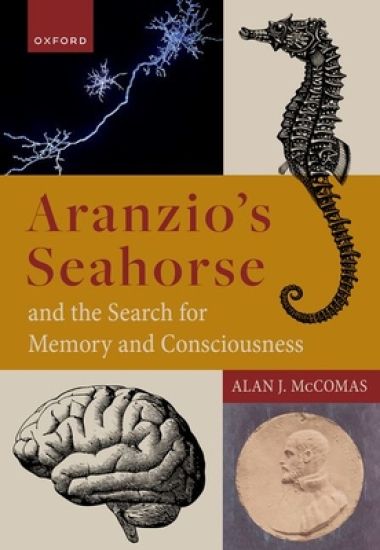
In the final volume of his historical neuroscience trilogy, prize-winning author Alan J. McComas recounts the research that led to recognition of the hippocampus, a structure deep within the brain, as being primarily responsible for memory. This intriguing and exciting account includes observations on patients with memory loss as well as insights from ingenious laboratory experiments. Using several arguments in support, McComas suggests that it is the electrical impulse activity of neurons in the hippocampus that creates consciousness and that the latter is, in fact, the ever-changing sequence of short-term memories. He show us how a deeper knowledge of the hippocampus can help us develop a fuller understanding of Alzheimer's disease and other disorders of memory and behaviour, including 'long COVID. Lavishly illustrated, Aranzio's Seahorse will be of value not only to neuroscientists, psychologists, and philosophers but to all those interested in the workings of the brain and in the history of its exploration.