Kirjojen hintavertailu. Mukana 11 244 527 kirjaa ja 12 kauppaa.

Kirjahaku

Etsi kirjoja tekijän nimen, kirjan nimen tai ISBN:n perusteella.

1000 tulosta hakusanalla Alan Jeffrey

Applied Partial Differential Equations: An Introduction
This book is written to meet the needs of undergraduates in applied mathematics, physics and engineering studying partial differential equations. It is a more modern, comprehensive treatment intended for students who need more than the purely numerical solutions provided by programs like the MATLAB PDE Toolbox, and those obtained by the method of separation of variables, which is usually the only theoretical approach found in the majority of elementary textbooks. This will fill a need in the market for a more modern text for future working engineers, and one that students can read and understand much more easily than those currently on the market.
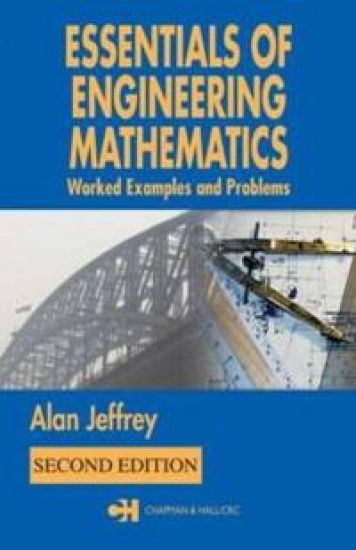
Essentials Engineering Mathematics
First published in 1992, Essentials of Engineering Mathematics is a widely popular reference ideal for self-study, review, and fast answers to specific questions. While retaining the style and content that made the first edition so successful, the second edition provides even more examples, new material, and most importantly, an introduction to using two of the most prevalent software packages in engineering: Maple and MATLAB. Specifically, this edition includes:Introductory accounts of Maple and MATLAB that offer a quick start to using symbolic software to perform calculations, explore the properties of functions and mathematical operations, and generate graphical output New problems involving the mean value theorem for derivatives Extension of the account of stationary points of functions of two variables The concept of the direction field of a first-order differential equation Introduction to the delta function and its use with the Laplace transformThe author includes all of the topics typically covered in first-year undergraduate engineering mathematics courses, organized into short, easily digestible sections that make it easy to find any subject of interest. Concise, right-to-the-point exposition, a wealth of examples, and extensive problem sets at the end each chapter--with answers at the end of the book--combine to make Essentials of Engineering Mathematics, Second Edition ideal as a supplemental textbook, for self-study, and as a quick guide to fundamental concepts and techniques.
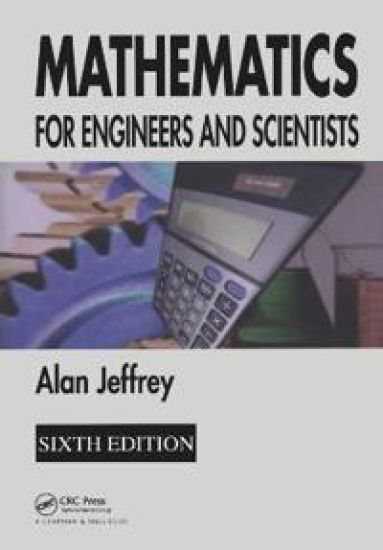
Mathematics for Engineers and Scientists
Since its original publication in 1969, Mathematics for Engineers and Scientists has built a solid foundation in mathematics for legions of undergraduate science and engineering students. It continues to do so, but as the influence of computers has grown and syllabi have evolved, once again the time has come for a new edition.Thoroughly revised to meet the needs of today's curricula, Mathematics for Engineers and Scientists, Sixth Edition covers all of the topics typically introduced to first- or second-year engineering students, from number systems, functions, and vectors to series, differential equations, and numerical analysis. Among the most significant revisions to this edition are:Simplified presentation of many topics and expanded explanations that further ease the comprehension of incoming engineering students A new chapter on double integrals Many more exercises, applications, and worked examples A new chapter introducing the MATLAB and Maple software packagesAlthough designed as a textbook with problem sets in each chapter and selected answers at the end of the book, Mathematics for Engineers and Scientists, Sixth Edition serves equally well as a supplemental text and for self-study. The author strongly encourages readers to make use of computer algebra software, to experiment with it, and to learn more about mathematical functions and the operations that it can perform.
Mathematics for Engineers and Scientists

Mathematics for Engineers and Scientists

Alan Jeffrey

Chapman Hall/CRC
2004
nidottu
Since its original publication in 1969, Mathematics for Engineers and Scientists has built a solid foundation in mathematics for legions of undergraduate science and engineering students. It continues to do so, but as the influence of computers has grown and syllabi have evolved, once again the time has come for a new edition.Thoroughly revised to meet the needs of today's curricula, Mathematics for Engineers and Scientists, Sixth Edition covers all of the topics typically introduced to first- or second-year engineering students, from number systems, functions, and vectors to series, differential equations, and numerical analysis. Among the most significant revisions to this edition are:Simplified presentation of many topics and expanded explanations that further ease the comprehension of incoming engineering students A new chapter on double integrals Many more exercises, applications, and worked examples A new chapter introducing the MATLAB and Maple software packagesAlthough designed as a textbook with problem sets in each chapter and selected answers at the end of the book, Mathematics for Engineers and Scientists, Sixth Edition serves equally well as a supplemental text and for self-study. The author strongly encourages readers to make use of computer algebra software, to experiment with it, and to learn more about mathematical functions and the operations that it can perform.
Essentials Engineering Mathematics

Essentials Engineering Mathematics

Alan Jeffrey

Chapman Hall/CRC
2004
nidottu
First published in 1992, Essentials of Engineering Mathematics is a widely popular reference ideal for self-study, review, and fast answers to specific questions. While retaining the style and content that made the first edition so successful, the second edition provides even more examples, new material, and most importantly, an introduction to using two of the most prevalent software packages in engineering: Maple and MATLAB. Specifically, this edition includes:Introductory accounts of Maple and MATLAB that offer a quick start to using symbolic software to perform calculations, explore the properties of functions and mathematical operations, and generate graphical output New problems involving the mean value theorem for derivatives Extension of the account of stationary points of functions of two variables The concept of the direction field of a first-order differential equation Introduction to the delta function and its use with the Laplace transformThe author includes all of the topics typically covered in first-year undergraduate engineering mathematics courses, organized into short, easily digestible sections that make it easy to find any subject of interest. Concise, right-to-the-point exposition, a wealth of examples, and extensive problem sets at the end each chapter--with answers at the end of the book--combine to make Essentials of Engineering Mathematics, Second Edition ideal as a supplemental textbook, for self-study, and as a quick guide to fundamental concepts and techniques.
Complex Analysis and Applications

Complex Analysis and Applications

Alan Jeffrey

Chapman Hall/CRC
2005
nidottu
Complex Analysis and Applications, Second Edition explains complex analysis for students of applied mathematics and engineering. Restructured and completely revised, this textbook first develops the theory of complex analysis, and then examines its geometrical interpretation and application to Dirichlet and Neumann boundary value problems.A discussion of complex analysis now forms the first three chapters of the book, with a description of conformal mapping and its application to boundary value problems for the two-dimensional Laplace equation forming the final two chapters. This new structure enables students to study theory and applications separately, as needed. In order to maintain brevity and clarity, the text limits the application of complex analysis to two-dimensional boundary value problems related to temperature distribution, fluid flow, and electrostatics. In each case, in order to show the relevance of complex analysis, each application is preceded by mathematical background that demonstrates how a real valued potential function and its related complex potential can be derived from the mathematics that describes the physical situation.
Matrix Operations for Engineers and Scientists
Engineers and scientists need to have an introduction to the basics of linear algebra in a context they understand. Computer algebra systems make the manipulation of matrices and the determination of their properties a simple matter, and in practical applications such software is often essential. However, using this tool when learning about matrices, without first gaining a proper understanding of the underlying theory, limits the ability to use matrices and to apply them to new problems. This book explains matrices in the detail required by engineering or science students, and it discusses linear systems of ordinary differential equations. These students require a straightforward introduction to linear algebra illustrated by applications to which they can relate. It caters of the needs of undergraduate engineers in all disciplines, and provides considerable detail where it is likely to be helpful. According to the author the best way to understand the theory of matrices is by working simple exercises designed to emphasize the theory, that at the same time avoid distractions caused by unnecessary numerical calculations. Hence, examples and exercises in this book have been constructed in such a way that wherever calculations are necessary they are straightforward. For example, when a characteristic equation occurs, its roots (the eigenvalues of a matrix) can be found by inspection. The author of this book is Alan Jeffrey, Emeritus Professor of mathematics at the University of Newcastle upon Tyne. He has given courses on engineering mathematics at UK and US Universities.
Handbook of Mathematical Formulas and Integrals

Handbook of Mathematical Formulas and Integrals

Alan Jeffrey; Hui Hui Dai

Academic Press Inc
2008
nidottu
The extensive additions, and the inclusion of a new chapter, has made this classic work by Jeffrey, now joined by co-author Dr. H.H. Dai, an even more essential reference for researchers and students in applied mathematics, engineering, and physics. It provides quick access to important formulas, relationships between functions, and mathematical techniques that range from matrix theory and integrals of commonly occurring functions to vector calculus, ordinary and partial differential equations, special functions, Fourier series, orthogonal polynomials, and Laplace and Fourier transforms. During the preparation of this edition full advantage was taken of the recently updated seventh edition of Gradshteyn and Ryzhik’s Table of Integrals, Series, and Products and other important reference works. Suggestions from users of the third edition of the Handbook have resulted in the expansion of many sections, and because of the relevance to boundary value problems for the Laplace equation in the plane, a new chapter on conformal mapping, has been added, complete with an atlas of useful mappings.
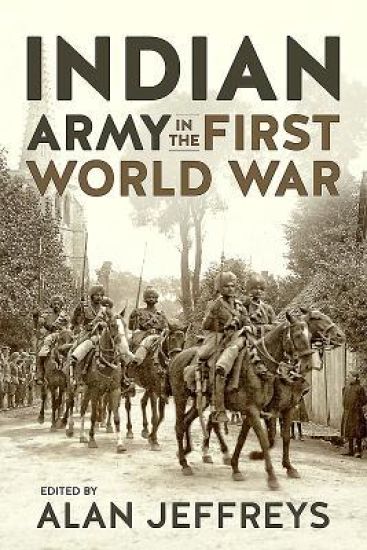
Indian Army in the First World War: New Perspectives
The book addresses the important global role of the Indian Army during the First World War. It is an academic reassessment of the army by both established and early career scholars of the Indian Army, as well as naval historians. It looks at the historiography of the army - taking into account the recent work on the army (particularly on the Western Front in 1914-1915). The edited volume covers the traditional areas of the Indian Army on the Western Front, in Palestine, Mesopotamia and the defense of the Suez Canal; however, there are also chapters on combined operations; Indian prisoners of war in Germany and Turkey; the expansion of the officer corps; and the Sikh experience, as well as the mobilization of the equine army at the beginning of the war and the demobilization of the army in the period from 1918 until 1923. Three additional chapters are related to the theme, such as the role of the Royal Indian Marine; the Territorial Army in India; and Churchill's portrayal of the Indian Army during the Gallipoli campaign in his account The World Crisis.
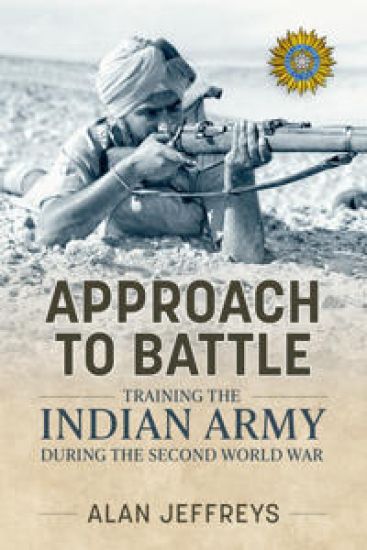
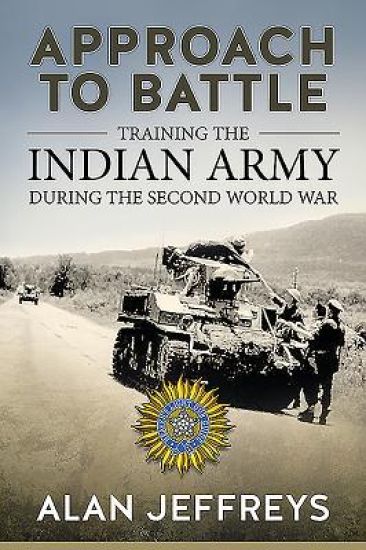
Approach to Battle

Approach to Battle

Alan Jeffreys

HELION COMPANY
2024
pokkari
The Indian Army was the largest volunteer army during the Second World War. Indian Army divisions fought in the Middle East, North Africa and Italy - and went to make up the overwhelming majority of the troops in South East Asia. Over two million personnel served in the Indian Army - and India provided the base for supplies for the Middle Eastern and South East Asian theaters. This monograph is a modern historical interpretation of the Indian Army as a holistic organization during the Second World War. It will look at training in India - charting how the Indian Army developed a more comprehensive training structure than any other Commonwealth country. This was achieved through both the dissemination of doctrine and the professionalism of a small coterie of Indian Army officers who brought about a military culture within the Indian Army - starting in the 1930s - that came to fruition during the Second World War, which informed the formal learning process. Finally, it will show that the Indian Army was reorganized after experiences of the First World War. During the interwar period, the army developed training and belief for both fighting on the North West Frontier, and as an aid to civil power. With the outbreak of the Second World War, in addition to these roles, the army had to expand and adapt to fighting modern professional armies in the difficult terrains of desert, jungle and mountain warfare. A clear development of doctrine and training can be seen, with many pamphlets being produced by GHQ India that were, in turn, used to formulate training within formations and then used in divisional, brigade and unit training instructions - thus a clear line of process can be seen not only from GHQ India down to brigade and battalion level, but also upwards from battalion and brigade level based on experience in battle that was absorbed into new training instructions. Together with the added impetus for education in the army, by 1945 the Indian Army had become a modern, professional and national army.
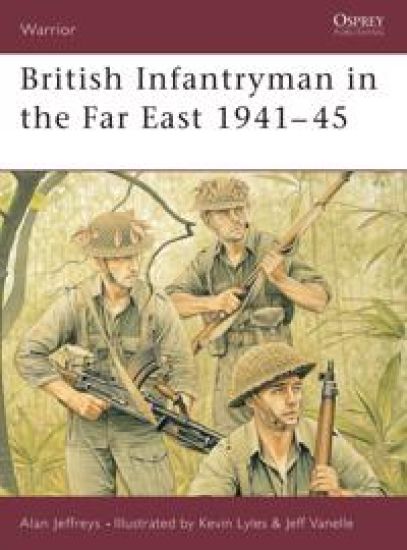
British Infantryman in the Far East 1941–45

British Infantryman in the Far East 1941–45

Alan Jeffreys

Osprey Publishing
2003
nidottu
This work focuses on the experience, tactics, training and weapons of the British soldier from the Fall of Malaya and Singapore until the Reconquest of Burma. It covers jungle warfare training in India and the ensuing action in Burma, tracing the development of tactics and doctrine: this formed the basis for the victories in the Arakan and the battles of Kohima and Imphal. Uniforms, equipment and weapons developed for jungle warfare are all covered. Other aspects such as the soldier's view of India, the entertainment available on leave, food rationing and other supplies such as cigarettes, the introduction of the forces newspaper SEAC, and the medical problems of malaria are covered.
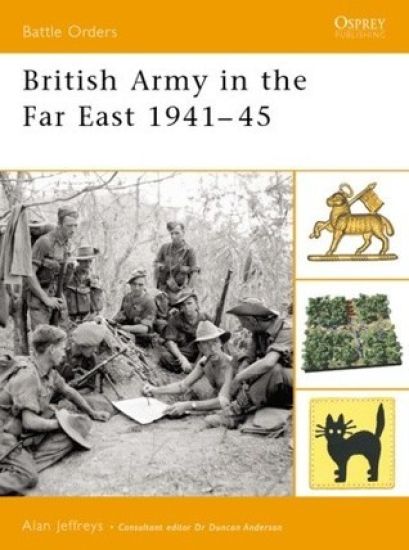
The British Army in the Far East 1941–45

The British Army in the Far East 1941–45

Alan Jeffreys

Osprey Publishing
2005
nidottu
This title focuses on the British and Commonwealth Armies that fought in the Far East between 1941 and 1945. It compares their division-level formations in India and South East Asia with those of the Japanese. British tactics in the Far East developed rapidly from 1940. By 1944 a centralised doctrine was in place and, with rigorous training, by 1945 the 14th Army was capable of defeating the Japanese in the jungle. Weapons and equipment are examined, as is the issue of effective leadership of small units in the jungle. This book provides a detailed examination of the overall structure of the British Army in this theatre and documents the development of the Allied forces that fought there.
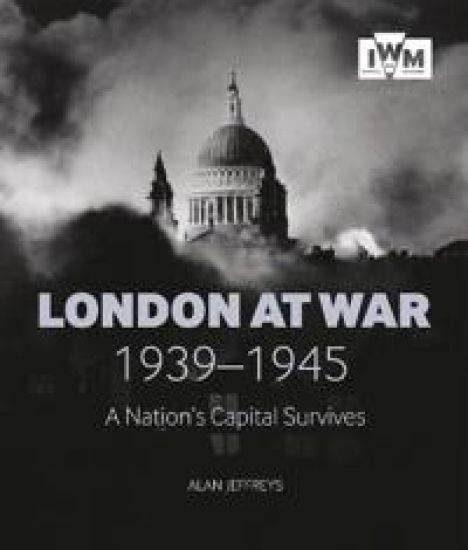
London at War

London at War

Alan Jeffreys

Imperial War Museum
2018
sidottu
London was a city on the front line in the Second World War. It suffered hits from nearly 12,000 tons of bombs, with nearly 30,000 civilians killed by enemy action. The Blitz changed the landscape of the city. Many famous landmarks were hit, including Buckingham Palace, the Houses of Parliament, the Tower of London - even the Imperial War Museum. Some areas, such as Stepney, were so badly damaged that they had to be almost entirely rebuilt after the war. But it wasn't just the city's physical landscape that was transformed. With the arrival of large numbers of Commonwealth and overseas service personnel, London became much more cosmopolitan. After 1942, vast numbers of American servicemen were deployed in the capital, and it was also a busy transport hub and a popular destination for troops on leave.This book tells the story of these momentous years in London's history through IWM's unique collections. Using personal accounts from letters and diaries, objects, photographs, maps and documents it gives an up-close and revealing insight into those turbulent years in the capital, experienced by those who lived there.
Approach to Battle

Approach to Battle

Alan Jeffreys

Helion Company
2016
sidottu
The Indian Army was the largest volunteer army during the Second World War. Indian Army divisions fought in the Middle East, North Africa and Italy - and went to make up the overwhelming majority of the troops in South East Asia. Over two million personnel served in the Indian Army - and India provided the base for supplies for the Middle Eastern and South East Asian theatres. This monograph is a modern historical interpretation of the Indian Army as a holistic organisation during the Second World War. It will look at training in India - charting how the Indian Army developed a more comprehensive training structure than any other Commonwealth country. This was achieved through both the dissemination of doctrine and the professionalism of a small coterie of Indian Army officers who brought about a military culture within the Indian Army - starting in the 1930s - that came to fruition during the Second World War, which informed the formal learning process. Finally, it will show that the Indian Army was reorganised after experiences of the First World War. During the interwar period, the army developed training and belief for both fighting on the North West Frontier, and as an aid to civil power. With the outbreak of the Second World War, in addition to these roles, the army had to expand and adapt to fighting modern professional armies in the difficult terrains of desert, jungle and mountain warfare. A clear development of doctrine and training can be seen, with many pamphlets being produced by GHQ India that were, in turn, used to formulate training within formations and then used in divisional, brigade and unit training instructions - thus a clear line of process can be seen not only from GHQ India down to brigade and battalion level, but also upwards from battalion and brigade level based on experience in battle that was absorbed into new training instructions. Together with the added impetus for education in the army, by 1945 the Indian Army had become a modern, professional and national army.
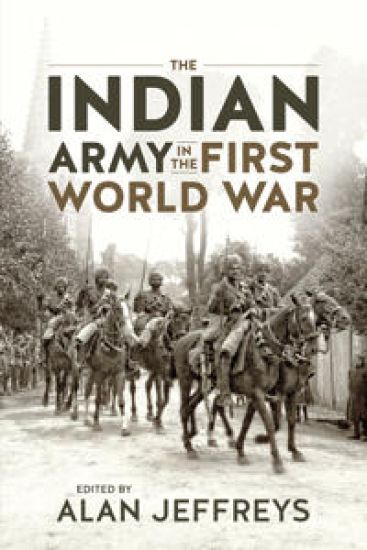
The Indian Army in the First World War

The Indian Army in the First World War

Alan Jeffreys

Helion Company
2018
sidottu
The book addresses the important global role of the Indian Army during the First World War. It is an academic reassessment of the army by both established and early career scholars of the Indian Army, as well as naval historians. It looks at the historiography of the army - taking into account the recent work on the army (particularly on the Western Front in 1914-1915). The edited volume covers the traditional areas of the Indian Army on the Western Front, in Palestine, Mesopotamia and the defence of the Suez Canal; however, there are also chapters on combined operations; Indian prisoners of war in Germany and Turkey; the expansion of the officer corps; and the Sikh experience, as well as the mobilisation of the equine army at the beginning of the war and the demobilisation of the army in the period from 1918 until 1923. Three additional chapters are related to the theme, such as the role of the Royal Indian Marine; the Territorial Army in India; and Churchill’s portrayal of the Indian Army during the Gallipoli campaign in his account The World Crisis.
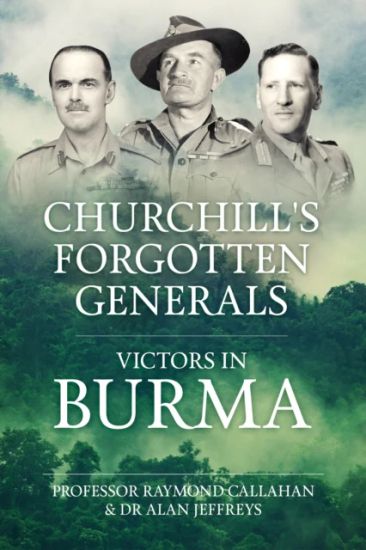
Churchill's Forgotten Generals

Churchill's Forgotten Generals

Raymond Callahan; Alan Jeffreys

HELION COMPANY
2025
sidottu
Generals Auchinleck, Slim and Savory and their role in the campaigns in Northeast India and Burma (Myanmar) have been largely forgotten in the historiography of the Second World War. Prime Minister Winston Churchill sacked General Claude Auchinleck as Commander-in-Chief (C-in-C) in the Mediterranean and Middle East theatre after the First Battle of Alamein. However, Auchinleck became C-in-C India for the remainder of the Second World War. In this role, he was essential in making sure the Indian Army was geared towards jungle warfare, but also improved the lot of both Indian officers and men not least by improving pay and conditions.General William Slim is perhaps better known as the successful commander of the 14th Army who also wrote one of the best books on the war: Defeat into Victory, an apt description of the campaign in Burma. He was a popular commander and referred to as General 'Bill' Slim by the British and Indian soldiers who served under him. Auchinleck and Slim both became Field Marshals after the war. Major General Reginald Savory played an essential role as the Director of Infantry from 1943 until the end of the war. He made sure that all infantry battalions and training establishments across India were trained for jungle warfare. His was a forgotten role that until now has not been documented. He retired as a Lieutenant General having been Adjutant General until the Independence of India and Pakistan in 1947.The appointments of Auchinleck, Slim and Savory in 1943 were an important factor in the eventual defeat of the Imperial Japanese Army in Burma. It helped that the key figures in Indian military affairs were, for the first time in the war, all drawn from the Indian Army and thus understood the traditions and ways of the Indian Army.
Hydraulic Modelling: An Introduction

Hydraulic Modelling: An Introduction

Pavel Novak; Vincent Guinot; Alan Jeffrey; Dominic E. Reeve

Spon Press
2010
sidottu
Modelling forms a vital part of all engineering design, yet many hydraulic engineers are not fully aware of the assumptions they make. These assumptions can have important consequences when choosing the best model to inform design decisions.Considering the advantages and limitations of both physical and mathematical methods, this book will help you identify the most appropriate form of analysis for the hydraulic engineering application in question. All models require the knowledge of their background, good data and careful interpretation and so this book also provides guidance on the range of accuracy to be expected of the model simulations and how they should be related to the prototype.Applications to models include: open channel systemsclosed conduit flowsstorm drainage systemsestuariescoastal and nearshore structureshydraulic structures.This an invaluable guide for students and professionals.