The law relating to general defences is one of the most important areas in the criminal law, yet the current state of the law in the United Kingdom reveals significant problems in the adoption of a consistent approach to their doctrinal and theoretical underpinnings, as exemplified by a number of recent developments in legislation and case law. A coherent and joined-up approach is still missing. This volume provides an analysis of the main contentious areas in British law, and proposes ways forward for reform. The collection includes contributions from leading experts across various jurisdictions. Part I examines the law in the United Kingdom, with specialist contributions on Irish and Scottish law. Part II consists of contributions by authors from a number of foreign jurisdictions, all written to a common research grid for maximum comparability, which provide a wider background of how other legal systems treat problems relating to general defences in the context of the criminal law, and which may serve as points of reference for domestic law reform.
Following on from the earlier edited collection, Loss of Control and Diminished Responbility, this book is the first volume in the Substantive Issues in Criminal Law series. It serves as a leading point of reference in the area relating to participation in crime and identifies the need for a consistent approach to the doctrinal and theoretical underpinnings of complicity liability. With a section on the UK analysing points of current interest, the book also has a large comparative section dealing with foreign jurisdictions and examines on the basis of a unified research grid how different legal systems treat core issues of participation in the context of criminal law. This book is a valuable reference resource for those in the criminal justice community in the UK and abroad and for academics, the judiciary and policy-makers.
Following on from the earlier edited collection, Loss of Control and Diminished Responbility, this book is the first volume in the Substantive Issues in Criminal Law series. It serves as a leading point of reference in the area relating to participation in crime and identifies the need for a consistent approach to the doctrinal and theoretical underpinnings of complicity liability. With a section on the UK analysing points of current interest, the book also has a large comparative section dealing with foreign jurisdictions and examines on the basis of a unified research grid how different legal systems treat core issues of participation in the context of criminal law. This book is a valuable reference resource for those in the criminal justice community in the UK and abroad and for academics, the judiciary and policy-makers.
The law relating to general defences is one of the most important areas in the criminal law, yet the current state of the law in the United Kingdom reveals significant problems in the adoption of a consistent approach to their doctrinal and theoretical underpinnings, as exemplified by a number of recent developments in legislation and case law. A coherent and joined-up approach is still missing. This volume provides an analysis of the main contentious areas in British law, and proposes ways forward for reform. The collection includes contributions from leading experts across various jurisdictions. Part I examines the law in the United Kingdom, with specialist contributions on Irish and Scottish law. Part II consists of contributions by authors from a number of foreign jurisdictions, all written to a common research grid for maximum comparability, which provide a wider background of how other legal systems treat problems relating to general defences in the context of the criminal law, and which may serve as points of reference for domestic law reform.
This book provides a leading point of reference in the field of partial defences to murder and with respect to the mental condition defences of loss of control and diminished responsibility in general. The work includes contributions from leading specialists from different jurisdictions. Divided into two parts, the first provides an analysis from the perspective of the UK, looking at particular concerns such as domestic violence, revenge and mixed motive killings, mistaken beliefs. The second part presents a comparative and international view to provide a wider background of how alternative systems treat issues of human frailty short of full insanity (loss of control, diminished responsibility) in the context of the criminal law.
This book provides a leading point of reference in the field of partial defences to murder and with respect to the mental condition defences of loss of control and diminished responsibility in general. The work includes contributions from leading specialists from different jurisdictions. Divided into two parts, the first provides an analysis from the perspective of the UK, looking at particular concerns such as domestic violence, revenge and mixed motive killings, mistaken beliefs. The second part presents a comparative and international view to provide a wider background of how alternative systems treat issues of human frailty short of full insanity (loss of control, diminished responsibility) in the context of the criminal law.
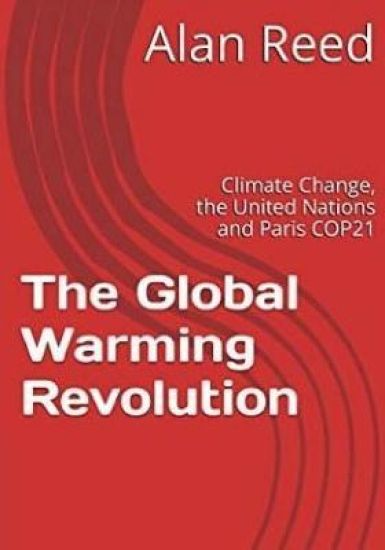
How Did We Get to Paris COP21? The evolution of a revolutionary global venture to control global warming began in 1972 at the Stockholm Conference and systematically penetrated public policy up to 2015's climactic Conference of Paries in Paris. This book is an epic tale of economic, social, cultural, political change, dramatic change, not realized by most of the Earth's people, but with revolutionary importance for everyone and all future generations. Science and Politics as Never Seen Before Do you wonder whether Global Warming is a real threat? Do you want to understand how scientists have become global political guides? Science and politics have become entangled on a huge scale, and Paris COP 2015 will be a dramatic show of which is stronger, science or geopolitics, or which will have the most successful proposals for the future. Written by an insider, this book will take you through the intricate geopolitical maneuvers of the past 43 years, the choices that made some countries bankers for the rest of the world, that drew a line between democratic industrial peoples and developing nations, and favored the worst polluters in the world over those trying to negotiate reductions in Greenhouse Gases. Quick and Easy to Understand The Global Warming Revolution is compact, readable and free of jargon. You don't need to be a scientist to understand and you sure don't need a political science degree. It is a good textbook for High School and College courses, but also a great way to catch up on a big part of your future when you have a few minutes to relax. You're concerned about global warming. You've heard about rising tides, extreme hurricanes, droughts that won't ever end. You need to know what the United Nations and your nation are trying to do about all of that in Paris next month. Alan Reed participated in the United Nations Conference of Parties and subsidiary bodies for ten years, at Bonn, Copenhagen, Marrakech, The Hague, Lyon and other conferences and seminars. He received a Ph.D. Degree from the University of Texas at Austin, served as an Analyst in American Foreign Policy for Congress, and now, as an Emeritus Professor of Government, researches and writes about the United Nations climate change activities. See his previous book: Precious Air: the Kyoto Protocol and Profit in the Global Warming Game. http: //www.amazon.com/s/ref=nb_sb_noss_2?url=search-alias%3Dstripbooks&field-keywords=precious+air
This is the story of Isobel and Emile. They wake up beside each other one morning, and they slowly get out of bed. It is the last time that they will sleep together. They know it. They do not want it to be the last time but they know that it is. They get out of bed and they go to a train station. Emile gets onto a train. Isobel does not. She stands on the platform and she watches him go. He is going to the city, where he will be an artist. He will make puppets, and films of puppets, that struggle to say something he does not have the words for. She will stay in the small town, in the small room where they lived. She will work at a small grocery store and write letters to Emile while she works up the courage to do something more. Told in a stark, minimalist voice, Isobel and Emile is the hypnotizing story of two lovers without each other. It is a story of struggling with loss and a loneliness that threatens to consume them. It is about staying true to what they hold dear, no matter that it is hopeless and that nothing will ever come of it, because sometimes that is all that is left. And sometimes, it is enough.
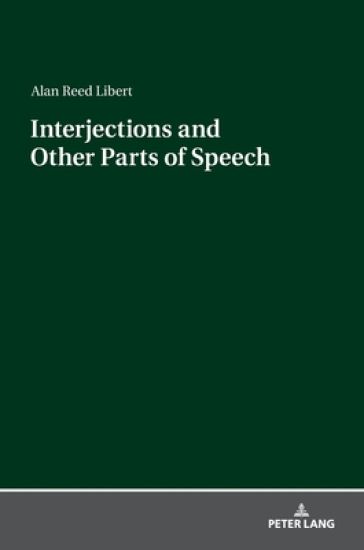
The boundaries between word classes are often fuzzy. This book looks at the classification of interjections and similar words of other classes. It reviews work done over the past 250 years on several languages, including English, German, French, Italian, Spanish, Latin, Ancient Greek, Albanian, and Welsh. Most chapters discuss interjections in relation to one of the other traditionally recognized parts of speech: nouns, verbs, adjectives, adverbs, adpositions, and conjunctions. A major focus is on the use of relevant terminology e.g. primary and secondary interjections, proper and improper interjections, and interjectives.
The classification of words in terms of parts of speech is frequently problematic. This book examines the classification of conjunctions and similar words of other classes. It reviews work done from the 19th century to the present on a wide range of languages, including English, German, French, Latin, Ancient Greek, Welsh, Persian, Chinese, Japanese, Ute, and Abun. Most chapters treat conjunctions as opposed to one of the other traditionally recognized parts of speech: nouns, verbs, adjectives, adverbs, adpositions, and interjections. The book’s major focus is on the terminology used to describe words on or near the borders between conjunctions and other parts of speech, such as «deverbal conjunctions», «conjunctional adverbs», «prepositional conjunctions», and «so-called conjunctions».
First published in 1998, European Business Litigation is a monograph produced as a follow-up step to European Business Law which contains a range of chapters, including a chapter on Business Litigation. Hence, as well as expanding on the issues raised in the chapter, this book provides an insight into the legal and policy problems involved in both the harmonisation process and the substantive EU laws adopted to ameliorate the situation in the field of Private International Law. More specifically, it examines the origin of EU laws in this area, considers the problems with their interpretation and implementation, and addresses the question of whether harmonisation has been achieved.
First published in 1998, European Business Litigation is a monograph produced as a follow-up step to European Business Law which contains a range of chapters, including a chapter on Business Litigation. Hence, as well as expanding on the issues raised in the chapter, this book provides an insight into the legal and policy problems involved in both the harmonisation process and the substantive EU laws adopted to ameliorate the situation in the field of Private International Law. More specifically, it examines the origin of EU laws in this area, considers the problems with their interpretation and implementation, and addresses the question of whether harmonisation has been achieved.
John Reed (1887ó1920) was part of the original Bohemian generation of the First World War, and is best known for his book, Ten Days that Shook the World, an eyewitness account of the October Revolution in Russia in 1917 that has long been regarded as a classic. Although his prose has been reprinted, his poems have never been collected in book form. An excellent compilation with introduction by Granville Hicks, noted literary critic and author of the definitive biography of Reed, John Reed: The Making of a Revolutionary, and memoir and sonnet by the late Max Eastman, Reed's close friend and editor of The Masses, a radical journal which Reed joined in 1913.