Kirjojen hintavertailu. Mukana 11 244 527 kirjaa ja 12 kauppaa.

Kirjahaku

Etsi kirjoja tekijän nimen, kirjan nimen tai ISBN:n perusteella.

1000 tulosta hakusanalla Alan Richardson

A Mental Theater

A Mental Theater

Alan Richardson

Pennsylvania State University Press
1990
sidottu
Certain works of Romantic drama—Prometheus Unbound, Cain, The Cenci—have received a good deal of critical attention, by as a whole the genre has been misunderstood and only slightly considered. Alan Richardson redresses a tradition of critical neglect by considering the works of Romantic drama not as failed stage-plays ("closet drama") but as constituting a new, distinctively Romantic genre. In turning from the contemporary stage—which was marked by spectacle, rant, and melodrama—the Romantic poets developed an altogether new kind of drama, one which they hoped could recapture the intensity of Shakespearean tragedy that Neoclassical writers had scarcely approached. Richardson calls this genre (after Byron) "mental theater," both because its works are concerned with portraying the development of self-consciousness and because it fuses the subjectivity of lyric with the interaction of dramatic poetry. Moreover, these works are addressed directly to the mind of the reader, bypassing the medium of stage representation. This study places Romantic self-consciousness in a fundamentally new light. Far from uncritically pursuing an egoistic stance, the Romantics criticize through their poetic drama the attempt to attain psychic autonomy. The protagonists of Romantic drama are seduced by their antagonists into entering such a condition only to find in it a hollow, deathly isolation. They find in self-consciousness not their promised liberation, but a tormented fate modeled after that of their betrayers. Wordsworth, Byron, and Shelley delineate the limitations of "Romantic" self-consciousness in their works of mental theater; Shelley alone envisions their transcendence through his radical transformation of consciousness in the conclusion to Prometheus Unbound. This interpretation of mental theater will lead to a new evaluation of the Romantics as dramatic poets. It brings back to critical attention neglected but challenging works such as Byron's Heaven and Earth and Beddoes's Death's Jest-Book, and provides vital new perspectives on undervalued texts like Wordsworth's The Borderers and Byron's Manfred and Cain. It qualifies decades of critical speculation on "Romantic individualism" and "Romantic consciousness," and helps return the ideal of imaginative sympathy to the central position held in the critical writings of the Romantics themselves. Finally, in emphasizing the dramatic quality of mental theater, it challenges the still-prevalent view that Romantic poetry in inherently lyrical in character. Scholars concerned with English Romantic drama, Romantic literature, and the Romantic period as well as English drama will find this work to be an important contribution to their understanding.
A Mental Theater

A Mental Theater

Alan Richardson

Pennsylvania State University Press
1988
pokkari
Certain works of Romantic drama—Prometheus Unbound, Cain, The Cenci—have received a good deal of critical attention, by as a whole the genre has been misunderstood and only slightly considered. Alan Richardson redresses a tradition of critical neglect by considering the works of Romantic drama not as failed stage-plays ("closet drama") but as constituting a new, distinctively Romantic genre. In turning from the contemporary stage—which was marked by spectacle, rant, and melodrama—the Romantic poets developed an altogether new kind of drama, one which they hoped could recapture the intensity of Shakespearean tragedy that Neoclassical writers had scarcely approached. Richardson calls this genre (after Byron) "mental theater," both because its works are concerned with portraying the development of self-consciousness and because it fuses the subjectivity of lyric with the interaction of dramatic poetry. Moreover, these works are addressed directly to the mind of the reader, bypassing the medium of stage representation. This study places Romantic self-consciousness in a fundamentally new light. Far from uncritically pursuing an egoistic stance, the Romantics criticize through their poetic drama the attempt to attain psychic autonomy. The protagonists of Romantic drama are seduced by their antagonists into entering such a condition only to find in it a hollow, deathly isolation. They find in self-consciousness not their promised liberation, but a tormented fate modeled after that of their betrayers. Wordsworth, Byron, and Shelley delineate the limitations of "Romantic" self-consciousness in their works of mental theater; Shelley alone envisions their transcendence through his radical transformation of consciousness in the conclusion to Prometheus Unbound. This interpretation of mental theater will lead to a new evaluation of the Romantics as dramatic poets. It brings back to critical attention neglected but challenging works such as Byron's Heaven and Earth and Beddoes's Death's Jest-Book, and provides vital new perspectives on undervalued texts like Wordsworth's The Borderers and Byron's Manfred and Cain. It qualifies decades of critical speculation on "Romantic individualism" and "Romantic consciousness," and helps return the ideal of imaginative sympathy to the central position held in the critical writings of the Romantics themselves. Finally, in emphasizing the dramatic quality of mental theater, it challenges the still-prevalent view that Romantic poetry in inherently lyrical in character. Scholars concerned with English Romantic drama, Romantic literature, and the Romantic period as well as English drama will find this work to be an important contribution to their understanding.
Creeds in the Making

Creeds in the Making

Alan Richardson

SCM Press
2012
nidottu
Alan Richardson's Creeds in the Making was first published more than forty years ago, in January 1935. After ten reprints, it went out of print in 1975 to make way, we hoped, for a new work which would reflect the scholarship of a new generation. There is, however, still no short inexpensive paperback available which illustrates the early development of the creeds and Christian doctrine to a general audience in quite the same way as this does, with its freshness, charm and that almost timeless quality of writing and judgment which was so characteristic of its author. So we are happy that it should be reissued for the 1980s, as an introduction to those coming to creeds and doctrine for the first time, and as a fitting memorial to a great modern pastor and teacher. From the first reviews: 'Mr Richardson has a true teacher's gift, that of making his subject live and relating it to modern experience and modern knowledge of the universe. He tells a story, and tells it well. Nor is he content with telling: he explains. He takes the principal doctrines of the Christian creed, shows how they came to be defined and what is their lasting value' (CEN). `In six chapters, Mr Alan Richardson covers the theology of the creed down to the article of belief in the Holy Ghost. What he gives us is very like a course of lectures to theological students, carefully worked out, scholarly and full, yet simply expressed' (Church Times). Alan Richardson, who died in 1975, was Dean of York and before that Professor of Christian Theology in the University of Nottingham.
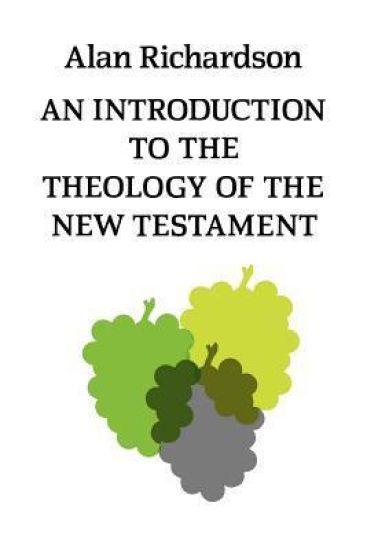
An Introduction to the Theology of the New Testament
`To present, in less than 400 pages (excluding the indexes), the whole sweep of New Testament thought is an excessively formidable task, calling not only for scholarship and learning but also for an artist's sense of proportion and economy of stroke. There are few who could have succeeded so well as Dr Richardson' (Journal of Theological Studies). `This book will stand for a long time as the indispensable handbook for the theological student who wants both to see the general picture of the apostolic Church's faith, and also to have a convenient and reliable digest of what the New Testament says about particular topics, such as, for example, Christology or salvation' (Church Times). `Alan Richardson is a theologian "whose praise in the gospel is (or deserves to be) in all the churches" on account both of the books which he has written himself and of those which he has edited. His latest work, An Introduction to the Theology of the New Testament, will probably be found more serviceable by students and teachers than anything he has previously produced' (Theology). Alan Richardson, who died in 1975, was for many years Professor of Christian Theology at Nottingham University and subsequently Dean of York.
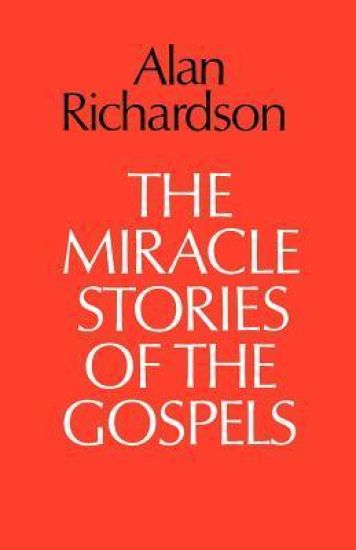
The Miracle Stories of the Gospels

The Miracle Stories of the Gospels

Alan Richardson

SCM Press
2012
nidottu
'This is one of the most important books produced in this century by an English scholar... Dr Richardson's book is short, but almost every other sentence requires to be underlined. It is sifted knowledge, succinctly expressed, and though closely packed, it is always lucid' (The Guardian). 'Dr Richardson has rendered an important service to the Christian Church by offering us this remarkably fresh, stimulating, and competent survey ... In addition to the working out of its main thesis, Dr Richardson's book contains full and valuable notes on many of the critical problems which have been hotly debated by New Testament scholarship' (Times Literary Supplement).
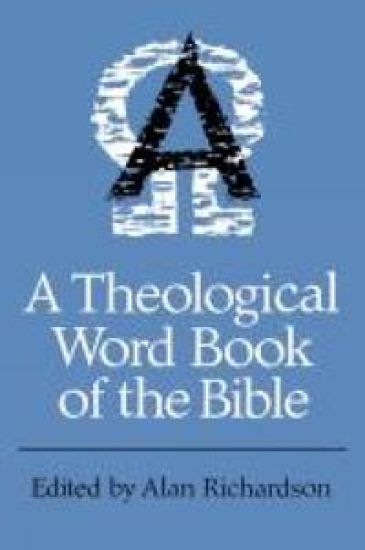
A Theological Word Book of the Bible

A Theological Word Book of the Bible

Alan Richardson

SCM Press
2012
nidottu
This is a book which every minister worth his salt theologically ought to have; it will do his preaching more good than many volumes of ready-made sermons.' (A. M. Hunter in The Expository Times) 'A book by scholars for the intelligent layman and the working minister or lay preacher. All these will find here, readily available, help towards the better understanding of the text of the Bible.' (T. W. Manson in The Manchester Guardian) 'It is a rash undertaking to forecast the probable future of books. But this one will probably take its place with Peake's Commentary and the Hasting's Dictionaries as an indispensable tool for preachers.' (Methodist Recorder)
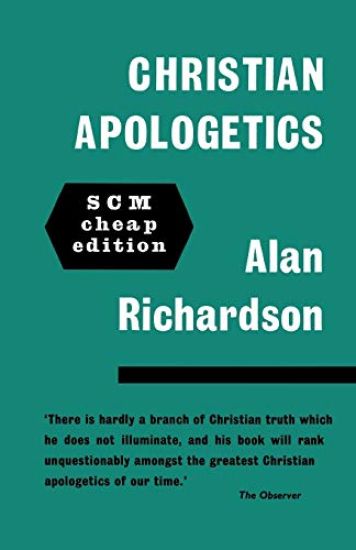
Christian Apologetics

Christian Apologetics

Alan Richardson

SCM Press
2012
nidottu
'Professor ALAN RICHARDSON is a theologian whose praise is (or deserves to be) in all the churches on account both of the books which he has written himself and of those which he has edited.' So Dr Alec Vidler, editor of Theology, has written. One reason for Alan Richardson's popularity as a theological writer is that he really does have long practical experience of teaching-as an Oxford tutor, as Study Secretary of the Student Christian Movement in the fateful years 1938-43, as Residentiary Canon and eventually Sub-dean of Durham Cathedral, and since 1953 as Professor of Christian Theology in the University of Nottingham. He has also had practical experience of church life-as a young parson in Liverpool and as the vicar of a Northumberland parish. And he has done much work for the Ecumenical Movement. Emerging from this wide experience, his books reflect his power of presenting difficult and complicated material as clearly as possible. He is a D.D. of Oxford, and an Honorary D.D. of Glasgow.
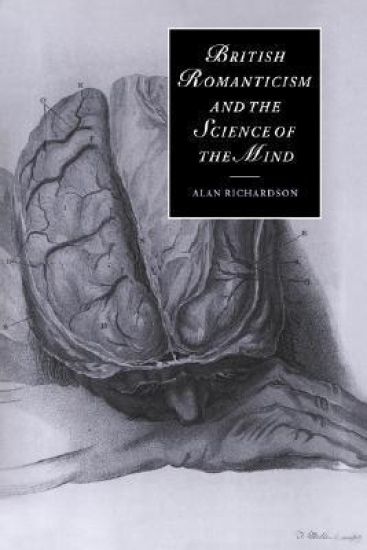
British Romanticism and the Science of the Mind

British Romanticism and the Science of the Mind

Alan Richardson

Cambridge University Press
2005
pokkari
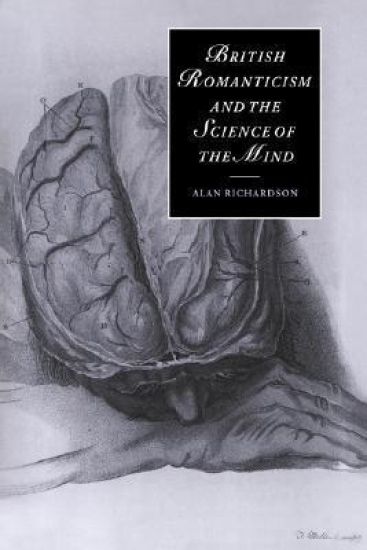
In this provocative and original study, Alan Richardson examines an entire range of intellectual, cultural, and ideological points of contact between British Romantic literary writing and the pioneering brain science of the time. Richardson breaks new ground in two fields, revealing a significant and undervalued facet of British Romanticism while demonstrating the 'Romantic' character of early neuroscience. Crucial notions like the active mind, organicism, the unconscious, the fragmented subject, instinct and intuition, arising simultaneously within the literature and psychology of the era, take on unsuspected valences that transform conventional accounts of Romantic cultural history. Neglected issues like the corporeality of mind, the role of non-linguistic communication, and the peculiarly Romantic understanding of cultural universals are reopened in discussions that bring new light to bear on long-standing critical puzzles, from Coleridge's suppression of 'Kubla Khan', to Wordsworth's perplexing theory of poetic language, to Austen's interest in head injury.
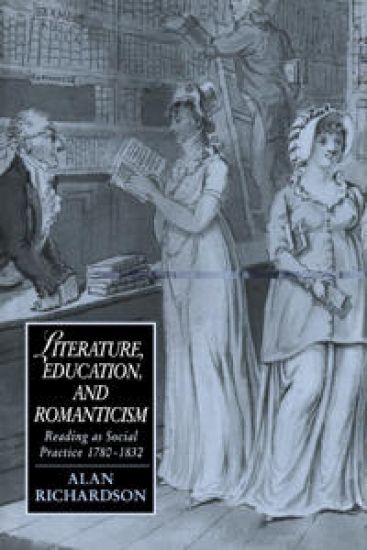
Literature, Education, and Romanticism

Literature, Education, and Romanticism

Alan Richardson

Cambridge University Press
1994
sidottu
In this wide-ranging and detailed book Alan Richardson addresses many issues in literary and educational history never before examined together. The result is an unprecedented study of how transformations in schooling and literacy in Britain between 1780 and 1832 helped shape the provision of literature as we now know it. In chapters focused on such topics as definitions of childhood, educational methods and institutions, children’s literature, female education, and publishing ventures aimed at working-class adults, Richardson demonstrates how literary genres, from fairy tales to epic poems, were enlisted in an ambitious programme for transforming social relations through reading and education. Romantic texts - including Wordsworth, Shelley, Blake, and Yearsley - are reinterpreted in the light of the complex historical and social issues which inform them and which they in turn critically address.
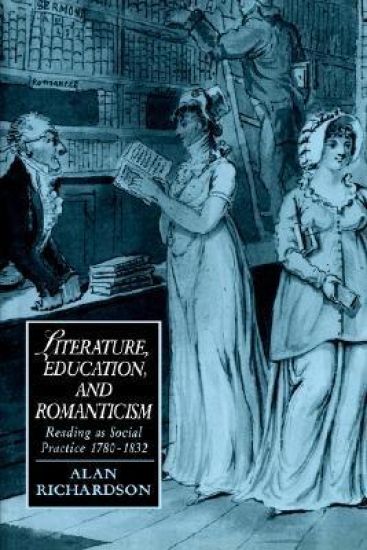
Literature, Education, and Romanticism

Literature, Education, and Romanticism

Alan Richardson

Cambridge University Press
2004
pokkari
In this wide-ranging and detailed book Alan Richardson addresses many issues in literary and educational history never before examined together. The result is an unprecedented study of how transformations in schooling and literacy in Britain between 1780 and 1832 helped shape the provision of literature as we now know it. In chapters focused on such topics as definitions of childhood, educational methods and institutions, children’s literature, female education, and publishing ventures aimed at working-class adults, Richardson demonstrates how literary genres, from fairy tales to epic poems, were enlisted in an ambitious programme for transforming social relations through reading and education. Romantic texts - including Wordsworth, Shelley, Blake, and Yearsley - are reinterpreted in the light of the complex historical and social issues which inform them and which they in turn critically address.
British Romanticism and the Science of the Mind

British Romanticism and the Science of the Mind

Alan Richardson

Cambridge University Press
2001
sidottu
In this provocative and original study, Alan Richardson examines an entire range of intellectual, cultural, and ideological points of contact between British Romantic literary writing and the pioneering brain science of the time. Richardson breaks new ground in two fields, revealing a significant and undervalued facet of British Romanticism while demonstrating the ‘Romantic’ character of early neuroscience. Crucial notions like the active mind, organicism, the unconscious, the fragmented subject, instinct and intuition, arising simultaneously within the literature and psychology of the era, take on unsuspected valences that transform conventional accounts of Romantic cultural history. Neglected issues like the corporeality of mind, the role of non-linguistic communication, and the peculiarly Romantic understanding of cultural universals are reopened in discussions that bring new light to bear on long-standing critical puzzles, from Coleridge’s suppression of ‘Kubla Kahn’, to Wordsworth’s perplexing theory of poetic language, to Austen’s interest in head injury.
Perfect Partners

Perfect Partners

Alan Richardson

Samuel French Ltd
1992
nidottu
Edwina and Jonathan Lovelock are to divorce - hardly the best advertisement for 'Perfect Partners', the dating agency they run together. When a prospective client is revealed as a journalist looking to write a blistering expos of dating agencies, the couple have a battle on their hands. Sparkily amusing, combining a satirical glimpse of the cynical yet romantic world of dating agencies with a witty, touching personal drama.-2 women, 2 men
The Neural Sublime

The Neural Sublime

Alan Richardson

Johns Hopkins University Press
2010
sidottu
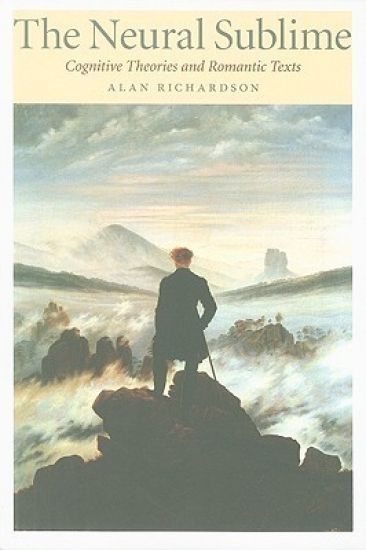
The Neural Sublime brings recent work in cognitive neuroscience to bear on some famously vexed issues in British Romantic studies. In exciting and unprecedented ways, Alan Richardson demonstrates how developments in the neurosciences can transform the study of literary history. Richardson presents six exemplary studies, each exploring a different intersection of Romanticism and the sciences of the mind and brain: the experience of the sublime and the neuroscience of illusion; the Romantic imagination and visual imaging; the figure of apostrophe and linguistic theory; fictional representations of the mind and "theory of mind" theory; depictions of sibling incest and neo-Darwinian theories of mental behavior; and representations of female speech and cognitive developmental psychology. Richardson's insightful analysis opens fresh perspectives on British Romanticism, pointing scholars to new developments in cognitive literary studies. He combines elements of new historicist analysis with original-and much-needed-models for understanding language, subjectivity, and social behavior. Far from signaling a departure from the prevalent critical approaches of new historicism, Richardson argues, cognitive theory presents an essential complement to them. The Neural Sublime features an array of cognitive and neuroscientific approaches, providing an engaging and readable introduction to the emergent field of cognitive literary studies.
The Neural Sublime

The Neural Sublime

Alan Richardson

Johns Hopkins University Press
2010
pokkari
The Neural Sublime brings recent work in cognitive neuroscience to bear on some famously vexed issues in British Romantic studies. In exciting and unprecedented ways, Alan Richardson demonstrates how developments in the neurosciences can transform the study of literary history. Richardson presents six exemplary studies, each exploring a different intersection of Romanticism and the sciences of the mind and brain: the experience of the sublime and the neuroscience of illusion; the Romantic imagination and visual imaging; the figure of apostrophe and linguistic theory; fictional representations of the mind and "theory of mind" theory; depictions of sibling incest and neo-Darwinian theories of mental behavior; and representations of female speech and cognitive developmental psychology. Richardson's insightful analysis opens fresh perspectives on British Romanticism, pointing scholars to new developments in cognitive literary studies. He combines elements of new historicist analysis with original-and much-needed-models for understanding language, subjectivity, and social behavior. Far from signaling a departure from the prevalent critical approaches of new historicism, Richardson argues, cognitive theory presents an essential complement to them. The Neural Sublime features an array of cognitive and neuroscientific approaches, providing an engaging and readable introduction to the emergent field of cognitive literary studies.