

Kirjahaku
Etsi kirjoja tekijän nimen, kirjan nimen tai ISBN:n perusteella.
1000 tulosta hakusanalla Alan W. Lathan


When I See You Again: A Tribute to Alan W. Jankowski
Abekah Emmanuel; Archana Kapoor Nagpal; Brian Johnston
Createspace Independent Publishing Platform
2017
nidottu
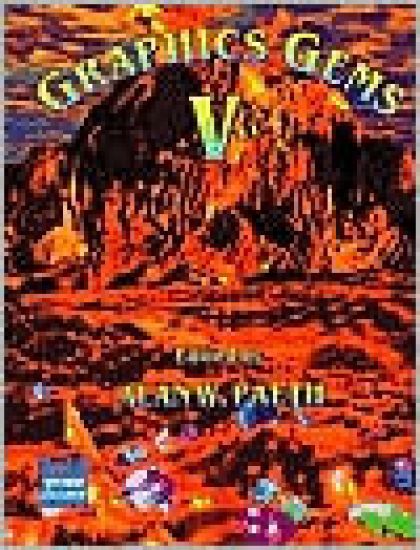
Graphics Gems V is the newest volume in The Graphics Gems Series. It is intended to provide the graphics community with a set of practical tools for implementing new ideas and techniques, and to offer working solutions to real programming problems. These tools are written by a wide variety of graphics programmers from industry, academia, and research. The books in the series have become essential, time-saving tools for many programmers.

Principles of CASE Tool Integration
Alan W. Brown; David J. Carney; Edwin J. Morris; Dennis B. Smith; Paul F. Zarrella
Oxford University Press Inc
1994
sidottu
Computer Aided Software Engineering tools typically support individual users in the automation of some task within a software development process. Used this way, CASE tools have undoubtedly helped many organisations in their efforts to develop better quality software to budget, within precedented time scales. This book will address the increasing activity within the software engineering community for automated support in the software development process. The authors integrate CASE tools into the overall software life cycle with emphasis on the following factors: scale=size and complexity; lack of maturity=limited expertise; diversity=many classes of users; technology base=extended operating system.
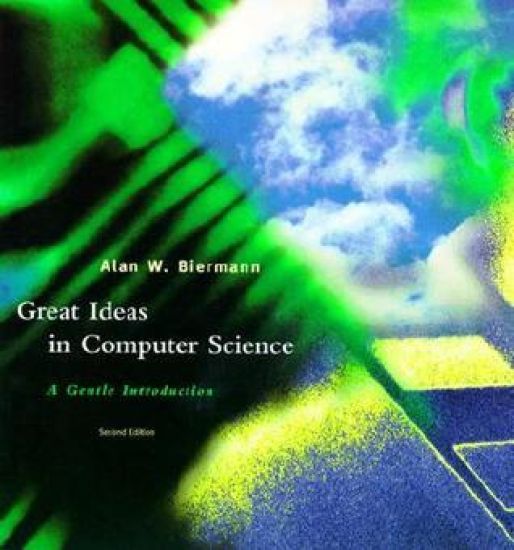
In Great Ideas in Computer Science: A Gentle Introduction, Alan Biermann presents the "great ideas" of computer science that together comprise the heart of the field. He condenses a great deal of complex material into a manageable, accessible form. His treatment of programming, for example, presents only a few features of Pascal and restricts all programs to those constructions. Yet most of the important lessons in programming can be taught within these limitations. The student's knowledge of programming then provides the basis for understanding ideas in compilation, operating systems, complexity theory, noncomputability, and other topics. Whenever possible, the author uses common words instead of the specialized vocabulary that might confuse readers.Readers of the book will learn to write a variety of programs in Pascal, design switching circuits, study a variety of Von Neumann and parallel architectures, hand simulate a computer, examine the mechanisms of an operating system, classify various computations as tractable or intractable, learn about noncomputability, and explore many of the important issues in artificial intelligence.This second edition has new chapters on simulation, operating systems, and networks. In addition, the author has upgraded many of the original chapters based on student and instructor comments, with a view toward greater simplicity and readability.

Campbell Walsh Wein Handbook of Urology
Alan W. Partin; Louis R. Kavoussi; Craig A. Peters; Roger R. Dmochowski
Elsevier - Health Sciences Division
2022
nidottu
Brush up on important clinical topics and prepare for exams or recertification with this easily accessible handbook. Campbell Walsh Wein Handbook of Urology contains essential, reliable information from the same author team as Campbell Walsh Wein Urology, 12th Edition, providing practical, well-illustrated diagnosis and treatment information on a wide range of urological conditions. It's an ideal resource for residents, practitioners, and nurse practitioners in urology who need quick access to key clinical information in a concise, easy-to-read format. Find information quickly and easily with a high-yield, templated format that includes numerous algorithms, tables, and figures. Effectively review for the boards or recertification using the self-assessment questions at the end of each chapter. Stay abreast of new AUA and ICI incontinence guidelines as well as up-to-date information on incontinence treatment recommendations, therapy for castrate-resistant prostate cancer, and active surveillance for prostate cancer. Focus on hot topics in urology including stress and mixed urinary incontinence, therapy for prolapse, overactive bladder, male subfertility and androgen deficiency, and renal cell carcinoma. Review the major categories of urologic diseases along with integrated content on radiology, radiation therapy, nephrology, pediatric urology, transplantation surgery, and vascular surgery. Enhanced eBook version included with purchase. Your enhanced eBook allows you to access all of the text, figures, and references from the book on a variety of devices.
Written by and for scholars, planners, and policymakers, Natural Resource Management: The Human Dimension focuses on issues such as the publics role in the decision-making processes of ecosystem management that affect how we use (or abuse) resources. It exposes the reader to a wide variety of applications of Human Dimensions Research, as well as to significant issues involved. One of the greatest needs in natural resource management is for a deeper understanding of the intricate relationship between humans and the natural environment. Human Dimensions Research, an interdisciplinary field involving a broad variety of social science approaches, seeks to fill this need by providing multidimensional assessments of peoples’ behavior, attitudes, and expectations toward natural resources and their uses. Written by and for scholars, planners, and policymakers, Natural Resource Management: The Human Dimension focuses on issues such as the publics role in the decision-making processes of ecosystem management that affect how we use (or abuse) resources. It exposes the reader to a wide variety of applications of Human Dimensions Research, as well as to significant issues involved. At a time when we are either loving our forests and parks to death or paving them over, a better understanding of the problems is critical if we are to create workable policies that will preserve and protect our natural resources

Culture, Conflict, And Communication In The Wildland-urban Interface
Alan W Ewert
Routledge
2019
sidottu
An examination of culture, conflict and communication in a rural/urban setting.

Written by and for scholars, planners, and policymakers, Natural Resource Management: The Human Dimension focuses on issues such as the publics role in the decision-making processes of ecosystem management that affect how we use (or abuse) resources. It exposes the reader to a wide variety of applications of Human Dimensions Research, as well as to significant issues involved. One of the greatest needs in natural resource management is for a deeper understanding of the intricate relationship between humans and the natural environment. Human Dimensions Research, an interdisciplinary field involving a broad variety of social science approaches, seeks to fill this need by providing multidimensional assessments of peoples’ behavior, attitudes, and expectations toward natural resources and their uses. Written by and for scholars, planners, and policymakers, Natural Resource Management: The Human Dimension focuses on issues such as the publics role in the decision-making processes of ecosystem management that affect how we use (or abuse) resources. It exposes the reader to a wide variety of applications of Human Dimensions Research, as well as to significant issues involved. At a time when we are either loving our forests and parks to death or paving them over, a better understanding of the problems is critical if we are to create workable policies that will preserve and protect our natural resources

Culture, Conflict, And Communication In The Wildland-urban Interface
Alan W Ewert
Routledge
2020
nidottu
This book discusses culture, conflict, and communication issues in a wildland-urban interface setting. It provides some insight and greater knowledge concerning the management and science of natural resources in a wildland-urban interface.
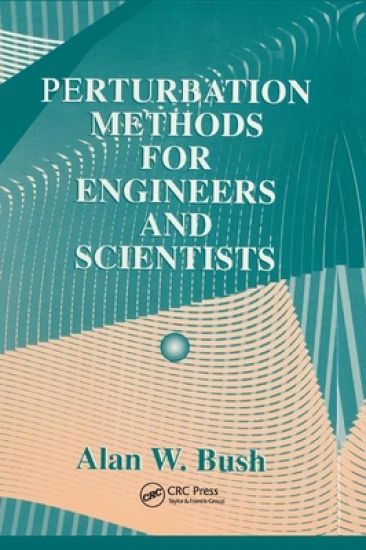
Perturbation Methods for Engineers and Scientists examines the main techniques of perturbation expansions applied to both differential equations and integral expressions. It describes several fluid dynamics applications, including aerofoils, boundary layers in momentum heat, and mass transfer. In addition, it applies the multiple scale technique to the description of surface roughness effects in lubrication. The book's intuitive, rather than formal, approach enables these advanced techniques to be used by scientists and engineers as well as by students.
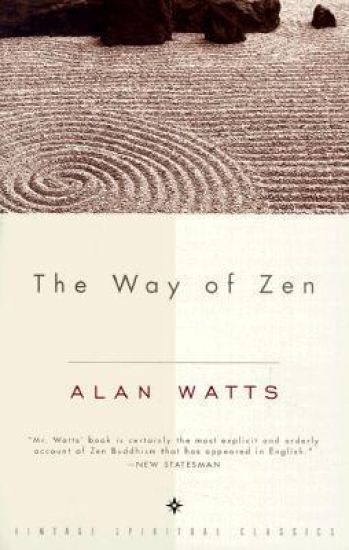
In his definitive introduction to Zen Buddhism, Alan Watts explains the principles and practices of this ancient religion to Western readers. With a rare combination of freshness and lucidity, he delves into the origins and history of Zen to explain what it means for the world today with incredible clarity. Watts saw Zen as "one of the most precious gifts of Asia to the world," and in The Way of Zen he gives this gift to readers everywhere.


This title is part of UC Press's Voices Revived program, which commemorates University of California Press’s mission to seek out and cultivate the brightest minds and give them voice, reach, and impact. Drawing on a backlist dating to 1893, Voices Revived makes high-quality, peer-reviewed scholarship accessible once again using print-on-demand technology. This title was originally published in 1987.

This title is part of UC Press's Voices Revived program, which commemorates University of California Press’s mission to seek out and cultivate the brightest minds and give them voice, reach, and impact. Drawing on a backlist dating to 1893, Voices Revived makes high-quality, peer-reviewed scholarship accessible once again using print-on-demand technology. This title was originally published in 1987.
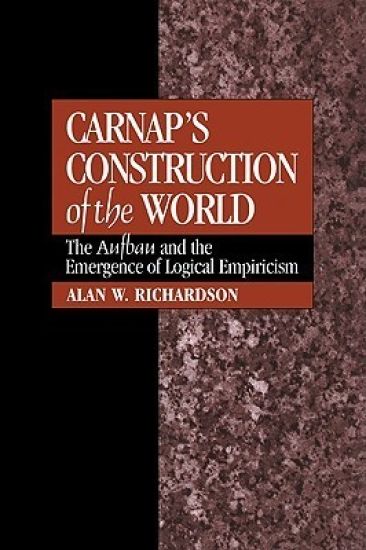
This book is a major contribution to the history of analytic philosophy in general and of logical positivism in particular. It provides the first detailed and comprehensive study of Rudolf Carnap, one of the most influential figures in twentieth-century philosophy. The focus of the book is Carnap's first major work: Der logische Aufbau der Welt (The Logical Structure of the World). It reveals tensions within the context of German epistemology and philosophy of science in the early twentieth century. Alan Richardson argues that Carnap's move to philosophy of science in the 1930s was largely an attempt to dissolve the tension in his early epistemology. This book fills a significant gap in the literature on the history of twentieth-century philosophy. It will be of particular importance to historians of analytic philosophy, philosophers of science, and historians of science.

The Russian Annexation of the Crimea 1772–1783
Alan W. Fisher
Cambridge University Press
2008
pokkari
The Black Sea and the coastal areas have played an important role in the history of eastern Europe and western Asia. Byzantium, Kiev Rus, the Golden Horde, Lithuania, Poland, the Ottoman Empire and Muscovy all tried to control parts of its area at various periods in history. From 1475 for three hundred years the Ottoman Turks controlled the Black Sea and the lands surrounding it. In 1783 Catherine annexed the Crimean peninsula, with its Muslim Tatar population, to the Russian Empire after a major Russian military victory over the Ottomans. The effect on the Ottoman Empire was significant. It lost its Tatar military forces when traditional means of securing recruits for the army had broken down; lost its secure northern frontier - the route to Istanbul itself was now open; it lost, for the first time, a Muslim province. This book provides a scholarly and balanced account of an important part of the transformation of the Muscovite state into a multinational empire. It also contributes to our understanding of the decline of the Ottoman Empire.

This book is a major contribution to the history of analytic philosophy in general and of logical positivism in particular. It provides the first detailed and comprehensive study of Rudolf Carnap, one of the most influential figures in twentieth-century philosophy. The focus of the book is Carnap’s first major work: Der logische Aufbau der Welt (The Logical Structure of the World). It reveals tensions within the context of German epistemology and philosophy of science in the early twentieth century. Alan Richardson argues that Carnap’s move to philosophy of science in the 1930s was largely an attempt to dissolve the tension in his early epistemology. This book fills a significant gap in the literature on the history of twentieth-century philosophy. It will be of particular importance to historians of analytic philosophy, philosophers of science, and historians of science.
