Alastair Gordon (b.1978, Edinburgh), is an artist based in London. This, the first major monograph of the artist’s career, includes over 160 paintings, drawings and documentational photographs, along with notes by Gordon himself. The book introduces this accomplished and engaging new voice in British painting.Gordon’s paintings bring the historic languages of genre painting and the quodlibet into a contemporary discourse that pushes the boundaries of realism, figuration and illusionism to focus on everyday moments. His work often elevates seemingly ordinary objects – feathers, matchsticks, postcards – allowing them to speak to wider concerns of beauty, truth, life and death. The documented works, produced between 2012 and 2023, include paintings made in oil or acrylic on MDF, wood, ‘found’ wood, gesso panel, paper, canvas and occasionally linen. Each is distinctive for its style and for the recurring motifs Gordon selects such as masking tape, paper ephemera and repeated, subtly different studies of the same subject. Gordon’s texts describe how objects found mud larking on the banks of the River Thames, shoes from the London City Mission and rags and papers discarded from art students’ studios have been depicted in paintings, incorporating the histories and stories of each item (and each person) into his work. The book also features recent works influenced by rural landscapes and parkland.An introduction by Julia Lucero, Associate Director of Nahmad Projects, London, emphasises the importance of nature and of meditation within Gordon’s practice. Specifically, Lucero brings out the idea of the ‘axis mundi, that metaphysical and mystical connecting point where heaven meets Earth’. She explores the significance of quodlibet, a seventeenth-century trompe-l’oeil painting technique that Gordon favours, rendering brushstrokes invisible and affording everyday objects new significance, even ‘profound value’. Humble objects such as a matchstick or paper aeroplane might be elevated to the realms of the divine. An essay by Jorella Andrews, Professor of Visual Cultures at Goldsmiths, University of London, describes the influence of Gordon’s time on a research residency in the former studio of Paul Cézanne at Les Lauves on the outskirts of Aix-en-Provence. His experiences there proved pivotal to the direction of his practice, in which both the ‘visual misdirection’ of quodlibet and the qualities of wood have become central. Andrews brings art historical texts and works of art into relation with Gordon’s paintings, making comparisons between subject, form and approach. Andrews’ text further details the recent synthesis of two sides of Gordon’s work: precise illusionism combined with looser observations made in the natural landscape.Edited by Alastair Gordon Studio, designed by Herman Lelie, printed by EBS Verona and published in 2023 by Anomie Publishing, London, the publication has been generously supported by Howard and Roberta Ahmanson through Fieldstead and Company.Alastair Gordon (b. 1978, Edinburgh) is an artist working with painting, drawing and installation, based in London. Gordon received his BA from Glasgow School of Art and his MA from Wimbledon School of Art, London. His work has been shown in recent solo exhibitions at Ahmanson Gallery in Irvine, California (2017), Aleph Contemporary, London (Quodlibet (2021) and Without Borders (2020)) and in the group exhibition Unpacking Gainsborough (2021) at Cynthia Corbett Gallery, London.
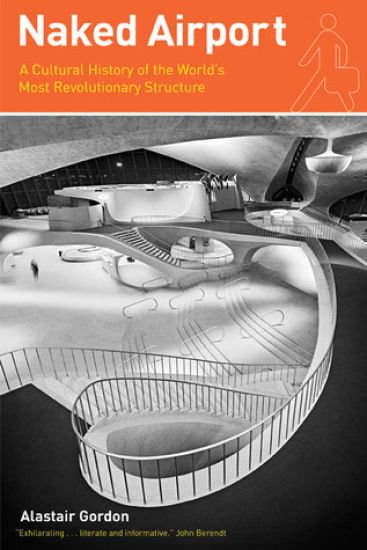
Although airports are now best known for interminable waits at check-in counters, liquid restrictions for carry-on luggage, and humiliating shoe-removal rituals at security, they were once the backdrops for jet-setters who strutted, martinis in hand, through curvilinear terminals designed by Eero Saarinen. In the critically acclaimed Naked Airport, Alastair Gordon traces the cultural history of this defining institution from its origins in muddy fields to its frontline position in the struggle against international terrorism.From global politics to action movies to the daily commute, Gordon shows how the airport has changed our sense of time, distance, and style, and ultimately the way cities are built and business is done. He introduces the people who shaped and were shaped by this place of sudden transition: pilots like Charles Lindbergh, architects like Le Corbusier, and political figures like Fiorello LaGuardia and Adolf Hitler. "Naked Airport" is a profoundly original history of a long-neglected yet central component of modern life.
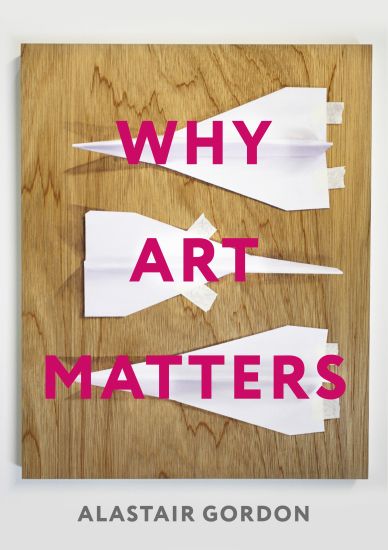
In a world of turmoil, art matters more than ever. Art can bring about political action, even social revolution. Art reminds us of the things that really matter. It lifts our eyes to eternity and show us the importance of the here and now. With illustration from contemporary art and reference to theatre and film, this book shows the importance of art for all, not just the professionals. Creativity helps humans to flourish and reflects the character of a creative God. This is a book to return to time and again for inspiration and encouragement. Illustrated by author Alastair Gordon, Why Art Matters encourages us to embrace creativity at home, church, in play and professionally in the creative arts and industries.
An expanded new edition of this fascinating and lavishly illustrated landmark volume offers a guided tour of Hamptons history and the architects and personalities—artists and designers, eccentrics and dreamers—who transformed this once-sleepy rural outpost to the high-powered resort it is today. “Weekend Utopia brings to vivid life a century in the architectural and social history of the East End.” – Best Books of 2001, New York Times Book Review The Hamptons have long served as a release valve for the urban pressures of New York City. Weekend Utopia traces the competitive, often humorous, and always compelling development of this incandescently beautiful but maddeningly self-conscious seaside paradise. Journalist and critic Alastair Gordon looks behind the hype of this charmed seaside realm to reveal the true legacy of the Hamptons as an incubator of cutting-edge art, architecture, and lifestyle that has helped to redefine the very notion of American leisure. This revised edition includes never-before-seen images and newly researched stories, an updated introduction, and an extensive new concluding chapter that brings the narrative into the present, demonstrating how the region's modernist legacy continues to influence and inspire the East End architecture and culture of today. Showcasing the artistic and architectural innovations of the Hamptons from the 1920s to the current day, Weekend Utopia ranges from the country clubs of the Social Register elite to the experimental houses and studios of avant-garde artists like Jackson Pollock and Robert Motherwell to the daring beachfront homes designed by the likes of Peter Blake, Andrew Geller, Philip Johnson, and George Nelson. An ideal gift for Hamptonites, architecture buffs, and beach lovers alike.
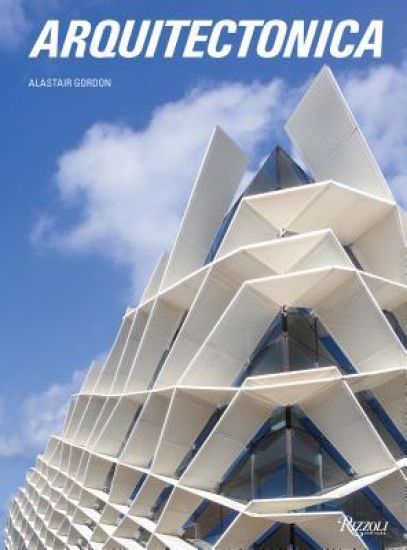
Arquitectonica is the design firm that put Miami on the map for the cool, hip, very now architecture that was first celebrated on TV in Miami Vice. Since their founding four decades ago, the firm has grown exponentially in stature, and its energies have only increased. Arquitectonica is a major presence on the world architectural stage, with offices in New York, Los Angeles, Paris, Hong Kong, Shanghai, Manila, Dubai, Lima, and Sao Paulo. Founded in 1977, the firm received critical and popular attention and acclaim almost from its inception, thanks to a bold modernism that was immediately identified with a renaissance in Miami s urban landscape. Principals Bernardo Fort-Brescia and Laurinda Spear continue to this day exploring and pushing the limits of materials and design with their innovative use of geometry, pattern, and colour. The first book on this major international architectural design firm since Rizzoli s own Arquitectonica (2004), this volume is a retrospective of the firm s forty-year history, considering its earliest projects the archetypal and hugely influential Pink House and Babylon Apartments to Regalia Condominium tower, its twenty-first-century masterwork of undulant glass and steel.
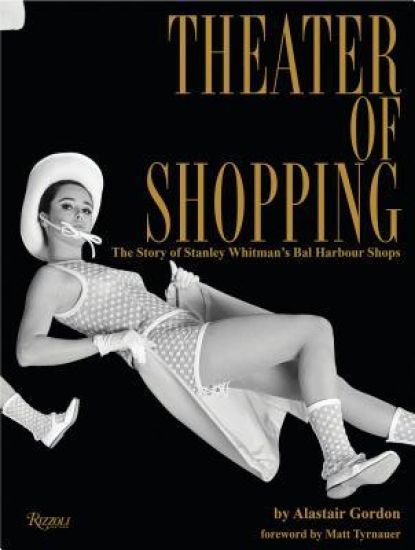
Theater of Shopping tells the story of retail visionary Stanley Whitman and the creation of Bal Harbour Shops, the most successful luxury fashion shopping centre in the world*, and one of the last family-owned malls in America. Written by critically acclaimed author Alastair Gordon, Theater of Shopping is a cultural history of both a place and a personal legacy. The open-air mall opened in 1965 as a pedestrian-friendly environment that turned shopping into a kind of theatrical event, while featuring the work of young design talents like Valentino, Versace, Mugler, de La Renta, and other foreign designers who were unknown in America before first showcasing their collections at Bal Harbour Shops. The text weaves together fashion, luxury commerce, architecture, landscape design, urban development, and family history, to create a highly readable narrative illustrated with more than 300 images including never-before-published drawings, plans and photographs by renowned photographers including Richard Avedon and Ezra Stoller.
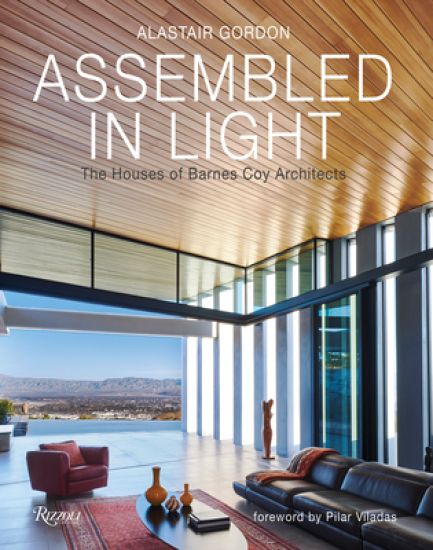
Throughout their twenty-five-year commitment to modern design, Barnes Coy Architects have specialized in one-of-a-kind dream houses designed for those who prefer to live in highly spatial and modern ways. Assembled in Light is the first exclusive look at this firm s previously unpublished body of high-end residential work. These leisure homes gleam in the sun like sleek, finely tuned machines. Everything has been custom designed, custom made, custom treated. The houses are tastefully furnished with one-of-a-kind artisanal pieces (by Wendell Castle, Chris Lehrecke, etc.) and museum-quality collections of contemporary art hanging on the walls (such as works by Anselm Kiefer, Barbara Kruger, Richard Prince, and Cindy Sherman). They feature infinity pools, outdoor and indoor kitchens, roof decks, temperature-controlled wine cellars, and numerous guest rooms, as well as ten-foot-high doorways and floor-to-ceiling swathes of tempered glass to better gaze out at the dunes and ocean views. The new photography beautifully captures the architects attention to detail and love of specialized materials, whether it s Carrara marble from Italy or teak from Bali. While most of the houses are located in the Hamptons in New York, a few are found as far afield as Costa Rica, California, Georgia, and Westchester County. All but three homes were built on commanding waterfront sites.
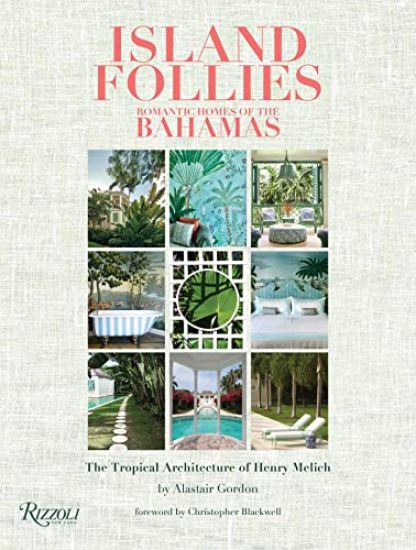
Island Follies is the first book to explore the work of Henry Melich (1924-1999), a Czech-born architect who brought a beguiling form of neoclassicism to the Caribbean. While Melich built projects in the United States and England, he s best remembered for the romantic follies he designed in the 1960s and 1970s in sunny island retreats like Lyford Cay, Harbour Island, and Windermere Island in the Bahamas. Melich created a romantic sense of escape with a softly cushioned whimsy and discrete sense of tranquillity. His signature motifs included faux marbled walls, seasoned wood, colonnades and tent-like interiors with striped ceilings that suited the playful mood of the moment, documented in Island Follies with the warm touch of Slim Aarons and with new photography of many previously unpublished interiors. Gardens with Bougainvillea-draped pergolas, ivy-clad alcoves, palm-lined allees are just some of the other features that extended the architecture into the tropical landscape. Island Follies showcases more than forty of Melich s island projects, capturing a lost world of glamor and faded glory certain to inspire lovers of interior design and island retreats alike.
First monograph to present the work of Laguardia Design Group, a highly regarded landscape architecture firm specializing in contemporary residential design in the Hamptons. First monograph to present the work of Laguardia Design Group, a highly regarded landscape architecture firm specializing in contemporary residential design in the Hamptons. With offices in Water Mill, LaGuardia Design Group is immersed in the fragile landscape of the Hamptons, both its woods and meadows and the dramatic shoreline along the Atlantic. Notable projects include the rebuilding of the dunescape surrounding a landmark Norman Jaffe house damaged by storms, collaborations with well-known contemporary architects, iand the setting for a distinguished collection of contemporary sculpture in Bridgehampton. Founded in 1994 by Christopher LaGuardia, this firm is committed to expressing the character of each site and recognized for its environmental stewardship, historic references, and meticulously designed outdoor spaces. Rather than attempting to mimic nature, LDG's goal with every design is to interpret natural processes as an artistic expression in their work. In 2013, LDG received the American Society of Landscape Architects (ASLA) award of excellence in residential design, the highest residential award in the profession.
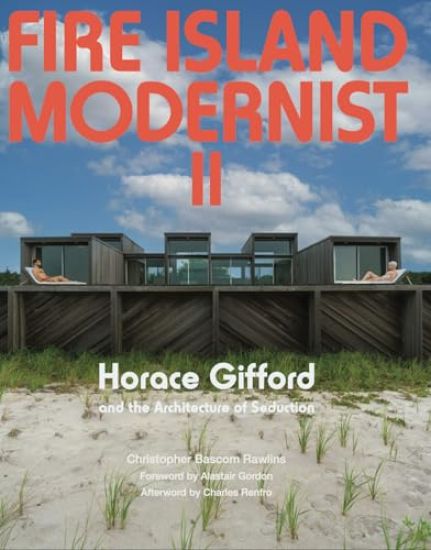
Featuring new houses, many additional photographs and a new afterword, Fire Island Modernist offers a fascinating look at the history and culture of this "gay paradise" through the life and work of Horace Gifford As the 1960s became the "Sixties," architect Horace Gifford executed a remarkable series of beach houses that transformed the terrain and culture of New York’s Fire Island. Growing up on the beaches of Florida, Gifford forged a deep connection with coastal landscapes. Pairing this sensitivity with jazzy improvisations on modernist themes, he perfected a sustainable modernism in cedar and glass that was as attuned to natural landscapes as to our animal natures. Gifford’s serene 1960s pavilions provided refuge from a hostile world, while his exuberant post-Stonewall, pre-AIDS masterpieces orchestrated bacchanals of liberation. Marilyn Monroe, Elizabeth Taylor and Montgomery Clift once spurned Hollywood limos for the rustic charm of Fire Island’s boardwalks. Truman Capote wrote Breakfast at Tiffany’s here. Diane von Fürstenberg showed off her latest wrap dresses to an audience that included Halston, Giorgio Sant’ Angelo, Calvin Klein and Geoffrey Beene. Today, such a roster evokes the aloof, gated compounds of the Hamptons or Malibu. But these celebrities lived in modestly scaled homes alongside middle-class vacationers, all with equal access to Fire Island’s natural beauty. Blending cultural and architectural history, Fire Island Modernist ponders a fascinating era through an overlooked architect whose life, work and colorful milieu trace the operatic arc of a lost generation, and still resonate with artistic and historical import. First published in 2013 and long out of print, this iconic book returns in an expanded edition, including five new featured houses, drawings of previously unseen homes, new photography, updated scholarship and a new afterword by Charles Renfro. This book was published in conjunction with Gordon De Vries Studio
Do you have a complex technical job, like a software developer, scientist, lawyer, engineer, policy writer, economist or medical researcher?Master Expert is your guide to every business skill you need to succeed. 740 pages and 50 chapters of toolkits, ideas, checklists, and new processes to help you surmount every one of the challenges faced by senior technical specialists: How do I pitch my ideas to make sense commercially and strategically?How do I understand my organisation's commercial context?How do I prioritise and engage stakeholders? How do I recalibrate failing relationships?How do I coach and delegate, and make my expertise understood by non-technical colleagues?How do I manage upward, talk to boards, and convince doubters?How do I manage my energy, workload and priorities day to day?How do I get better at presenting, intelligence gathering and networking?How do I understand where my skills are weak, and how to plan to improve them?Why Master Expert?It's time technical specialists like yourself got the same deal as managers.From the very first day a new manager starts work, they're given a LOT of help. A career ladder. Appraisals, Mentoring. Networking. Capability frameworks. Support, connections - they're trained to deal with whatever business problems come along.Technical people don't get that kind of support. It's time they did. Master Expert details how to evaluate the performance of technical specialists, and includes a capability framework to understand your own, or your team's, progress toward Master Expert status.The authors, Alistair Gordon and Dominic Johnson, have been coaching developers, scientists, lawyers, engineers, policy writers, economists, medical researchers and other technical specialists for close to ten years now, and this book distils everything they've learned.Learn more at expertship.com
The book examines the reasons behind accusations of dysfunctional humanitarian identities and the loss of space for impartial action. Through a combination of practical examples in case studies from the field with a theoretical and philosophical approach to questions of voluntary service, community and identity, it reconsiders the exceptional discourse that constructs these identities and drives humanitarian response in environments of complex emergency. By recognizing both the strength and the limits of its social and political agency, the study presents opportunities for the construction of a less exceptional space, or ‘niche’ within the humanitarian sector, where the politics is around one of an ordinary humanitarian society instead of an ordered humanitarian system.
Contract LawBasics, 5th Edition provides the perfect study and revision guide for students preparing for examination in both the specialism that is contract law, and all those courses for which thereexists an element of contract law. This new edition by Alex Gibb is entirely up-to-date and engages with a range of current issues affecting contract law. A wealth of case law is included within the text to illustrate key developments in areas of judicial interpretation and to demonstrate legislation as it is applied in practice
We believe this is the first guide of its kind ever published. It is designed by experts for experts, to help them actively build their capability. It assists experts in becoming the very best experts they can by helping them craft meaningful and actionable Personal Growth Plans. It contains 102 growth opportunities - initiatives which, when put into action, position experts, no matter what their expert domain, to have greater impact and influence, and add more value.GROWTH FOR EXPERTSMany of those using this book will have participated in one of Expertunity's growth programs for experts around the world. So, you'll understand about the concept of the Expertship Model, and the process by which you should develop your Personal Growth Plan using our template. It is however designed to be a standalone tool, so we have included chapters at the beginning of this Guide explaining these concepts. If you know about them already you can jump straight over them. If you're new to the concept you can read about how Expertship is for experts what leadership is to leaders.THE EXPERTSHIP MODELThe Expertship Model is a result of years of research and testing and is acknowledged as one of the leading capability frameworks for experts. Experts from places as far afield as Las Vegas, New York, London, New Delhi, Singapore, Sydney and Auckland use the model. These experts operatein a wide variety of expert domains -IT, law, HR, Engineering, Sales, Finance, Risk and Science.THE EXPERTSHIP360This Guide is best used in conjunction with a feedback tool, such as the Expertship360. Recipients of a 360 report get valuable feedback from a range of their stakeholders, and thus can determine which capabilities are their strengths to be built upon, and which capabilities present opportunities for significantly more value to be added. The growth initiatives listed in this Guide are organised by capability area.A GUIDE FOR MANAGERS OF EXPERTS, TOOSome readers may lead a team or division of experts. You might be responsible for helping them identify and satisfy their development needs. This Guide represents the latest thinking on how to motivate and get the best value from your experts. You may be receiving it as an accompaniment to Expertunity's Leader of Experts program.TOP EXPERTS COMBINE TECHNICAL AND ENTERPRISE SKILLSExperts face many challenges that are unique to them. Many challenges are resolved by deploying technical skills - skills which experts have typically been trained in many times over the years. In fact, usually nearly all of an experts' capability development has been in these technical areas. However, the very best experts combine these technical skills with what we refer to as enterprise skills. These are the additional skills - such as business acumen, change agility, stakeholder management, and personal impact - which enable experts to deploy their technical skills best. Many experts have missed out on training in these skills, and the arrival of Expertship programs seeks to restore this imbalance. You can find out about all of our Expertship services at http: //www.expertunity.global/ Of course, we would love to hear your feedback on how we can continue to improve this Guide. Please let us know how you found it helpful, and how you think we could make it easier to use. We would also love to hear your success stories putting these growth initiatives to work. Our website provides you with a direct line of contact with the authors.Good luck with your personal growth plan
Fully revised and updated in its third edition, this timely book brings together the study of conflict and war and the problems surrounding the economic development of developing societies that are most prone to experiencing problems in moving on after war.The book does so by reflecting on the issues surrounding war as it unfolds and after it has (in principle) ‘ended’, within the context of the history, present-day problems and future prospects. The book aims to highlight the possibilities, successes and failures of past and present policies that bring ‘development’ to countries and peoples that want to be more involved in deciding their own futures after conflict and war, and often find themselves subject to what can be seen as arbitrary and even alien ways of thinking and acting by institutions in which they theoretically have membership and agency but often do not in practice. The case studies have been fully updated to reflect changes and developments since the second edition of this text, and there are questions at the end of each chapter to promote reflection. This new edition presents a deeper dive into the history of conflict and the emergence of new theories and policy guidance about present and future options in the fields of conflict and development.Accessible and engaging, this textbook is a pivotal resource for a nexus of subjects related to the often separated fields of conflict and development studies, as well as practitioners in this area.