First published in 1999. This book, in compliance with the aims of the series, attempts to provide a comprehensive and critical account of Kierkegaard's thought. In the case of a writer so complex, prolix, and so little concerned with the logical presentation of his own thought, it is perhaps inevitable that the exegetical side of this task should overshadow the critical.
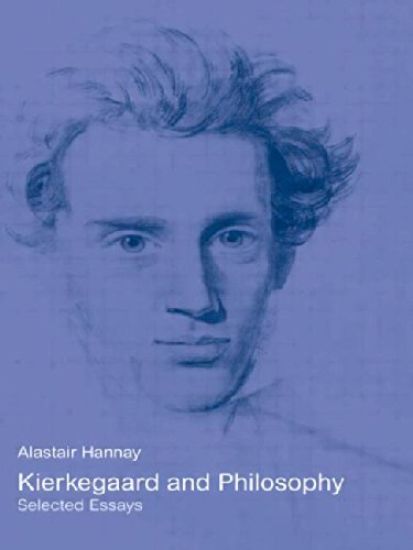
Kierkegaard and Philosophy makes many of the most important papers on Kierkegaard available in one place for the first time. These seventeen essays, written over a period of over twenty years, have all been substantially revised or specially prepared for this collection, with a new introduction by the author.In the first part, Alastair Hannay concentrates on Kierkegaard's central philosophical writings, offering closely text-based accounts of the silent concepts Kierkegaard uses. The second part shows the relevance of other thinkers' treatments of shared themes, pointing out where they differ from Kierkegaard. The concluding chapter provides a reason Kierkegaard himself would give for disagreeing with those who claim his texts are infinitely interpretable.Written by the world's foremost Kierkegaard scholar and translator, Kierkegaard and Philosophy is an indispensible resource for all students of Kierkegaard's work.
First published in 2002. This is Volume VII of seventeen in the Philosophy of Mind and Psychology series. The Muirhead Library of Philosophy was designed as a contribution to the History of Modern Philosophy under the heads: first of Different Schools of Thought-Sensationalist, Realist, Idealist, Intuitivist; secondly of different Subjects-Psychology, Ethics, Aesthetics, Political Philosophy, Theology. Written in 1971, the central topic of this book is imaging, more specifically visual imaging and includes the embracing topic of the general question of the nature of mind-or, now that we have taken the linguistic turn, of the content and reference of mental-concept terms.
The media often talk about public opinion, the 'American' or 'British' public, or the movie-going public. A public can hold an opinion and be divided. What is the public and where did it come from? Is there one public or many? Is the very idea of the public a myth?In this fascinating book, Alastair Hannay explores these questions and unpacks a much talked about but little understood phenomenon. He begins by tracing the origins of the public back to ancient Rome, before arguing that the idea of a public sphere is closely linked to the birth of democracy in the eighteenth century. He also reflects on the Enlightenment and the origins of public opinion, as well as considering the role of the media in creating and manipulating the public, and asks whether the very idea of the public might be uprooted and undermined by the Internet and global technology.Engaging and controversial in equal measure, On the Public also draws on famous thinkers who have written about the public, such as Kierkegaard, Hannah Arendt, John Dewey and Jürgen Habermas.
The media often talk about public opinion, the 'American' or 'British' public, or the movie-going public. A public can hold an opinion and be divided. What is the public and where did it come from? Is there one public or many? Is the very idea of the public a myth?In this fascinating book, Alastair Hannay explores these questions and unpacks a much talked about but little understood phenomenon. He begins by tracing the origins of the public back to ancient Rome, before arguing that the idea of a public sphere is closely linked to the birth of democracy in the eighteenth century. He also reflects on the Enlightenment and the origins of public opinion, as well as considering the role of the media in creating and manipulating the public, and asks whether the very idea of the public might be uprooted and undermined by the Internet and global technology.Engaging and controversial in equal measure, On the Public also draws on famous thinkers who have written about the public, such as Kierkegaard, Hannah Arendt, John Dewey and Jürgen Habermas.
Kierkegaard and Philosophy makes many of the most important papers on Kierkegaard available in one place for the first time. These seventeen essays, written over a period of over twenty years, have all been substantially revised or specially prepared for this collection, with a new introduction by the author.In the first part, Alastair Hannay concentrates on Kierkegaard's central philosophical writings, offering closely text-based accounts of the silent concepts Kierkegaard uses. The second part shows the relevance of other thinkers' treatments of shared themes, pointing out where they differ from Kierkegaard. The concluding chapter provides a reason Kierkegaard himself would give for disagreeing with those who claim his texts are infinitely interpretable.Written by the world's foremost Kierkegaard scholar and translator, Kierkegaard and Philosophy is an indispensible resource for all students of Kierkegaard's work.
First published in 1999. This book, in compliance with the aims of the series, attempts to provide a comprehensive and critical account of Kierkegaard's thought. In the case of a writer so complex, prolix, and so little concerned with the logical presentation of his own thought, it is perhaps inevitable that the exegetical side of this task should overshadow the critical.
Written by one of the world’s preeminent authorities on Kierkegaard, this biography is the first to reveal the delicate imbrication of Kierkegaard’s life and thought. To grasp the importance and influence of Kierkegaard’s thought far beyond his native Denmark, it is necessary to trace the many factors that led this gifted but (according to his headmaster) ‘exceedingly childish youth’ to grapple with traditional philosophical problems and religious themes in a way that later generations would recognize as amounting to a philosophical revolution. This book offers a powerful narrative account which will be of particular interest to philosophers, literary theorists, intellectual historians, and scholars of religious studies as well as any non-specialist looking for an authoritative guide to the life and work of one of the most original and fascinating figures in Western philosophy.
Written by one of the world’s preeminent authorities on Kierkegaard, this biography is the first to reveal the delicate imbrication of Kierkegaard’s life and thought. To grasp the importance and influence of Kierkegaard’s thought far beyond his native Denmark, it is necessary to trace the many factors that led this gifted but (according to his headmaster) ‘exceedingly childish youth’ to grapple with traditional philosophical problems and religious themes in a way that later generations would recognize as amounting to a philosophical revolution. This book offers a powerful narrative account which will be of particular interest to philosophers, literary theorists, intellectual historians, and scholars of religious studies as well as any non-specialist looking for an authoritative guide to the life and work of one of the most original and fascinating figures in Western philosophy.
First published in 2002. This is Volume VII of seventeen in the Philosophy of Mind and Psychology series. The Muirhead Library of Philosophy was designed as a contribution to the History of Modern Philosophy under the heads: first of Different Schools of Thought-Sensationalist, Realist, Idealist, Intuitivist; secondly of different Subjects-Psychology, Ethics, Aesthetics, Political Philosophy, Theology. Written in 1971, the central topic of this book is imaging, more specifically visual imaging and includes the embracing topic of the general question of the nature of mind-or, now that we have taken the linguistic turn, of the content and reference of mental-concept terms.
In his perceptive and provocative new book, Alastair Hannay contests two prejudices that have dogged the appreciation of Soren Kierkegaard’s writings. These are that to grasp their contemporary impact, the religious focus must be referred to his personal background, and that their varied voices mirror a fragmentation in his own relationship to self and society. It was for paying lip-service to their own values that Kierkegaard castigated his society, his diagnosis being that this was one of many ways in which more pressing and disturbing questions of existence were typically evaded. It is in the renowned thinker's own struggle for selfhood that Hannay sees his prescient anticipation of the current focus on issues relating to integration, acceptance and identity. By cultivating a role as the social misfit within his innate exceptionality Kierkegaard deliberately exposed himself to the problems to which an age gripped by ‘identity politics’ is now responding. By cleverly examining the relation between his richly conceived polemics and Kierkegaard’s own preoccupation with identity, Hannay has written an essential new text for Kierkegaard scholars and students of Continental philosophy and existentialism.
The Danish philosopher, theologian and author Soren Kierkegaard (1813-1855) is widely considered to be one of the most important religious thinkers of the modern age. He is known as the `father of existentialism', but his work was also influential on theories of modernism, theology, Western culture, church politics and the Christian faith. His wit, imagination and humour have inspired a generation of followers from Franz Kafka to Woody Allen. But how did this inattentive schoolboy rise to critique the work of great thinkers such as Hegel and the German Romantics? Who was the unusual person writing behind the many pseudonyms? And in what way are Kierkegaard's concepts still relevant today? In this absorbing new biography Alastair Hannay unravels the mystery of Soren Kierkegaard's short but momentous career. Kierkegaard's key concepts and major works are described alongside the major incidents in his private and public life, from his longing for selfhood expressed at the age of 22, to a verbal assault on the Church in the months prior to his early death at the age of 42. Soren Kierkegaard is a story of a man destined to become a thorn in the side of society.
Rear-view mirrors are not normal scientific equipment, nor are philosophers all that keen to recall a partly embarrassing past. But looking back can cure a self-induced narrowing of the modern scientific mind and help us to renew a sense of where, if anywhere, we might feel we belong in the world. Today, a centuries-long belief in the primacy of a first-personal perspective has given way to an opposite view that what passes through the conscious mind has little to do with who we are and what we are doing. A lifelong campaigner for the first-personal perspective, Alastair Hannay presents here a powerful and historically framed case for restoring faith in its status as a provider of important truths about ourselves.
'Oh friends, not these sounds, let us instead strike up ones more pleasing and more joyful'. Written during the corona of 2020 and stretching into 2021, the sounds and words of music are here given a deeper and wider meaning. The words quoted above were Beethoven's own in the lockdown of his own deafness and just before letting the chorus loose to proclaim that 'all people become brothers'. The sounds he refers to are those of despair, exuberance, and utopian peace that his symphony has just portrayed. For him, and for us, the Ode is less the vision of an alternative world than an expression of a constant need to seek a joy which, beyond happiness and once-in-a-while cheerfulness, is a sense of doing something worthwhile with and, where possible, for others.
Readers often come to know Kierkegaard's work through just one or two of the more widely mentioned of his twenty-eight publications. Here the first-time reader is offered an introduction to Kierkegaard that situates the texts in a context of the personal circumstances from which they arose. This makes it clear why Kierkegaard was able to conclude not only that writing had been his own education, but that posterity would find as much interest in what made him put pen to paper as in the individual texts that were the result. Central in this respect are the pseudonymous works, summarized here and situated in their two main 'indirect' and 'direct' phases and within a wider biographical context that shows the approaching and infamous 'attack on the church' just prior to Kierkegaard's early death to be an inevitable outcome. Some common catchphrases ('leap of faith', 'Father of Existentialism', 'Three Stages') are examined in depth, while to counter a tendency to distort the legacy by explaining its focus on God and the individual as an expression of time and place, or purely personal circumstances, the details of Kierkegaard's cultural and family origins are placed after the commentary. Finally, an invitation to further questioning is offered in the form of reflections on how Kierkegaard and Nietzsche, given the latter's declaration of the death of God, might have responded to one another.
The lives of philosophers would be dull reading if they were as tidy as their thoughts often tend to be. Alastair Hannay describes how he ‘slid’ into philosophy but found it a useful means of transport for a life framed here in metaphors of the sea, an unruly element that has played some part in a not always tidy life. Although the philosophy option attracts some because it suits their talents, the less talented may look to it for guidance in making sense of their lives. Hannay’s own ‘episodic’ interest led him by chance to a life-time of active engagement with philosophers of all kinds. An encounter with the works of Søren Kierkegaard opened the way to a personal take on a profession that easily ends in abstractions but which, when its questions are brought down to earth, sees market-place and academic philosophy from a perspective that allows the one to enrich the other.
In his perceptive and provocative new book, Alastair Hannay contests two prejudices that have dogged the appreciation of Soren Kierkegaard’s writings. These are that to grasp their contemporary impact, the religious focus must be referred to his personal background, and that their varied voices mirror a fragmentation in his own relationship to self and society. It was for paying lip-service to their own values that Kierkegaard castigated his society, his diagnosis being that this was one of many ways in which more pressing and disturbing questions of existence were typically evaded. It is in the renowned thinker's own struggle for selfhood that Hannay sees his prescient anticipation of the current focus on issues relating to integration, acceptance and identity. By cultivating a role as the social misfit within his innate exceptionality Kierkegaard deliberately exposed himself to the problems to which an age gripped by ‘identity politics’ is now responding. By cleverly examining the relation between his richly conceived polemics and Kierkegaard’s own preoccupation with identity, Hannay has written an essential new text for Kierkegaard scholars and students of Continental philosophy and existentialism.
Simon Oliver; Sara Novic; Matthew Loftus; Arlie Coles; David Schaengold; Hannah Arendt; J. L. Wall; Alastair Roberts; Julian Peters; Robert Lee Williams
How can we live well with tech, without it becoming our master? These days, the heady promises of Silicon Valley seem suspect: the internet didn’t bring all of humanity together; neither did smartphones or social media. We have long since stopped associating tech with utopian visions of global harmony, instead blaming it for distraction, polarization, addictions to porn and gambling, the trivialization of culture, loss of privacy and work-life balance, and fears that automation may push millions out of a job. Advances in artificial intelligence seem poised to bring us to the next technological watershed. It’s a good time to ask how we can learn to live well with tech, and how we might push back against technologies that shape humans in anti-human ways. On this theme: Find out why computers can’t do math and humans can.When parenting from prison, a little tech can make a big difference.Glucose monitoring systems transform life for children with diabetes.Should ChatGPT write sermons and prayers?From scrolls to scrolling, tech has changed the way Jewish people read scriptureWill AI bring the end of the world, or is it already here?An intentional community tries to be intentional about personal technology.Our struggle with technology goes back to the Tower of Babel in Genesis.A farmer praises a simple piece of technology – the rock bar. Also in this issue: A photo essay about children on the frontlines in UkraineA philosopher’s proposal for a gift economyThe winners of the 2024 Rhina Espaillat Poetry AwardInsights from Gerard Manley Hopkins, E. F. Schumacher, Antoine de Saint-Exupéry, Jean-Pierre Dupuy, and Hannah ArendtReviews of Birding to Change the World, The Heaven & Earth Grocery Store, and All Things Are Too Small Plough Quarterly features stories, ideas, and culture for people eager to apply their faith to the challenges we face. Each issue includes in-depth articles, interviews, poetry, book reviews, and art.
Edward Bond; Mojisola Adebayo; Sudha Bhuchar; Gurpreet Kaur Bhatti; Zoe Cooper; Frances Ya-Chu Cowhig; Tim Crouch; Inua Ellams; James Graham; Tanika Gupta; Hannah Khalil; Morgan Lloyd Malcolm; Alistair McDowall; Vinay Patel; Lucy Prebble; Philip Ridley; Christopher Shinn; Simon Stephens; Chris Thorpe; Laura Wade; Anne Washburn
Theatre has a complex history of responding to crises, long before they happen. Through stage plays, contemporary challenges can be presented, explored and even foreshadowed in ways that help audiences understand the world around them. Since the theatre of the Greeks, audiences have turned to live theatre in order to find answers in uncertain political, social and economic times, and through this unique collection questions about This anthology brings together a collection of 20 scenes from 20 playwrights that each respond to the world in crisis. Twenty of the world’s most prolific playwrights were asked to select one scene from across their published work that speaks to the current world situation in 2020. As COVID-19 continues to challenge every aspect of global life, contemporary theatre has long predicted a world on the edge. Through these 20 scenes from plays spanning from 1980 to 2020, we see how theatre and art has the capacity to respond, comment on and grapple with global challenges that in turn speak to the current time in which we are living. Each scene, chosen by the writer, is prefaced by an interview in which they discuss their process, their reason for selection and how their work reflects both the past and the present. From the political plays of Lucy Prebble and James Graham to the polemics of Philip Ridley and Tim Crouch. From bold works by Inua Ellams, Morgan Lloyd Malcom and Tanika Gupta to the social relevance of Hannah Khalil, Zoe Cooper and Simon Stephens this anthology looks at theatre in the present and asks the question: “how can theatre respond to a world in crisis?” The collection is prefaced by an introduction from Edward Bond, one of contemporary theatre’s most prolific dramatists.