Kirjojen hintavertailu. Mukana 11 244 527 kirjaa ja 12 kauppaa.

Kirjahaku

Etsi kirjoja tekijän nimen, kirjan nimen tai ISBN:n perusteella.

1000 tulosta hakusanalla Albert Bormann

Geschichte des Klosters U. L. Frauen zu Magdeburg

Geschichte des Klosters U. L. Frauen zu Magdeburg

Albert Bormann; Gustav Hertel

Hansebooks
2020
pokkari
Geschichte des Klosters U. L. Frauen zu Magdeburg ist ein unver nderter, hochwertiger Nachdruck der Originalausgabe aus dem Jahr 1885. Hansebooks ist Herausgeber von Literatur zu unterschiedlichen Themengebieten wie Forschung und Wissenschaft, Reisen und Expeditionen, Kochen und Ern hrung, Medizin und weiteren Genres. Der Schwerpunkt des Verlages liegt auf dem Erhalt historischer Literatur. Viele Werke historischer Schriftsteller und Wissenschaftler sind heute nur noch als Antiquit ten erh ltlich. Hansebooks verlegt diese B cher neu und tr gt damit zum Erhalt selten gewordener Literatur und historischem Wissen auch f r die Zukunft bei.
Holding On to Reality

Holding On to Reality

Albert Borgmann

University of Chicago Press
2000
nidottu
In the late-1990s people hear constantly about the "information revolution". The 24-hour news channels and dizzying Internet technologies bombard people with facts and pictures from around the globe. But what kind of a "revolution" is this? How has information really changed from what it was ten years or ten centuries ago? This work offers some answers to these questions. Albert Borgmann has written a history of information, from its inception in the natural world to its role in the transformation of culture - in writing and printing, in music and architecture - to the late-1990s Internet mania and its attendant assets and liabilities. Drawing on the history of ideas, the details of information technology, and the boundaries of the human condition, Borgmann explains the relationship between things and signs, between reality and information. His history ranges from Plato to Boeing and from the alphabet to virtual reality, all the while being conscious of the enthusiasm, apprehension, and uncertainty that have greeted every stage of the development of information. The book is underscored by the humanist's fundamental belief in human excellence and by the conviction that excellence is jeopardized unless we achieve a balance of information and "the things and practices that have served us well and we continue to depend on for our material and spiritual well-being - the grandeur of nature, the splendour of cities, competence of work, fidelity to loved ones, and devotion to art or religion".
Holding On to Reality

Holding On to Reality

Albert Borgmann

University of Chicago Press
1999
sidottu
In the late-1990s people hear constantly about the "information revolution". The 24-hour news channels and dizzying Internet technologies bombard people with facts and pictures from around the globe. But what kind of a "revolution" is this? How has information really changed from what it was ten years or ten centuries ago? This work offers some answers to these questions. Albert Borgmann has written a history of information, from its inception in the natural world to its role in the transformation of culture - in writing and printing, in music and architecture - to the late-1990s Internet mania and its attendant assets and liabilities. Drawing on the history of ideas, the details of information technology, and the boundaries of the human condition, Borgmann explains the relationship between things and signs, between reality and information. His history ranges from Plato to Boeing and from the alphabet to virtual reality, all the while being conscious of the enthusiasm, apprehension, and uncertainty that have greeted every stage of the development of information. The book is underscored by the humanist's fundamental belief in human excellence and by the conviction that excellence is jeopardized unless we achieve a balance of information and "the things and practices that have served us well and we continue to depend on for our material and spiritual well-being - the grandeur of nature, the splendour of cities, competence of work, fidelity to loved ones, and devotion to art or religion".
Crossing the Postmodern Divide

Crossing the Postmodern Divide

Albert Borgmann

University of Chicago Press
1993
nidottu
In this eloquent guide to the meanings of the postmodern era, Albert Borgmann charts the options before us as we seek alternatives to the joyless and artificial culture of consumption. Borgmann connects the fundamental ideas driving his understanding of society's ills to every sphere of contemporary social life, and goes beyond the language of postmodern discourse to offer a powerfully articulated vision of what this new era, at its best, has in store. "[This] thoughtful book is the first remotely realistic map out of the post modern labyrinth."--Joseph Coates, The Chicago Tribune "Rather astoundingly large-minded vision of the nature of humanity, civilization and science."--Kirkus Reviews
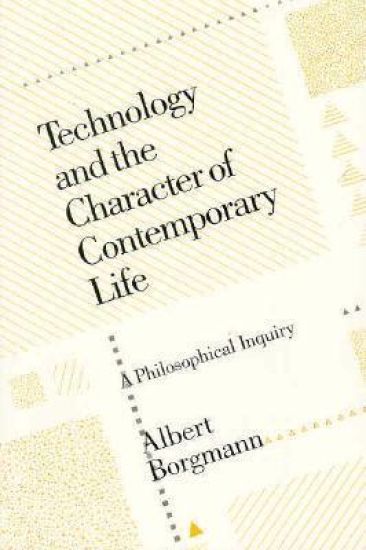
Technology and the Character of Contemporary Life

Technology and the Character of Contemporary Life

Albert Borgmann

University of Chicago Press
1987
nidottu
Blending social analysis and philosophy, Albert Borgmann maintains that technology creates a controlling pattern in our lives. This pattern, discernible even in such an inconspicuous action as switching on a stereo, has global effects: it sharply divides life into labor and leisure, it sustains the industrial democracies, and it fosters the view that the earth itself is a technological device. He argues that technology has served us as well in conquering hunger and disease, but that when we turn to it for richer experiences, it leads instead to a life dominated by effortless and thoughtless consumption. Borgmann does not reject technology but calls for public conversation about the nature of the good life. He counsels us to make room in a technological age for matters of ultimate concern—things and practices that engage us in their own right.
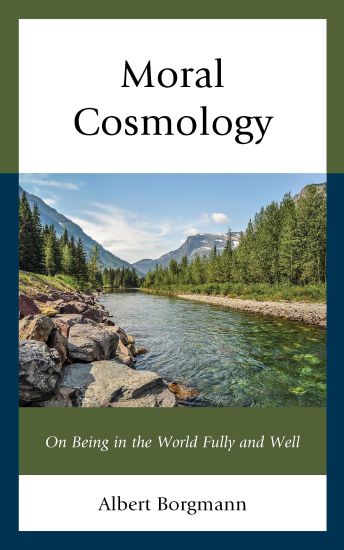
Moral Cosmology

Moral Cosmology

Albert Borgmann

BLOOMSBURY PUBLISHING PLC
2024
sidottu
A moral cosmology was the ordinary background knowledge of prescientific peoples, who took the divinity and the moral rules of the heavenly bodies for granted. That unified world view was disrupted by the European Enlightenment, which divided moral cosmology into physics and ethics: physics tells us what is, ethics tells us what we ought to do. While knowledge of physics has become hard, and understanding ethics has become shifting and uncertain, nostalgia for a unified cosmic understanding continues. Moral Cosmology: On Being in the World Fully and Well demands that we search for one world and learn to be truly at home in that world once again. Albert Borgmann argues that a basic understanding of quantum physics and relative theory offers the widest possible background for the renewal of a moral cosmology, inviting us into a deeper understanding that can inform the focal occasions and practices that we implicitly know to be valuable. We may not always be able to completely understand or explain the depth of the world gathered and disclosed in these focal occasions, but to greet it with celebration deepening into wonder orients us and makes it possible for us to be at home in the universe.
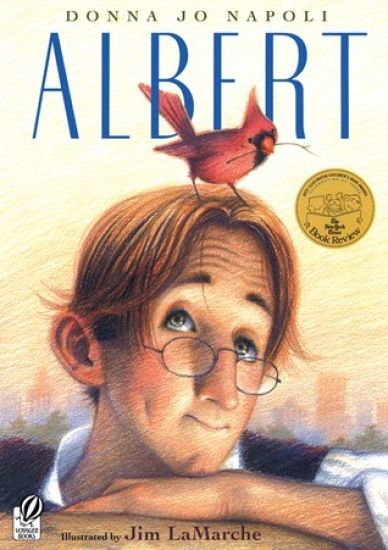
Albert

Albert

Donna Jo Napoli

Clarion Books
2005
nidottu
The morning begins like any other. Albert reaches out the window to check the weather. But from the moment a twig lands in the palm of his hand, life is never the same.
Albert

Albert

Richard Harris

Samuel French Ltd
2016
nidottu
If it were not for the thoughtfulness of the author who has kindly translated the dialogue of two of the characters into English, the audience would be as confused as the actors, who play a Finn, an Italian and an Englishman - none of whom speak a word of the other's languages.1 women, 2 men
Albert

Albert

Don Miller

Dog Pound Press
2017
nidottu
For over two hundred years in England, the name Anderson was associated with power and wealth. Albert Anderson, at twenty-one years of age, was the future heir of the Anderson fortune, and like his ancestors before him, his early years were spent sowing wild oats. That is until his grandfather asked him two simple questions, "What are your goals in life?", and "What are your dreams for the future?" Astounded, young Albert could not answer, nor did he know. The next few days, though, would change his life forever. Would he continue to let himself be used by his conniving mother or step into the long line of fortune makers? Or something altogether different? You may be astounded at his decision. This is the life story of young Albert.