Kirjojen hintavertailu. Mukana 11 244 527 kirjaa ja 12 kauppaa.

Kirjahaku

Etsi kirjoja tekijän nimen, kirjan nimen tai ISBN:n perusteella.

1000 tulosta hakusanalla Albert J. Geritz

Thomas More

Thomas More

Albert J. Geritz

Greenwood Press
1998
sidottu
Few people have had as enduring an influence as Thomas More (1478-1535), who—along with Erasmus, with whom he corresponded—was the quintessential Renaissance Humanist. More had a deep understanding of the classics. He wrote poems in Latin and prepared Latin translations of Lucian's Greek dialogues. Like so many thinkers of his day, he had a strong interest in the philosophy of education. Trained as a lawyer, he was also a leading political figure of his time. He became a member of Parliament in 1504, speaker of the House of Commons in 1523, Chancellor of the Duchy of Lancaster in 1525, and Lord Chancellor in 1529. But most importantly, he was a theologian and religious leader and had once contemplated pursuing a religious vocation. He challenged the influence of Lutheranism; debated Christopher St. German about the limits of ecclesiastical jurisdiction in England; and wrote theological treatises on the sufferings of Christ, the nature of heresies, and other religious topics. Though he saw himself as the king's servant, he refused to acknowledge the authority of Henry VIII as spiritual head of England. For his defiance, he was executed; for his martyrdom, he was canonized. Many of his views are reflected in what is perhaps his most famous work, Utopia, in which he offers a fictional portrait of an ideal society.Research on More has flourished in the centuries after his death, particularly since his canonization. This bibliography includes more than 1600 annotated entries for major works on his life and writings not only written in English, but also in French, German, Dutch, Italian, Spanish, and Portuguese. It contains entries for books, chapters, journal articles, and numerous unpublished dissertations. The opening chapters cover reference works, editions, and editorial concerns. A chapter on biography precedes sections on general critical studies; More's reception, reputation, and influence; the religious and philosophical background of his works; and his language, style, and use of classical and Christian sources. Individual chapters then treat particular major works, such as his History of King Richard III, or clusters of his shorter writings, such as his English and Latin poems. Entries include cross-references, and the volume closes with a detailed index.
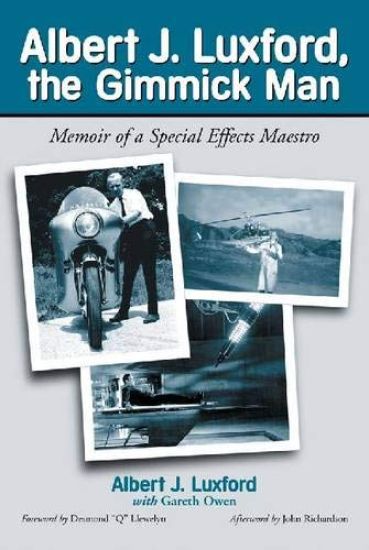
Albert J. Luxford, the Gimmick Man

Albert J. Luxford, the Gimmick Man

Albert J. Luxford; Gareth Owen

McFarland Co Inc
2002
pokkari
Albert J. Luxford has long been known as "The Gimmick Man" in the film and television industry, but he has remained one of its unsung and unknown geniuses despite his well-known work. He equipped James Bond with some of his most memorable gadgets; made possible many of the effects and sequences in the Carry On series. He worked on such shows and movies as Are You Being Served?, The Muppets, Highlander, and Chitty Chitty Bang Bang, among many others. In this memoir, Luxford reminisces with great good humor about his life and work and shares some tricks of the trade. He left school at 16 to attend the Institute of Automobile Engineers in West London and began in the film industry as an engineer at Pinewood Studios. The bulk of this work is made up of Luxford's recollections about his experiences in special effects. This is a genuine tour behind the scenes by an incomparable master of movie magic.
The Definitive Albert J. Sterne

The Definitive Albert J. Sterne

Julie Bozza

LIBRAtiger
2019
pokkari
Albert Sterne, forensics expert with the FBI, is so obnoxious on the surface that no one bothers digging deeper. When he's sent to Colorado to investigate what turns out to be the work of a serial killer he encounters Special Agent Fletcher Ash and they end up reluctantly joining forces to unravel the case. It's only a matter of duty, though; it can't be more, because Albert doesn't do friendship - and he certainly doesn't do love
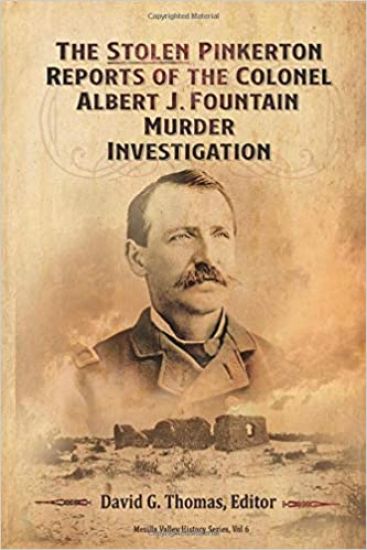
The Stolen Pinkerton Reports of the Colonel Albert J. Fountain Murder Investigation
The abduction and apparent murder of Colonel Albert J. and Henry Fountain on February 1, 1896, shocked and outraged the citizens of New Mexico.It was not the killing of Colonel Fountain, a Union Civil War veteran and a prominent New Mexico attorney, which roused the physical disgust of the citizenry - after all, it was not unknown for distinguished men to be killed. It was the cold-blooded murder of his eight-year-old son which provoked the public outcry and revulsion.The evidence indicated that although Colonel Albert J. Fountain was killed during the ambush, his son was taken alive, and only killed the next day.The public was left without answers to the questions: Who ambushed and killed Colonel Fountain? Who was willing to kill his young son in cold-blood after holding him captive for 24 hours?The case was never solved. Two men were eventually tried for and acquitted of the crime.The case file for the crime contains almost no information. There are no trial transcripts or witness testimonies. The only reports that exist today of the investigation of the case are these Pinkerton Reports, which were commissioned by the Territorial Governor, and then stolen from his office four months after the murders. These Reports, now recovered, are published here.These Reports are important historical documents, not only for what they reveal about the Fountain murders, but also as a fascinating window into the how the most famous professional detective agency in the United States in the 1890s - the Pinkerton Detective Agency - went about investigating a murder, at a time when scientific forensic evidence was virtually non-existent.The two Pinkerton Operatives sent to investigate the crime were John Conklin Fraser and William C. Sayers, the Agency's most competent detectives. Their investigative methods revolved around taking witness and suspect statements, and then working to verify what they were told, a process that remains at the heart of criminal investigation today. As of the date of this writing, the Dona Ana County Sheriff's Office has reclassified the murders as an Active Case.
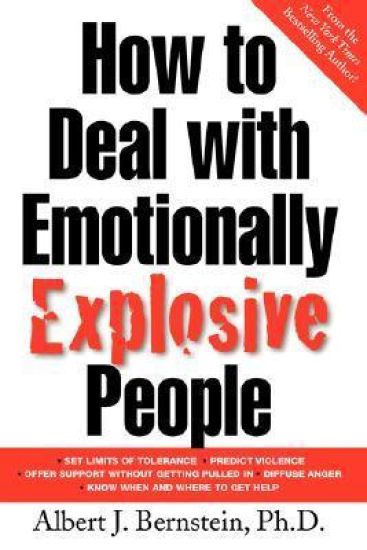
How to Deal With Emotionally Explosive People

How to Deal With Emotionally Explosive People

Albert J. Bernstein

McGraw-Hill Inc.,US
2002
pokkari
This manual is designed for anyone who lives with, works with, or deals with emotionally explosive people. The personalities described as "Walking Time Bombs" react to stress with emotional explosions into anger, sadness or fear. Albert J. Bernstein examines how to cope with these people, offering strategies for dealing with all types of emotional outbursts and over-reactions. He distinguishes between "hot anger", which involves anger that explodes into any form of violence, including everything from verbal outbursts to bodily harm, and "cold anger", which involves explosions into withdrawal, rejection and disapproval. The volume also discusses how to predict violence, and where and when to get help.
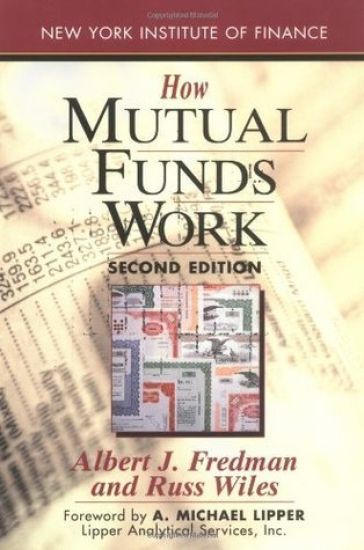
How Mutual Funds Work

How Mutual Funds Work

Albert J. Fredman; Russ Wiles

PRENTICE HALL PR
1997
pokkari
Explains how funds work, and provides the background tools necessary to select funds and evaluate performance. The book outlines the stock market, bond market, asset location, index funds, variable annuities, tax considerations, and using computers and online for information and analysis.
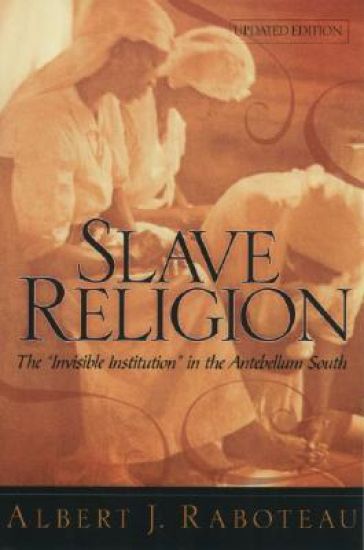
Slave Religion

Slave Religion

Albert J. Raboteau

Oxford University Press Inc
2004
nidottu
Twenty-five years after its original publication, Slave Religion remains a classic in the study of African American history and religion. In a new chapter in this anniversary edition, author Albert J. Raboteau reflects upon the origins of the book, the reactions to it over the past twenty-five years, and how he would write it differently today. Using a variety of first and second-hand sources-- some objective, some personal, all riveting-- Raboteau analyzes the transformation of the African religions into evangelical Christianity. He presents the narratives of the slaves themselves, as well as missionary reports, travel accounts, folklore, black autobiographies, and the journals of white observers to describe the day-to-day religious life in the slave communities. Slave Religion is a must-read for anyone wanting a full picture of this "invisible institution."
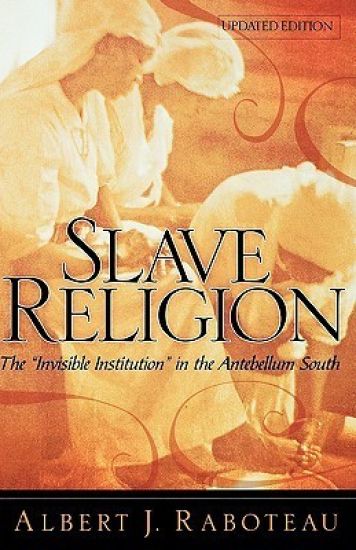
Slave Religion

Slave Religion

Albert J. Raboteau

Oxford University Press Inc
2004
sidottu
Twenty-five years after its original publication, Slave Religion remains a classic in the study of African American history and religion. In a new chapter in this anniversary edition, author Albert J. Raboteau reflects upon the origins of the book, the reactions to it over the past twenty-five years, and how he would write it differently today. Using a variety of first and second-hand sources-- some objective, some personal, all riveting-- Raboteau analyzes the transformation of the African religions into evangelical Christianity. He presents the narratives of the slaves themselves, as well as missionary reports, travel accounts, folklore, black autobiographies, and the journals of white observers to describe the day-to-day religious life in the slave communities. Slave Religion is a must-read for anyone wanting a full picture of this "invisible institution."