

Kirjahaku
Etsi kirjoja tekijän nimen, kirjan nimen tai ISBN:n perusteella.
59 tulosta hakusanalla Aldersey Dicken
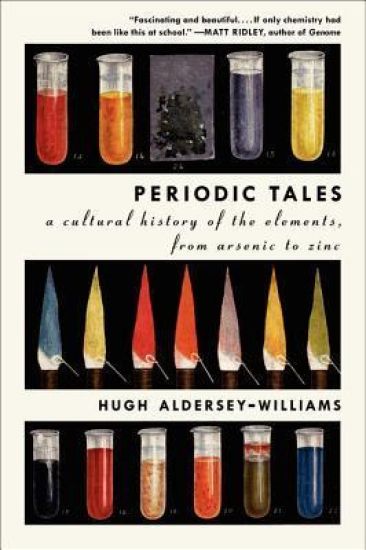
Periodic Tales: A Cultural History of the Elements, from Arsenic to Zinc
Hugh Aldersey-Williams
Ecco Press
2012
nidottu
In the spirit of A Short History of Nearly Everything comes Periodic Tales. Award-winning science writer Hugh Andersey-Williams offers readers a captivating look at the elements--and the amazing, little-known stories behind their discoveries. Periodic Tales is an energetic and wide-ranging book of innovations and innovators, of superstition and science and the myriad ways the chemical elements are woven into our culture, history, and language. It will delight readers of Genome, Einstein's Dreams, Longitude, and The Age of Wonder.
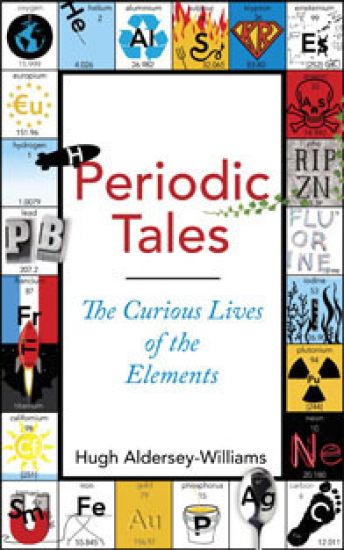
THE PHENOMENAL SUNDAY TIMES BESTSELLER 'Science writing at its best. If only chemistry had been like this at school' Matt Ridley ____________________ Everything in the universe is made of them, including you. Like you, the elements have personalities, attitudes, talents, shortcomings, stories rich with meaning. Here you'll meet iron that rains from the heavens and noble gases that light the way to vice. You'll learn how lead can tell your future while zinc may one day line your coffin. You'll discover what connects the bones in your body with the Whitehouse in Washington, the glow of a streetlamp with the salt on your dinner table. Unlocking their astonishing secrets and colourful pasts, Periodic Tales is a voyage of wonder and discovery, showing that their stories are inextricable from the stories of our own lives. ____________________ 'A love letter to the chemical elements. Aldersey-Williams is full of good stories and he knows how to tell them well' Sunday Telegraph 'The history, science, art, literature and everyday applications of all the elements from aluminium to zinc' The Times 'Great fun to read and an endless fund of unlikely and improbable anecdotes' Financial Times
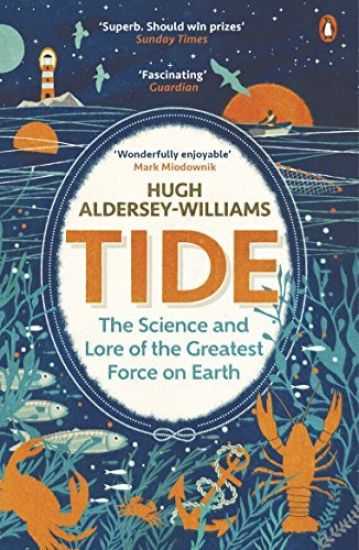
A Sunday Times 'Must Read' book.Described by the Sunday Times as "a gently studious Bill Bryson crossed with an upbeat and relaxed WG Sebald", Tide is "a superb book... a delight to read. It is profound and powerful, and should win prizes."From Cnut to D-Day, the history and science of the unceasing tide is explored for the first time.Half of the world's population lives in coastal regions lapped by tidal waters. Yet how little most of us know about the tide - a key force on our planet that has altered the course of history and will transform our future.Our ability to predict and understand the tide depends on centuries of science, from the observations of Aristotle and the theories of Newton to today's supercomputer calculations. This story is punctuated here by notable tidal episodes in history, from Caesar's thwarted invasion of Britain to the catastrophic flooding of Venice, and interwoven with a rich folklore that continues to inspire art and literature today.With Aldersey-Williams as our guide to the most feared and celebrated tidal features on the planet, from the original maelstrøm in Scandinavia to the world's highest tides in Nova Scotia to the crumbling coast of East Anglia, the importance of the tide, and the way it has shaped - and will continue to shape - our civilization, becomes startlingly clear.
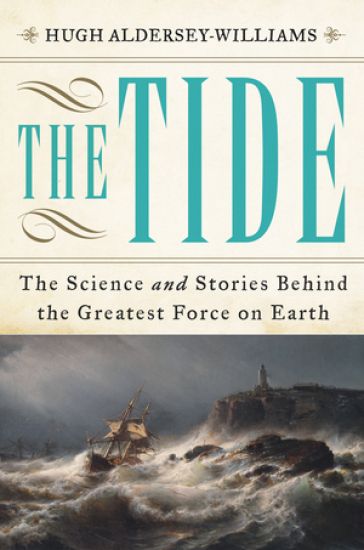
The Tide: The Science and Stories Behind the Greatest Force on Earth
Hugh Aldersey-Williams
W. W. Norton Company
2016
sidottu
Half of the world's population today lives in coastal regions lapped by tidal waters. But the tide rises and falls according to rules that are a mystery to almost all of us. In The Tide, celebrated science writer Hugh Aldersey-Williams weaves together centuries of scientific thinking with the literature and folklore the tide has inspired to explain the power and workings of this most remarkable force.Here is the epic story of the long search to understand the tide: from Aristotle, who is said to have drowned himself in his efforts to figure out the Greek tides, to the pioneering investigations into the role of the moon by Galileo and Newton, to the quest to understand and even control the tide in our own time. Throughout, Aldersey-Williams whisks the reader along on his travels in search of the most remarkable tidal phenomena. He visits the Bay of Fundy in Nova Scotia, where the tides are the strongest in the world; arctic Norway, home of the raging tidal whirlpool known as the maelstrom; and Venice, to investigate efforts to defend the city against flooding caused by the famed acqua alta.Along the way, Aldersey-Williams delves into classic literary portrayals of the tide from Shakespeare to Dickens, Melville to Jules Verne. And he reveals the tidal truths behind the Homeric tale of Scylla and Charybdis, the biblical story of Moses parting the Red Sea, the conquests of Julius Caesar, the Boston Tea Party, and the D-Day landings in Normandy.
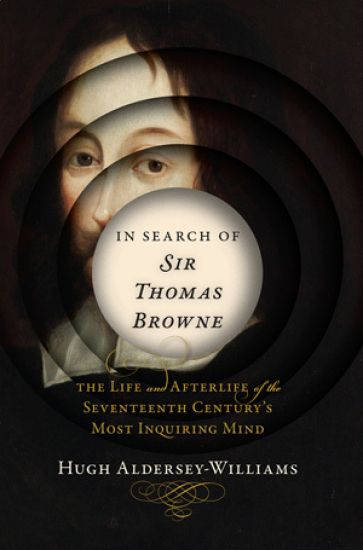
In Search of Sir Thomas Browne: The Life and Afterlife of the Seventeenth Century's Most Inquiring Mind
Hugh Aldersey-Williams
W. W. Norton Company
2015
sidottu
Sir Thomas Browne (1605-1682) was an English writer, physician, and philosopher whose work has inspired everyone from Ralph Waldo Emerson to Jorge Luis Borges, Virginia Woolf to Stephen Jay Gould. In an intellectual adventure like Sarah Bakewell's book about Montaigne, How to Live, Hugh Aldersey-Williams sets off not just to tell the story of Browne's life but to champion his skeptical nature and inquiring mind.Mixing botany, etymology, medicine, and literary history, Aldersey-Williams journeys in his hero's footsteps to introduce us to witches, zealots, natural wonders, and fabulous creatures of Browne's time and ours. We meet Browne the master prose stylist, responsible for introducing hundreds of words into English, including electricity, hallucination, and suicide. Aldersey-Williams reveals how Browne's preoccupations--how to disabuse the credulous of their foolish beliefs, what to make of order in nature, how to unite science and religion--are relevant today.In Search of Sir Thomas Browne is more than just a biography--it is a cabinet of wonders and an argument that Browne, standing at the very gates of modern science, remains an inquiring mind for our own time. As Stephen Greenblatt has written, Browne is "unnervingly one of our most adventurous contemporaries."
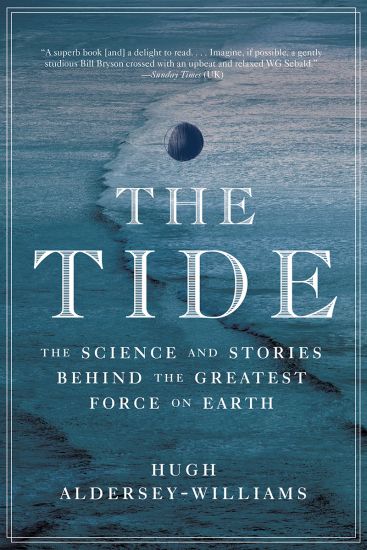
Tide: The Science and Stories Behind the Greatest Force on Earth
Hugh Aldersey-Williams
W. W. Norton Company
2017
nidottu
Half of the world's population today lives in coastal regions lapped by tidal waters. But the tide rises and falls according to rules that are a mystery to almost all of us. In The Tide, celebrated science writer Hugh Aldersey-Williams weaves together centuries of scientific thinking with the literature and folklore the tide has inspired to explain the power and workings of this most remarkable force.Here is the epic story of the long search to understand the tide from Aristotle, to Galileo and Newton, to classic literary portrayals of the tide from Shakespeare to Dickens, Melville to Jules Verne. Throughout, Aldersey-Williams whisks the reader along on his travels: He visits the Bay of Fundy in Nova Scotia, where the tides are the strongest in the world; arctic Norway, home of the raging tidal whirlpool known as the maelstrom; and Venice, to investigate efforts to defend the city against flooding caused by the famed acqua alta.

The Most Beautiful Molecule "The molecule, buckminsterfullerene, is beautiful physically and intellectually. Its qualities, and even some of its properties, can be appreciated instantly and intuitively by nonscientists. Its uniqueness is bound to lead to novel applications-superconductivity is the leading contender at the moment." "The commercial potential of buckminsterfullerene has heightened the excitement and controversy in recent years, while the exact nature of the discovery process in 1985 has been the subject of a heated feud between the British and American scientists involved."-Hugh Aldersey-Williams Ten years ago, the discovery of buckminsterfullerene, a previously unknown form of carbon, stunned the scientific community, as much for the discovery itself as for the manner in which it came about. In the words of author Hugh Aldersey-Williams, it was an example of "classic bootleg science". The work was done on the back of other, funded projects, and when time would allow. Yet its commercial implications are probably immense. Now, with objectivity and insight, The Most Beautiful Molecule recounts the events leading up to this momentous discovery and chronicles the ongoing, often frenzied aftermath. Hugh Aldersey-Williams leads us on a thrilling expedition to the very forefront of modern chemistry research. Houston, Texas, 1985. Two industrious chemists discover a previously unknown form of carbon and christen it buckminsterfullerene, for its striking resemblance to American architect Richard Buckminster Fuller's geodesic domes. This unusual molecule-also known as the buckyball-is composed of 60 carbon atoms arranged in a hollow sphere, with hexagonal and pentagonal configurations similar to those found on a soccer ball. Its near-perfect symmetry is just one reason why scientists have since dubbed it "the most beautiful molecule." The discovery of buckminsterfullerene-by American physicist and chemist Richard Smalley and British physical chemist Harry Kroto-rocked the scientific community. After all, generations believed graphite and diamond to be the only pure forms of carbon. How had this third form gone undetected? In fact, the actual discovery was merely the beginning of an intense-and ongoing-quest to master this newest form of the most basic of elements. Confirmation would take five years and launch an unprecedented flood of investigation and investment. The unique physical structure of buckminsterfullerene-a "cage" into which atoms of other materials may be inserted-had huge commercial potential and inspired scientists, industrial laboratories, and corporations alike. Backed by such giants as AT&T, DuPont, Exxon, and IBM, a highly competitive search for practical applications began-and continues. Possibilities range from the creation of a revolutionary rocket fuel to nanotechnology-the construction of microscopic "molecular machines"-to developments in the fight against AIDS. Here, then, is a fascinating, multilayered look at one of the most important scientific findings of our time. The Most Beautiful Molecule is a brain-teasing detective story, a marvelously detailed, inside look at the workings of the scientific community, and an exciting contemplation of what lies ahead. From the forefront of research in modern chemistry, author Hugh Aldersey-Williams offers, in his own words, "a celebration of the intimate world of physical science and its practitioners."
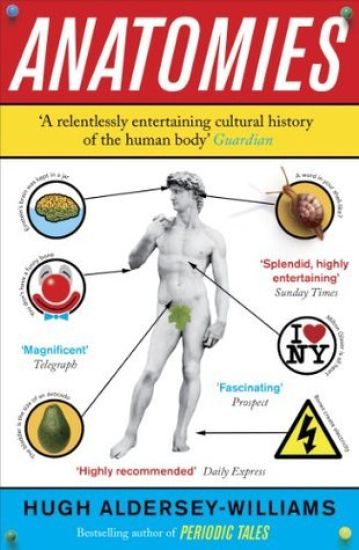
Including facts, stories and information drawn from across history, science, art and literature - from finger-prints to angel physiology, from Isaac Newton's death-mask to the afterlife of Einstein's brain, this title explores our relationship with our bodies and investigates our changing attitudes to the extraordinary physical shell we inhabit.

Dutch Light: Christiaan Huygens and the Making of Science in Europe
Hugh Aldersey-Williams
Picador USA
2020
nidottu
Hugh Aldersey-Williams transports us to the Dutch Golden Age a time of immense scientific and artistic innovation - in this histo-biography of Christiaan Huygens, one of Europes leading, yet unsung, thinkers.
'Enchanting to the point of escapism.' – Simon Ings, Spectator'Hugh Aldersey-Williams rescues his subject from Newton's shadow, where he was been unjustly confined for over three hundred years.' – Literary ReviewFilled with incident, discovery, and revelation, Dutch Light is a vivid account of Christiaan Huygens’s remarkable life and career, but it is also nothing less than the story of the birth of modern science as we know it. Europe’s greatest scientist during the latter half of the seventeenth century, Christiaan Huygens was a true polymath. A towering figure in the fields of astronomy, optics, mechanics, and mathematics, many of his innovations in methodology, optics and timekeeping remain in use to this day. Among his many achievements, he developed the theory of light travelling as a wave, invented the mechanism for the pendulum clock, and discovered the rings of Saturn – via a telescope that he had also invented.A man of fashion and culture, Christiaan came from a family of multi-talented individuals whose circle included not only leading figures of Dutch society, but also artists and philosophers such as Rembrandt, Locke and Descartes. The Huygens family and their contemporaries would become key actors in the Dutch Golden Age, a time of unprecedented intellectual expansion within the Netherlands. Set against a backdrop of worldwide religious and political turmoil, this febrile period was defined by danger, luxury and leisure, but also curiosity, purpose, and tremendous possibility.Following in Huygens’s footsteps as he navigates this era while shuttling opportunistically between countries and scientific disciplines, Hugh Aldersey-Williams builds a compelling case to reclaim Huygens from the margins of history and acknowledge him as one of our most important and influential scientific figures.
Maximising Economic Recovery
Judith Aldersey – Williams; Valerie Allan
Globe Law and Business Ltd
2023
sidottu
The regulatory regime encapsulated in the term ‘maximising economic recovery’ or MER, now administered by the North Sea Transition Authority (NSTA), was introduced in 2015. It emerged from a government-commissioned report by Sir Ian Wood, published in 2014, which recommended the introduction of a new tripartite strategy for MER from the UKCS involving HM Treasury, industry and a new regulator at arm’s length from government. This was intended to address the problems of an ageing basin in which smaller discoveries meant new fields were more marginal and interdependent than in the past. An increasingly diverse set of companies operating these smaller, more interconnected fields resulted in greater competition for ageing infrastructure and required increased collaboration between operators to ensure that fields remain economical. These factors, coupled with growing competition for investment from outside the UK, had led to significant falls in production, production efficiency and exploration. The new approach requires regulated persons active in UKCS operations to seek to maximise economic recovery not just from their own assets but across the basin and therefore requires unprecedented levels of collaboration. It has also resulted in a far more hands-on regulator seeking to use both influence and enforcement to radically alter the culture of the UKCS. This book is not a complete guide to oil and gas industry regulation in the UK; instead, it is specific to the MER UK regime. It describes the legislative changes that introduced the regime, the nature of the NSTA, and how it uses ‘soft power’ to achieve many of its aims. It also describes the regulatory tools at the NSTA’s disposal including the nature of the OGA Strategy and how this can be enforced through sanctions, the right to attend a wide range of industry meetings, request vast amounts of industry data and to get involved in industry disputes. It also discusses the increasing focus of the NSTA on the energy transition. This book will be of interest to legal practitioners active in energy law whether in private practice or in house, academics and students with an interest in energy regulation and regulators looking at the UKCS as a model for other jurisdictions.

What really happened in the small, German-occupied Channel Island of Alderney during the Second World War? Rumours have circulated and grown during the decades since, with sinister allegations, firstly against the Germans, that there was an extermination camp, secondly against the British, that there was a 'cover-up'. The man in the best position to know the facts, 'Bunny' Pantcheff, decided to provide them in this book, so that the evidence can speak for itself. In June 1940 virtually the entire population was evacuated so that, unlike their neighbours in Jersey and Guernsey, the islanders of Alderney could not provide a single eye-witness account of the occupation. The German armed forces moved in early 1940 and by 1942 they had a garrison of over 3,000 personnel in an island only 3 and a half miles long. To build the extensive concrete fortifications, many of which are still evident today, they brought in a work force totalling 4,000 men, from several European countries. Some were volunteers, some were forced labourers, some were state prisoners in the only SS concentration camp on British soil. Major Pantcheff was the official Military Intelligence interrogator who questioned the whole German garrison and very many prisoners and civilian labourers in 1945. This book is the composite testimony of those who served or suffered in Alderney, recorded while the events were still fresh and recent, by the author, in Alderney, the other islands and elsewhere. There was no extermination camp, no Auschwitz, nor any 'cover up'.

On 23 June 1940, one week before the German invaders arrived and with just a few hours notice, the island of Alderney was evacuated of all but a handful of its 1,450 inhabitants. During its occupation Alderney became an island fortress and slave labour camp. Alderney at War offers the fullest account ever published of events on the island during the war, as well as an examination of the circumstances leading up to the evacuation and the subsequent fate of the refugees. Bonnard draws on both German and British official records and on the fascinating eye-witness accounts of former Russian, French and islander prisoners, as well as personal diaries and photographs taken by members of the occupying forces. Alderney at War is a factual record of this remarkable episode in British history, which is sure to enthrall residents and visitors to the Channel Islands, but its comprehensive coverage of those grim years guarantees it a place alongside any Second World War History.

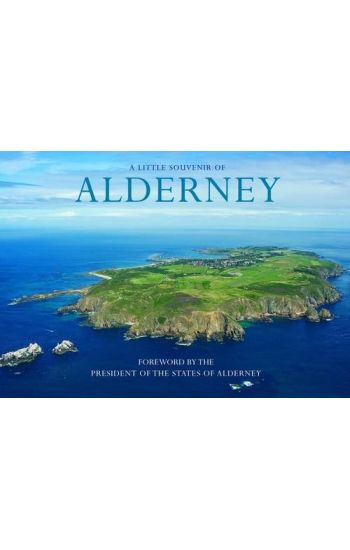
A souvenir picture book which contains over 60 colour photographs of the Channel Island of Alderney
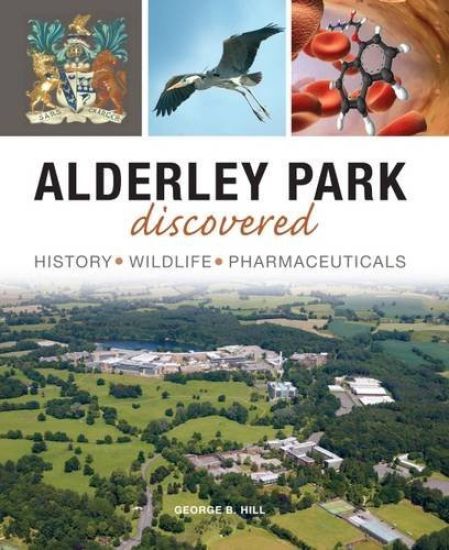
Alderley Park Discovered is written by former AstraZeneca chemist George Hill, whose carefully researched text is presented in a wonderfully lively and readable style. The 400-acre site is a unique and beautiful natural environment with a rich, varied history, and is home to a diverse range of wildlife.
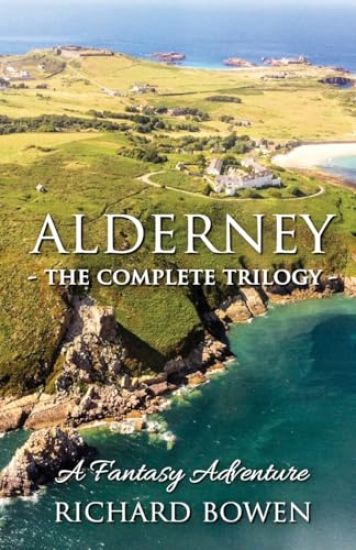
This popular series of books for adults come together to form a magical fantasy adventure, undertaken by three teenage girls and their grandfather. Join them in this coming of age saga of mystery and magic as they search for the hidden treasure of Lima. The Mafia are hot on their heels as the trio battle goblins and demons, with the help of fairies, ghosts and heavenly superpowers. Alderney - The Complete Trilogy - A Fantasy Adventure is pure fantasy written with plenty of humour interwoven with historical places and popular music. Enjoy